Did you know that thousands of Dundee landlords are currently racing against a ticking clock? With a massive wave of certificates issued in 2021 reaching their five-year expiry this April 2026, and new social housing rules taking effect this May, securing a valid eicr certificate dundee has become a high priority for property owners across the city.
You’re likely worried that an inspection will lead to a mountain of expensive repairs or that you’ll be blinded by technical jargon from a national call centre firm. It’s frustrating when you just want to keep your tenants safe and stay on the right side of Scottish law without being overcharged, especially with the complex BS 7671 Amendment 4 regulations that arrived on 15 April 2026. We believe in providing honest feedback and treating your property with the same respect we would our own.
We’re here to take the stress out of compliance by providing a clear, jargon-free roadmap to a satisfactory report. This guide explains exactly what to expect during an inspection, how to meet your legal obligations for a change of tenancy, and why the new Level 3 qualification standards starting this October ensure you’re getting a professional job done the old-fashioned way.
Key Takeaways
- Understand why a valid EICR is a legal cornerstone for Scottish private tenancies and how it safeguards your tenants and property.
- Navigate the inspection process for an eicr certificate dundee with ease, from visual safety checks to technical dead testing when the power is off.
- Stay ahead of the five-year renewal cycle and tenancy change requirements to ensure your documentation is always up to date and legally sound.
- Spot common failure points like wooden-backed fuse boards and missing RCD protection before the electrician arrives to save time and stress.
- Learn the benefits of working with a local craftsman who provides clear, honest feedback and dependable service without the confusing jargon.
What is an EICR Certificate and Why is it Mandatory in Dundee?
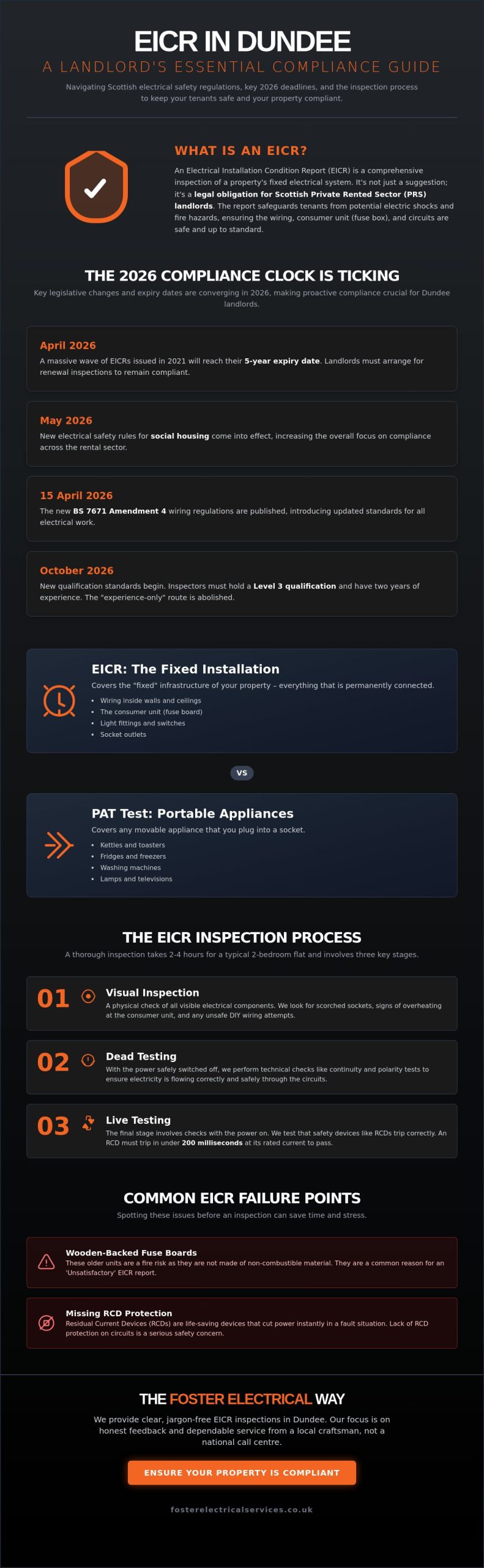
We see it often: a landlord thinks their property is safe because the lights turn on, but behind the walls, the cables are beginning to crumble. An Electrical Installation Condition Report (EICR) is the only way to prove a building is truly healthy. It involves a deep-dive assessment of the fixed wiring, consumer units, and every circuit in the home. For local property owners, securing an eicr certificate dundee isn’t just a choice; it’s a legal obligation. Scottish Private Rented Sector (PRS) regulations demand that all tenancies have a valid report to protect tenants from electric shocks and fire risks.
The stakes are high in 2026. With a massive surge in renewals from the 2021 cycle reaching their five-year expiry this April, and new social housing deadlines arriving in May 2026, the Scottish government is tightening the net on electrical safety. It’s not just for rentals, either. If you’re buying or selling a home in Tayside, mortgage lenders and Home Report surveyors will almost certainly ask for a valid eicr certificate dundee to ensure the property isn’t a hidden hazard. We treat every inspection with the same care we’d give our own homes, ensuring your insurance stays valid and your family or tenants stay safe.
The Difference Between an EICR and a PAT Test
Many people get confused between these two, but they serve very different roles. An EICR covers the “fixed” parts of your home, like the fuse board, light switches, and the wiring buried inside the walls. In contrast, PAT testing (Portable Appliance Testing) is for items you plug in, like kettles, fridges, or washing machines. To stay fully compliant in Dundee, most landlords need both. We provide a clear, honest breakdown of what’s needed so you don’t pay for tests you don’t actually require.
Who Can Legally Carry Out an EICR in Scotland?
Not every electrician has the right credentials to sign off on these reports. From 1 October 2026, new standards require all inspectors to hold a Level 3 qualification and have two years of documented experience. The old “experience-only” route is gone. We’ve always done things the old-fashioned way, focusing on proper training and personal integrity. Our team is fully versed in the latest BS 7671 Amendment 4 regulations, published on 15 April 2026. We don’t use call centres or hide behind jargon; we’re just local experts doing a job properly.
What Happens During an Electrical Safety Inspection?
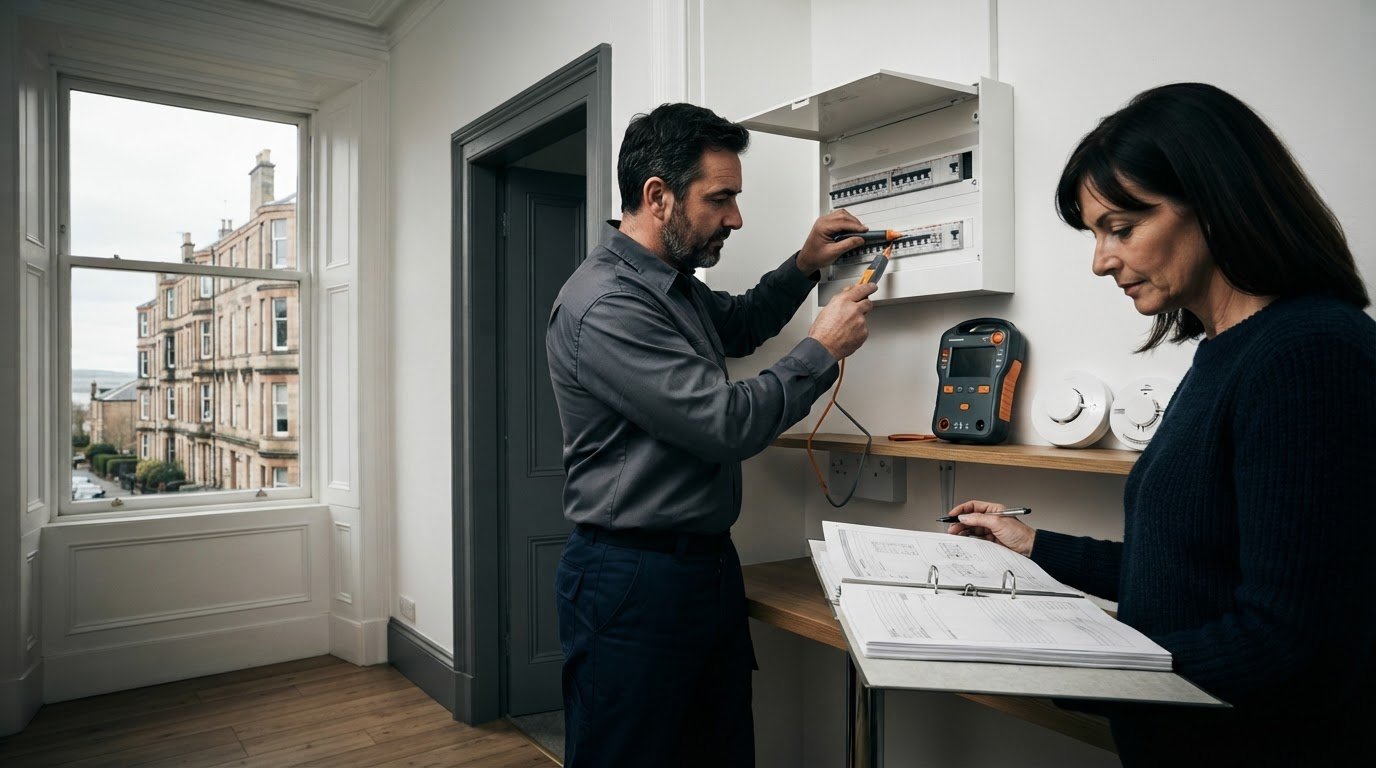
We understand that inviting an electrician into your home or a tenant’s property can feel like a bit of a disruption. That’s why we work with a no-nonsense approach, ensuring we’re thorough without making a mess. A proper inspection for an eicr certificate dundee isn’t a quick ten-minute walk-through. For a standard two-bedroom flat in the city, you should expect us to be on-site for between two and four hours. Our process is broken down into three main stages:
- Visual Inspection: A physical check of all visible electrical components.
- Dead Testing: Technical checks performed while the power is safely switched off.
- Live Testing: Final verifications carried out while the system is energised.
The process begins with a detailed visual inspection. We’re looking for the obvious signs of trouble that often get missed, such as scorched socket outlets, DIY wiring attempts by previous tenants, or signs of overheating at the consumer unit. Following the Scottish Government statutory guidance, we ensure every visible component meets modern safety standards. If you’re concerned about the state of an older property, our local experts can provide a clear assessment without the confusing industry talk.
Once the visual checks are done, we move into dead testing. This part requires us to turn the power off, so it’s a good idea to let your tenants know in advance. We perform continuity and polarity checks to make sure electricity is flowing where it should and nowhere else. Finally, we finish with live testing. This involves checking that your Residual Current Devices (RCDs) trip fast enough to prevent a fatal shock. Under current standards, an RCD must trip within 200ms at its rated current to pass. Securing a valid eicr certificate dundee relies heavily on these technical results, which prove your safety systems will actually work when they’re needed most.
Visual Checks: Sockets, Switches, and Fittings
In high-use areas like kitchens, sockets often show signs of wear and tear or cracked faceplates. In some of Dundee’s older tenement buildings, we still encounter outdated round-pin sockets or lead-covered cabling that hasn’t been touched in decades. We check that every fitting is correctly installed and suitable for its environment, such as ensuring bathroom lights are properly enclosed against moisture. We take personal pride in being meticulous, treating your property with the same respect we’d show our own.
Technical Testing: The Consumer Unit and Circuitry
We spend a significant portion of the inspection at the consumer unit, which acts as the brain of your home’s electrical system. We verify that the earthing and bonding to your gas and water pipes are up to modern standards to prevent metalwork from becoming live during a fault. Insulation Resistance Testing is a specific check we perform to identify hidden damage or perishing within the cable insulation that isn’t visible to the naked eye. By doing things the old-fashioned way, we ensure no stone is left unturned.
Scottish Legislation: 2026 Compliance for Dundee Landlords
Legislative requirements in Scotland are significantly stricter than those south of the border. We often speak with landlords who are surprised to learn that they must hold a valid eicr certificate dundee not just every five years, but also for every new tenancy. This ensures that every person moving into a rental property in Tayside is entering a home that has been thoroughly vetted for safety. Following the Scottish Government Electrical Safety Guidance is the only way to ensure you’re meeting your obligations under the Housing (Scotland) Act 2006. We don’t hide behind complex legal terms; our job is to make sure your property is safe and your paperwork is perfect.
Dundee City Council takes these regulations seriously and has the power to enforce the Repairing Standard through the First-tier Tribunal. Failure to provide a valid report when requested can lead to a formal Enforcement Order. If ignored, landlords face heavy financial penalties and potential issues with their landlord registration. Beyond the council, your insurance company is likely to be your biggest concern. If an electrical fire occurs and you don’t have a satisfactory eicr certificate dundee, your policy may be voided. This leaves you to cover the costs of repairs out of your own pocket, which can be devastating. We believe in doing things properly the first time to avoid these stressful outcomes.
Interlinked Smoke and Heat Alarms
Since February 2022, every home in Scotland must have interlinked smoke and heat alarms. This means if one goes off, they all go off, giving residents the best possible chance to escape. We find that many properties still haven’t been updated to this standard. To save you the hassle of booking multiple trades, we check these systems during our EICR visits. You can check if your Dundee home is legal with interlinked alarms by speaking with our team. We’ll give you an honest appraisal of what’s needed to keep you compliant without any high-pressure sales tactics.
Carbon Monoxide (CO) Detectors
Carbon monoxide is a silent killer, and Scottish law is clear about where detectors must be placed. You need a CO alarm in every room with a fixed combustion appliance, such as a gas boiler or a wood-burning fire. They must also be installed in every bedroom through which a flue passes to ensure maximum protection. These rules are part of the ‘Tolerable Standard’ set by the Scottish Government. We ensure your property meets these requirements during our safety checks, treating your rental like it’s our own home. Our simple promise is to provide dependable service that keeps your tenants safe and your business legal.
Common EICR Failures in Dundee Properties and How to Prep
Dundee has a beautiful mix of architecture, but the electrical systems in those grand West End tenements often tell a different story than the newer builds near the Waterfront. We frequently find that older properties struggle to meet modern standards during an inspection for an eicr certificate dundee. One of the most common “automatic failures” we see is the presence of wooden-backed consumer units. These are significant fire hazards because they don’t contain sparks if a fault occurs. If your property still has one of these relics, it’s a guaranteed “Unsatisfactory” result that needs immediate attention.
Another frequent issue is a total lack of RCD protection. Residual Current Devices are life-savers that cut the power in a fraction of a second if they detect a leak. Without them, a simple fault can lead to a fatal shock. This is usually flagged as a “C2” code, meaning “Potentially Dangerous.” We also see plenty of “handyman” DIY fixes in older flats, where cables have been joined with tape or sockets have been added without proper testing. These shortcuts might have worked for years, but they won’t pass a professional safety check. Finally, something as small as a cracked socket face or a missing blanking plate on a fuse board can result in a failure because it exposes live parts to human touch. We never cut corners, so we’ll always point these out to keep you and your tenants safe.
Understanding the Codes: C1, C2, C3, and FI
When you receive your report, you’ll see various codes next to each finding. We believe in explaining these in plain English so you aren’t left guessing. A C1 means “Danger Present” and usually requires us to fix the issue immediately to make the home safe. A C2 means “Potentially Dangerous” and will fail your report until remedial work is done. C3 is simply “Improvement Recommended,” which doesn’t cause a failure but highlights where you could upgrade for better safety. Lastly, FI stands for “Further Investigation,” which we use if we find a mystery in the wiring that requires more time to solve properly.
How to Prepare Your Property for an Inspection
A little bit of preparation goes a long way in making the day go smoothly. We treat your property like it’s our own, but we do need your help to work efficiently. Please ensure we have clear access to the consumer unit; we often find them hidden behind cupboards full of coats or heavy boxes. You should also unplug sensitive electronics like computers and high-end TVs before we start the power-down phase to prevent any issues. If the property has a pre-payment meter, please make sure there is enough credit for us to run our tests. If you’re ready to secure your eicr certificate dundee, get in touch with us today for an honest, dependable service done the old-fashioned way.
The Foster Electrical Way: Honest Safety Inspections in Dundee
We’ve seen how the industry has changed over the years, with national firms and faceless call centres prioritising speed over genuine safety. At Foster Electrical, we choose to do things differently. Our business is built on a simple promise: dependable service, done properly, the old-fashioned way. When you book an eicr certificate dundee, you aren’t just getting a tick-box exercise. You’re getting the expertise of a local craftsman who takes personal pride in every circuit tested and every report written. We believe that safety shouldn’t be a “black box” of technical mystery, so we’re here to guide you through the process with integrity.
Transparency is at the heart of what we do. We know that electrical reports can be full of confusing codes and industry speak that leaves you feeling unsure about the safety of your property. That’s why we explicitly promise no jargon. If we find an issue, we’ll explain it in plain English so you can make an informed decision. This honesty extends to our pricing too. There are no hidden extras or surprise fees; whether it’s the initial inspection or the remedial work required to reach compliance, you’ll know exactly where you stand. We don’t use high-pressure sales tactics because we value the relationship as much as the transaction.
We also understand the trust you place in us when you invite us into your home or a tenant’s flat. We treat every property like it’s our own. This means we’re meticulous about tidiness and respect your space, ensuring we leave things exactly as we found them. It’s about combining technical expertise with domestic comfort. We’re proud of our reputation as a protective guardian of our clients’ homes, and we work hard to maintain that trust every single day.
From Fault Finding to Full Compliance
We don’t just identify problems and leave you to find another contractor to fix them. We provide the complete solution to bring your property up to the 18th Edition standards, including the latest BS 7671 Amendment 4 requirements. Whether it’s a simple socket replacement or Professional Property Rewiring in Dundee, we’ve got the skills to handle it. We’ve been supporting the local landlord community for years, and we’re proud to be a dependable partner in keeping Dundee’s housing stock safe and compliant.
Book Your EICR Certificate in Dundee Today
If you’re ready to secure your eicr certificate dundee, you won’t have to navigate an automated phone menu or wait for a call back from a national office. You’ll speak directly to a real person who understands the local area and the specific challenges of Dundee’s properties. We offer flexible scheduling to suit your busy life and your tenants’ needs, ensuring the process is as smooth as possible. Contact Foster Electrical for a transparent EICR quote and experience the peace of mind that comes from a job done properly.
Protect Your Home and Tenants with a Trusted Local Expert
Staying compliant with electrical safety laws doesn’t need to be a source of stress. You’ve seen how the April 2026 renewal surge and the strict requirements of the Housing (Scotland) Act 2006 make early preparation essential. By addressing common failure points like outdated fuse boards and ensuring clear access for your inspector, you can avoid the frustration of an unsatisfactory report and keep your property running smoothly.
We’re here to help you secure a valid eicr certificate dundee without the hassle of anonymous call centres or technical confusion. As NICEIC Registered Electricians with expert knowledge of Scottish landlord legislation, we offer honest, no-jargon safety reporting that you can trust. We’ll always treat your property with the same care we show our own, delivering dependable service the old-fashioned way.
Book your Dundee EICR inspection with Foster Electrical today to ensure your investment remains safe and legally sound. We’re ready to provide the clear, professional support you need to keep your home and your tenants protected.
Frequently Asked Questions
How much does an EICR certificate cost in Dundee?
Prices for an eicr certificate dundee typically start from approximately £69 to £90 for smaller properties and can reach £300 or more for larger homes. On average, you can expect to pay between £100 and £230 for a flat. We provide honest, transparent pricing without hidden extras. These figures reflect the current market conditions in Tayside as of May 2026.
How long is an EICR certificate valid for in Scotland?
An EICR is valid for a maximum of five years in Scotland for all rental properties. You must also provide a valid report to any new tenant before they move into the property. If an inspector identifies specific safety concerns, they might recommend a more frequent check. We always explain our findings in plain English so you can plan your maintenance properly.
Do I need an EICR if I am selling my house in Dundee?
While not a strict legal requirement for private sellers, most mortgage lenders and surveyors in Dundee will request one during the Home Report process. Providing a recent eicr certificate dundee can speed up your sale by proving the electrical system is safe. It gives potential buyers peace of mind and prevents last-minute negotiations over expensive repair costs before the sale completes.
What happens if my property fails the EICR inspection?
If your property receives an “Unsatisfactory” result, you have a legal obligation to complete the necessary remedial work within 28 days. We’ll provide a clear list of the faults using standard codes like C1 or C2 to show what’s dangerous. Once the items are fixed, we’ll issue a certificate of compliance. We don’t just find faults; we provide the honest solutions needed.
Can a landlord do their own EICR?
No, you cannot perform the inspection yourself unless you are a qualified and registered electrician. From 1 October 2026, the Scottish Government requires all inspectors to hold a Level 3 qualification and have at least two years of documented experience. Most landlords hire a professional local craftsman to ensure the report is legally valid for insurance and council registration purposes.
Is an EICR the same as a landlord’s safety certificate?
Yes, in the context of electrical safety, the EICR is the formal document people mean when they ask for a “landlord’s safety certificate.” It is the primary requirement under the Scottish Private Rented Sector (PRS) regulations. However, landlords also need separate certificates for gas safety and interlinked smoke alarms to be fully compliant. We make sure your electrical paperwork is done properly.
Do I need to be present during the electrical inspection?
You don’t need to be present as long as we have clear access to the property and the consumer unit. Many Dundee landlords arrange for us to collect keys from a local agent or meet the tenant directly at the home. We treat every property like it’s our own, so you can rest assured that your home will be left tidy and secure.
What is the 5-year rule for EICRs in Scotland?
The “5-year rule” is the statutory requirement for all private rental properties in Scotland to have an electrical inspection at least every five years. This rule ensures that aging wiring and fuse boards are regularly checked for safety. With many certificates issued in 2021 now expiring in April 2026, it’s vital to book your inspection early to avoid missing the legal deadline.