What if the wooden cabinet you built to hide an unsightly fuse box is the very thing that causes your home to fail its next safety inspection? It is a common dilemma; you want a beautiful hallway, but those bulky metal boards rarely match the aesthetic of a modern home. We understand the frustration of receiving conflicting advice from different tradespeople, which often leaves you feeling uncertain about fire risks and legal compliance.
Keeping your property safe is our priority, and we want to help you understand the consumer unit in cupboard regulations uk so you can rest easy. By following the latest BS 7671:2018+A4:2026 standards, you can ensure your electrical board is housed correctly whilst remaining fully accessible for testing and maintenance. In this guide, we will walk you through the non-combustible material requirements and the practical steps needed to turn a storage nook into a compliant, fire-safe environment. Our goal is to provide the clarity you need to protect your home and ensure your installation meets every professional standard with total integrity.
Key Takeaways
- Confirm that housing a consumer unit in a cupboard is permitted provided you follow specific BS 7671 guidelines for safety and ventilation.
- Understand the “exclusion zone” requirements and why keeping a one-metre clear space is vital for emergency access and routine maintenance.
- Discover how the consumer unit in cupboard regulations uk require non-combustible materials to mitigate fire risks when electrical equipment is near wooden surfaces.
- Learn the practical requirements for boxing in a unit, including the necessity of using removable panels that don’t require dismantling your joinery.
- Gain peace of mind by learning how a professional EICR can verify your cupboard installation is safe and fully compliant with the latest standards.
Are Consumer Units Allowed in Cupboards? Understanding UK Regulations
Yes, you can certainly house your consumer unit (or distribution board) within a cupboard. It is a practical solution for many British homes where space is at a premium and interior design matters. However, it isn’t as simple as building a wooden frame around your electrical board and forgetting it exists. The consumer unit in cupboard regulations uk are governed primarily by BS 7671, the IET Wiring Regulations. These rules ensure that while your electrical system is out of sight, it remains safe and functional for everyone in the household.
We often see units tucked away in the cupboard under the stairs. This location is common, but it is frequently non-compliant because the space often becomes a dumping ground for coats, shoes, and flammable household items. There is a vital distinction between a dedicated electrical cupboard and a general storage space. A dedicated area is designed specifically for safety, whilst a general storage cupboard packed with blankets or cleaning supplies can quickly turn a small electrical spark into a major domestic fire.
The Core Purpose of Cupboard Regulations
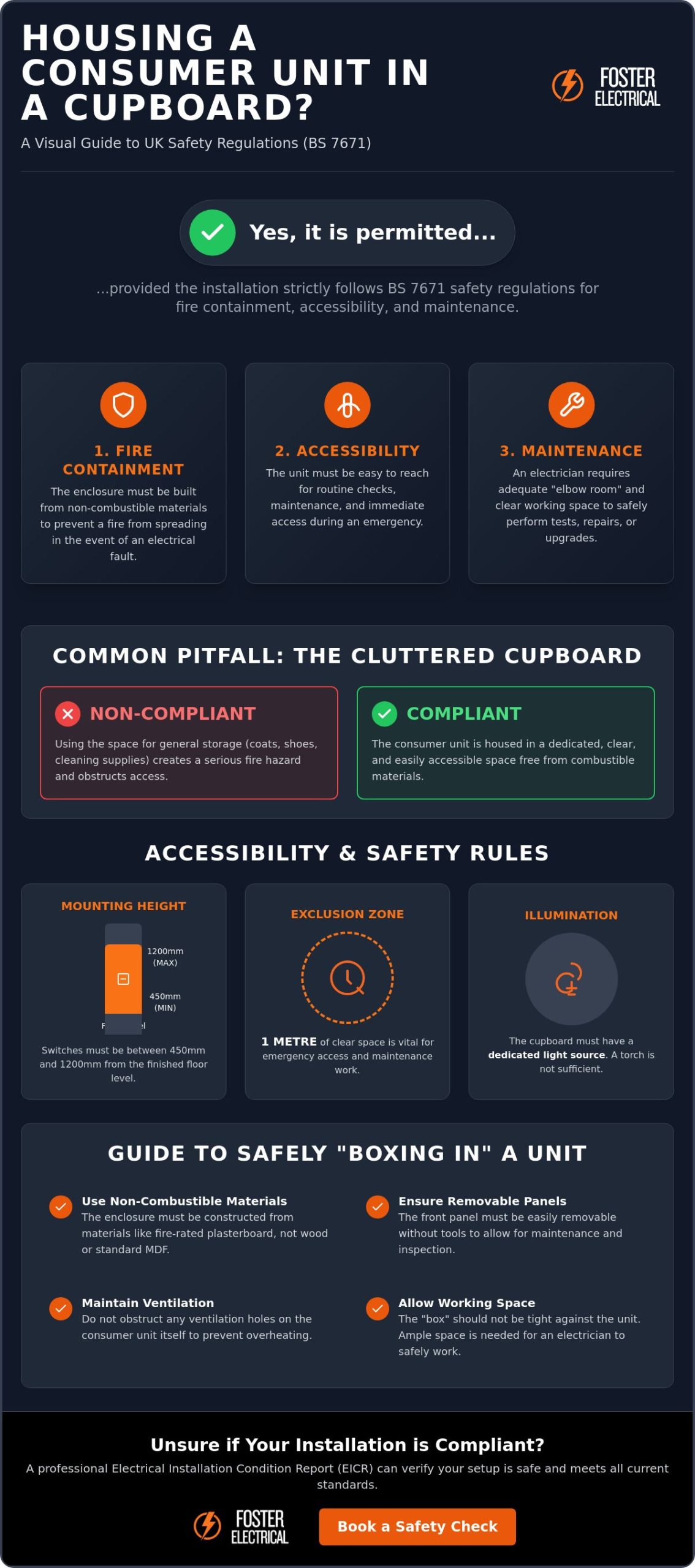
The regulations aren’t there to make your life difficult; they serve three main purposes. First is fire containment. If a fault occurs, a compliant enclosure prevents the fire from spreading to the rest of your property. Second is accessibility. You must be able to reach the switches quickly in an emergency. If you are fumbling in the dark after a trip, you shouldn’t have to fight through a vacuum cleaner to reach the board. Finally, there is the matter of maintenance. We need enough room to work safely. An electrician requires “elbow room” to perform testing and repairs without being cramped by the cupboard’s structure.
When an Existing Cupboard Becomes a Problem
Many older homes have setups that would fail a modern EICR today. Since the introduction of Amendment 2 of the 18th Edition, the standards for safety have become more stringent. You might think “grandfather rights” protect your old wooden cupboard, but this is a common misconception. If an installation is deemed dangerous or lacks proper fire protection, it needs addressing regardless of when it was installed. Signs of a problem include scorched wood, lack of ventilation, or a unit that is physically difficult to reach. Following the consumer unit in cupboard regulations uk ensures your home is protected by modern safety standards. We take pride in helping homeowners modernise these spaces through our services, ensuring every job is done with care and integrity.
Accessibility and Height: Why You Should Not Hide Your Fuse Box
Whilst it is tempting to tuck your electrical board behind a pile of winter coats or high up in a dark corner, accessibility is a cornerstone of safety. If a circuit trips or an emergency occurs, you need to reach those switches instantly. The consumer unit in cupboard regulations uk are quite clear on this point; your installation must be easy to reach, operate, and maintain. We believe that a safe home is one where the electrical system is respected, not buried under household clutter.
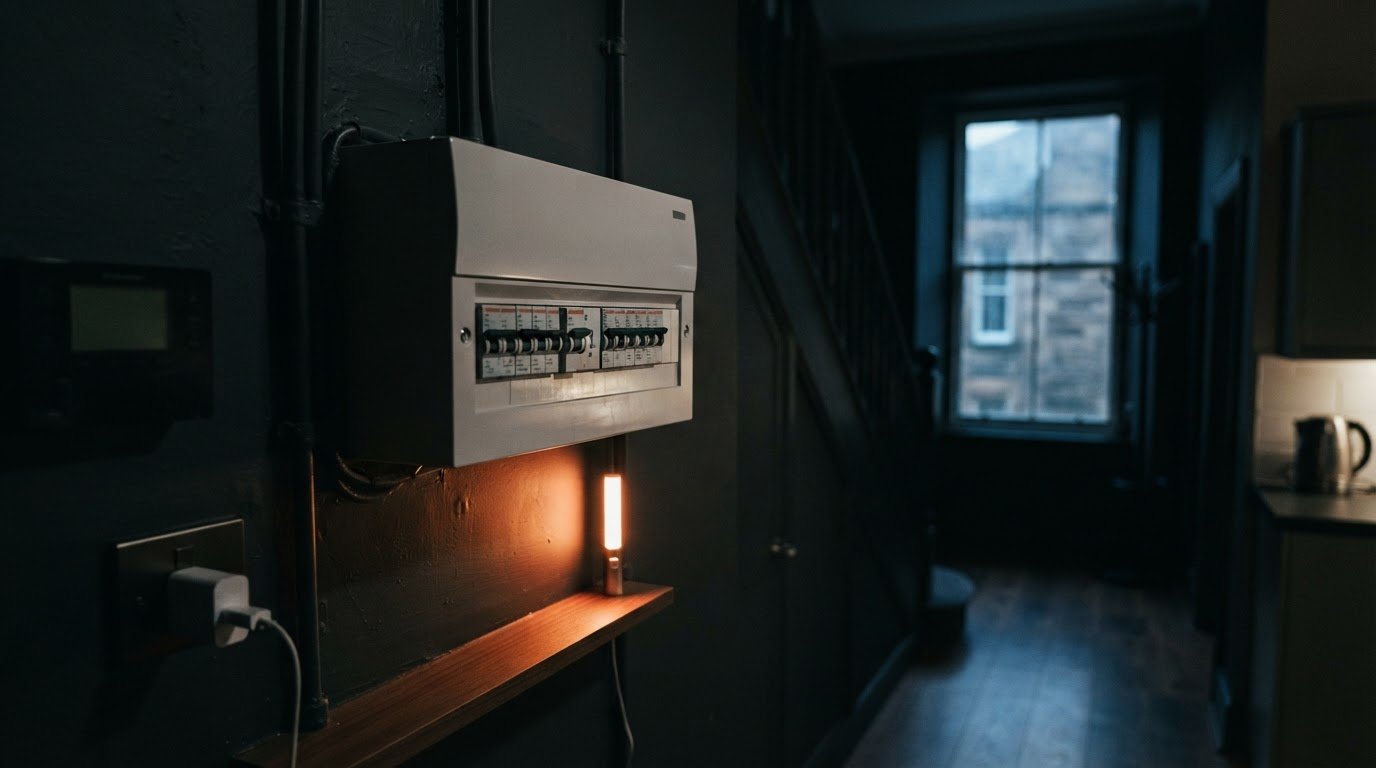
One of the most overlooked aspects of a compliant installation is illumination. If your consumer unit is inside a cupboard, that space needs a dedicated light source. Relying on a torch or the glow from a smartphone isn’t enough when you are trying to identify a tripped RCD in the middle of the night. A simple battery-operated LED or a wired-in light ensures you can see exactly what you are doing without fumbling in the shadows.
The 450mm to 1200mm Rule Explained
For new builds and many major renovations in Dundee, Part M of the Building Regulations dictates the height of electrical controls. The switches on your consumer unit should be mounted between 450mm and 1200mm from the finished floor level. This range ensures that everyone, including residents who use wheelchairs, can reach the main switch without assistance. We always measure this height from the floor to the very top of the switches to ensure total accuracy. Whilst older properties might have units mounted higher up, we always recommend bringing them down to a sensible level during a consumer unit upgrade to improve daily safety.
Working Space and Maintenance Access
A common mistake we see is “boxing in” a unit so tightly that the cover cannot be removed. To comply with the consumer unit in cupboard regulations uk, there must be adequate working space around the board. We generally look for a 1-metre “exclusion zone” in front of the unit. This space should be kept clear of vacuum cleaners, ironing boards, and storage boxes. If an electrician cannot safely remove the front cover to perform an EICR or a repair, you may find yourself facing a much larger bill for joinery work before the electrical task can even begin.
We also advocate for a strict “no-ladder” policy. Emergency controls should never require you to climb or overreach. If you are unsure if your current cupboard setup meets these accessibility standards, it is always best to speak with a local expert who can offer honest, practical advice on your specific layout.
Fire Safety and Combustible Materials: The Metal vs Wood Debate
Fire safety is the primary reason that electrical standards evolve. Whilst an older wooden cupboard might look charming, it presents a significant risk if your electrical system develops a fault. The consumer unit in cupboard regulations uk shifted dramatically in 2016 to address this specific danger. We believe that protecting your family from the risk of fire is more important than any interior design choice, and modern standards are designed to contain a fire before it can spread to the rest of your home.
Mounting high-voltage equipment directly onto wooden surfaces or inside MDF cupboards is no longer acceptable for new installations. If a loose connection causes “arcing,” the resulting heat can easily ignite timber or compressed wood panels. In many older Tayside properties, we still find fuse boxes mounted on original wooden backing boards. In these cases, we use fire-rated backing boards or intumescent gaskets to create a protective barrier between the electrical unit and the combustible structure of your home.
Regulation 421.1.201: The Non-Combustible Rule
This specific regulation was a turning point for domestic safety in the UK. It requires that all new consumer units in domestic premises must have their enclosure manufactured from a non-combustible material, which in practice almost always means steel. Plastic boards are being phased out because they can melt and add fuel to a fire rather than containing it. A modern 2026 installation focuses on “enhanced fire safety,” which includes sealing all cable entries with fire-stopping materials to prevent smoke and flames from travelling through the walls. According to current IET standards, a non-combustible material is one that is not capable of supporting combustion and will not add heat to a fire.
Ventilation and Heat Dissipation
There is a common myth that an electrical cupboard should be air-tight to “smother” a fire, but the opposite is actually true. Your consumer unit needs breathing room to prevent components from over-heating under heavy load, especially when you are running high-drain appliances like showers or EV chargers. Some airflow is a vital safety feature that helps maintain a stable operating temperature for your breakers. We always advise clients to watch for warning signs inside their cupboards. If you notice any discolouration on the walls near the unit or detect a strange “fishy” smell, this is often a sign of electrical arcing or overheating plastic. If you experience this, you should seek professional fault finding and repairs immediately to prevent a more serious incident.
Professional Guidelines for Boxing In a Consumer Unit Safely
Many homeowners find that the sight of a grey metal box ruins the character of a freshly decorated hallway or kitchen. We understand the desire to hide these components, but boxing them in must be done with meticulous care. The consumer unit in cupboard regulations uk exist to ensure that your home remains both stylish and safe. You cannot simply nail a few pieces of MDF together; you must create a structure that respects the electrical system it houses.
Any enclosure you build must feature removable panels. If an electrician needs to perform an EICR or a repair, they shouldn’t have to break your joinery to reach the wiring. Even more critical is the “No-Tool” access rule. If a circuit trips or you need to isolate the power in a hurry, you must be able to reach the RCDs and the main switch without searching for a screwdriver. A simple magnetic latch or a sturdy hinged door is often the most practical and compliant solution.
We also insist on clear labelling for every installation. Even if the unit is tucked behind a beautiful bespoke door, the exterior must indicate that live electrical equipment is inside. This isn’t just a bureaucratic hurdle; it is a vital safety measure for future owners and any tradespeople working in your home. Clear signage ensures that nobody accidentally drills into the area or ignores the cupboard during an emergency.
Material Choices for Boxing In
When choosing materials, fire-rated plasterboard is a far superior option to standard timber or plywood. We recommend leaving a minimum 50mm gap between the consumer unit and the enclosure walls. This space prevents heat build-up and ensures there is enough room for cables to enter the unit without being crushed. In high-risk locations, we often fit intumescent strips around the door frame. These strips expand when exposed to heat, sealing the gap to prevent smoke from escaping if a fault occurs inside the enclosure.
Common Boxing-In Mistakes to Avoid
One of the most frequent errors we see is covering the “Main Switch” or emergency isolation points. This switch must be visible and accessible at all times. Another common trap is blocking the path of cables, which leads to “thermal insulation” issues. If cables are packed too tightly against wood or insulation, they cannot dissipate heat, which may lead to the cable insulation melting over time. Finally, you should never paint over the consumer unit cover itself. Whilst it might help the board blend into your decor, paint can seal the door shut and obscure vital safety warnings and circuit charts. If you are planning a renovation and want to ensure your new cupboard meets the consumer unit in cupboard regulations uk, get in touch with us for expert guidance.
Ensuring Your Dundee Home is Compliant and Safe
We take great pride in our reputation across Dundee and the wider Tayside area. Our team understands that every home has its own unique history and architectural quirks. In many of our local tenements and traditional villas, the electrical board is often tucked away in a dark, narrow cupboard that hasn’t been updated in decades. We approach these private spaces with the respect they deserve, ensuring that your modern safety needs are met without compromising the character of your property. Our commitment is simple; we provide grounded, professional service that puts your safety first.
The most reliable way to confirm your setup follows the consumer unit in cupboard regulations uk is through a professional EICR. We don’t just tick boxes or rush through the process. We look at the whole picture to ensure cables are dressed correctly and that the cupboard remains a safe, functional environment. We take personal pride in our meticulous standards of execution. When we finish a job, we ensure the area is tidy and your electrical system is organised in a way that provides lasting peace of mind.
Landlord Compliance in Dundee
For those managing properties in Dundee, the rules are often even more stringent. Scottish HMO requirements frequently dictate specific fire-rating standards for cupboards housing electrical equipment. A standard wooden door might not be enough; you may need a dedicated fire door to satisfy local inspectors. We’ve seen many landlords struggle to achieve a “satisfactory” rating because a cupboard-mounted board is blocked by tenant storage or lacks proper fire-stopping. We help you meet these Scottish safety laws with straightforward, honest advice that keeps your tenants safe and your business fully compliant.
Your Next Steps for a Safer Home
If you are worried about your current setup, the first step is a simple visual inspection of your cupboard. We can quickly identify if your wooden enclosure or older plastic board needs attention to meet modern standards. If an upgrade is necessary, we replace old fuse boxes with modern, metal units that provide the highest level of protection against electrical fires. We manage the entire process with the diligence and integrity you would expect from a local expert. For total certainty regarding your home’s safety, you can contact Foster Electrical for a professional safety check in Dundee today. We promise a service that is punctual, reliable, and focused entirely on protecting your environment.
Securing Your Home with Confidence
Your electrical system is the heartbeat of your property. Keeping it hidden shouldn’t mean keeping it unsafe. We have explored how proper ventilation, non-combustible materials, and clear accessibility are the pillars of a compliant installation. Adhering to the consumer unit in cupboard regulations uk is about more than just passing a survey; it is about protecting the people you love and ensuring your home remains a sanctuary. By choosing the right materials and maintaining a clear exclusion zone, you transform a potential fire risk into a well-organised and secure electrical hub.
Maintaining these standards ensures your property is protected, a commitment shared by professional electrical specialists like Inlightec Electrical Solutions who provide comprehensive services for both homes and businesses.
As a NICEIC Approved Contractor and specialists in Dundee property rewires, we are here to provide the expert guidance you need. We serve as expert EICR inspectors for landlords and homeowners alike, treating every property with the same care and diligence as if it were our own. We invite you to book a consumer unit safety inspection with Foster Electrical today to ensure your installation is correct and safe. Let us help you protect your home with the honesty and reliability you deserve.
Frequently Asked Questions
Can I put my consumer unit in a kitchen cupboard?
You can certainly place a consumer unit in a kitchen cupboard as long as it remains easily accessible and protected from steam or water. We often find this is a practical solution in modern kitchens where space is limited. However, you must ensure it isn’t buried behind groceries or appliances, and the cupboard must be large enough to allow for future maintenance without dismantling your cabinetry.
What is the minimum height for a consumer unit in the UK?
For new builds and major renovations, the switches must be mounted between 450mm and 1200mm from the finished floor level. This ensures the unit is reachable for everyone, including residents who use wheelchairs. Whilst older properties often have units mounted much higher, we always aim for this specific range during a replacement to improve household safety and accessibility.
Do I need to move my fuse box if it’s currently in a wooden cupboard?
You don’t always need to move the unit, but you might need to upgrade the enclosure to meet the consumer unit in cupboard regulations uk. If your current unit is plastic and mounted directly onto wood, we typically recommend a modern metal replacement. This upgrade provides far superior fire containment and ensures your home remains safe and fully compliant with current standards.
Is it illegal to box in a consumer unit?
It is perfectly legal to box in a consumer unit, provided you follow strict safety guidelines regarding access and fire protection. The enclosure must allow for “no-tool” access, meaning you can reach the switches in an emergency without needing a screwdriver. We also insist that any boxing is not so tight that it prevents the front cover from being removed for essential testing.
How much clearance do I need around my fuse board?
You should maintain at least one metre of clear space directly in front of the board at all times. This “exclusion zone” ensures that an electrician can work safely and that you can reach the main switch quickly in the dark. We often see these spaces filled with vacuum cleaners or ironing boards, which can be a real hazard during an electrical emergency.
Does a consumer unit cupboard need a fire-rated door?
Whilst not always a legal requirement for standard domestic homes, fire-rated doors are often mandatory in HMOs or high-risk hallway locations. Using fire-rated materials for the cupboard provides an extra layer of protection for your property. It helps contain any potential electrical fault within the enclosure, giving your family more time to exit the property safely if a fault occurs.
Why is my consumer unit in the cupboard making a buzzing sound?
A buzzing sound often indicates a loose connection or a circuit breaker that is beginning to fail. This is a serious sign that your system is under stress or experiencing electrical arcing. Because the unit is tucked away in a cupboard, you might not notice the smell of burning plastic immediately, so you should have it inspected by a professional as soon as you hear any unusual noises.
Can an EICR fail because of a consumer unit’s location?
Yes, an EICR can fail if the unit’s location prevents safe operation, maintenance, or inspection. If we cannot reach the board to test the circuits, or if it is housed in a way that presents an immediate fire risk, we must mark the report as “unsatisfactory.” Following the consumer unit in cupboard regulations uk is the best way to ensure your safety report comes back clean and your home remains protected.