Can you really enjoy the benefits of an electric vehicle when your home is a third-floor flat in the West End or a traditional build in Stobswell? Many local residents feel that the transition to green energy is a privilege reserved for those with private driveways, whilst tenement dwellers are left to worry about “cable chaos” and the legalities of shared garden spaces. If you have been searching for a way to install an ev charger for tenement flat dundee properties, you likely know the frustration of feeling stuck between modern transport needs and the practical constraints of our city’s historic architecture.
We are here to help you bridge that gap with honest, professional advice. We explore the legal and technical solutions for charging at home, ensuring you stay compliant with Scottish law and local council regulations. You will learn about the 2026 grant increases that offer up to £500 per socket and the specific funding available for factored developments. We also walk through the technical requirements for rear-court installations and the steps needed to secure agreement from your co-owners. Our goal is to provide a clear path toward a safe, reliable charging setup that respects your neighbours and protects the integrity of your property.
Key Takeaways
- Understand how the Tenements (Scotland) Act 2004 treats charger installation as an “alteration,” necessitating a majority agreement amongst your co-owners.
- Discover the technical methods for routing power from upper-floor flats to shared rear courts whilst maintaining the safety and tidiness of the building.
- Learn why an ev charger for tenement flat dundee must comply with strict council rules that prevent cables from trailing across public pavements.
- Find out about the latest 2026 grant increases that provide up to £500 per socket for flat owners and residents in flatted properties.
- Ensure your installation meets the 18th Edition Wiring Regulations, keeping your household and neighbours safe with proper RCD protection.
The Reality of EV Charging in Dundee Tenements
Living in a stone-built tenement in Dundee brings a unique sense of history, but it also presents modern hurdles. If you own an electric vehicle, the lack of a private driveway is often the biggest barrier to convenient charging. Traditional Dundee tenements were built long before the motor car, meaning they rarely feature the dropped kerbs required for a standard home charger. We often speak with residents who feel caught between their desire for a greener commute and the physical limitations of their building. It’s a common frustration, yet many people don’t realise that the solution depends entirely on where you park your car.
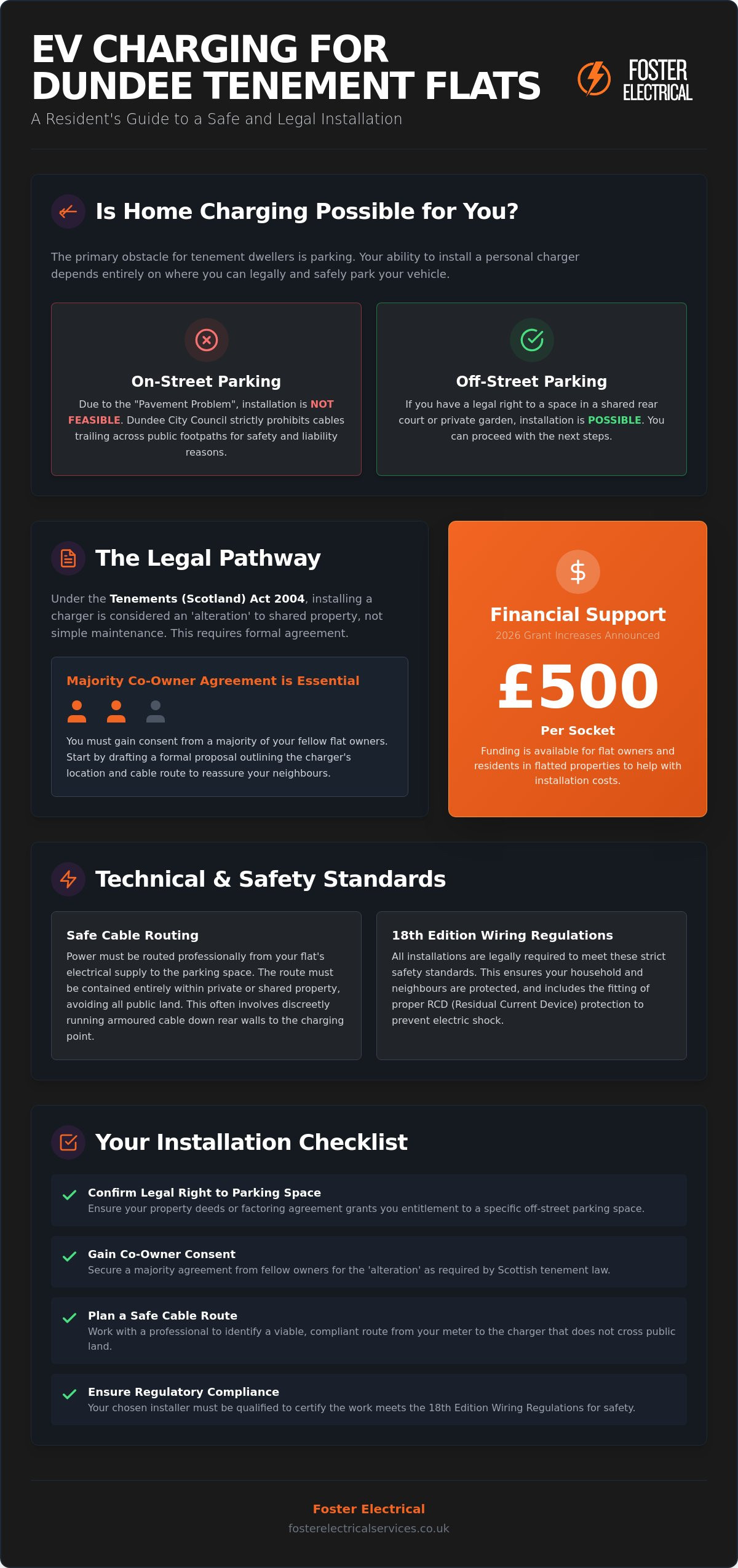
If your vehicle is parked on the street, the logistics of an ev charger for tenement flat dundee become significantly more complex. For those without a dedicated rear court, the reality is that a personal ev charger for tenement flat dundee might not be feasible until local council policy on pavement gullies changes. While public hubs like the Whitfield Centre or the ultra-rapid hub at Myrekirk, which opened in July 2024, offer vital infrastructure, they lack the convenience of waking up to a full battery. For most, these hubs remain a secondary choice to the comfort of home charging.
The “Pavement Problem” in Tayside
Dundee City Council maintains a very strict stance on public safety regarding our streets. They do not permit cables to trail across public footpaths, even if they are covered by a “trip hazard” mat or protector. This isn’t just about tidiness; it’s a matter of liability. Should a neighbour or passerby fall, the legal responsibility rests entirely on the flat owner. We often get asked about “cable gullies” or channels cut into the pavement to house a wire. Currently, these are restricted on public Dundee pavements, as the council prioritises unobstructed pedestrian access over individual charging needs.
When is an Installation Actually Possible?
We believe in being straightforward with our neighbours. For an installation to move forward, your property must meet three specific criteria. First, you need a legal entitlement to a specific parking space, typically found in a shared rear court or a private garden. Second, there must be a viable cable route from your flat to the charger that does not cross public land. Finally, the proximity to your property’s electrical supply is vital. If your flat is on the top floor and the garden is far away, the technical challenge increases. Understanding your rights under the Tenements (Scotland) Act 2004 is a good starting point for knowing what you can and cannot do with shared building fabric. If you have off-street access, we can help you explore our range of services to find a safe, compliant way to bring power to your car.
Navigating Permissions and the Tenements (Scotland) Act 2004
Installing an ev charger for tenement flat dundee is not just a technical task; it is a legal one. Under the Tenements (Scotland) Act 2004, adding a charging point to a shared wall or garden is classified as an ‘alteration’ rather than simple maintenance. This distinction is vital. Whilst maintaining a roof is a shared obligation, installing new electrical infrastructure is a personal choice that affects communal property. We always recommend starting with a friendly conversation, but understanding the formal rules ensures your investment is protected from future disputes.
The current legal landscape is shifting. A Scottish Law Commission report published in December 2025 has highlighted the need for clearer rules regarding owners’ associations, which may eventually lead to a more defined “Right to Charge.” For now, you must rely on the existing framework. According to Dundee City Council EV charging guidance, you must have a clear legal right to your parking space before any work can be considered. Without this, the council or your co-owners can rightfully object to the installation, even if the work is already complete.
Gaining Consent from Co-owners
We suggest drafting a formal proposal for your neighbours that outlines exactly where the charger will sit and how the cables will be routed. Many people worry about electricity theft or unsightly wires. You can reassure them by explaining that the charger is locked to your personal account and that we use neat, professional trunking to match the building’s character. If your title deeds are silent on the matter, the Tenement Management Scheme (TMS) usually dictates that a majority vote amongst owners is enough to proceed with works in communal areas.
Dealing with Factored Buildings in Dundee
If your block is managed by a factor such as James Gibb or Ross & Liddell, the process for an ev charger for tenement flat dundee is slightly more structured. Factors generally require a detailed technical drawing and proof that the installer is fully certified. We take pride in providing the necessary documentation to make this stage as smooth as possible. Securing written permission from your factor before any work commences is non-negotiable. It protects you and ensures the work meets the high standards expected in shared residential spaces. If you are unsure how to start this conversation, you can get in touch with us for a bit of friendly guidance on the technical details they will need to see.
Technical Solutions for Flats with Off-Street Parking
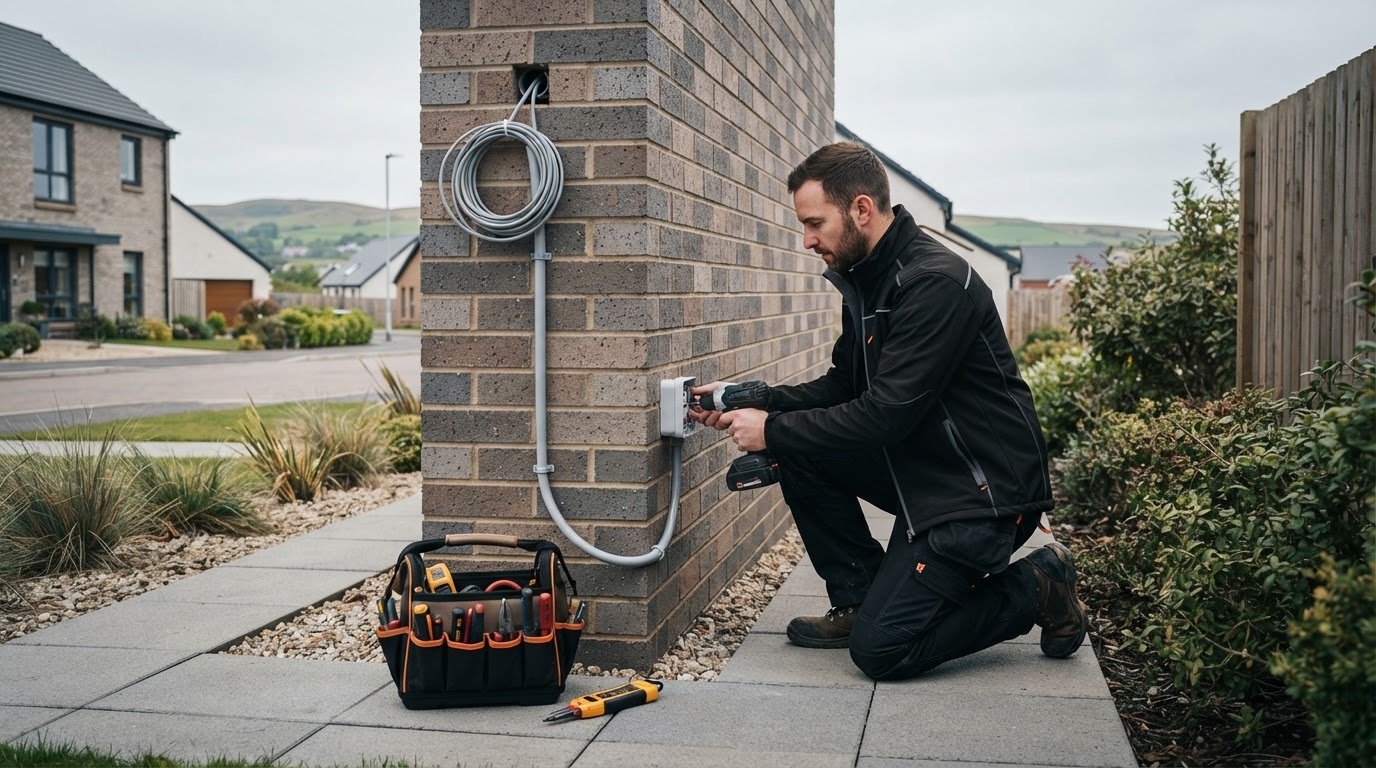
While many feel that living on the second or third floor makes home charging impossible, the reality is that a clever technical approach can bridge the gap. For an ev charger for tenement flat dundee residents can rely on, the secret lies in the cabling and the route it takes. We often install dedicated circuits that run from a flat’s internal board, down the external building fabric, and into the rear court. This requires a meticulous eye for detail to ensure the run is both safe and visually discreet, respecting the character of our city’s traditional architecture—a challenge also met by specialists like Empire Electrical Innovations who focus on bespoke green energy designs.
We always use Steel Wire Armoured (SWA) cabling for these external runs across gardens or drying greens. This cabling is designed to withstand the elements and accidental knocks from garden tools or foot traffic. To keep the installation secure, we may install a lockable outdoor enclosure or a secondary consumer unit near the charging point. Load management is another vital consideration. Tenement electrical supplies can be limited, so we use smart technology to ensure your car doesn’t trip the main fuse when you are using the cooker or the shower. It is a matter of balance and protecting your home’s electrical integrity.
The Rear-Court Installation Strategy
- Step 1: We identify the shortest, most discreet cable route from your meter or consumer unit to the parking area, avoiding any public land.
- Step 2: We assess your existing electrical setup to determine if a Consumer Unit Upgrade is necessary to handle the high demand of an EV charger safely.
- Step 3: We mount the charger securely on a sturdy brick wall or a bespoke metal pedestal if your parking space is situated away from the building.
Smart Chargers for Shared Spaces
Safety Standards and Avoiding “Cable Chaos”
Safety is never just a checkbox for us; it is a promise we make to you, your family, and your neighbours. When installing an ev charger for tenement flat dundee, we strictly adhere to the 18th Edition Wiring Regulations to ensure every component is fit for purpose. This is particularly important when dealing with the historic fabric of Dundee’s stone buildings. We take great care to preserve the structural integrity of these properties, ensuring that any drilling or fixing is done with the precision and respect that a traditional building deserves.
A significant part of our work involves managing complex earthing arrangements. Depending on your building’s setup, we must navigate the differences between PME and TT earthing systems to prevent metalwork from becoming live during a fault. This technical diligence prevents electric shocks and ensures your vehicle’s sensitive electronics are protected. We treat your environment with the same care we would our own homes, prioritising a tidy, professional finish that stands the test of time and keeps the communal areas safe for everyone.
Professional Cable Management
We believe that a job well done should be seen but not heard; or in the case of cabling, barely seen at all. By using galvanised steel conduit, we protect your power supply from the Scottish weather and any potential vandalism. We often route these conduits along boundary walls or discreet architectural lines to minimise the visual impact on the communal garden. A Residual Current Device (RCD) acts as a high-speed safety switch that cuts power if a leak is detected, and the 2026 standards now mandate specific Type B protection to safely manage the electrical feedback common in modern vehicle batteries.
The Danger of DIY and Uncertified Installs
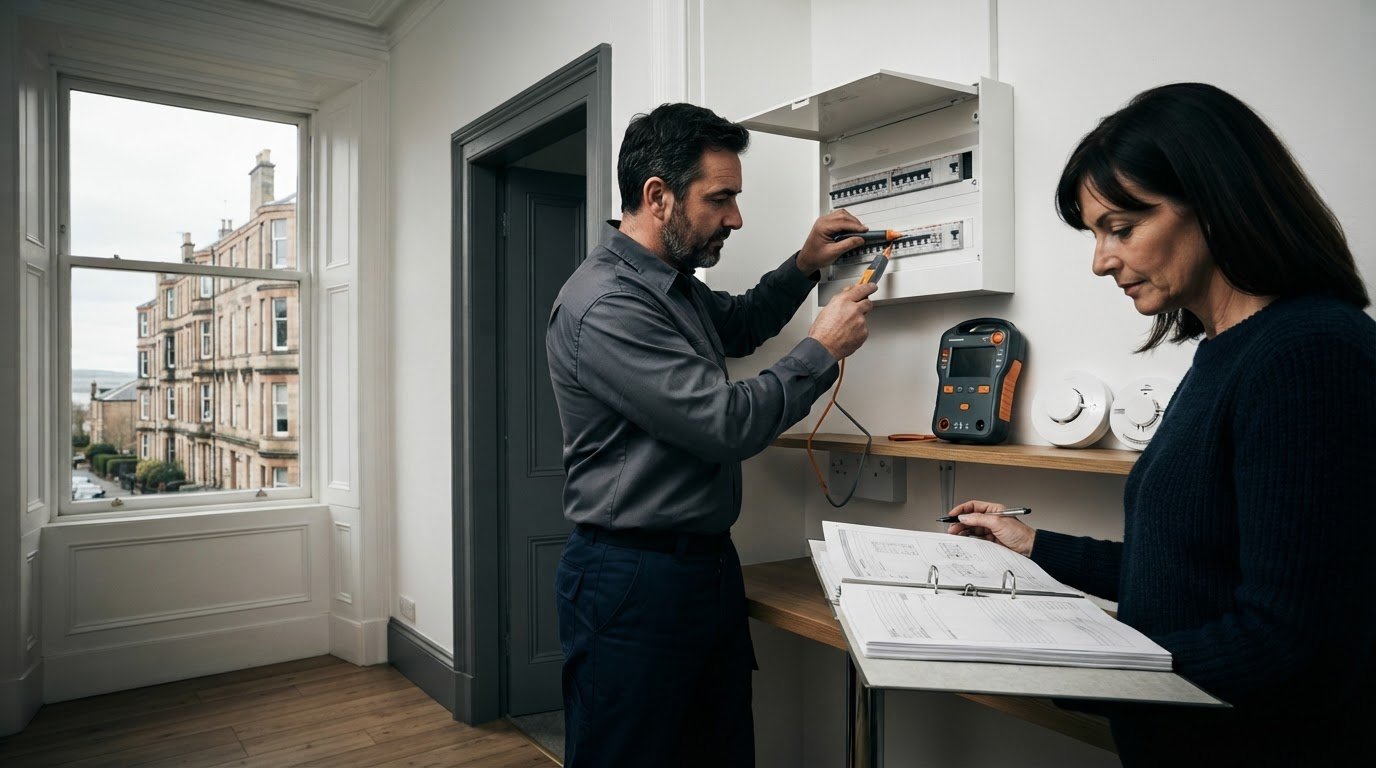
It’s tempting to look for a quick fix, but “extension lead charging” from a tenement window is a serious fire risk that we strongly advise against. Standard domestic sockets aren’t designed to run at full capacity for several hours, and a trailing lead is an invitation for disaster. Beyond the physical danger, uncertified work can have heavy legal consequences in a shared building, potentially voiding your home insurance or leading to disputes with co-owners. When planning an ev charger for tenement flat dundee, cutting corners simply isn’t an option. Every major new circuit we install is accompanied by a full Electrical Installation Condition Report (EICR) to prove the work is safe. If you want to ensure your home meets these rigorous standards, you can book a professional safety assessment with our team today.
Why Local Expertise Matters for Dundee Flat Installs
Dundee’s tenements are a source of local pride, but their thick sandstone walls and shared closes weren’t designed with modern technology in mind. We have spent years working within these historic blocks, from the West End to Broughty Ferry, and we understand the structural nuances that national firms often overlook. When you search for an ev charger for tenement flat dundee, you might find that many large, anonymous corporations refuse the work. They often prefer the simplicity of a modern driveway. We take a different view. We see these complex installations as a vital service to our neighbours, helping our city move toward a greener future without compromising the integrity of our traditional buildings.
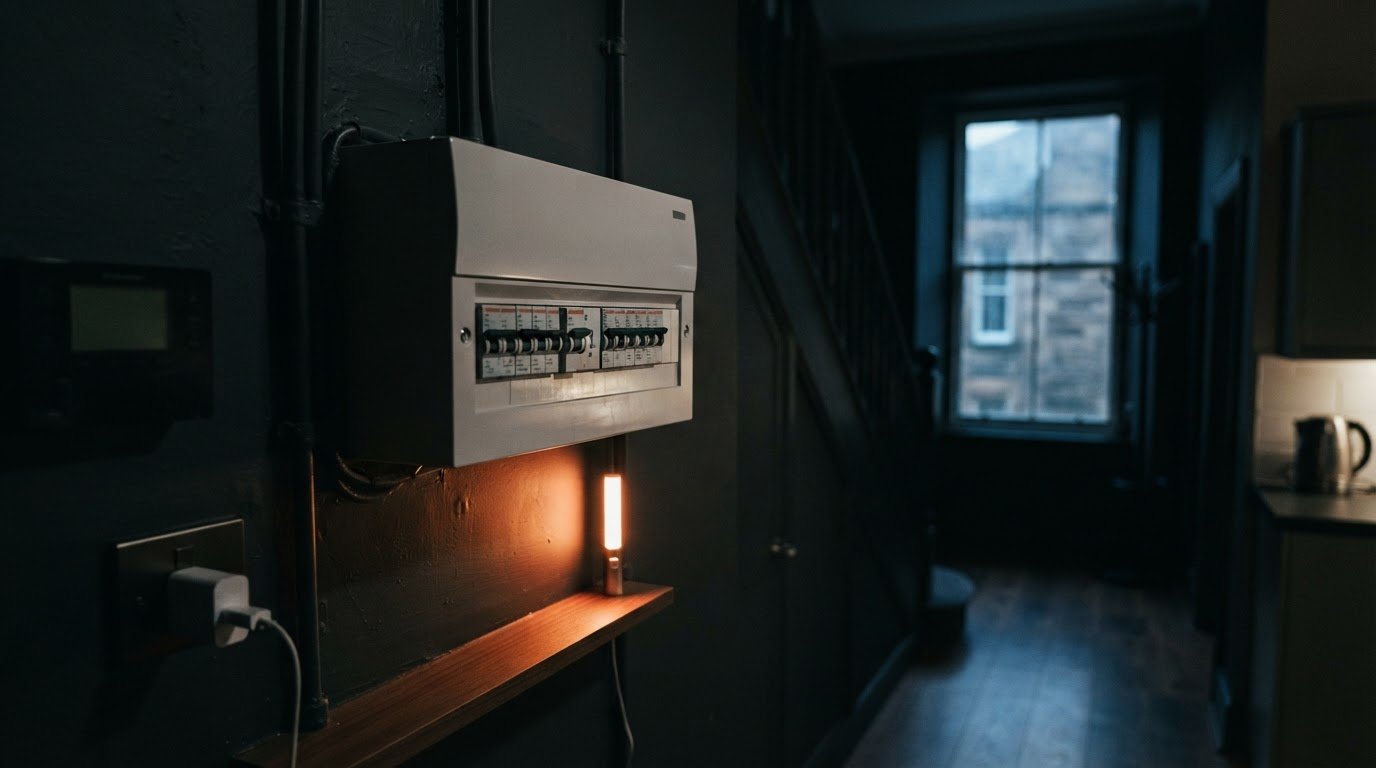
One of the most significant technical gaps in these projects involves the existing power supply. Modern consumer unit upgrades are frequently the unsung heroes of a successful tenement install. Without a robust, up-to-date board, running a dedicated line from an upper-floor flat to a rear court parking space isn’t just a challenge; it can be a safety risk. We specialise in these upgrades, ensuring your home’s electrical foundation is strong enough to handle the steady draw of a vehicle charger alongside your daily appliances. It is this level of local, technical insight that ensures your project meets all Dundee City Council building standards from the very start.
A Protective Guardian of Your Home
We approach every shared-space installation with a “neighbour-first” mindset. This means we are meticulous about tidiness in the communal close and deeply respectful of the garden spaces that everyone in the block enjoys. We don’t believe in messy trunking or haphazard cable runs. Instead, we provide the complete certification package that your insurance provider and building factor will insist upon. This documentation is your proof that the work is safe, legal, and professionally executed. You can learn more about our EV Charger Installation Dundee services and our commitment to protecting the character of your property.
Next Steps for Dundee Flat Owners
The path to home charging begins with a straightforward conversation. We recommend booking a technical site survey so we can assess the specific feasibility of your flat and parking arrangement. We will look for the most discreet, efficient cable routes and check your current electrical capacity to ensure a safe installation. Following our visit, we provide a transparent, no-obligation quote with no hidden fees or opaque pricing. We are proud of our reputation for honesty and diligence. To see how else we can support your home’s safety, feel free to explore our full range of Electrical Services for local residents.
Empowering Your Electric Future in Dundee
Transitioning to an electric vehicle shouldn’t feel like a compromise just because you live in one of Dundee’s historic tenements. We have explored how understanding the legal framework of the Tenements (Scotland) Act 2004 and identifying safe, off-street cable routes can turn a complex puzzle into a practical reality. By prioritising professional standards and 18th Edition compliance, you can ensure your home remains safe whilst enjoying the convenience of private charging. It’s about bridging the gap between our city’s architectural heritage and the requirements of modern transport.
Finding a reliable way to install an ev charger for tenement flat dundee requires more than just technical skill; it needs a neighbour who understands our local building fabric. As Dundee-based local experts and specialists in complex tenement rewires, we are here to provide the honest, diligent service you deserve. We are fully insured and committed to the highest standards of execution. We invite you to Request a Tenement EV Installation Survey from Foster Electrical to assess your property’s specific needs and receive a transparent plan for your home. Your journey toward a full battery starts with a simple, professional conversation.
Frequently Asked Questions
Can I run a charging cable from my flat window to the street in Dundee?
No, you cannot run a cable from a window across a public pavement. Dundee City Council is very clear that trailing cables are a safety hazard and a liability risk for the flat owner. If your car is parked on the street, you will need to use the city’s public charging infrastructure instead of a private lead.
Do I need permission from my neighbours to install an EV charger in a shared garden?
Yes, you typically need a majority agreement from your co-owners. Because the work involves altering the building fabric or using communal land, the Tenements (Scotland) Act 2004 usually requires you to consult with the other owners. We recommend checking your title deeds first to see if they specify different rules for your particular block.
What if my Dundee tenement doesn’t have off-street parking?
If you lack off-street parking, a personal ev charger for tenement flat dundee installation isn’t currently possible. You should instead make use of the public chargers available across the city. This includes high-power hubs like the one at Myrekirk Roundabout, which provides 24 bays for rapid charging to keep you moving without a home socket.
Is there any Scottish Government funding for EV chargers in flats?
Yes, there are several grants available for those in flatted properties. You can access up to £500 through the EV Chargepoint Grant, and there is also a specific Factored Development Charge Point Fund. These are designed to help overcome the higher costs often associated with installing ev charger for tenement flat dundee systems in shared residential buildings.
How much does it cost to install an EV charger in a tenement flat?
The total investment for a charger varies based on several technical factors. The length of the cable run from your flat to the parking space and whether your electrical board needs an upgrade are the two main drivers of the final price. We always provide a clear, itemised quote after a site survey so you know exactly what the work entails.
Will a tenement EV charger installation affect my property’s EICR?
Yes, adding a new circuit for a charger will be documented in your next Electrical Installation Condition Report (EICR). This is actually a benefit, as it proves the work was carried out to the 18th Edition safety standards. It ensures your property remains compliant and your insurance provider is kept fully up to date with the changes.
Can I install a charger if I am a tenant in a Dundee flat?
Tenants can certainly have a charger installed, provided they have written permission from their landlord. In fact, the £500 grant for flat dwellers is specifically extended to those who rent their homes. It is a great way to add value to the property whilst making your own daily commute much more convenient.
What is the best EV charger for a shared parking area?
For shared parking areas, we recommend smart chargers that feature RFID card access or app-based locking. These security measures prevent unauthorised people from using your electricity. Choosing an untethered unit is also a popular choice for tenements, as it looks neater when not in use and reduces the risk of accidental damage in communal spaces.