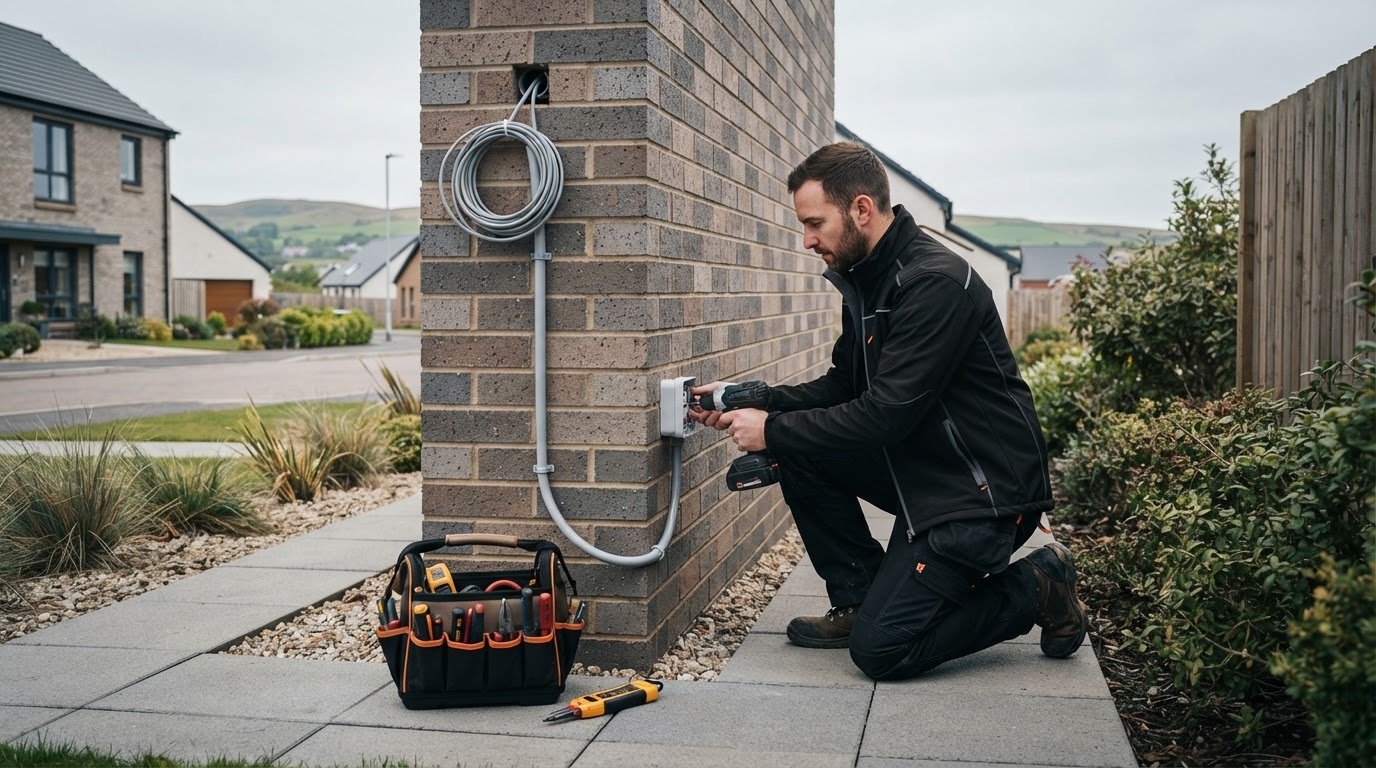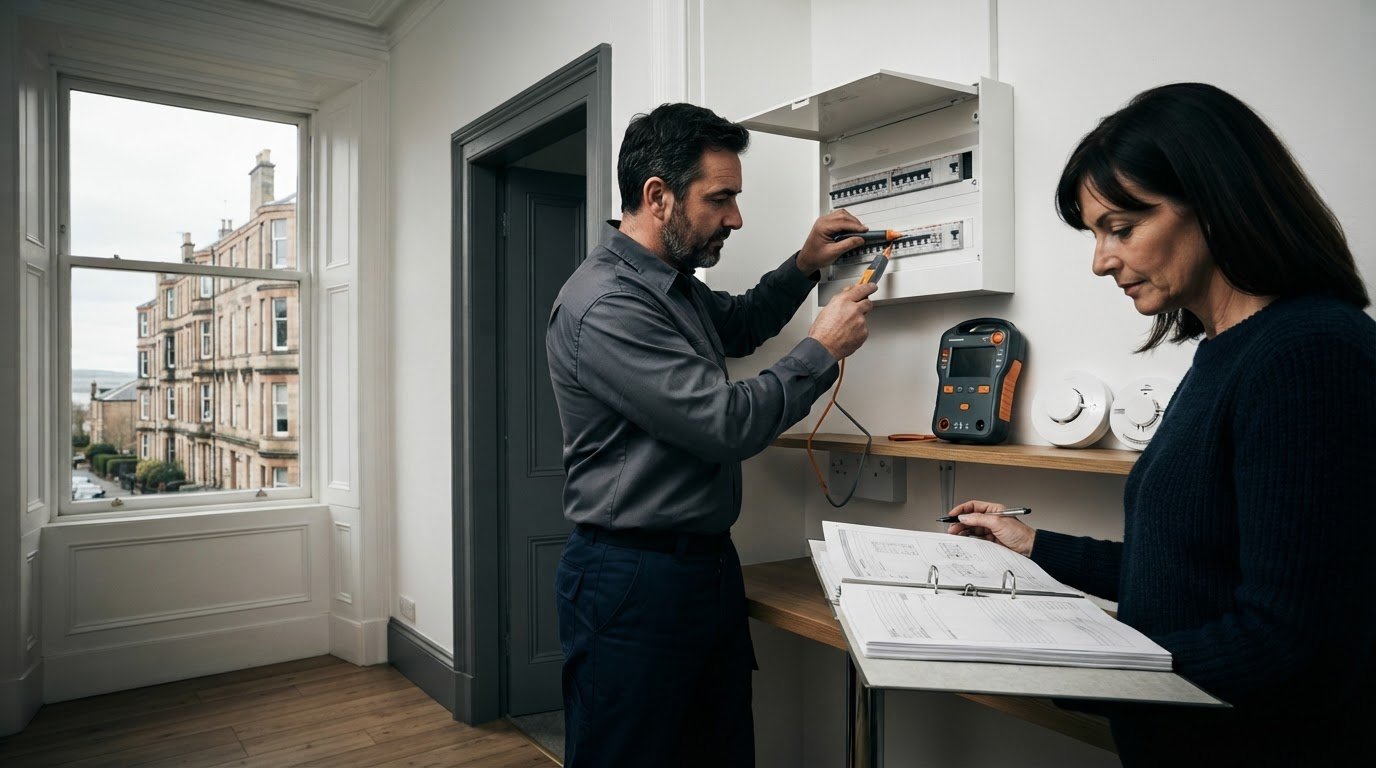
Most homeowners assume a full rewire means weeks of chaos, cold takeaways, and living out of a single lit room. The reality, when the work is properly planned and carried out by someone who genuinely respects your home, is far less dramatic than that.
It’s a fair concern, though. Wondering how long does a house rewire take is usually the first question people ask, and rightly so. You’ve got work calls to make, a household to run, and a home you’d rather not see turned upside down for longer than necessary. The disruption is real, and any honest electrician will tell you so.
This guide gives you a clear, straightforward picture of what to expect. We’ll walk you through realistic timelines for different property sizes, explain the difference between first and second fix so the process actually makes sense, and cover the key factors that can shorten or extend the job. By the end, you’ll know exactly what a well-organised rewire looks like from day one to the final EICR certificate, and what to look for in a local electrician who’ll treat your home with the care it deserves.
Key Takeaways
- Understanding how long does a house rewire take depends heavily on your property’s size, age, and construction — a small flat may take as little as two days, whilst a larger family home can run to ten working days or more.
- A rewire happens in two distinct stages — first fix and second fix — and knowing what each involves helps you plan your household routine around the work rather than against it.
- Several factors within your control, including clearing rooms in advance and agreeing socket positions before work begins, can meaningfully reduce the number of days an electrician spends on site.
- Older properties with solid stone walls or original wiring layouts present unique challenges that a locally experienced electrician will be far better placed to handle efficiently and safely.
- The job isn’t complete until a certified EICR is issued — this document is your proof that the installation meets current 18th Edition standards and protects your home for years to come.
Estimating the Timeline: How Many Days for a Full Rewire?
The honest answer is that there’s no single figure that fits every home. Giving every property the same “one week” estimate is the kind of oversimplification that leaves homeowners either underprepared or unnecessarily anxious. How long does a house rewire take depends on the size of the property, the complexity of the existing installation, and the construction of the building itself. A realistic estimate respects those differences.
Typical Duration by Property Size
As a practical guide, here’s what experienced electricians working on Dundee and Angus properties typically plan for:
- 1 to 2 bedroom flat: A full circuit overhaul usually takes 2 to 4 working days. Fewer rooms, shorter cable runs, and a single consumer unit keep the scope manageable.
- 3 bedroom semi-detached: The most common job type. Expect 5 to 8 working days for a thorough, properly certified rewire. This accounts for upstairs and downstairs circuits, a new consumer unit, and all sockets and lighting positions.
- 4+ bedroom detached: Larger homes with more circuits, greater cable lengths, and potentially outbuildings or garages should be planned at 10 working days or more. Some complex properties run to 12 or 15 days without any corners being cut.
Partial rewires sit in a different category entirely. If you’re updating a single floor, replacing an ageing consumer unit, or addressing a specific fault area, the work can often be completed in 1 to 3 days, with far less disruption to the rest of the house.
Why We Estimate in Phases Rather Than Hours
Working days and calendar days aren’t the same thing. A job quoted at eight working days spans nearly two full calendar weeks once you account for weekends. That distinction matters when you’re planning childcare, working from home, or temporarily relocating.
Older properties add another layer of unpredictability. Dundee’s stone-built tenements and Victorian semis don’t give up their secrets easily. A solid stone wall that would take minutes to chase in a modern cavity-built home can take considerably longer when the material is harder and the original cable routes are irregular. Timber floorboards, particularly original ones, require careful lifting to avoid damage, and that takes time done properly.
We also factor in testing, certification, and a final walk-through at the end of every job. These aren’t optional extras; they’re the steps that result in a valid EICR certificate and a system you can rely on. Throughout the process, we organise the work so that power is restored to essential circuits each evening, meaning your kitchen, heating controls, and key sockets are live before we leave the site each day.
If you’d like to understand the full scope of what a rewire involves, our services page sets out exactly what we cover from first fix through to final certification.
Key Factors That Influence Your Property’s Rewiring Duration
The timeline estimates in the previous section are a solid starting point, but they’re built on a set of assumptions that won’t apply to every home. Several variables can compress or extend those figures meaningfully, and understanding them puts you in a far stronger position to plan realistically. How long does a house rewire take in your specific property depends on decisions you’ve already made, and some you haven’t made yet.
The Occupancy Variable: Lived-in vs. Empty
An empty property is a fundamentally different working environment. When a home is vacant, the first fix phase becomes a clean, uninterrupted process. Cables can be run, walls chased, and floorboards lifted without the daily ritual of protecting furniture, cordoning off rooms, and restoring safe access before the household settles in for the evening. That daily setup and pack-down isn’t trivial. In an occupied home, it adds meaningful time to every single working day.
As a practical rule, an occupied home takes roughly 30% longer than an empty one of equivalent size. For a family in a three-bedroom semi, that can translate to an extra day or two of labour. If temporarily relocating for a week is a realistic option, it’s worth considering seriously. The saving in labour time often offsets the cost of a short stay elsewhere, and the disruption to your household is concentrated rather than drawn out.
When moving out isn’t possible, we work methodically through the house room by room, maintaining a clear, powered safe zone for the family at all times. It requires more coordination, but it’s entirely manageable with proper planning agreed in advance.
Technical Complexity and Modern Upgrades
The scope of what you’re asking for matters just as much as the size of the property. Modern households have genuinely different electrical demands than homes did even fifteen years ago, and those demands add time to the second fix in particular.
- Socket count: A contemporary living standard typically requires significantly more double sockets per room than older installations provided. Each additional outlet is a relatively small task on its own, but across a full house, the cumulative time adds up during the second fix stage.
- Consumer unit upgrades: Integrating a new consumer unit upgrade into the rewire timeline is standard practice, but the specification of the board itself, including the number of ways and the type of RCD protection required, affects how long the installation and subsequent testing takes.
- Lighting complexity: A straightforward pendant in each room is quick. A kitchen with twelve downlights on two separate circuits, or a living room wired for smart lighting controls, is a different proposition entirely. Complex lighting layouts require more cable, more connections, and more careful testing.
- The “whilst you’re at it” additions: A rewire is the ideal moment to add EV charger cabling, data cabling for home networking, or outdoor power circuits. Each addition is far more cost-effective done now than as a standalone job later, but each one adds days to the programme. Agree these upfront so they’re costed and scheduled properly from the start.
Floor coverings also play a quiet but significant role. Lifting a fitted carpet carefully, preserving it for re-laying, takes considerably more time than working on bare floorboards. Solid stone walls, common in Dundee’s older tenements, require more effort to chase than modern timber-frame construction. None of these are reasons to cut corners; they’re simply honest reasons why a thorough survey before work begins is so important.
If you’d like to talk through the specific factors affecting your property before committing to a timeline, get in touch for a straightforward conversation about what your rewire realistically involves.
The Two-Stage Process: Understanding First Fix and Second Fix
A rewire isn’t one continuous event. It’s two distinct phases of work, separated by a clear boundary, and understanding what happens in each one transforms the experience from something mysterious and stressful into something you can genuinely plan around. Knowing what each stage looks like, and how long it takes, is part of answering how long does a house rewire take in any meaningful way.
First Fix: The Foundation of Your New System
First fix is where the structural work happens. Floorboards are lifted, walls are chased, and new cable is threaded through the bones of your home. It’s the longest phase by some distance, typically accounting for 60 to 70% of the total project time. For a three-bedroom semi, that could mean four or five days of what looks, honestly, like controlled disruption.
What you’ll see during this stage:
- Floorboards lifted to route cables between floors
- Shallow channels chased into plasterwork for socket and switch drops
- Cables left protruding from walls and ceilings at every outlet position
- A consumer unit housing that’s in place but not yet energised
The dust and noise are real. We won’t pretend otherwise. But the single biggest thing you can do to keep this phase moving efficiently is to have furniture cleared from working areas before we arrive, and carpets lifted where you’re able. Every hour we spend moving a wardrobe or carefully rolling a fitted carpet is an hour not spent running cable. Preparation on your part genuinely compresses the timeline.
Second Fix and Final Testing
Second fix is where the house starts to look like itself again. This stage typically runs across the final two to three days of the project. Sockets are fitted to their back boxes, light switches are connected, your chosen light fittings are installed, and the consumer unit is wired, labelled, and made live. If you’ve been living with bare cables protruding from walls, this is the phase where that changes quickly.
The final day is reserved entirely for testing and commissioning. Every circuit is checked methodically against the requirements of the 18th Edition wiring regulations. We’re testing polarity, earth continuity, insulation resistance, and RCD response times, not as a formality, but because this is the work that determines whether your installation is genuinely safe rather than just visually complete.
Once testing is satisfied, we issue the EICR certificate and submit the Building Regulations notification. That paperwork isn’t a bureaucratic afterthought. It’s your legal proof that the installation meets current standards, and it’s the document your insurer, your mortgage lender, and any future buyer will want to see. A rewire without it isn’t finished, regardless of how tidy the sockets look.
For a full picture of what we cover across both stages, our services page sets out the complete scope of our rewiring work.

How to Minimise Disruption and Speed Up the Rewiring Process
The single most effective thing you can do to reduce how long a house rewire takes isn’t something an electrician does. It’s something you do before we arrive. Preparation on your part directly translates into hours saved on site, and hours saved means fewer days of disruption to your household. This isn’t a polite suggestion; it’s genuinely one of the most practical levers available to you.
Dust management is the other side of that coin. Professional-grade extraction equipment and protective sheeting make a meaningful difference to how your home looks at the end of each working day. We use both as standard, not because it’s expected, but because walking into someone’s home and leaving it worse than we found it isn’t how we work. That said, no extraction system eliminates all dust during chasing and drilling. Removing soft furnishings and ornaments from working rooms before we start is a simple step that protects your belongings and keeps the working environment clear.
The pre-start walk-through is where the real groundwork happens. Before a single floorboard is lifted, we walk through the property with you, confirming every socket position, switch location, and lighting point. Changes made during the first fix phase cost time; changes agreed before it cost nothing. If you’re unsure about socket heights or want USB outlets in specific rooms, that conversation belongs in the walk-through, not on day three.
A Checklist for Homeowners
Coming to the job prepared makes a tangible difference to the pace of work. In the days before we arrive:
- Move furniture to the centre of the room or into a designated storage area. We can work around a chest of drawers pushed to the middle of a bedroom; we can’t efficiently chase a wall behind a wardrobe that’s still fully loaded.
- Lift carpets where you’re able. Accessible floorboards from day one removes a significant time cost from the first fix phase. If you’re unsure which areas need access, ask us during the survey.
- Arrange for pets and children to be away from the property during the noisiest, dustiest days. The first two days of a full rewire are typically the most disruptive. Planning around those specifically is far more manageable than trying to keep the whole project child-friendly throughout.
Effective Communication with Your Electrician
A clear brief from the outset prevents the kind of mid-project delays that nobody wants. When you’ve reviewed the full scope of what a full property rewire involves, you arrive at the start date with decisions already made rather than questions still open. That clarity keeps the programme moving.
We operate with a single point of contact throughout the job. You’ll know who to call, and you’ll get a straight answer. Daily progress updates mean you’re never left guessing what’s happening or when power will be restored to a particular area. It’s a simple thing, but it removes an enormous amount of anxiety from the process.
Ensure access to the consumer unit and the water and gas bonding points is clear from day one. These aren’t areas we can work around. If they’re behind stored items or in a cluttered cupboard, sorting that in advance saves time on the first morning when the work needs to begin promptly.
If you’d like to talk through your specific property before work begins, get in touch and we’ll arrange a straightforward pre-start conversation at a time that suits you.
Why a Professional Local Electrician Ensures a Smooth Rewire
There’s a meaningful difference between an electrician who works in your area and one who genuinely knows it. Dundee’s stone-built tenements, Angus farmhouses, and Victorian semis each present their own set of challenges that no amount of general experience fully prepares you for. Solid sandstone walls behave differently to modern blockwork. Original timber joists in a pre-war property require a different approach to cable routing than a 1980s cavity-built home. A local electrician who has worked through dozens of these properties carries that knowledge into your job from day one, rather than learning it at your expense.
That local familiarity also shapes how long does a house rewire take in practice. An electrician who’s never encountered a Dundee tenement’s original wiring layout will spend time on site working things out. One who has will move through the first fix phase with a confidence that keeps the programme on track.
Accountability matters too. A local business lives and works in the same community as its clients. Reputation isn’t an abstract marketing concept; it’s the reason the phone rings. That accountability produces a different quality of care than you’ll typically get from a large contractor dispatching unfamiliar engineers to jobs they’ve never seen before.
The Foster Electrical Standards
We operate a clean-as-we-go policy throughout every rewire. Dust sheets are laid before work begins, professional extraction runs during chasing and drilling, and each working area is tidied before we leave the site each evening. Your home is a private space, not a building site, and we treat it accordingly.
Restoring essential power circuits at the end of every working day isn’t optional for us; it’s a commitment we make before the job starts. Your kitchen, heating controls, and key sockets are live before we leave. We’re also fully insured, which protects you as well as us throughout the process.
Beyond the Rewire: Ongoing Support
The EICR certificate we issue at the end of every rewire is a document with a long working life. It’s what your insurer will ask for, what a future buyer’s solicitor will request, and what demonstrates your installation meets current 18th Edition standards. We provide clear, complete documentation as standard.
A rewire also creates the ideal infrastructure for future upgrades. Our full range of services includes EV charger installation, data cabling, and outdoor power circuits, all of which integrate far more efficiently into a newly rewired property than a tired, ageing one. Planning those additions now, rather than returning to the job later, saves time and cost.
Ready to get a clear picture of what your rewire involves? Contact Foster Electrical for a bespoke rewire quote and we’ll give you a straightforward, honest assessment of your property’s specific requirements.
Plan Your Rewire with Confidence and Get It Done Right
How long does a house rewire take comes down to a straightforward set of variables: your property’s size, its age and construction, whether you’re in or out during the work, and the scope of what you’re asking for. A small flat might be complete in two days; a larger family home could run to ten or more. What matters most is that the timeline is honest, the work is thorough, and the EICR certificate at the end means something.
The difference between a smooth rewire and a stressful one usually isn’t the job itself. It’s the planning, the communication, and the care taken by the people doing the work. As Dundee-based specialists in minimal-disruption domestic rewires, fully compliant with 18th Edition Wiring Regulations, we treat every property with the same respect we’d want shown to our own.
If you’re ready to move from uncertainty to a clear, honest plan, get in touch with Foster Electrical to arrange your rewire consultation. We’ll give you a straightforward assessment and a timeline you can actually plan around.
Frequently Asked Questions About House Rewiring
Can I stay in my house whilst it is being rewired?
Yes, you can stay in your home during a rewire, and many homeowners do. It requires more coordination from everyone involved, but it’s entirely manageable with proper planning. We work room by room, maintaining a powered safe zone for your household at all times, and essential circuits including your kitchen and heating controls are restored before we leave each evening.
The honest caveat is that an occupied home takes longer than an empty one. The daily setup, protection of furniture, and end-of-day tidying add time to every working day. If temporarily relocating for the noisiest first few days is an option, it’s worth considering seriously.
Will a house rewire cause a lot of mess and damage to my wallpaper?
Some disturbance to decorative surfaces is unavoidable. Chasing walls for cable drops and lifting floorboards to route cables between floors will leave marks that need making good afterwards. Wallpaper directly over a chased channel will need repairing or replacing in those specific areas. We use professional dust extraction and protective sheeting throughout, which significantly limits the spread of debris beyond the immediate working area.
Most homeowners treat a rewire as the natural moment to redecorate. The making-good work after first fix is the ideal starting point for fresh plaster and new wallpaper, and the result is a home that looks better than it did before the work began.
Do I need to have my house rewired if I am just replacing the fuse board?
Not necessarily. A consumer unit upgrade is a standalone job that doesn’t automatically require a full rewire. If your existing wiring is in sound condition and passes an EICR inspection, upgrading the board to modern RCD protection is a perfectly valid and far less disruptive option. The two jobs are related but distinct.
Where an EICR reveals that the wiring itself is degraded, unsafe, or non-compliant, a rewire becomes the right course of action. A thorough inspection before any work is agreed will tell you clearly which situation applies to your property, so you’re not spending money unnecessarily.
How long will I be without electricity during the project?
You won’t be without power for the entire duration of the rewire. The main isolation happens at specific points during the first fix phase, typically for a few hours at a time whilst the consumer unit is worked on or circuits are being transferred. We plan these outages in advance so you can prepare, and we restore essential circuits each evening before leaving site.
Complete loss of power for a full working day is avoidable with careful sequencing. We’ll always discuss the planned isolation periods with you beforehand so there are no surprises, and so you can arrange to be out of the house during the most disruptive windows if that suits your household better.
Does a full rewire include new sockets and light switches?
Yes. A full rewire replaces all the wiring throughout the property and includes new back boxes, sockets, light switches, and ceiling roses as standard. The fittings themselves, meaning the style and finish of sockets and switches, are agreed with you before work begins so the result suits your home rather than defaulting to a generic choice.
Light fittings such as pendants or downlights are typically supplied by the homeowner and fitted during second fix, though we can advise on compatibility. Any additional requirements, extra sockets, USB outlets, or specific lighting circuits, are far more cost-effective agreed upfront than added mid-project.
What happens if the electricians find more problems once they start?
It happens, particularly in older properties where the original wiring has been added to over the decades by different hands. A thorough pre-start survey reduces surprises significantly, but once floorboards are lifted and walls opened up, additional issues can come to light. When they do, we stop, explain clearly what we’ve found, and give you an honest assessment of the options before any additional work is carried out.
You’ll never find unexpected charges appearing without a conversation first. That kind of transparency is simply how we work. In most cases, addressing an additional issue whilst the property is already open is considerably more straightforward and less costly than returning to it later as a separate job.
Will I get a safety certificate once the rewire is finished?
Yes, absolutely. Every completed rewire is followed by a full EICR inspection and test, and we issue the certificate once every circuit has been verified against current 18th Edition Wiring Regulations. We also submit the Building Regulations notification, which is a legal requirement for rewiring work in Scotland. Both documents are yours to keep.
This paperwork matters well beyond the day the work is finished. Your insurer, your mortgage lender, and any future buyer’s solicitor will want to see it. A rewire without a valid certificate isn’t a finished job, regardless of how the installation looks, and we don’t consider our work complete until that documentation is in your hands.
How often should a house be rewired in the UK?
There’s no fixed legal interval, but the general guidance from electrical industry bodies is that a domestic installation should be inspected every ten years, or at every change of occupancy. A full rewire is typically considered when an EICR reveals the installation has deteriorated beyond safe repair, or when the wiring is so outdated that it can’t support modern electrical demands safely.
How long does a house rewire take to become necessary depends largely on the age and history of the installation. Properties with original rubber-insulated wiring, aluminium cabling, or no RCD protection are the most common candidates. An EICR is the right starting point if you’re unsure about the condition of your own installation.