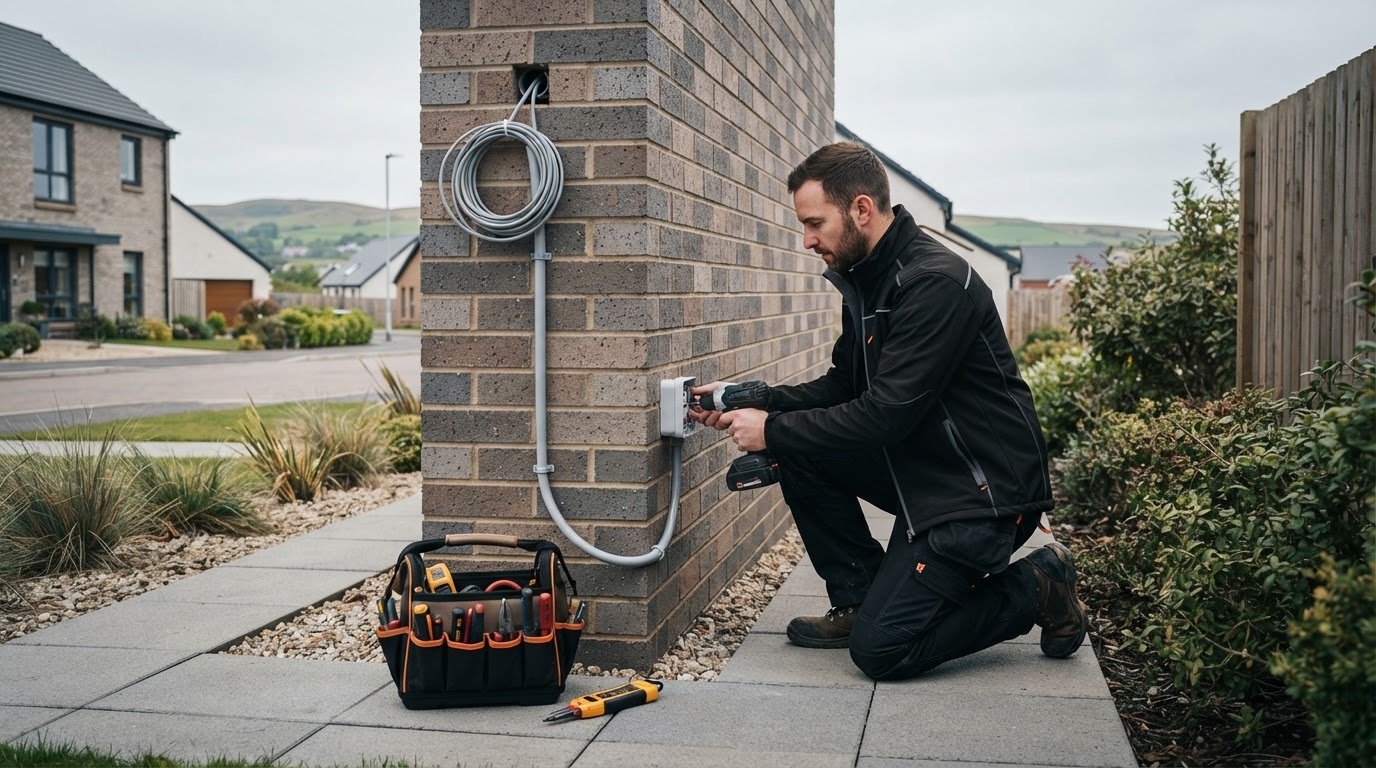
Your home insurance policy might be worth less than the paper it’s printed on if your electrical system hasn’t kept pace with Scottish law. Many people still believe that strict rules only apply to landlords, but the reality is that scottish electrical safety regulations for homeowners have changed significantly to ensure every household is protected. If your smoke alarms aren’t talking to each other or your consumer unit is a relic from the past, you aren’t just risking a safety hazard; you’re potentially facing non-compliance. We know how frustrating it is to sift through confusing jargon whilst trying to figure out if you need a building warrant for a property rewire.
We believe you deserve the same peace of mind we’d want for our own families here in Dundee and across Angus. This guide cuts through the technical noise to show you exactly which measures are mandatory and which ones simply make good sense for a safe home in 2026. We’ll walk you through the current requirements for interlinked alarms, explain the “Tolerable Standard,” and provide a clear checklist to keep your property protected. It’s about moving from uncertainty to total confidence that your home is legal, insured, and above all, safe for those who live there.
Key Takeaways
- Learn how current scottish electrical safety regulations for homeowners differ from those in the rest of the UK, ensuring your property meets the strict requirements of the Building (Scotland) Act.
- Understand the specific placement rules for mandatory interlinked smoke and heat alarms to keep your family safe and ensure your home insurance remains valid.
- Discover why modern RCD protection and 18th Edition fuse board standards are essential for preventing domestic fires and maintaining a reliable power supply.
- Identify the clear signs that your home requires an EICR or a professional rewire, providing a straightforward path toward a certified and safe electrical system.
- Find out exactly when you must apply for a Building Warrant through your local council in Dundee or Angus before beginning any significant electrical renovations.
Understanding the Scottish Building Standards System for Residential Properties
The legal framework for your home’s wiring isn’t just a set of suggestions; it’s a statutory requirement anchored in the Building (Scotland) Act 2003. Whilst our neighbours in England follow “Part P” of their building regulations, we operate under a distinct Scottish Building Standards System. This system is designed specifically for our unique housing stock and climate. Understanding these scottish electrical safety regulations for homeowners is the first step toward ensuring your property remains legal and your insurance stays valid. Local authorities in Dundee and Angus take these rules seriously, overseeing compliance to keep our communities safe.
The Role of the Domestic Technical Handbook 2022-2026
For any electrician working in Tayside, the Domestic Technical Handbook is the definitive guide. Standard 4.5 is particularly crucial; it dictates that every electrical installation must be designed and constructed so that it doesn’t threaten the health and safety of the people in or around the building. These rules apply to all domestic properties, whether you live in a brand-new build in Perth or a traditional tenement in Dundee. A Mandatory Standard is the absolute minimum legal baseline for safety that every homeowner must meet. We never treat these as optional extras because they’re the foundation of a secure home environment.
Approved Certifiers vs. Local Authority Inspections
When you undertake significant work, such as Full Property Rewires or consumer unit upgrades, you’ll often need to prove compliance to your local council. You have two main paths. You can pay for a local authority inspection, which involves extra fees and waiting times, or you can hire a registered “Approved Certifier of Construction.” We take great pride in being accredited to provide this service. By choosing a qualified professional, you receive a Certificate of Construction that serves as permanent proof of safety for your property records. This document is vital when you come to sell your home or renew your insurance policy. We ensure every job meets these stringent Scottish benchmarks, giving you the peace of mind that comes from honest, diligent workmanship. Choosing a local expert means you avoid the bureaucratic hurdles of council inspections whilst knowing your home is in safe hands.
Mandatory Interlinked Smoke and Heat Alarms: 2026 Requirements
Since February 2022, the legal landscape for fire safety in Scotland has undergone a massive shift that applies to every single homeowner. It’s no longer just a requirement for landlords; every owner-occupied property must now meet the same high standards to ensure residents have the best possible chance of escape during an emergency. These scottish electrical safety regulations for homeowners were introduced following tragic data showing that 44 people died in residential fires in Scotland during 2020-21. To comply with the Building Standards Technical Handbook, your home must have a system where if one alarm sounds, they all sound. This interlinked approach ensures that a fire starting in the kitchen will immediately alert someone sleeping in a distant bedroom.
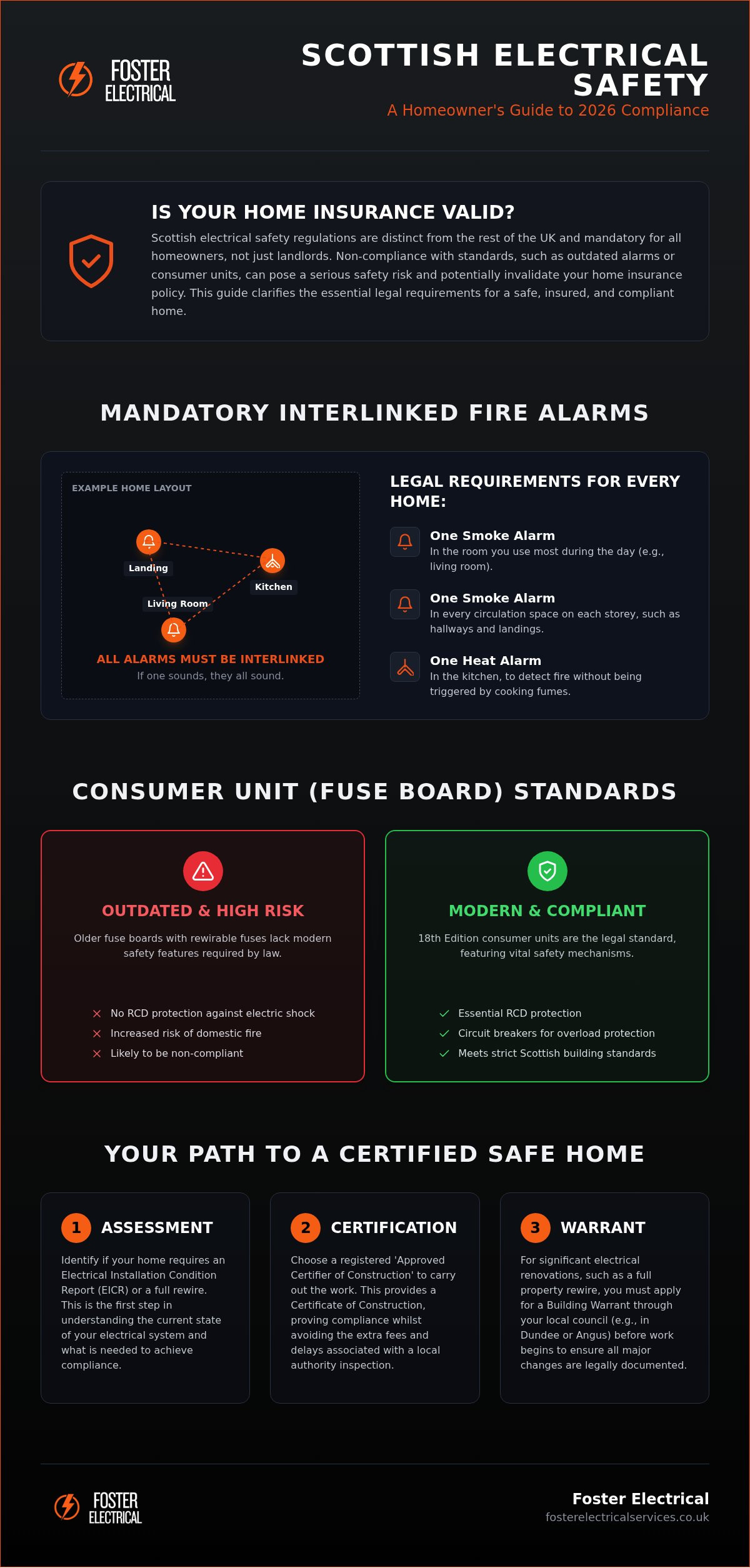
The specific requirements for your home’s layout are clear. You must have one smoke alarm in the room you use most during the daytime, typically the living room. Additionally, a smoke alarm is required in every “circulation space” on every floor, such as hallways and landings. The kitchen requires a dedicated heat alarm, which is less likely to be triggered by cooking fumes but highly sensitive to rapid temperature rises. All these units must be ceiling-mounted and interlinked to meet the current Scottish standard. Staying non-compliant in 2026 doesn’t just risk your safety; it could also lead to your home insurance being invalidated in the event of a claim.
Grade D1 vs. Grade F1 Systems: Which Do You Need?
When we discuss Interlinked Smoke & Heat Alarm Installation with our neighbours in Dundee, the choice usually comes down to two types of systems. Grade D1 systems are mains-powered with a back-up battery, whilst Grade F1 systems use tamper-proof, long-life lithium batteries. For older properties amongst the traditional streets of Tayside, we often recommend interlinking via radio frequency (RF). This modern method allows the alarms to communicate wirelessly, avoiding the need to lift floorboards or run unsightly cables through your home. It’s a clean, efficient way to bring a classic property up to modern safety benchmarks without the mess of a full rewire.
Carbon Monoxide Alarms and the 2026 Updates
Carbon monoxide (CO) safety is the final piece of the puzzle. You must have a CO alarm in any room with a fuel-burning appliance, such as a gas boiler, fire, or wood burner. Whilst the 2022 rules initially focused on smoke and heat, the 2026 best practice strongly encourages interlinking your CO alarms with the rest of your fire safety system. This creates a unified safety net for your family. We recommend testing your system monthly to ensure the interlink is still active and the batteries are healthy. If you’re unsure whether your current setup meets the 2026 requirements, we’re always happy to help you review your home’s safety with a friendly, professional eye.
Consumer Unit Standards and RCD Protection in Scotland
The consumer unit is the heart of your home’s electrical system, yet it’s often the most overlooked component. Since the introduction of the 18th Edition Wiring Regulations (Amendment 2), the standards for these “fuse boards” have tightened considerably to keep pace with modern living. Current scottish electrical safety regulations for homeowners now demand a level of protection that older units simply cannot provide. We often find that whilst homes in Dundee and Angus have modern appliances, they’re still powered by infrastructure designed for a different era. Upgrading this hub isn’t just about convenience; it’s about ensuring your property meets the statutory safety benchmarks required in 2026.
Residual Current Devices (RCDs) are the frontline defenders in your consumer unit. They’re designed to trip the power in a fraction of a second if they detect a leak, preventing fatal electric shocks and significantly reducing the risk of domestic fires. Whilst the Scottish Government has clear guidance on Mandatory Interlinked Smoke and Heat Alarms, those life-saving devices rely on a stable and correctly protected supply from your consumer unit. Investing in Consumer Unit Upgrades ensures that your entire safety network, from your kitchen sockets to your hallway alarms, is supported by modern circuitry.
SPD and AFDD: The New Safety Guardians
Modern units now include Surge Protection Devices (SPD) as standard. These protect your expensive home electronics and appliances from unpredictable grid spikes or lightning strikes. In an age where we rely on smart home tech and sensitive computers, SPDs protect your expensive home electronics from grid spikes that would otherwise fry delicate components. We’re also seeing the rise of Arc Fault Detection Devices (AFDD). These clever components can spot the tiny, sparking “arcs” caused by damaged cables or loose connections, which are a leading cause of fires in bedrooms and living areas. They catch the danger long before a traditional fuse would even notice a problem.
Signs Your Current Fuse Board is Non-Compliant
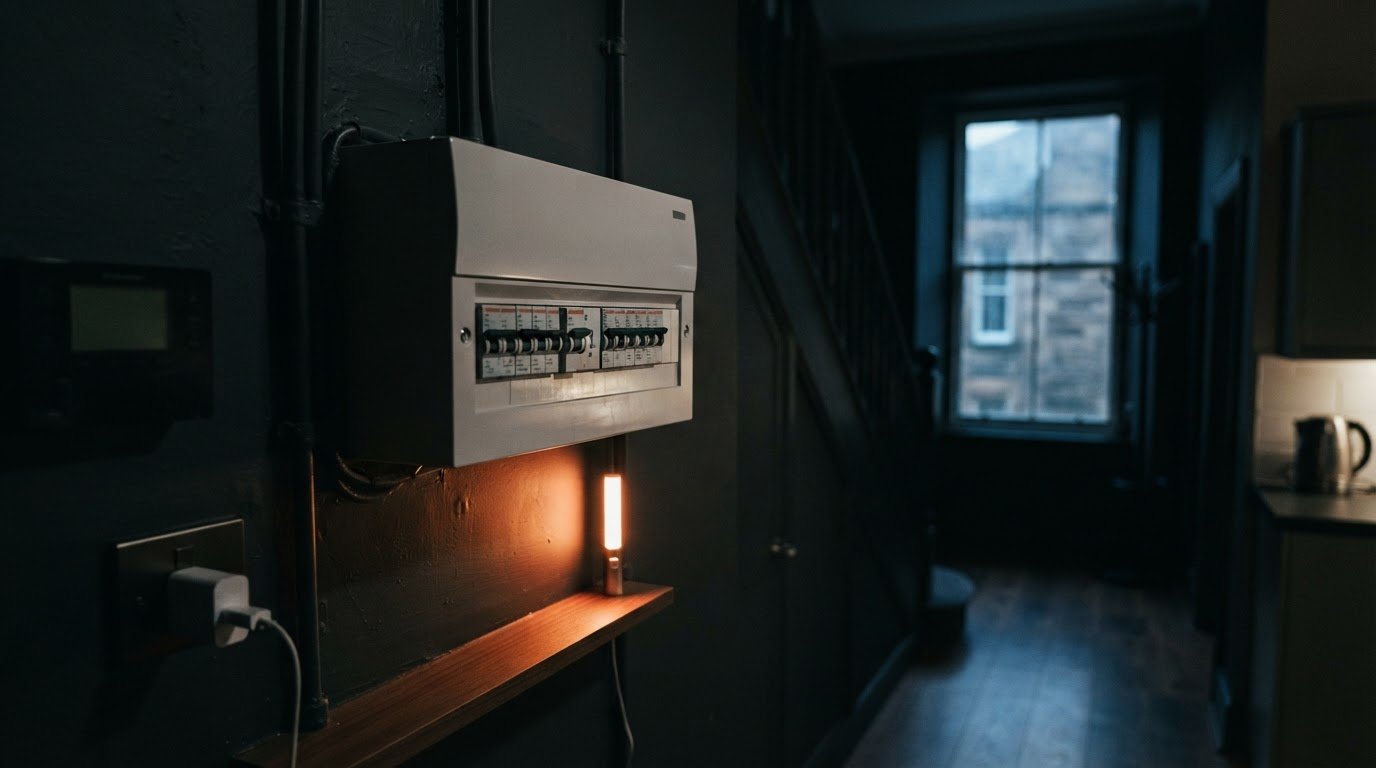
If your consumer unit has a plastic casing, it no longer meets current fire safety standards. Modern units must be made of non-combustible material, usually steel, to contain any internal fire. Another red flag is the presence of “rewirable” fuses, where you have to physically replace a piece of wire when a circuit blows. These are dangerous amongst modern high-load appliances like electric showers or EV chargers, as they lack the precision of modern circuit breakers. We take great pride in helping our neighbours modernise their infrastructure. We’ll always give you an honest assessment of whether your board is safe or if it’s time to bring your home up to the 2026 Scottish standard.
The Homeowner’s Electrical Safety Checklist
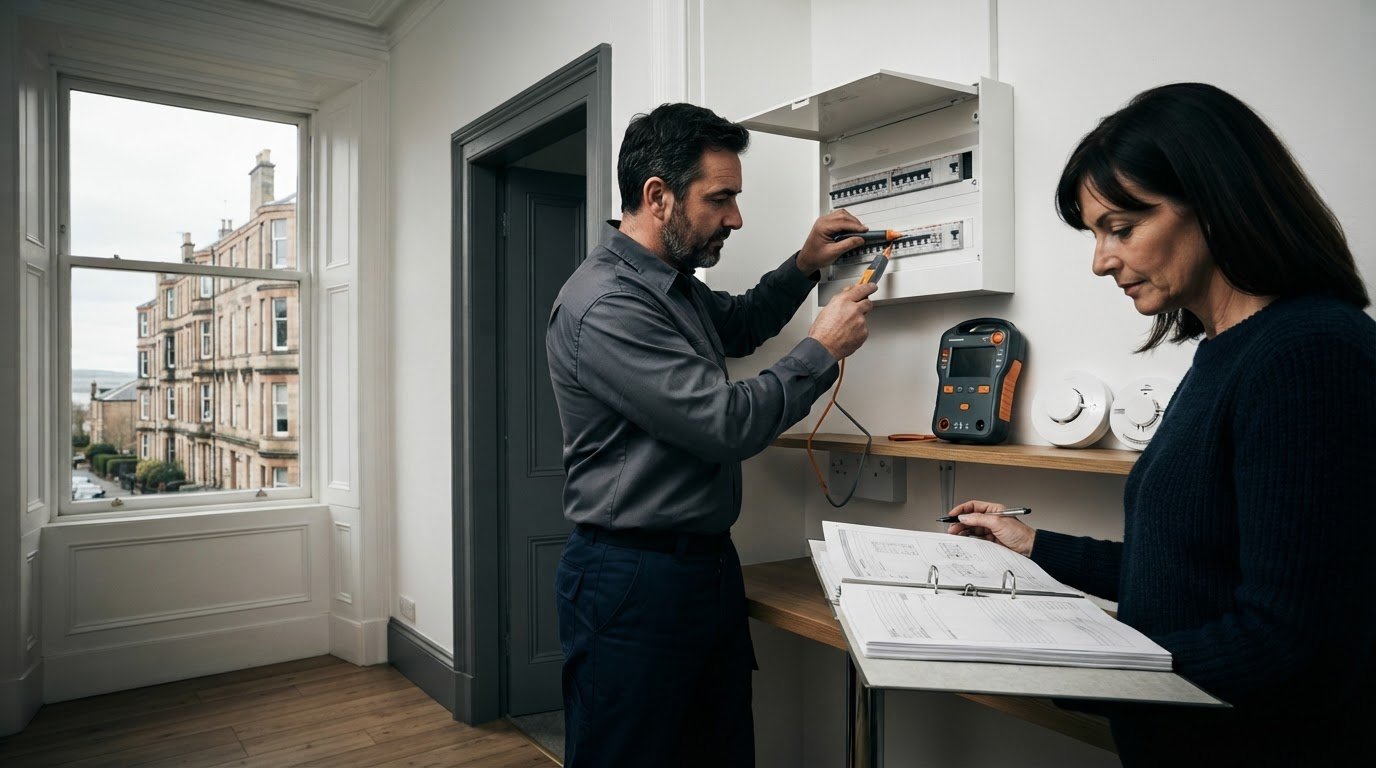
An EICR Certificate is the most thorough way to verify your home’s health. Whilst landlords must have one every five years, we strongly recommend owner-occupiers in Dundee and Angus follow the same schedule. Many home insurance providers now ask for proof of a recent inspection when you make a claim. During the check, we use codes to rate findings: C1 means immediate danger, C2 indicates potential danger, and C3 is a recommendation for improvement. It’s a transparent way to understand exactly where your property stands amongst modern safety benchmarks.
Outdoor power is another area where the Scottish weather plays a significant role. Sockets and garden lighting must be correctly IP-rated to withstand our persistent rain and winter frost. If a circuit starts tripping, don’t attempt DIY fault finding. Modern systems are incredibly complex; poking around without the right diagnostic tools is dangerous and can lead to further damage. We treat fault finding as a priority service to ensure your home stays functional and your family remains protected.
Visual Checks Every Homeowner Should Organise
You don’t need to be an expert to spot some common warning signs. Look for discolouration or scorch marks on sockets whilst you’re cleaning; this often indicates loose connections or overheating behind the faceplate. Ensure cables aren’t tucked under carpets where they can wear down over time, and keep them away from heat sources like radiators. Most importantly, if a previous owner added “DIY” wiring in the shed or attic, have it professionally checked and certified. We take personal pride in ensuring these small details meet the highest standards of execution. If you’ve noticed any of these red flags, book a professional safety inspection with our team.
Ensuring Compliance During Home Renovations and Rewires
Starting a renovation in Dundee or Angus is a significant undertaking. When you’re stripping back walls or extending your kitchen, you’ll likely encounter the complex world of scottish electrical safety regulations for homeowners. A full property rewire becomes a legal necessity if your existing cables are degraded or if the system cannot safely support the increased load of modern life. Under Scottish Building Standards, major works like this often require a Building Warrant from your local council. We understand that local government portals can be daunting, so we handle the technical paperwork and liaison to ensure your project stays on track. Even if you’re only opting for partial rewires, documenting the work is essential for maintaining your home’s resale value and legal standing.
The Legal Paperwork You Need After Electrical Work
Once the job is finished, you must receive the correct certification. An Electrical Installation Certificate (EIC) is issued for major works, whilst a Minor Works Certificate covers smaller changes like adding a new socket. These documents are your proof of compliance. Solicitors will invariably ask for them when you eventually sell your property. To make things easier, we provide digital certification through our systems. This ensures you never lose your compliance records amongst old receipts or moving boxes. Our process for Full Property Rewires is designed to be thorough and transparent, leaving you with a safe home and a clear paper trail for the future.
Choosing a Registered Electrician in Tayside
Your choice of contractor is the most important safety decision you’ll make. In Scotland, look for professionals registered with SELECT or NICEIC. These bodies ensure that we’re vetted and our work meets the highest technical standards. Choosing an unregistered “cowboy” might save a few pounds initially, but it often leads to local authority fines or, worse, insurance rejection during a claim. We take immense pride in our reputation as a trusted local expert. We treat every client’s private space with sensitivity and care, ensuring our work is as tidy as it is safe. Our commitment to traditional sincerity means we won’t hit you with opaque pricing or high-pressure sales. We’re simply here to be your diligent neighbour and expert advisor, keeping your home within the law and your family out of harm’s way.
Protecting Your Home for the Years Ahead
Managing your home’s wiring doesn’t have to be a source of stress. By staying on top of interlinked alarm requirements and modernising your consumer unit, you’ve already taken the most important steps toward a safer household. These scottish electrical safety regulations for homeowners are designed to protect our local communities; meeting them ensures your property remains a secure sanctuary for your family. Whether you’re planning a major renovation or simply want to verify your current system’s health, a proactive approach is always the wisest choice for any resident in Tayside.
We’re proud of our reputation for traditional reliability and grounded professionalism. As NICEIC Registered Installers and Dundee’s trusted local electrical specialists, we provide full EICR and compliance certification to keep your property records in perfect order. We treat every home with the same care and meticulous attention to detail as if it were our own, ensuring a tidy and respectful service every time. Book your Home Safety Inspection with Foster Electrical today and let us help you keep your environment legal and safe. We look forward to helping you protect what matters most.
Frequently Asked Questions
Are interlinked smoke alarms a legal requirement for all Scottish homeowners?
Yes, interlinked smoke and heat alarms became a mandatory legal requirement for every home in Scotland in February 2022. This legislation applies to all tenures, meaning owner-occupiers must comply just as strictly as landlords. You need a smoke alarm in your main living area and every hallway or landing, plus a heat alarm in the kitchen. Ensuring your property meets these scottish electrical safety regulations for homeowners is vital for protecting your family and your investment.
Do I need a building warrant for electrical work in my Dundee home?
You’ll typically require a building warrant for significant electrical projects, such as a full property rewire or the installation of entirely new circuits. However, minor like-for-like repairs or replacing existing sockets and light fittings usually don’t need one. It’s always best to check with Dundee or Angus Council before you begin any major renovations. We handle the technical side of these applications to ensure your work is fully documented and legal for future house sales.
How often should a homeowner get an EICR in Scotland?
Whilst it’s a legal requirement for landlords every five years, we strongly recommend that homeowners in Tayside follow the same five-year schedule. Our local stone-built properties often face damp conditions that can affect the longevity of wiring and connections. A regular inspection by a qualified professional identifies hidden faults before they become dangerous. It provides a cumulative sense of security, knowing that your home’s electrical heart is healthy and your safety certification is up to date.
What happens if my home does not meet the Scottish electrical safety standards?
Can I install my own interlinked smoke alarms to save on costs?
You can install tamper-proof battery-powered units yourself, but we generally advise against a DIY approach for mains-powered systems. Professional installation ensures that the interlink is robust and that the units are placed exactly where they’ll be most effective. A qualified electrician also provides the necessary certification that proves your system meets the Scottish standard. This paperwork is an essential shield for your insurance policy and gives you the peace of mind that the system will work perfectly.
Is my home insurance valid if I do not have a recent electrical safety certificate?
Most insurance policies require you to keep your home in a safe, well-maintained condition. If you don’t have a recent EICR or proof of compliance for major works, an insurer could argue that you’ve neglected your responsibilities. This could lead to a rejected claim following an electrical fire or accident. Having a professional certificate provides tangible proof of your diligence. It’s a straightforward way to eliminate ambiguity and ensure your financial protection remains fully intact.
What is the difference between a fuse board and a modern consumer unit?
An old-fashioned fuse board uses rewirable fuses that melt when a circuit overloads, which is a slow and sometimes unreliable method of protection. A modern consumer unit uses sensitive circuit breakers and Residual Current Devices (RCDs) that trip the power in milliseconds. These modern hubs also include surge protection to safeguard your expensive electronics from grid spikes. Upgrading to a modern unit replaces artisanal, dated components with precise technology designed to save lives and protect your delicate modern appliances.
Why does Scotland have different electrical regulations than England?
Scotland has its own distinct legal framework, primarily the Building (Scotland) Act 2003, which allows for higher safety standards tailored to our specific housing needs. Our regulations regarding fire detection are currently the most stringent in the UK, requiring interlinked alarms in all domestic properties. These rules reflect a dedicated commitment to reducing fire-related injuries and deaths across the country. We take pride in being local experts who understand these nuances, ensuring our neighbours always receive the most accurate, localised safety advice.