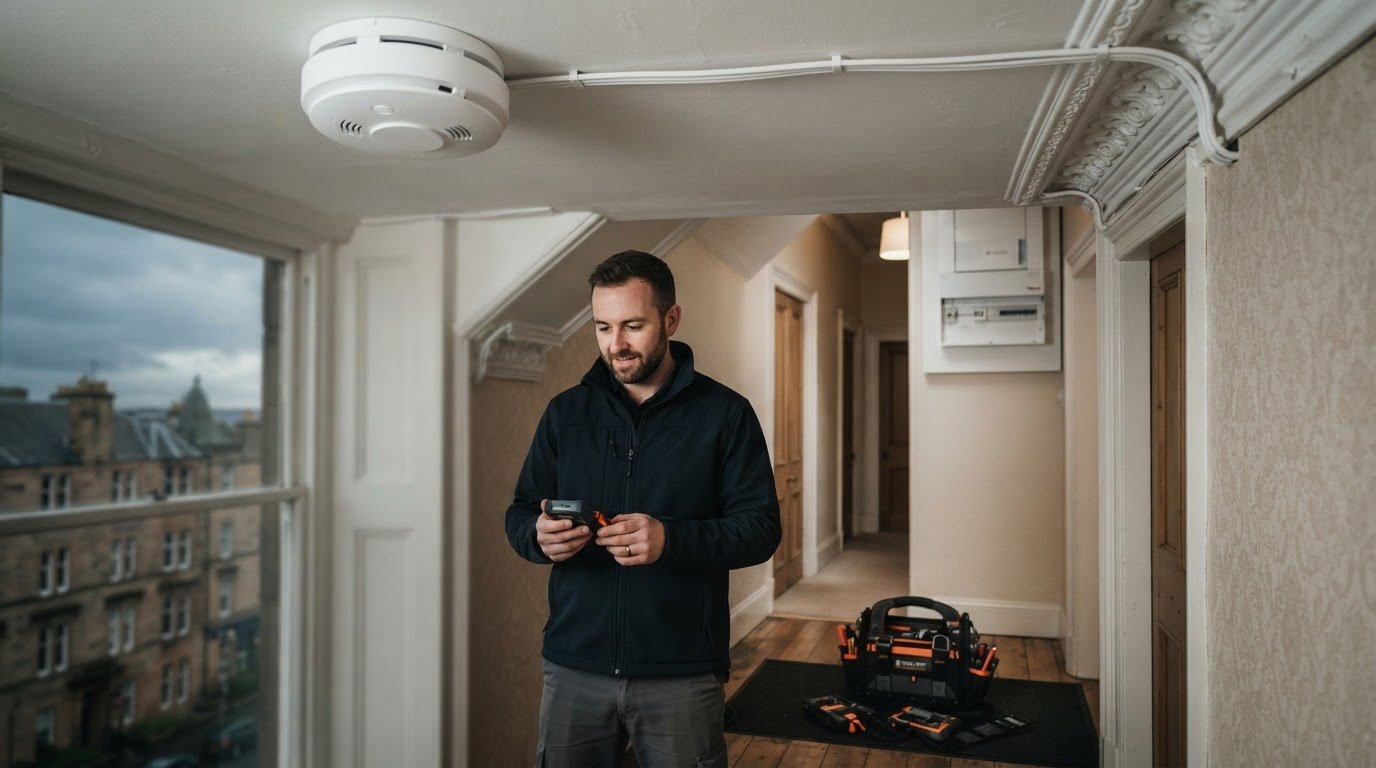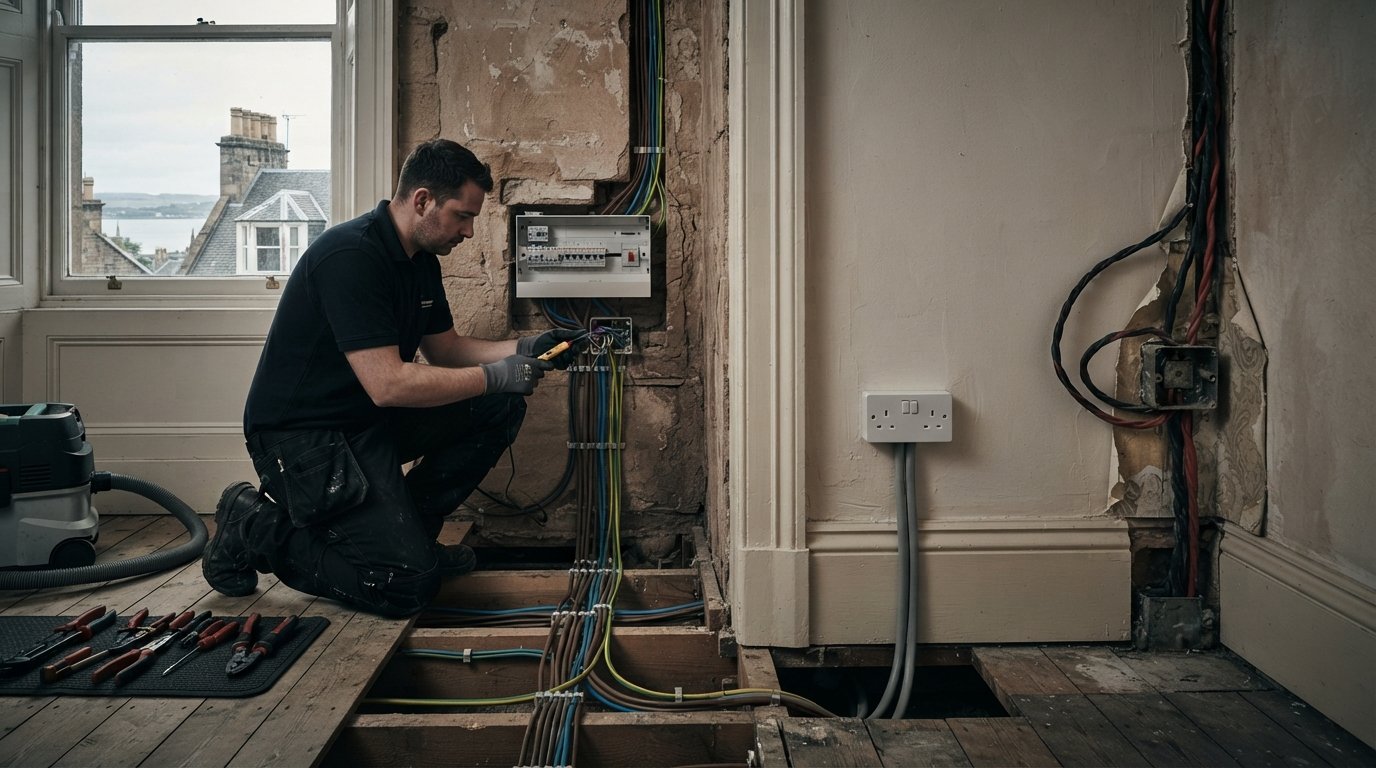
Fitting compliant fire alarms shouldn’t mean tearing apart traditional plasterwork or worrying whether an unverified installer will leave you without legal paperwork. If you feel confused by current Scottish fire safety legislation, you aren’t alone. Arranging a proper hardwired smoke detector installation Dundee homeowners can trust often feels daunting, particularly when modernising stone tenements without causing unsightly wall damage. You simply want the quiet certainty of a durable, mains-powered setup, fitted with genuine care and respect for your living space.
Your home is your most personal sanctuary, and keeping it safe demands honest craftsmanship rather than temporary shortcuts or unreliable fixes. In this complete guide, you’ll discover how to choose, specify, and professionally install a fully compliant fire and heat alarm system for your property. We’ll show you how to satisfy the Scottish Tolerable Standard with minimal disruption, avoid destructive surface chasing, and secure the official electrical certification your insurer requires.
Key Takeaways
- Understand the precise room-by-room requirements needed to meet the Scottish Tolerable Standard across all domestic properties.
- Compare hardwired and battery-powered units to see why mains power prevents communication dropouts across thick stone walls.
- Discover sympathetic wiring techniques that protect the character and ornate plasterwork of Dundee tenement flats and Victorian villas.
- Learn why professional hardwired smoke detector installation Dundee services include essential compliance certification for insurance and tenancy records.
- Follow the step-by-step installation journey from initial survey to final testing, ensuring minimal domestic disruption.
Scottish Smoke Alarm Legislation: Mandatory Standards for Dundee Properties
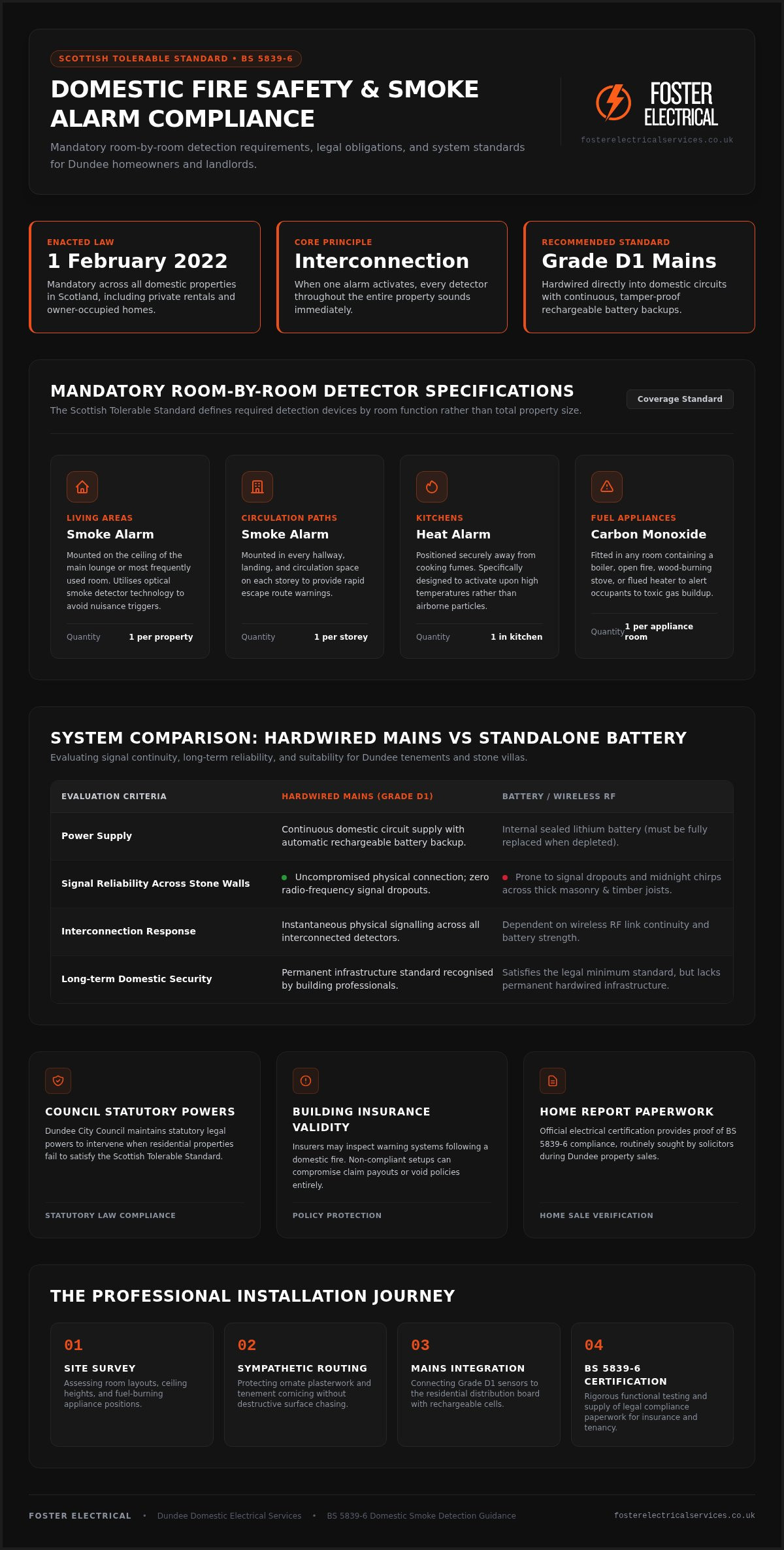
Many homeowners assume fire safety laws apply only to commercial premises or private rentals. In Scotland, that changed permanently on 1 February 2022. Every domestic property across Dundee must satisfy the Scottish Tolerable Standard fire safety requirements, regardless of whether you own a detached villa in Broughty Ferry or rent out a flat in the West End. The central principle of this law is interconnection: when a single detector activates, every unit throughout the property sounds immediately, buying critical seconds during an emergency.
Meeting this standard demands specific sensor types rather than haphazard retail purchases. Installing modern units built around optical smoke detector technology prevents troublesome nuisance triggers while swiftly catching slow-burning domestic fires. While sealed-battery alarms are legally permissible, mains-powered systems remain the gold standard recognized by building professionals. Opting for a professional hardwired smoke detector installation Dundee homeowners invest in establishes a permanent safety infrastructure that draws continuous power directly from domestic circuits, safeguarded by reliable battery backups.
Mandatory Sensor Locations in Dundee Homes
The law specifies coverage by room function rather than property size. To achieve full compliance, you must fit:
- Living Areas: One smoke alarm mounted on the ceiling of the main lounge or most frequently used room.
- Circulation Paths: One smoke detector in every hallway, landing, and circulation space on each storey.
- Kitchens: One dedicated heat alarm securely positioned away from cooking fumes to detect high temperatures rather than airborne particles.
- Carbon-Fuelled Appliances: A carbon monoxide alarm fitted in any room housing a boiler, open fire, wood-burning stove, or flued heater.
The Legal Reality of the Scottish Tolerable Standard
Dundee City Council maintains statutory powers to intervene when properties fall below standard, making compliant detection a matter of law rather than a personal choice. Sub-standard systems carry tangible consequences for owner-occupiers. Following a domestic fire, building insurers can inspect warning provisions; failing to maintain certified fire detection may compromise insurance claims or void policy protections entirely.
Official electrical certification provides definitive proof that your installation complies with British Standard BS 5839-6. When the time arrives to sell your property, solicitors routinely seek this paperwork as part of the standard Home Report pack. Securing a certified installation from experienced professionals, such as the registered team carrying out safety upgrades via Foster Electrical’s comprehensive domestic services, ensures your household remains fully protected and legally indisputable.
Hardwired vs Wireless Smoke Detectors: Evaluating Long-Term Domestic Value
While standalone, battery-powered alarms offer a quick fix, homeowners often underestimate the subtle limitations of wireless signals. Scottish tenements and stone-built villas feature solid masonry dividing walls and dense timber joists. In these environments, wireless units can suffer from radio-frequency dropouts, leading to mysterious midnight chirps or disconnected units that fail to communicate. Investing in a permanent hardwired smoke detector installation Dundee properties benefit from provides uncompromised signal continuity, ensuring every alarm triggers without relying on fluctuating radio signals.
Hardwired safety systems connect straight into your residential distribution board, backed up by rechargeable cells that engage automatically during a power cut. Under official Scottish smoke alarm legislation, both sealed-battery and mains-wired networks satisfy the legal minimum. Yet, mains infrastructure delivers distinct domestic security that battery-only discs simply cannot match over decades of occupancy.
Power Delivery and System Reliability
Mains-powered domestic installations typically employ Grade D1 setups, which feature tamper-proof, rechargeable internal batteries powered continuously by household electricity. This architecture delivers several clear engineering advantages:
- Instantaneous physical signalling: Interlink cabling carries the alert current instantly across rooms, bypassing thick stone walls or dense plaster.
- Signal shielding: Physical wiring remains unaffected by household Wi-Fi congestion, thick stone arches, or metal lath construction.
- Consumer unit integration: Detectors connect neatly through your consumer unit, protected by dedicated miniature circuit breakers.
Comparing Lifespan, Upkeep, and Total Ownership
Standalone sealed lithium alarms require complete replacement and disposal every ten years. When sealed units malfunction or deplete early, you must replace the entire unit. In contrast, hardwired systems add permanent electrical value to your home. The underlying infrastructure remains fixed in place, allowing you to update detector heads simply as technology evolves without ripping out wiring or damaging decorative plasterwork.
Routine upkeep on a mains system involves simple vacuuming and testing rather than replacing disposable units. If you want to evaluate your home layout before upgrading, feel free to reach out to our friendly Dundee team for honest advice tailored to your property.
Specifying Detectors for Dundee Properties: Tenements, Villas, and Modern Builds
Dundee boasts an exceptional architectural variety, stretching from Victorian sandstone tenements in the West End and Broughty Ferry to contemporary housing across the Western Gateway. A new-build timber frame allows effortless cable runs through plasterboard cavities. In contrast, older stone properties present distinct structural challenges. Executing a successful hardwired smoke detector installation Dundee homeowners feel proud of requires an installation strategy tailored to the building fabric, protecting period features rather than resorting to intrusive surface plastics.
Navigating Dundee Tenements and Period Properties
Victorian villas and tenement flats feature high ceilings, fragile lath-and-plaster construction, and hand-crafted decorative cornices. Chasing channels into solid masonry or slicing through historic plaster damages original finishes irreparably. Conscientious electricians route fire-rated interconnect cabling discreetly along sub-floor voids, behind timber skirting, or above ceiling joists. This thoughtful approach ensures complete legal compliance without defacing the historic character of your home.
Selecting Optical Smoke Sensors Versus Thermal Heat Alarms
Specifying the correct sensor chemistry for each living zone prevents recurring false alarms while maintaining compliance with Scottish smoke alarm legislation. Different rooms require distinctly tuned mechanisms:
- Circulation zones and lounges: Optical detection chambers spot slow-smouldering electrical or upholstery fires rapidly while ignoring routine airborne steam from bathrooms.
- Kitchen environments: Dedicated thermistor heat alarms monitor sharp temperature spikes. They remain indifferent to boiling kettles, cooking fumes, or burnt toast.
- Appliance locations: Standalone electrochemical carbon monoxide sensors measure hazardous gas levels precisely, positioned at respiratory height rather than ceiling level.
Consumer Unit Integration and Electrical Circuit Design
Mains alarms require stable power drawn from your consumer unit, either routed as a dedicated fire circuit or safely integrated into an existing, regularly operated lighting radial. Supplying alarms through a primary lighting loop offers a practical advantage: if the circuit trips, the lack of lighting immediately alerts the household to restore power.
Modern wiring regulations stipulate that newly installed detector circuits must receive proper residual current device (RCD) protection. If your property still runs an outdated fuse box with rewirable wire carriers, paired upgrades become crucial. Speaking with an electrician regarding consumer unit upgrades and domestic services ensures your entire distribution board supports modern safety equipment safely and reliably.
The Professional Installation Journey: From Site Survey to Certification
Inviting a tradesperson into your home requires trust. When undertaking a hardwired smoke detector installation Dundee homeowners naturally want assurances that their carpets, wallpaper, and furnishings will remain respected and intact throughout the job. A proper domestic installation is neither rushed nor messy. It follows a methodical five-stage sequence designed to integrate robust safety equipment while preserving your living space.
Step-by-Step Installation Procedures
Delivering high standards begins well before clipping cables into position. Our structured approach ensures complete electrical safety from the ground up:
- Stage 1: Electrical Survey: We assess your existing consumer unit, available circuit capacity, and room layouts to plan the cleanest containment route.
- Stage 2: Careful Routing: Cabling passes cleanly through floor voids and ceiling spaces. We lay heavy-duty dust sheets across all work areas to catch any plaster dust.
- Stage 3: Terminations and Mounting: Sensor baseplates fit flush against ceiling plaster, with every core cleanly terminated and insulated to BS 7671 standards.
- Stage 4: Commissioning and Testing: We trigger the interlink mechanism systematically, verifying that activating the kitchen heat sensor sounds every alarm throughout the building.
- Stage 5: Handover: We demonstrate routine monthly testing procedures, hand over the technical documentation, and leave your property tidy.
Essential Certification for Dundee Landlords and Buyers
Fitting the physical units is only half the duty. An uncertified alarm leaves you vulnerable during insurance queries or property transactions. Once our testing confirms every sensor responds within statutory tolerances, we issue an official Electrical Installation Certificate or Minor Electrical Installation Works Certificate, confirming compliance with British Standard BS 5839-6.
If you let property within Dundee, this sign-off integrates directly with your regular Electrical Installation Condition Report (EICR) assessments. For owner-occupiers, keeping these signed documents alongside your title deeds proves compliance to mortgage surveyors, prospective buyers, and building insurers. If you are ready to secure your property with total peace of mind, schedule your electrical inspection with our Dundee team today.
Why Choose Foster Electrical for Your Dundee Smoke Detector Installation
Finding a reliable tradesperson shouldn’t mean dealing with an anonymous call centre or worrying about who turns up at your front door. When protecting your household, you want an experienced professional who lives in your community, arrives punctually, and treats your living room with genuine care. At Foster Electrical, we reject high-pressure sales pitches and opaque corporate processes. We take quiet pride in traditional domestic craftsmanship, ensuring every hardwired smoke detector installation Dundee residents book with us is carried out neatly, securely, and without fuss.
Traditional Craftsmanship and Respectful Home Service
Entering your private living space is a privilege we never take lightly. That standard guides our daily conduct across every property we attend:
- Respect for your furnishings: We lay protective dust sheets across working areas, wear clean footwear covers, and vacuum thoroughly before packing our tools.
- Dependable punctuality: We turn up when promised and communicate directly with you, offering plain, jargon-free explanations.
- Community accountability: You deal directly with conscientious local electricians who take personal pride in high standards and lasting relationships.
Comprehensive Domestic Electrical Solutions
Installing smoke detection often highlights wider domestic wiring needs. Because our expertise spans complete residential installations, we effortlessly coordinate fire alarm projects alongside consumer unit replacements, full or partial rewires, and electrical testing. We evaluate your installation honestly, letting you know whether your existing fuse board supports the new circuit safely without attempting to push unnecessary additions.
Once our testing is complete, we deliver official compliance certificates promptly for your personal records, tenancy registers, or home insurance policies. If you want dependable, mains-powered safety installed by tradespeople who treat your home like their own, reach out through the Foster Electrical contact page to speak with our local team.
Protect Your Dundee Home with Lasting Mains-Powered Safety
Safeguarding your household against domestic fire risks comes down to choosing permanent, dependable infrastructure over temporary fixes. Meeting the Scottish Tolerable Standard requires interlinked alarms that alert your entire property the instant danger appears. While battery-powered options exist, mains-powered systems deliver uninterrupted protection across dense sandstone walls without communication loss or battery degradation. They turn statutory compliance into a durable, long-term home asset.
Protecting your property should never mean sacrificing its character or dealing with careless tradespeople. Our fully qualified local electricians bring extensive domestic experience across Dundee tenements, traditional stone homes, and modern developments. We route cabling discreetly to preserve your plasterwork, keep your rooms immaculate, and supply the official electrical certification required by building insurers and landlord registers. Investing in a professional hardwired smoke detector installation Dundee homeowners trust provides absolute domestic certainty. Take the next step toward genuine peace of mind and arrange your certified hardwired smoke alarm installation with Dundee experts today.
Frequently Asked Questions
How much does hardwired smoke detector installation typically cost across Dundee homes?
Total installation costs depend on the number of storeys, room layouts, and the accessibility of cable paths between ceilings. Stone tenements requiring discrete routing along floorboards involve different labour considerations than modern properties with open floor voids. At Foster Electrical, we provide clear, upfront assessments without hidden fees or surprise additions, tailoring every quote specifically to your property’s architectural requirements.
Is hardwired smoke detector installation mandatory under Scottish law, or can I use battery alarms?
Scottish legislation permits sealed, tamper-proof 10-year lithium battery alarms alongside mains-wired options, provided all units interlink. However, choosing a hardwired smoke detector installation Dundee homeowners invest in offers superior long-term reliability. Mains systems eliminate radio-frequency dropouts across thick sandstone walls, avoid premature battery failures, and permanently enhance domestic electrical safety infrastructure without requiring complete unit disposals every few years.
Can hardwired smoke alarms be fitted in older Dundee flats without damaging plasterwork?
Yes, experienced local electricians install hardwired alarms without defacing original cornices or traditional lath-and-plaster ceilings. By carefully lifting individual floorboards above or guiding fire-rated cables through existing sub-floor cavities and voids, we avoid unsightly surface-mounted plastic trunking. This sympathetic method protects historical finishes while delivering a neat, compliant electrical installation throughout older tenement flats and Victorian villas.
How many interlinked detectors does my Dundee property legally require?
Every Dundee home requires at least one optical smoke alarm in the principal living room, one smoke alarm in every circulation space on each floor (such as hallways and landings), and one heat alarm in the kitchen. If your home contains carbon-fuelled appliances like gas boilers, stoves, or open fires, you must also fit a carbon monoxide detector nearby.
What happens if a mains-powered smoke alarm system loses electrical power during a cut?
Mains-powered Grade D1 fire systems incorporate rechargeable backup batteries inside each detector head. When grid power drops during a storm or local power cut, these internal cells engage instantly and run the detection sensors continuously for weeks. Once household mains power returns, the system recharges itself automatically, providing uninterrupted domestic protection around the clock.
Do I need an Electrical Installation Certificate after fitting new mains smoke detectors?
Yes, an official Electrical Installation Certificate or Minor Electrical Installation Works Certificate is essential. This paperwork confirms the circuit design, cabling, and earthing meet BS 7671 and BS 5839-6 standards. Securing certified documentation validates your home insurance coverage, satisfies Dundee City Council tenancy rules for landlords, and proves full legal compliance to mortgage surveyors during future property sales.
Can my new smoke detectors connect directly to an older household fuse board?
Alarms can often tie into an existing domestic lighting radial, but modern safety standards require proper RCD protection for new wiring. During your hardwired smoke detector installation Dundee assessment, an electrician evaluates your consumer unit. If your board still uses outdated rewirable fuses, upgrading to a modern consumer unit provides vital circuit breaker protection for the entire home.