What if the first estimate for an electrical fault doesn’t include everything needed to put it right? Searching “cost to fix electrical fault dundee” often reflects a reasonable concern: you want to know what diagnosis involves, whether parts may be needed and when you’ll be asked to approve repair work.
A fault can be worrying, especially when it’s unclear whether an appliance, socket or part of the property’s wiring is causing the problem. A clear description of what’s happening can help an electrician decide what to investigate, but the cause may only become clear after professional fault-finding. Foster Electrical provides fault finding and repairs for property wiring issues, not domestic appliance repairs.
This guide explains what can affect the cost, what an electrician may need to check and which details to share when requesting an estimate. It also covers questions to ask about diagnostic charges, parts and the repair scope before work begins, so you can make a considered decision and arrange a safety-focused assessment.
Key Takeaways
- The cost to fix electrical fault dundee depends on what the investigation finds, how accessible the affected wiring is and what repair work is needed.
- Ask what the initial assessment covers, whether parts are included and when you’ll be asked to approve further work.
- Note when the fault occurs, what is affected and any changes you’ve noticed. These details can help the electrician assess the next steps.
- Compare estimates by checking the work included, exclusions and approval arrangements, not just the headline price.
- Foster Electrical provides fault finding and repairs in Dundee, Perth, Angus, Fife and St Andrews.
Cost to Fix Electrical Fault Dundee: What Shapes an Estimate?
The cost to fix electrical fault dundee depends on what is causing the problem and what work is needed to put it right. Fault finding involves investigating a property’s electrical system to identify the source of an issue. An estimate may depend on the electrician’s findings, access to the affected area, the repair scope and any parts required.
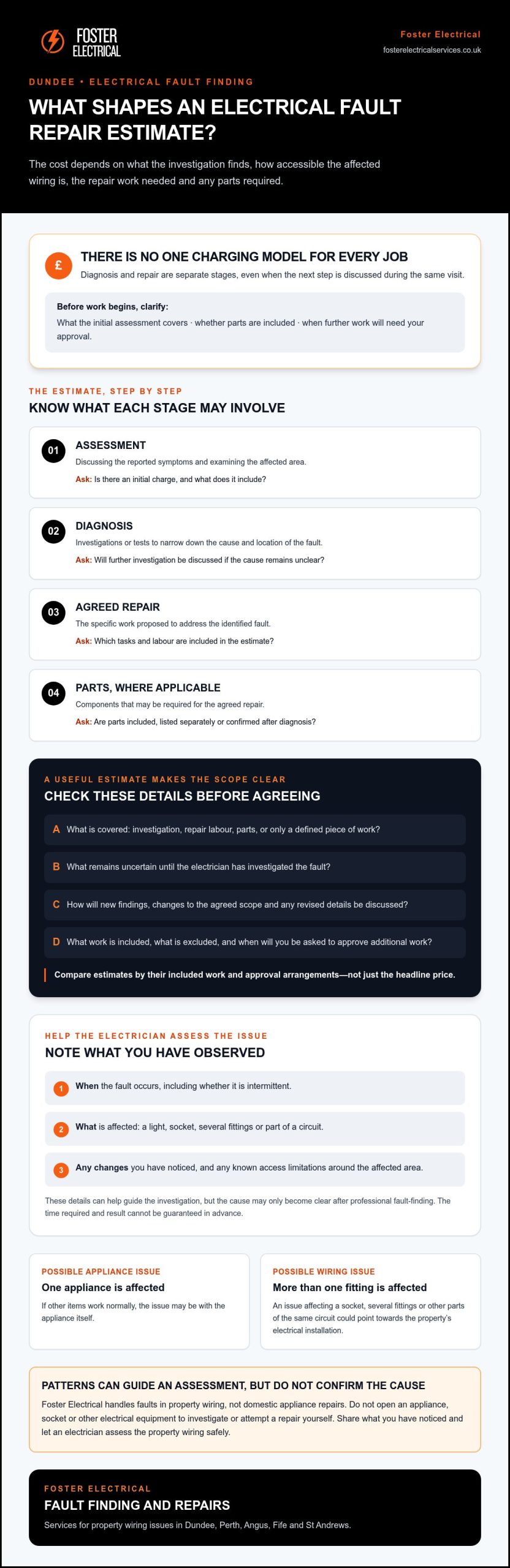
Diagnosis and repair are separate stages, even if an electrician can explain and agree the next step during the same visit. There isn’t one charging model that applies to every job. Before arranging work, ask whether the initial assessment is charged separately, what it includes and how additional repairs will be agreed. An initial diagnosis may narrow down the likely cause without confirming every detail until further investigation is carried out.
What does electrical fault finding involve?
The electrician will usually ask what has happened, when the problem occurs and which lights, sockets or other parts of the property are affected. They may then examine the relevant fitting or circuit and carry out appropriate testing to narrow down the fault’s location. Access can affect what needs to be checked, so mention any known limitations when describing the issue. The investigation helps establish the proposed repair, but the time required and result can’t be guaranteed in advance.
For a plain-language overview of what an electrical fault is, including terms such as short circuit, see Wikipedia. For an estimate, the practical questions are where the fault lies and what needs attention.
Is the problem in the appliance or the property wiring?
If one appliance appears to be affected while other items work normally, the issue may be with the appliance itself. A fault that also affects a socket, several fittings or other parts of the same circuit could point towards the property’s electrical installation instead. These patterns can help guide an assessment, but they don’t confirm the cause. Foster Electrical handles faults in property wiring, not domestic appliance repairs. If the appliance itself appears to be at fault, an appliance repair specialist may be the right contact.
Don’t open an appliance, socket or other electrical equipment to investigate, and don’t attempt a repair yourself. Share what you’ve noticed with an electrician and let them assess the property wiring safely. You can find more about Foster Electrical’s fault finding and repair services alongside its other electrical work.
From Diagnosis to Repair: Understand What You Are Being Charged For
A clear estimate should show where investigation ends and repair work begins. When considering the cost to fix electrical fault dundee, ask what the initial charge covers, what remains uncertain until the electrician investigates and when you’ll need to approve additional work. Check the details rather than assuming that one stage is included in another.
| Stage | What it may cover | What to clarify |
|---|---|---|
| Assessment | Discussing the reported symptoms and examining the affected area. | Is there an initial charge, and what does it include? |
| Diagnosis | Investigations or tests to narrow down the cause and location. | Will further investigation be discussed if the cause remains unclear? |
| Agreed repair | The specific work proposed to address the identified fault. | Which tasks and labour are included in the estimate? |
| Parts | Components required for the agreed repair, where applicable. | Are parts included, listed separately or confirmed after diagnosis? |
Proper diagnosis matters for safety as well as cost. The Health and Safety Executive provides information on national safety standards relevant to electrical work. Ask the electrician to explain the findings and proposed work in plain language before you decide how to proceed.
What should an estimate make clear?
Check whether the estimate covers investigation, repair labour, parts or only a defined piece of work. Ask how the electrician will discuss new findings before changing the agreed scope, and whether you’ll receive revised details in writing. Established trade maintenance providers such as Synergy Trades Group emphasise that clear, itemised scopes are essential for avoiding misunderstandings, helping you understand what you’re accepting without assuming every contractor presents charges in the same way.
When might the repair scope change?
Some faults are intermittent, or the relevant wiring may be concealed, so further investigation could be needed before the cause is clear. An electrician might also find a damaged component that changes the proposed repair. If that happens, ask what has been found, what further work is recommended and what it will involve. Request written confirmation of any revised scope and charges, then agree whether the work should proceed.
For more context, see Foster Electrical’s fault finding and repair services. If you’d like to describe a property wiring issue and ask about next steps, contact Foster Electrical.
Which Factors Can Change an Electrical Fault Repair Estimate in Dundee?
The cost to fix electrical fault dundee can vary because the work depends on what the investigation finds, not just the symptom you first notice. An accessible fitting may be straightforward to inspect, while a fault that appears intermittently or involves concealed wiring may need further investigation. The affected circuit and any parts required can also change the proposed repair. A clear estimate should explain how those findings shape the work, rather than assume every fault has the same solution.
How do access and fault complexity affect the work?
An electrician may be able to examine an accessible socket or fitting directly. If wiring is behind a finish or otherwise difficult to reach, assessing it may involve additional steps. Intermittent symptoms can also make the source harder to narrow down, particularly if the issue isn’t present during the initial checks. Describe when it happens, what loses power or behaves differently, and whether it affects one area or more. Don’t assume that a particular property age or construction type determines the cause in Dundee, Perth, Angus, Fife or St Andrews. The installation needs to be assessed.
Parts may be needed once the fault is identified. Rather than assume what needs replacing, ask whether parts are included in the estimate, listed separately or to be confirmed after diagnosis. If further work or materials are proposed, ask for the reason and revised scope before agreeing.
Could the fault point to a wider electrical issue?
A recurring problem may prompt an electrician to check whether the cause is limited to one fitting or points to a wider issue. A consumer unit assessment or rewire should only be considered if the inspection findings support that recommendation, not simply because a fault has occurred. If an electrician identifies a concern with the consumer unit, ask what was found and why further work is proposed. You can review Foster Electrical’s consumer unit upgrade services if that option is relevant to the assessment.
If you need help urgently, ask directly about availability and any charges that may apply to the requested timing. Arrangements can vary, so don’t assume urgent work follows the same terms as a planned visit. Before proceeding, make sure you understand what will be investigated, what the estimate includes and how you’ll be asked to approve any change in scope.
How to Compare Quotes and Prepare for an Electrician’s Visit
A little preparation can help an electrician understand what you’ve noticed and explain the proposed work more clearly. If you’re comparing the cost to fix electrical fault dundee, look beyond the headline figure. Check whether each quote covers the same investigation and repair work, how parts are treated, what’s excluded and how you’ll approve additional work. These checks are useful whether the property is in Dundee, Perth, Angus, Fife or St Andrews.
What information should you give the electrician?
Share what you’ve observed, rather than trying to diagnose the cause. Note when the issue started, whether it happens repeatedly or intermittently, and which lights, sockets or circuits seem affected. Mention any sounds, smells, visible damage or recent changes to the property. Be open about previous repair attempts, and don’t disturb damaged electrical equipment. If the issue came up during an electrical safety inspection, have the relevant report or notes ready to discuss.
A practical checklist before the visit
- Write down the symptoms. Record what stops working, when it happens and whether it affects one area or more.
- Note what you’ve observed. Include sounds, smells, visible damage and any recent changes, without handling or opening equipment.
- Make the area accessible if safe. Clear belongings away from the affected fitting or area, but don’t move or touch anything damaged.
- Gather relevant information. Keep any inspection notes and details of previous work to hand, and explain what has already been tried.
- Prepare questions about the estimate. Ask what the assessment and proposed repair include, whether parts are covered and how extra work will be discussed.
What should you check before agreeing to work?
Ask the electrician to explain the investigation and repair scope in plain language. Confirm what’s included, what’s excluded and whether parts are included or assessed separately. If further work is needed, agree how the revised scope and any associated charges will be presented for your approval before it proceeds. This gives you a clearer basis for comparing estimates than price alone.
If a fault was recorded during an EICR, use the report’s observations to ask what further investigation or repair is being proposed. A report can provide useful context, but make sure you understand the specific work and approval arrangements before proceeding.
To discuss a property electrical fault in Dundee, contact Foster Electrical about fault finding and repairs.
Arrange Electrical Fault Finding and Repairs with Foster Electrical
Once you understand what can shape an estimate, the next step is to explain the fault clearly and ask how the assessment will be arranged. Foster Electrical provides fault finding and repairs for property electrical issues in Dundee, Perth, Angus, Fife and St Andrews. An investigation helps establish what may be causing the problem and what repair, if any, is appropriate.
There’s no need to work out the cause yourself. Describe what you’ve noticed, where the property is and whether you have any immediate safety concerns. If you’re contacting an electrician in Dundee about the cost to fix electrical fault dundee, ask about charges and how estimates are handled before booking work. Pricing arrangements can vary, so make sure you understand what the initial assessment covers and how further work would be discussed.
What to expect when you contact a local electrician
Useful details include which lights, sockets or other areas are affected, when the fault began and whether it happens repeatedly or intermittently. Mention any sounds, smells or visible damage, along with relevant changes or previous work at the property. These observations can help the electrician consider the next steps, but they don’t replace a professional assessment. Ask what information is needed to understand the issue and what to expect before agreeing to a visit or repair.
If you have broader electrical work in mind, you can also review Foster Electrical’s electrical services to see which listed services may be relevant. The specific work required should be based on the property and the findings, not assumed in advance.
When should you arrange a professional assessment?
Arrange professional attention for a fault that keeps returning or for visible damage to electrical equipment. If you’re concerned that using the affected equipment may be unsafe, stop using it and explain the concern when seeking advice. Don’t open fittings or attempt repairs yourself. If you believe there’s an immediate danger, move away from the affected area and contact the appropriate emergency service.
Clear communication helps establish what is known, what still needs checking and what options may follow. If you’d like to explain a property wiring fault and ask about the next step, contact Foster Electrical about fault finding and repairs.
Take the Next Step with a Clearer Plan
The cost to fix electrical fault dundee depends on what an electrician finds, how accessible the affected area is and what repair work or parts may be needed. Before agreeing, check what the estimate covers and how any changes to the proposed work will be discussed. Sharing when the fault occurs and what it affects can also help the electrician assess the next steps.
Foster Electrical provides fault finding and repairs in Dundee, Perth, Angus, Fife and St Andrews. The proposed work should be based on the assessment, with the issue and next steps explained before you decide how to proceed.
If you’re dealing with a property wiring fault, contact Foster Electrical to discuss your electrical fault. Describe what you’ve noticed and ask about the assessment and estimate arrangements before booking.
Frequently Asked Questions
How much does it cost to fix an electrical fault in Dundee?
There isn’t one set price for every fault, because the cost depends on what an electrician finds and what repair is needed. The cost to fix electrical fault dundee may be affected by investigation, access to the affected wiring, the work involved and any parts required. Ask whether diagnosis is charged separately, what an estimate includes and how you’ll approve additional work. Foster Electrical provides fault finding and repairs in Dundee and nearby areas, including Perth, Angus, Fife and St Andrews.
What is included in an electrician’s fault-finding charge?
It depends on the electrician’s charging arrangements, so confirm what the initial charge covers before booking. It may relate to an assessment or investigation, but don’t assume repair labour or parts are included. Ask whether testing is covered, what happens if the fault needs further investigation and how any proposed repair will be priced. Clear answers help you understand the scope before agreeing to work, without relying on assumptions about a standard charging format.
Can an electrician give me a repair estimate before finding the fault?
An electrician may be able to explain the assessment arrangements beforehand, but the repair required can be difficult to estimate accurately until the cause is investigated. Share the symptoms, when they occur and which areas are affected to help clarify what may need checking. Before work starts, ask what the initial estimate covers and how the electrician will explain any revised scope or charges if the findings point to a different repair.
Why does an intermittent electrical fault take longer to diagnose?
An intermittent fault may not be present during an inspection, which can make its source harder to identify. Details about when it occurs can help: note whether it follows use of a particular fitting, happens in certain conditions or affects more than one area. Don’t try to reproduce the fault by handling wiring or equipment. Give your observations to the electrician and ask what investigation is proposed if the issue isn’t active during the assessment.
Should I call an electrician if my circuit keeps tripping?
Yes, a circuit that trips repeatedly should be assessed by an electrician rather than treated as a nuisance to reset. Note what was in use and which areas lost power when it happened, but don’t remove covers or investigate the wiring yourself. If you’re concerned about using the affected equipment, stop using it and explain why when seeking advice. An electrician can investigate the cause and discuss any repair that may be needed.
Can I fix an electrical fault myself to avoid repair costs?
Don’t open electrical equipment, sockets or fittings or attempt wiring repairs yourself. Aside from the safety concern, an unconfirmed repair may not address the cause of the fault. You can still help by recording what happens, which areas are affected and whether you’ve noticed visible damage, unusual sounds or smells. Share those details with an electrician, who can assess the property installation and explain the proposed work and charges before you decide how to proceed.
Will a recurring electrical fault mean I need a rewire?
No, a recurring fault doesn’t automatically mean the property needs a rewire. The cause may be limited to a particular fitting or circuit, or an electrician may identify a wider wiring concern that needs further assessment. The recommendation should follow inspection findings, not the symptom alone. Ask what has been found, why any broader work is suggested and whether a targeted repair is suitable. Foster Electrical offers full and partial property rewires as well as fault finding and repairs.