What if a property that looks ready to buy could still bring an electrical surprise before settlement? If your lender has asked for an electrical report for mortgage dundee, it’s understandable to worry about delays, repair work or a mortgage retention. A Scottish Home Report can offer a useful overview, but it isn’t a full electrical inspection and condition report.
There’s no general legal requirement for a homeowner to provide an EICR when selling in Scotland, but a mortgage lender may make one a condition of lending. Getting clear findings early can help you understand the installation’s condition, discuss any necessary work and keep your purchase moving.
In this guide, we explain why lenders request an EICR, what it can reveal that a Home Report may not, and how to arrange documentation for your lender to review. We’ll also look at what to do if the inspection identifies problems, including how to approach remedial work or possible rewiring before concluding missives. Foster Electrical provides EICR inspections and electrical services in Dundee, Perth, Angus, Fife and St Andrews.
Key Takeaways
- An electrical report for mortgage dundee is usually an EICR, but confirm your lender’s requirements before arranging an inspection.
- Dundee’s varied housing stock, including traditional tenements, makes a property-specific assessment useful before you commit to purchase.
- Learn how EICR observation codes affect the report outcome and what to ask if findings need clarification.
- Arrange access and share the lender’s paperwork requirements early to help keep your purchase on track.
- Find out what to consider if the inspection points to remedial repairs, a consumer unit upgrade or rewiring.
What Is an Electrical Report for Mortgage in Dundee?
If your lender asks for an electrical report, they’re usually referring to an Electrical Installation Condition Report (EICR). It’s a formal assessment of a property’s fixed electrical installation, rather than a general note in a survey. For a Dundee buyer, an electrical report for mortgage dundee can clarify the condition of the wiring before funds are released or a lender decides whether to apply a retention.
There’s no general legal requirement for a homeowner to provide an EICR when selling a property in Scotland. However, a lender may request one as part of its lending conditions, particularly where an older property’s electrical condition needs closer assessment. Check the wording of your mortgage or survey conditions, as requirements can differ between lenders.
The purpose of an Electrical Installation Condition Report
An EICR assesses the safety and condition of fixed wiring and associated components against the applicable BS 7671 requirements. The electrician looks for issues such as damaged wiring, inadequate earthing, unsafe equipment or circuits that may be overloaded. These checks can reveal risks that aren’t obvious from switches and sockets alone. The report records its findings and gives an overall outcome, helping you and your lender understand whether further action may be needed.
Why a Scottish Home Report isn’t enough
A Scottish Home Report provides valuable information about a property, but its electrical observations are not a substitute for specialist testing. The surveyor’s assessment is generally visual and limited to accessible areas. It doesn’t involve opening electrical accessories or carrying out circuit diagnostics. Hidden cabling, earthing arrangements and safety components inside a consumer unit therefore need a dedicated inspection to assess properly.
This distinction matters in Dundee, where traditional tenements and post-war homes can have varied electrical histories. A visual check may flag concerns, but it can’t establish the full condition of the installation. If your Home Report recommends further electrical investigation, ask your solicitor or lender what documentation they require before arranging work. Don’t assume that a recommendation automatically means the report is unsatisfactory or that rewiring is needed. The EICR findings provide a clearer basis for deciding what comes next.
Foster Electrical carries out EICR inspections in Dundee. The report can help you understand the findings and discuss any remedial work with the relevant parties before your purchase progresses.
Why Lenders Require an Electrical Survey on Dundee Properties
A mortgage lender is taking the property as security for its loan, so concerns about electrical safety can prompt questions before lending is approved or funds are released. An electrical report for mortgage dundee gives a clearer picture of the fixed installation than a valuation visit alone. If a lender identifies a concern, it may ask for further inspection or work and could apply a retention until specified conditions are met. Requirements depend on the lender, so check its request rather than assuming every older home needs the same checks.
This is especially relevant in Dundee, where traditional tenements and post-war homes have varied electrical histories. A property may have been altered over time, and wiring or protective equipment can differ between homes of similar age. The Electrical Safety First website offers independent household electrical safety guidance, but only an inspection can assess the condition of a particular property.
Protecting the lender’s security and your investment
A surveyor’s valuation considers the property as security, but it isn’t a detailed electrical test. If visible signs of ageing or a survey comment raise concerns, the lender may want a specialist report before deciding whether to proceed without conditions. For buyers, arranging checks before settlement can bring defects to light while there’s still an opportunity to discuss the findings with the seller and solicitor. An inspection won’t guarantee that the lender will remove a retention, but it gives everyone clearer information to work from.
Electrical concerns to investigate in local homes
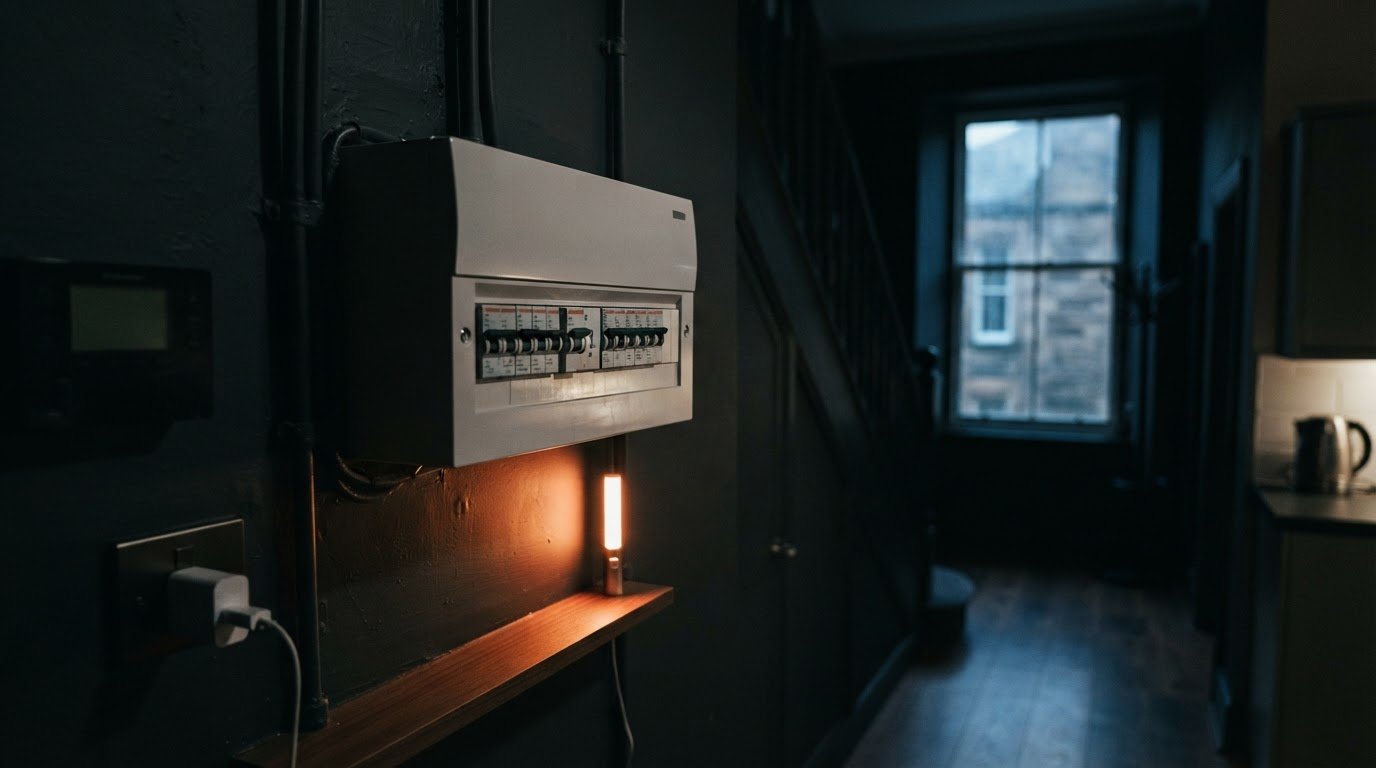
Age alone doesn’t establish whether wiring is safe. In an older Dundee flat or house, an electrician may need to assess historic alterations, the condition of the cabling and whether the consumer unit’s protective components are suitable for the installation. Older fuse boxes, including wooden-backed examples, may merit closer inspection, but their appearance alone doesn’t confirm the report outcome. Visible cable types or signs of DIY work should also be assessed in context, not treated as proof of a particular fault.
Ask the seller or solicitor whether records of previous electrical work are available, then compare those with the lender’s written conditions. If an EICR identifies concerns, the report helps distinguish observations requiring attention from recommendations for improvement. Foster Electrical provides EICRs and electrical services in Dundee, Perth, Angus, Fife and St Andrews. You can review its EICR and electrical services when considering what inspection or remedial work may be relevant.
Understanding EICR Observation Codes: What They Mean for Your Purchase
An EICR doesn’t simply label a home as safe or unsafe without explanation. The electrician records observations using condition codes, helping you understand which findings need attention and which are recommendations. For an electrical report for mortgage dundee, read the observations as well as the overall result, then confirm with your lender what it requires before funds are released.
What the observation codes mean
- C1, Danger present: The finding indicates immediate danger. The electrician should explain the risk and any urgent action needed to protect occupants.
- C2, Potentially dangerous: The defect could create danger and needs remedial attention.
- C3, Improvement recommended: This identifies a possible improvement, but a C3 observation alone doesn’t make the report unsatisfactory.
- FI, Further investigation required: More investigation is needed to establish the condition of part of the installation. An FI code alone doesn’t make the report unsatisfactory under the 2026 standard described in this guide.
Under BS 7671:2018+A4:2026, an EICR is classed as unsatisfactory when it includes a C1 or C2 observation. This distinction matters: not every note or recommendation means the property has failed its inspection. The Scottish Government electrical safety guidance relates to private rented homes, so check its scope and don’t treat it as a statement of mortgage-lender policy.
Discussing an unsatisfactory report with your lender
A C1 or C2 finding can raise safety concerns, but the report doesn’t by itself establish what a lender will do. Requirements vary. Your underwriter may request remedial work, evidence of completed repairs or further information. Ask your lender or solicitor whether it will apply a retention and what documentation it needs. Don’t assume that every unsatisfactory report automatically blocks the mortgage or that a C3 observation requires repair before completion.
The findings can also help you have a practical conversation with the seller. Share the relevant report details with your solicitor and ask whether repairs can be agreed before missives are concluded, or whether another arrangement is appropriate. Use the electrician’s written observations to focus discussions on the work actually identified, rather than guessing at costs or assuming a full rewire is necessary.
Foster Electrical provides EICRs, remedial repairs, consumer unit upgrades and full property rewires. See its electrical inspection and remedial services for information about relevant work in Dundee and nearby areas.

What Happens During an Electrical Inspection in Dundee?
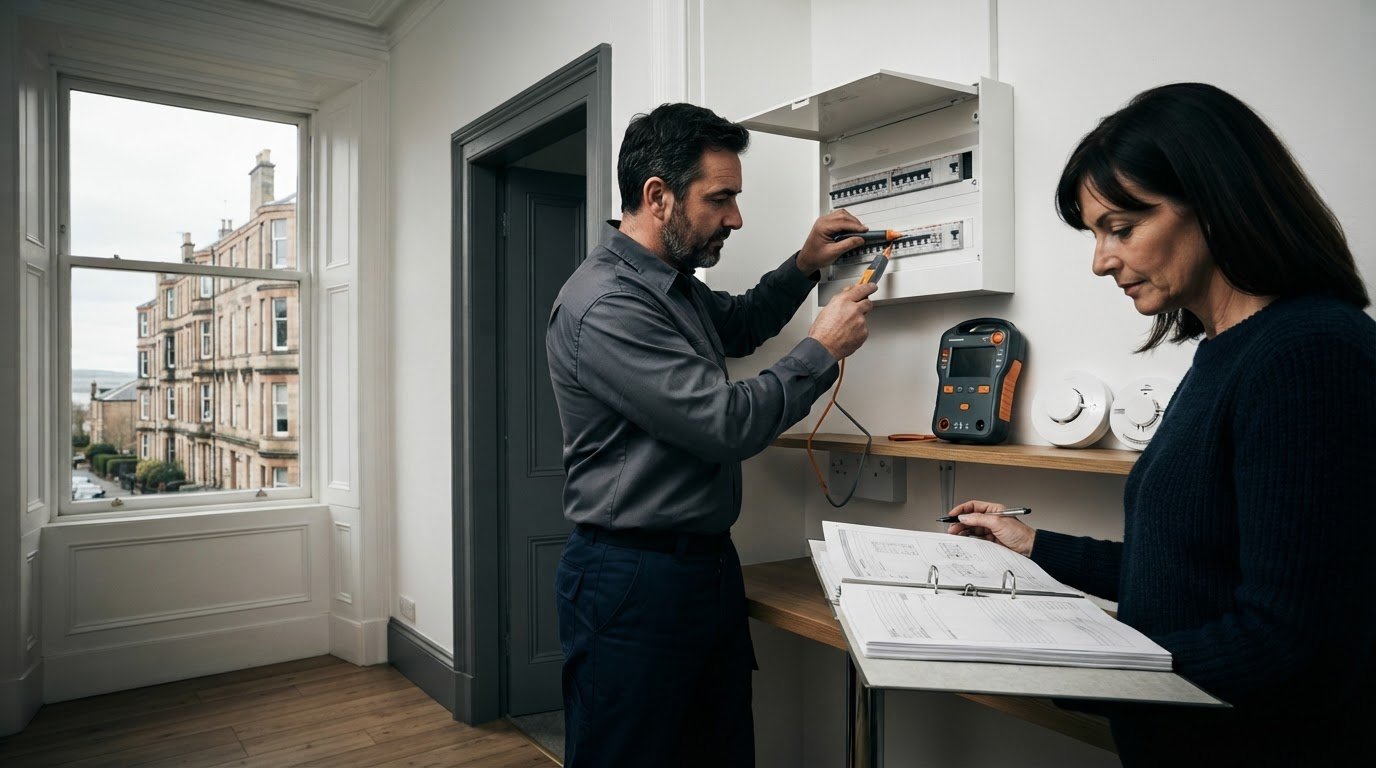
An EICR is a structured inspection, not simply a quick check of whether lights and sockets work. For an electrical report for mortgage dundee, the electrician examines accessible parts of the installation and carries out tests to assess its condition. A domestic inspection may take around two to four hours, depending on the property’s size and the installation’s complexity.
Some tests require circuits to be temporarily disconnected. The electrician will then restore the supply for live testing, so you should expect brief power interruptions. The exact checks and access needed can vary with the property and its wiring.
How the inspection and testing work
The electrician starts with a visual assessment and checks relevant supply and safety arrangements, including earthing and main bonding. With circuits isolated, dead testing can assess continuity and insulation resistance, helping identify issues such as damaged or deteriorated wiring. The circuits are then re-energised for live tests, which may include checks of earth fault loop impedance and RCD operation. Findings are recorded in the EICR, with any observations explained in the report.
Testing is methodical, but it doesn’t mean every concealed part of the installation can be examined. If access is restricted or an area needs further investigation, ask the electrician how that limitation will be recorded and whether it affects the report.
Getting the property ready
A little preparation helps the inspection proceed smoothly. Arrange access with the seller, agent or occupants and clear the area around the consumer unit, meter, sockets and switches. If the electrician needs access to a loft or other relevant space, make sure it can be reached safely. Let occupants know that power may be interrupted temporarily, so they can plan around affected equipment.
- Confirm how the electrician will access the property and who will be present.
- Move items blocking electrical points or the consumer unit, without attempting to open fittings yourself.
- Share any known information about previous electrical work or access restrictions.
If testing identifies concerns, use the written findings to understand what needs further attention rather than assuming a full rewire is required. Foster Electrical provides EICRs and electrical remedial services in Dundee. You can review its electrical inspection services and discuss which service may fit the report’s findings.
How to Organise an Electrical Report for Mortgage in Dundee
Act promptly when your Home Report or lender raises an electrical concern. Solicitors, lenders and sellers may each need time to review findings, so waiting until settlement is close can put completion under pressure. For an electrical report for mortgage dundee, first ask your lender or mortgage broker exactly what inspection and paperwork it requires, and whether it has set a deadline.
Turn survey feedback into clear next steps
Send the electrician the relevant Home Report comments and any written lender conditions. This helps them understand what prompted the request, though the inspection should assess the installation rather than assume a particular fault. Arrange access with the seller or agent, then ask when you can expect the written EICR so you can plan around your solicitor’s and lender’s timelines.
Once you have the report, read the observations and overall outcome carefully. Forward the full document to your conveyancing solicitor and mortgage broker, and ask the lender what it needs next. If defects are recorded, use the findings to discuss seller repairs or another suitable arrangement before missives conclude. The report can inform negotiations, but it doesn’t automatically determine a price reduction, contractual allowance or lender decision.
Choose an electrician with relevant experience
For a purchase in Dundee, look for an electrician experienced in EICRs and, if relevant to the property, familiar with tenement installations. Before booking, confirm that the person carrying out the inspection has suitable qualifications and that the lender will accept the report format. Ask what access is needed, whether power will be interrupted during testing, and how any limitations or recommended follow-up will be recorded.
Foster Electrical provides EICRs in Dundee, Perth, Angus, Fife and St Andrews. If the report identifies remedial work, its services include repairs, consumer unit upgrades and full property rewires. You can review its EICR and electrical services to see the relevant options.
Keep the lender informed about remedial work
If repairs are needed, ask the lender or solicitor what evidence it requires once work is complete. Don’t assume that carrying out remedial work will automatically remove a retention or secure an unconditional offer. The lender must confirm its decision and any conditions. Keep copies of the EICR and relevant completion documents, and share them through your solicitor or broker as requested. Clear communication at each step can help avoid preventable hold-ups.
Move Forward with Clear Electrical Information
A lender’s request for an EICR needn’t leave you guessing. Check what documentation it requires, arrange the inspection early, and use the report’s findings to discuss any necessary work with your solicitor and the seller. A clear electrical report for mortgage dundee can help you understand the property’s condition and address lender questions before they hold up your purchase.
Foster Electrical provides EICR inspections as well as full and partial rewires, consumer unit upgrades and other electrical services. If the report identifies further work, these services can help you explore the next steps with an electrician.
Contact Foster Electrical to discuss your mortgage EICR inspection and the requirements set by your lender.
Frequently Asked Questions
Is an electrical report mandatory when buying a house in Dundee?
No, there’s no general legal requirement for a buyer or seller to provide an EICR when a home is sold in Scotland. However, your mortgage lender may make one a condition of lending, particularly if it has concerns about the property’s electrical installation. Check your lender’s written requirements early. An electrical report for mortgage dundee can help address those conditions and clarify the installation’s condition before your purchase progresses.
How much time does an EICR mortgage inspection take in a Scottish home?
A domestic EICR inspection can take around two to four hours, depending on the property’s size and the installation’s complexity. The electrician needs access to the consumer unit and relevant electrical points, and testing may involve temporarily interrupting the power. Arrange access with the seller or agent in advance, and let occupants know about the planned inspection. If access is limited, ask how this could affect the assessment or report.
What happens if the electrical report comes back as Unsatisfactory?
An Unsatisfactory result means the report has recorded findings requiring attention, but it doesn’t automatically mean the purchase or mortgage will fail. Under the 2026 standard referenced in this guide, C1 or C2 observations make an EICR Unsatisfactory; C3 recommendations or an FI code alone do not. Share the report with your solicitor and lender, then ask what remedial work or evidence they require before funds are released.
Can a mortgage lender refuse a loan due to an outdated consumer unit?
A lender may raise concerns about an older consumer unit, but its age alone doesn’t establish that it’s unsafe or mean the loan will be refused. The EICR findings and the lender’s own requirements matter. Ask for the electrician’s assessment and check directly with your lender or broker whether it needs remedial work, a consumer unit upgrade or further documentation. Don’t assume replacement is necessary based only on appearance.
Who is responsible for paying for the mortgage electrical report?
There isn’t one fixed arrangement for who pays for an EICR requested during a purchase. The buyer and seller may agree who will arrange and cover the inspection, while the lender’s requirement determines what documentation is needed. Speak to your solicitor before booking, especially if the seller is arranging access or you’re negotiating repairs. Confirm the agreed payment and arrangements in writing to reduce the chance of confusion later.
Does an EICR inspect appliances like cookers, washing machines, and fridges?
No, an EICR assesses the fixed electrical installation, such as wiring, circuits, the consumer unit and associated safety measures. It isn’t a condition or performance test of household appliances like a washing machine or fridge. A cooker’s fixed connection may form part of the installation assessment, but that doesn’t mean the appliance itself has been fully tested. Ask the electrician if you’re unsure what the inspection covers.
Can I use an old landlord EICR for my homebuyer mortgage application?
Possibly, but don’t assume an older landlord EICR will satisfy your mortgage lender. The lender may consider when it was issued, which property and installation it covers, its findings, and whether it meets the lender’s specific requirements. Send a copy to your mortgage broker or lender and ask for confirmation before relying on it. Foster Electrical provides EICRs for homebuyers in Dundee, Perth, Angus, Fife and St Andrews.