Could your home insurance depend less on the age of your wiring than on what your policy says and the records you can provide? It’s understandable to worry that older or undocumented wiring could affect your cover, but the insurance requirements for house wiring uk homeowners need to check vary between policies. An EICR isn’t automatically required for every owner-occupied home.
Start by reading your policy wording and asking your insurer what it expects, particularly if you’re planning electrical work or can’t find paperwork for earlier alterations. Keep inspection reports, certificates and invoices together. These records can help show what work was carried out and when. They won’t guarantee a particular claim outcome, but clear paperwork makes it easier to explain your home’s electrical history.
This guide explains what to check with your insurer, which documents may be useful to keep and what to consider if the wiring is old or its history is unclear. If you’re in Dundee, Perth, Angus, Fife or St Andrews, a local electrician can carry out an EICR to assess the installation’s condition and help you consider practical next steps.
Key Takeaways
- The insurance requirements for house wiring uk homeowners need to follow depend on the insurer and policy wording. Check the specific conditions and disclosure questions that apply to you.
- Insurer conditions, electrical installation standards and legal requirements are different things. Don’t assume one automatically sets the others.
- Keep relevant inspection reports, certificates and records of electrical work together. An EICR describes the installation’s condition at the time it was inspected.
- If wiring is old or its history is unclear, gather the records you have, ask your insurer for guidance and don’t guess or conceal known defects.
- A local electrician can assess the installation and explain their findings, but your insurer decides what they mean for your cover. Foster Electrical serves Dundee, Perth, Angus, Fife and St Andrews.
Insurance requirements for house wiring UK: what to check first
Requirements depend on your insurer and the wording of your policy. An insurance requirement is a condition or disclosure specified by the insurer, such as answering a question about known electrical defects or reporting certain work. The insurance requirements for house wiring uk homeowners encounter can differ between policies, so check your own documents rather than relying on a general rule.
Keep three things separate: your policy terms, electrical installation standards and any legal requirements that apply to your circumstances. They’re related, but they aren’t interchangeable. For background on domestic wiring and the standards and framework discussed in the UK, see this overview of UK electrical wiring standards. It provides context, but check your specific requirements with your insurer and consult relevant official guidance.
Old wiring alone shouldn’t be treated as proof that your cover is automatically void. The age or condition of an installation may be relevant to questions in your policy, but only your insurer can explain how its terms apply to your home and circumstances.
Does every UK home need an electrical certificate for insurance?
Don’t assume there’s a universal certificate requirement for every home. Whether an insurer asks for an electrical certificate or inspection record depends on its policy conditions and the details of the property. Owner-occupied and rented homes can involve different policy arrangements and responsibilities, so don’t apply guidance for one situation to another. Read your policy and ask your insurer whether it needs a particular document and what evidence it will accept.
Why an insurer may ask about wiring or electrical work
An insurer may ask what you know about the property’s condition, including known electrical defects or alterations. Because compromised wiring is a primary cause of domestic electrical fires—which can result in severe damage requiring professional remediators such as Fire Industry Restoration Experts—insurers monitor these risks closely. They may also ask about work carried out when you arrange a new policy or renew existing cover. Answer accurately, using records where available. If you don’t know when the wiring was last checked or who carried out an alteration, say so rather than guessing.
Before contacting your insurer, note the exact question and gather relevant paperwork. Ask them to clarify any term you don’t understand and whether they need a report, certificate or other evidence. Keep a record of their response with your policy documents. This won’t determine how a future claim is handled, but it will help you understand what your insurer expects and decide whether you need further advice.
House wiring insurance terms versus electrical rules: what is the difference?
Insurance conditions, electrical standards and legal requirements are related, but they serve different purposes. Knowing which one you’re dealing with helps you ask the right question and avoid treating an insurer’s request as a rule for every homeowner. The insurance requirements for house wiring uk homeowners need to check are set by their own policy. Technical standards and legal duties have separate sources and scopes.
| What it is | What it governs | What to check |
|---|---|---|
| Insurer conditions | The information, evidence or actions required under a particular policy. | Read your policy wording and ask your insurer how a condition applies to your property. |
| Technical standard | How electrical installation work is designed, carried out or assessed. BS 7671 is an electrical installation standard. | Don’t treat the standard as an insurance policy or a universal certificate requirement. |
| Legal requirement | Duties established by relevant legislation, which can depend on the property and where it is in the UK. | Check current official guidance for the nation and situation concerned. |
How policy conditions differ from electrical standards
An insurer can request evidence under its own policy terms, but that request isn’t automatically a universal legal requirement. Equally, following an electrical standard doesn’t by itself confirm that you’ve met every condition in your insurance contract. If your insurer asks for a report or certificate, ask which document it wants and why. Don’t assume any electrical paperwork will meet the request.
Legal duties need separate consideration. For example, the official guidance on electrical safety standards in the private rented sector concerns rental-sector requirements. Check its scope and current official guidance before applying it to a different property or situation.
What homeowners in Scotland should verify
Rules shouldn’t be assumed to apply identically across the UK. Homeowners in Dundee, Perth, Angus, Fife and St Andrews should check Scotland-specific official guidance before relying on information about building standards or notification requirements drawn from England and Wales. If you’re unsure whether an alteration needs attention, an electrician can explain the electrical work involved, but your insurer remains the authority on its policy conditions.
If you’re in Foster Electrical’s service area and want practical advice about an inspection or electrical work, you can contact the local team. An assessment may help clarify the installation’s condition, but it can’t determine what cover your insurer will provide.
Which house wiring records and inspections might your insurer ask about?
There isn’t one paperwork checklist for every policy. An insurer may request records relevant to your home, the work carried out or a concern you’ve disclosed. Check your policy and ask what it needs before arranging an inspection or sending documents. This keeps the insurance requirements for house wiring uk homeowners face tied to their actual policy, rather than assumptions about what every insurer requests.
What paperwork to keep after electrical work
Keep electrical paperwork together in a safe, easy-to-find place, such as a home file or digital folder. Useful records may include:
- Certificates supplied for electrical work, where applicable.
- Invoices or job records describing the work completed, its date and the contractor responsible, where known.
- Inspection reports, including any Electrical Installation Condition Report (EICR).
- Insurer correspondence about questions, requested evidence or agreed policy details.
Ask the electrician which documents apply to the work and keep what they provide. Some records may refer to the technical rules used for the installation. This guide to the 18th Edition Wiring Regulations gives background on BS 7671. A document can help explain work carried out, but it doesn’t guarantee that an insurer will accept it or determine the outcome of a future claim.
Organised electrical records make it easier to answer an insurer’s questions clearly and accurately.
When an EICR may help clarify wiring condition
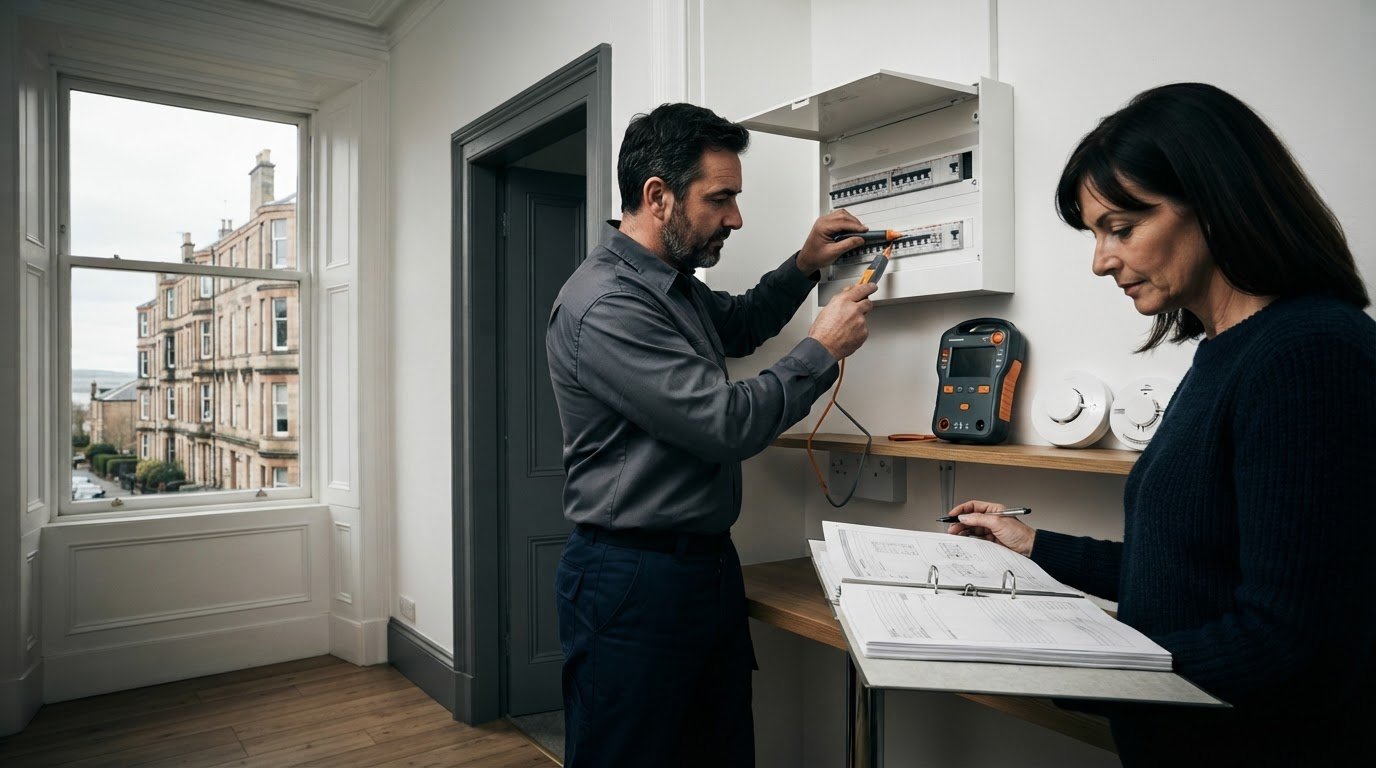
An EICR assesses an electrical installation and records its condition at the time of inspection. It can be useful if the wiring history is uncertain, you’ve noticed visible damage or your insurer asks for an inspection report. It isn’t a universal insurance requirement. The report describes the installation when inspected, rather than guaranteeing its future condition or acceptance by your insurer.
For more detail on what an inspection involves, read the EICR inspection guide. If you’re unsure whether an inspection would help in your circumstances, first ask your insurer what evidence it wants. An electrician can assess the installation and explain the findings, but your insurer decides how any report relates to your cover.

Dealing with old, altered or undocumented house wiring
Uncertainty about wiring doesn’t have to be solved all at once. Start by checking what your insurer asks, gather the records you can find and seek an electrical assessment if you still have questions about the installation. The insurance requirements for house wiring uk homeowners need to meet depend on their policy, so don’t assume that missing paperwork automatically means your cover is invalid.
If you cannot find paperwork for previous electrical work
Before drawing conclusions, look through property files, available invoices and conveyancing documents. Ask previous owners or the person who arranged the work if possible. If details remain unknown, be clear with your insurer. Explain which records you have and ask what evidence it will accept for your property. Don’t guess about the age of the wiring, who carried out work or whether it was inspected, and don’t conceal a defect you know about.
A new inspection can assess the installation’s present condition, but it can’t recreate every detail of historic work or prove who completed it. Treat a report as a current assessment, not a substitute for missing records. If you’re in Scotland, check that advice about building standards or notification applies to your circumstances rather than relying on guidance written for England and Wales.
If an inspection identifies concerns or recommended work
Ask the electrician to explain the findings and recommended next steps clearly, preferably in writing. If anything is unclear, request an explanation before deciding what to do or describing the issue to your insurer. Don’t try to diagnose the wiring yourself or judge the urgency of a concern without an appropriate professional assessment. Share relevant findings with your insurer and ask how they affect its requirements. An electrician can explain the installation, but can’t decide your cover or predict a claim outcome.
The next step depends on what the inspection finds. It might involve further investigation or repairs, or consideration of a full or partial property rewire if extensive work is recommended. Foster Electrical provides EICR inspections, electrical repairs and rewiring in Dundee, Perth, Angus, Fife and St Andrews. If you need help understanding wiring concerns or arranging relevant electrical work, contact Foster Electrical about an inspection or repair.
When a local electrician can help with house wiring and insurance questions
An electrician can inspect wiring, explain its condition and set out recommended work. This can help if the installation is old, has been altered or lacks records, but an electrician can’t decide what your insurer requires or whether a claim will be covered. Your policy and insurer remain the authority on cover.
Before booking, check that the electrician’s qualifications, insurance and experience are appropriate for the work you need. For an inspection, ask about its scope and what findings or documents you’ll receive. Make sure you understand what will be assessed and what the report can and can’t tell you.
What to ask before arranging an inspection or rewiring
Gather useful details first: the property’s approximate age, known alterations, any paperwork you’ve found and the exact questions your insurer has raised. Share what you know, including gaps in the history, rather than guessing. Ask the electrician to confirm the proposed scope in writing and explain what records they’ll provide when the work is complete. If rewiring is being considered, clarify whether the assessment points to a full or partial rewire, or another next step.
Check any claimed qualification or scheme membership directly, and confirm that the person carrying out an inspection has relevant experience. Establish the inspection scope before arranging a visit.
A clear next step for homeowners in Dundee and nearby areas
For homeowners in Dundee, Perth, Angus, Fife and St Andrews, an electrician’s assessment may help clarify the installation’s present condition when records are missing or wiring has been altered. Foster Electrical provides EICR inspections, full and partial rewires, consumer unit upgrades and electrical repairs in these areas. You can explore its electrical inspection and rewiring services to find relevant options. An assessment can inform your next step, but it can’t guarantee insurer acceptance or cover.
Gather any paperwork and note your insurer’s questions. Contact Foster Electrical about your wiring to discuss an inspection or wiring concern.
Take a clear next step with your wiring
The key to understanding the insurance requirements for house wiring uk homeowners face is to check your own policy, answer insurer questions accurately and keep electrical records together. An EICR can help clarify the installation’s condition at the time of inspection, but it doesn’t decide what your insurer will cover.
If wiring is old, altered or undocumented, gather the information you have and ask your insurer what it needs. An electrician can assess the installation and explain any findings, helping you decide what to do next.
Foster Electrical is based in Dundee and serves Dundee, Perth, Angus, Fife and St Andrews, providing EICR inspections, rewiring and consumer unit upgrades. Contact Foster Electrical to discuss your wiring or inspection needs.
Frequently Asked Questions
Is an electrical certificate required for home insurance in the UK?
Not universally. Whether a certificate is required depends on the insurer’s policy wording and the details of your property. The insurance requirements for house wiring uk homeowners need to meet can’t be settled by a blanket rule. Check your policy documents and ask your insurer which evidence it needs, if any. Don’t assume an EICR or another certificate is required simply because the property has older wiring.
Can old wiring invalidate my home insurance?
Old wiring alone shouldn’t be treated as automatically invalidating your cover. What matters is how the policy applies to your circumstances and whether you’ve answered the insurer’s questions accurately. If you know about a defect or have concerns about previous electrical work, don’t conceal them or guess at details. Ask your insurer how to disclose what you know, and consider an electrical assessment if you’re unsure about the installation’s condition.
Does my insurer require an EICR for an owner-occupied house?
Not in every case. An Electrical Installation Condition Report (EICR) isn’t a universal insurance requirement for owner-occupied homes, but an individual insurer may ask for one under its policy terms. Check your documents or contact the insurer to confirm whether it wants an EICR, what inspection scope it expects and whether another record would be suitable. An EICR records the installation’s condition at the time it’s inspected; it doesn’t guarantee insurance acceptance.
What happens if I cannot find certificates for previous wiring work?
Tell your insurer which records you can and can’t find, and ask what evidence it will accept for your property. Before assuming documents are missing, check property files, invoices and conveyancing paperwork. If you arrange a new inspection, remember that it assesses the installation’s present condition. It can’t recreate every detail of historic work or confirm who carried it out. Keep the report and any records of later work together.
Do I need to tell my insurer before rewiring my house?
Check your policy and ask your insurer before work begins, particularly if the policy asks you to disclose alterations or changes to the property. Requirements can differ, so don’t assume every insurer has the same process. Explain the planned work and ask whether it affects your cover or whether the insurer needs documents afterwards. Keep its response, along with the electrician’s written scope and records of completed work.
Are house wiring insurance requirements different in Scotland?
Insurance terms depend on the insurer and policy, while legal requirements can vary across the UK. Don’t automatically apply guidance written for England and Wales to a home in Scotland. Check current Scottish official guidance for any building standards or notification questions relevant to your work, and confirm policy conditions directly with your insurer. This is useful for homeowners in Dundee, Perth, Angus, Fife and St Andrews checking local requirements.
Can an electrician inspect house wiring before I contact my insurer?
Yes. An electrician can assess the installation and explain their findings, which may help you describe a concern accurately. An inspection won’t decide what your insurer requires or guarantee cover or a claim outcome, so check your policy as well. Before arranging an EICR or other work, confirm the inspection scope and the electrician’s relevant qualifications and experience. Foster Electrical is based in Dundee and serves Dundee, Perth, Angus, Fife and St Andrews. Contact Foster Electrical to discuss an inspection or wiring concern.