What if the alarm you hear isn’t the one that needs attention? With an interlinked system, finding an interlinked smoke alarm beeping fix starts with identifying which unit is sounding and checking whether the pattern might indicate a warning or a fault. Silencing or disconnecting an alarm before you know what’s happening could leave you unsure whether the rest of the system is working as it should.
A persistent beep can be unsettling, especially when you can’t trace it to a particular room. Careful, manufacturer-guided checks may help you identify the cause without taking unnecessary risks. This guide explains how to locate the likely source, note common warning patterns and check the instructions for your alarm model before trying a reset or battery change.
You’ll also learn when to stop troubleshooting and seek professional fault-finding. If the beeping continues or you can’t identify the cause, an electrician can help investigate the system and advise on the next step. Foster Electrical provides fault-finding and interlinked smoke and heat alarm services in Dundee, Perth, Angus, Fife and St Andrews.
Key Takeaways
- Beep patterns can offer clues, but sound alone won’t confirm the cause. Check the alarm’s model and manufacturer guidance before deciding what to do.
- A safe interlinked smoke alarm beeping fix starts with identifying the unit and checking its visible indicators before attempting any approved user checks.
- Don’t cover or disconnect an alarm to stop the noise. Repeated resets may not resolve an underlying fault.
- Visible damage, exposed wiring, unexplained recurring alerts or unpredictable linked alarms are reasons to stop and seek professional help.
- Foster Electrical provides interlinked smoke and heat alarm installation and electrical fault-finding services in Dundee, Perth, Angus, Fife and St Andrews.
Interlinked smoke alarm beeping: identify the alarm and the signal first
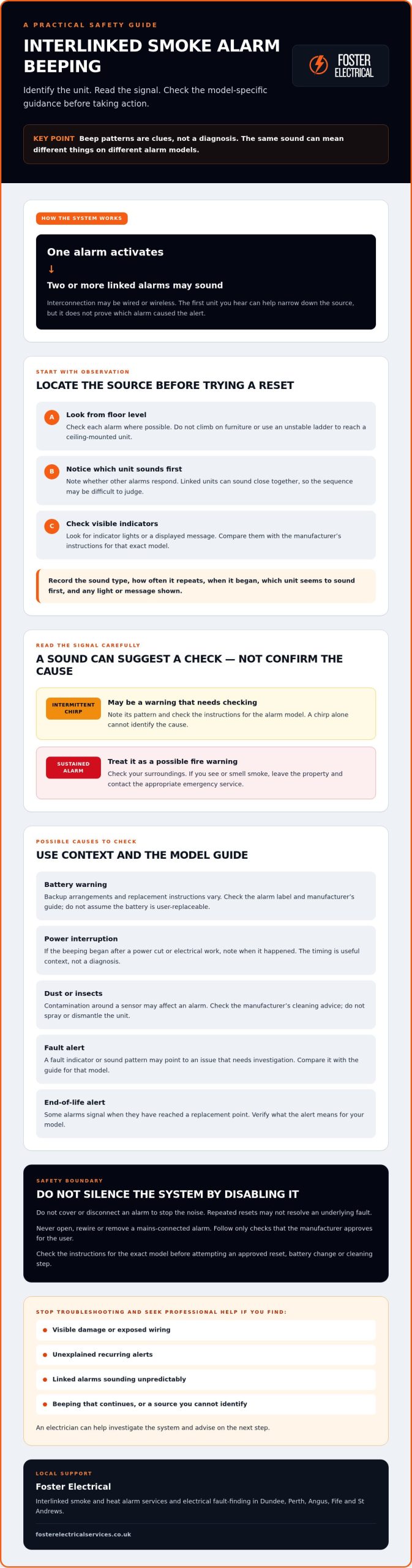
A beep doesn’t always mean the same thing. Alarm models and interconnection methods can produce different signals, so start by observing what’s happening rather than trying to silence the system. This is the first step towards an interlinked smoke alarm beeping fix, but the sound alone can’t confirm the cause.
An interlinked alarm system connects two or more alarms so that when one activates, the others can sound too. The link may be wired or wireless, depending on the system. For a basic explanation of how smoke detectors work and how interconnected alarms communicate, this overview provides helpful background.
How to locate the alarm making the noise
Look at each alarm from floor level where possible. Don’t climb on furniture or use an unstable ladder to reach a ceiling-mounted unit. Note which alarm appears to sound first, whether other units respond and whether the noise happens at a particular time or after a power interruption.
Check for visible indicator lights or a displayed message, then compare what you see with the manufacturer’s guide for that exact model. The first-sounding alarm may help narrow down the source, but it isn’t proof. Linked units can sound close together, making the sequence difficult to judge.
What the beep pattern may indicate
A brief chirp that repeats at intervals is different from a sustained alarm sound, but neither pattern gives a reliable diagnosis on its own. An intermittent chirp may be a warning that needs checking. Treat a continuous alarm as a possible fire warning until you’ve checked the surroundings. If you see or smell smoke, leave the property and contact the appropriate emergency service.
Patterns vary by model, so note the details instead of relying on a general sound guide. Record:
- Whether the sound is a short chirp or a sustained alarm
- How often it repeats and when it started
- Which unit seems to sound first, and whether the other alarms respond
- Any indicator light or message shown on the unit
Beep patterns are clues, not a substitute for model-specific instructions. Keep your notes handy when checking the manufacturer’s guidance. If you can’t identify the source or the signals don’t match the guide, don’t guess. Follow only the checks approved for your alarm.
Common causes of an interlinked smoke alarm beeping
A chirp can have several possible causes, and the same sound may mean different things on different alarms. Use the pattern, indicator lights and recent events as clues, then check the instructions for the exact model before taking action.
| Possible cause | What to consider |
|---|---|
| Battery warning | Some alarms have a backup battery, but its arrangement and replacement instructions vary. Check the alarm label and manufacturer’s guide. |
| Power interruption | A beep that begins after a power cut or electrical work is useful context, but it doesn’t confirm the cause. |
| Dust or insects | Contamination around a sensor may affect an alarm. Only clean it as the manufacturer directs. |
| Fault alert | A fault indicator or sound pattern may point to an issue that needs investigation. Check the model-specific guide. |
| End-of-life alert | Some alarms signal when they have reached a replacement point. Verify what the alert means for your model. |
Battery, power and warning signals
Don’t assume every alarm has a user-replaceable battery. Backup arrangements differ, so check the unit’s label and instructions rather than opening it to investigate. If the beeping started after a power interruption or electrical work, note when it happened. That timing may help narrow down the issue, but it isn’t a diagnosis.
Never open, rewire or remove a mains-connected alarm to stop the noise. Follow only checks the manufacturer approves for the user. The NFPA smoke alarm guidance offers general maintenance information, but it’s US-based. For your alarm, follow its manufacturer’s instructions and relevant UK guidance.
Dust, faults and end-of-life warnings
Dust or insects may interfere with a sensor, but don’t spray or dismantle the unit. Check the manufacturer’s cleaning advice first. Fault and replacement alerts also vary by model, so compare any light, display or sound pattern with the instructions before deciding what it means.
One chirp pattern can’t identify every alarm fault; the model’s instructions are the reliable guide. If approved checks don’t explain persistent beeping, professional fault-finding may be a sensible next step. Foster Electrical provides electrical fault-finding and repairs, alongside interlinked smoke and heat alarm services in Dundee, Perth, Angus, Fife and St Andrews.
Safe checks to try before resetting an interlinked alarm
A careful check can help you decide whether the beeping matches a user-level warning or needs professional attention. Work through the steps below in order, using the instructions for your exact alarm model. A safe interlinked smoke alarm beeping fix should never involve disabling the system just to stop the sound.
A cautious troubleshooting sequence
- Identify the unit. From a safe position, note which alarm appears to sound first. If you can read its make and model from a visible label without climbing or removing the unit, record those details.
- Check the manufacturer’s instructions. Use the guidance for that model to understand its indicators and approved user checks. General advice may not match your alarm’s design.
- Inspect visible indicators. Note any light or displayed message and whether other linked alarms sound. Don’t open the casing to look for a cause.
- Follow approved user checks only. Clean, check batteries or test the alarm only as directed for your model. The NFPA maintenance guidance offers general information, but it’s US-based. Your alarm manufacturer’s instructions should guide checks on your unit.
- Retest as instructed. Follow the manufacturer’s test procedure, then note whether the original beeping returns or the linked alarms behave unexpectedly.
Keep a short record of the pattern, indicator and checks you’ve tried. These details can help distinguish a warning from a problem that needs electrical fault-finding.
What not to do when alarms are interconnected
Don’t cover an alarm, bypass the interlink or leave a unit disabled to silence nuisance beeping. Don’t remove an alarm or its battery unless the manufacturer’s instructions explicitly tell you to do so. A mains-connected unit may involve electrical work, so leave wiring changes and investigation inside the unit to a competent electrician.
If you suspect a fire, don’t troubleshoot. Follow your household emergency procedure and leave the property if needed.
If manufacturer-approved checks don’t resolve the beeping, repeated resets are unlikely to provide a dependable answer. Foster Electrical provides electrical fault-finding and repairs, as well as interlinked smoke and heat alarm installation. If you’re in Dundee, Perth, Angus, Fife or St Andrews, you can contact Foster Electrical about persistent alarm beeping to discuss a sensible next step.
When a beeping interlinked smoke alarm needs an electrician
If the beeping returns after you’ve completed the manufacturer-approved checks, treat it as an unresolved fault rather than repeating resets. A warning that persists may need professional investigation, particularly if you can’t identify its source or the instructions don’t explain the signal.
Signs the issue may be beyond a simple user check
Stop troubleshooting and seek help if you notice visible damage or exposed wiring. The same applies if unexplained alerts keep returning, several linked units sound unexpectedly, or the warning continues after you’ve followed the approved procedure for the apparent source. These signs don’t prove a particular fault, but they are a reason not to open, remove or alter the alarms yourself.
Keep the alarms in service. Don’t cover a unit, bypass the interlink or leave part of the system disabled to stop the noise. If there may be a fire, follow your household emergency procedure instead of investigating the beeping. For broader context on electrical issues, see Fault Finding and Repairs: A Homeowner’s Guide to Electrical Troubleshooting.
Electrical fault-finding should be handled by a qualified professional. Foster Electrical provides fault-finding and repairs, as well as interlinked smoke and heat alarm installation in Dundee, Perth, Angus, Fife and St Andrews. Not every beep needs a call-out, but recurring or unexplained alerts after safe checks deserve proper attention.
What to tell an electrician about the alarm fault
A few clear details can help a local electrician understand what you’ve observed. Before making contact, note:
- The alarm’s make and model, if visible from a safe position
- Which unit seems to sound first, and whether other alarms respond
- The beep pattern, any visible indicator or message, and when the noise occurs
- When the issue began, plus any recent power interruption or electrical maintenance
- Which manufacturer-approved checks you’ve already tried, and whether the warning returned
These observations help describe the fault without requiring you to dismantle the unit or test electrical connections. If the checks haven’t resolved the beeping, contact Foster Electrical about persistent alarm beeping to discuss a sensible next step.
Resolve persistent smoke alarm beeping with local professional help
A measured approach helps you avoid guesswork. Identify which unit appears to be sounding, check its make and model, then follow the manufacturer’s instructions for any user-level checks. Don’t cover or disconnect an alarm to silence it. If the warning returns after approved checks, or you can’t work out what it means, arrange professional fault-finding rather than repeating resets.
This is the sensible next step when a do-it-yourself interlinked smoke alarm beeping fix hasn’t resolved the problem. You don’t need to assume every beep signals a major fault, but an unexplained recurring warning deserves attention. Professional fault-finding can help establish what’s happening without you altering the system yourself.
What information to have ready before making contact
A few observations can make an initial discussion clearer. From a safe position, note the alarm’s make and model if you can see them without dismantling the unit or climbing to reach it. Describe which alarms beep, whether they sound together, the timing or pattern, and any visible warning light or message.
Also mention when the beeping began and whether there was a recent power interruption or electrical maintenance. List the manufacturer-approved checks you’ve completed and say whether the warning stopped, returned or changed. These details give an electrician useful context without asking you to investigate wiring or open an alarm.
When installation or wider system advice may help
Troubleshooting an existing alarm is different from installing or changing an interlinked system. Foster Electrical provides electrical fault-finding and repairs, as well as interlinked smoke and heat alarm installation. If your concern is about a new installation or changes to the arrangement, see the information on interlinked smoke and heat alarm services. For questions about current requirements, consult the relevant official Scottish guidance rather than relying on an assumption about compliance.
Foster Electrical is based in Dundee and serves Perth, Angus, Fife and St Andrews as well. If persistent beeping remains unexplained after safe checks, contact Foster Electrical about an alarm fault to discuss an appropriate next step. Share what you’ve observed and leave any electrical investigation to a professional.
Take the next safe step with your alarm system
A sensible interlinked smoke alarm beeping fix starts with identifying the unit and signal, then checking the manufacturer’s instructions before trying any approved user checks. A beep can have several causes, so don’t rely on sound alone or disable an alarm to quiet it.
If the warning persists or linked units behave unpredictably, stop troubleshooting and arrange professional fault-finding. Foster Electrical provides fault-finding and repair services across Dundee, Perth, Angus, Fife and St Andrews, and offers interlinked smoke and heat alarm installation.
Share the alarm details and checks you’ve already tried, then contact Foster Electrical for practical advice about a persistent alarm fault. Explain what you’ve observed and leave any electrical investigation to a professional.
Frequently Asked Questions
Why is one interlinked smoke alarm beeping when the others are quiet?
One alarm may chirp on its own because its warning relates to that individual unit, but the sound alone can’t confirm the cause. Interlinked systems and warning behaviours vary by model, and not every type of beep necessarily makes all linked alarms sound. Check the indicator on the unit and its manufacturer’s instructions. Note which alarm beeps, how often and whether the pattern changes before trying any approved checks.
How do I stop an interlinked smoke alarm from beeping safely?
To find a safe interlinked smoke alarm beeping fix, identify the unit and follow its manufacturer’s instructions for approved user checks, such as cleaning or battery steps if specified. Don’t cover, disconnect or leave an alarm disabled just to stop the noise, and don’t attempt wiring changes. If you suspect a fire, follow your household emergency procedure rather than troubleshooting. If the warning returns after the approved checks, arrange professional fault-finding.
Can a power cut make an interlinked smoke alarm beep?
A power cut may be relevant, particularly if the beeping began during or after the interruption, but it doesn’t prove that the outage caused the warning. Backup power arrangements and indicators differ between alarm models. Note when the power interruption happened and compare the alarm’s current signal with its manufacturer’s guide. Don’t open or remove a mains-connected alarm to investigate. If beeping persists or linked units act unpredictably, seek professional advice.
Why is my smoke alarm still beeping after I changed the battery?
The battery may not be the only possible cause. Some alarms have different backup arrangements, and a continuing warning could relate to the model’s battery instructions, a fault, contamination or an end-of-life alert. Check that the battery change was approved for your unit and follow the manufacturer’s procedure. Don’t keep removing batteries or resetting the system repeatedly. If the beep continues, note any indicators and contact an electrician for fault-finding.
Can I remove one alarm from an interlinked system to stop the noise?
Don’t remove an alarm or its battery just to silence the system. Taking one unit out of service may affect the protection provided, and the correct procedure depends on the alarm model. Only follow removal instructions if the manufacturer explicitly directs users to do so. Never disconnect wiring or bypass the interlink yourself. If the beeping is persistent or unexplained, keep the alarms in service and arrange appropriate professional help.
How do I know whether an interlinked smoke alarm has reached the end of its life?
Check the alarm label for a date or replacement information, then compare any warning light, message or beep pattern with the manufacturer’s instructions. Some models provide an end-of-life alert, but its signal and meaning can vary. Don’t rely on a generic chirp description to decide that an alarm needs replacing. If the label is inaccessible or the instructions don’t clarify the warning, ask an electrician to assess the unit.
When should I call an electrician about a beeping smoke alarm?
Contact an electrician if beeping returns after the manufacturer-approved checks, the cause remains unclear, you see damage or exposed wiring, or linked alarms behave unpredictably. Don’t open the units or attempt electrical repairs. Foster Electrical provides fault-finding and repairs, as well as interlinked smoke and heat alarm installation. The Dundee-based business serves Dundee, Perth, Angus, Fife and St Andrews, offering a local next step for persistent alarm concerns.