A monthly emergency lighting check should be brief, but it still needs to be completed carefully. If you’re unsure which fittings to inspect, how to limit disruption or what to do when a light fails, a clear emergency lighting monthly test procedure gives your team a repeatable way to check and record the system.
This guide explains how to prepare, carry out the functional check, record the result and return the system to its normal state. It also covers when a fault needs attention from an electrician rather than a note in the log. Foster Electrical provides emergency lighting testing and commercial electrical support for premises in Dundee, Perth, Angus, Fife and St Andrews.
Key Takeaways
- Before starting, find the system instructions, designated test control and existing log. Plan the check around building use and site safety arrangements.
- Follow the installed system’s authorised emergency lighting monthly test procedure. Check the relevant fittings and signs for the response specified in the instructions.
- Record the date, areas or fittings checked, outcome and any faults. A fitting that fails or shows damage should not be recorded as a pass.
- If a fitting fails, follow the site’s interim safety procedures and arrange a competent assessment where needed.
- Give a named person responsibility for reminders, records and fault follow-up. Check the system guidance for any other tests required. Foster Electrical provides emergency lighting testing across Dundee, Perth, Angus, Fife and St Andrews.
What an emergency lighting monthly test checks
An emergency lighting monthly test is a routine functional check. Using the system’s designated test method, it confirms whether the relevant emergency fittings operate when the normal supply is interrupted. This helps a site team identify obvious problems before the lights are needed.
Emergency lighting can include fittings that illuminate escape routes and illuminated signs. For a general introduction to the purpose and types of equipment, see Emergency light. The correct emergency lighting monthly test procedure depends on the equipment installed, its manufacturer’s instructions and the arrangements at your premises. Controls differ between systems, so don’t copy a method from another building or improvise with an unfamiliar switch.
What should the monthly check tell you?
The check should show whether the relevant fittings respond when normal power is interrupted using the designated test method. As you go around the site, look for lights or signs that remain off, warning indicators, visible damage and unusual behaviour. Note the location or fitting reference for anything that needs attention. A failed or damaged fitting is a fault to follow up, not a pass.
A successful functional check confirms operation at the time of the check. It does not prove every aspect of system performance, including how the equipment will operate during a longer period without normal power. Follow the system guidance and site arrangements for any additional testing. Don’t treat the monthly check as a replacement for other tests that may apply.
Who should organise the test at commercial premises?
At a commercial site, the site manager or nominated responsible person can schedule the check, maintain the log and make sure faults are passed to the right person. Before testing, they should review the fire-safety arrangements and system instructions, including how to use the test control and what to do if normal lighting is affected.
The test should be operated only by someone competent and authorised for that site. The suitable method can depend on the system and how the building is used. If the instructions are unclear, the check cannot be completed safely or a fitting fails, seek advice from an electrician rather than attempting a repair yourself.
Foster Electrical provides emergency lighting testing across Dundee, Perth, Angus, Fife and St Andrews. Commercial premises needing professional support can find information about emergency lighting testing among its electrical services.
Prepare the building and emergency lighting before testing
Preparation makes the check easier to manage and reduces the risk of disrupting work or confusing occupants. Before starting, locate the instructions for the installed system, identify its designated test switch or control, and have the existing log and relevant site records ready. If the building has a site plan or asset register, use it to identify the fittings and areas to include, such as escape routes, stairwells and exit signs.
What should be ready before the test begins?
Confirm the authorised method in the system instructions, including how to interrupt and restore the normal supply. Don’t assume a control used for a different system is suitable. Decide who will operate the test facility, who will observe the fittings and who will record the outcome. Agree how to report a failed light or an unexpected effect on the building.
Tell affected occupants what to expect and when normal lighting should return. Check the premises’ fire-safety arrangements alongside the equipment instructions so the plan suits the building and its use. If either is unclear, get competent advice before operating the test facility.
How can you reduce disruption during a monthly check?
Choose a time that takes account of occupancy, essential activities and the routes people need to use. A busy reception, working area or public-facing space may need more coordination than a quiet office. Let occupants know about the planned interruption, and make sure appropriate arrangements are in place for occupied areas while normal lighting is affected.
If the test creates an unsafe condition, unexpectedly affects essential activity or cannot be completed using the authorised method, stop and seek competent assistance. Don’t improvise or leave the system in an uncertain state.
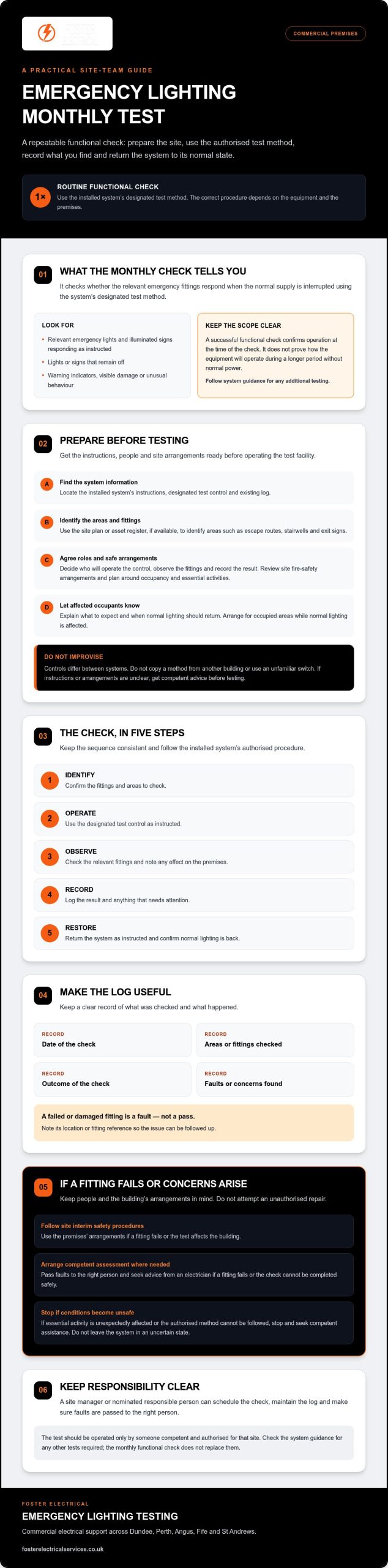
Keep the process in a clear order: identify the fittings and areas to check; operate the designated test control; observe the fittings and any effect on the premises; record the result and any issues; then restore the system as instructed and confirm normal lighting is back. This gives the person carrying out the emergency lighting monthly test procedure a practical sequence to follow, while keeping a routine functional check distinct from other testing.
For commercial sites in Dundee, Perth, Angus, Fife and St Andrews, Foster Electrical provides emergency lighting testing as part of its electrical services.
Emergency lighting monthly test procedure: the checks and what to record
Use the instructions for the installed system rather than relying on a generic method. The emergency lighting monthly test procedure should help the nominated checker identify which fittings respond, note anything that needs attention and restore the system as directed. There is no single test duration to assume for every system. Check the manufacturer’s guidance and site requirements.
How do you carry out the functional check?
Use only the designated test facility and the method described in the system instructions. If the controls or the scope of the check are unclear, pause and ask someone competent for advice. Don’t open fittings, alter wiring or attempt electrical repairs unless you are suitably competent and authorised.
- Start with the authorised method. Operate the test facility as instructed for that system. Don’t improvise or use a control you haven’t identified.
- Observe the relevant fittings. Check the locations and fitting references included in the site arrangements. Note which lights and illuminated signs operate as expected, and identify anything that remains off or behaves unusually.
- Look for visible concerns. Record damage, warning indicators and other obvious issues. A fitting that does not illuminate or appears damaged should be recorded as a fault, not a pass.
- Restore normal supply. Follow the system instructions to end the check and restore normal supply. Confirm that the system has returned to its expected state. Seek competent help if it has not.
- Complete the record and follow-up. Enter the result in the site log and state who will arrange investigation or repair of any fault.
What belongs in the emergency lighting test log?
A useful log should show what was checked and what happened, so another person can understand the result later. Include:
- the test date and the name of the person carrying it out;
- the locations or fitting references checked, including any areas not checked;
- the result, with failed fittings, warning indicators, damage or unusual behaviour described clearly;
- confirmation that normal supply was restored, along with any concern about the system’s condition;
- the action required, who is responsible for arranging it and a later note confirming whether the fault has been addressed.
Be specific. “Corridor fitting by rear exit did not illuminate” is more useful than “light faulty”. Keep outstanding issues visible in the log until they have been followed up. Foster Electrical provides emergency lighting testing across Dundee, Perth, Angus, Fife and St Andrews for sites that need support with testing or a fault.
What to do if a fitting fails or the test raises concerns
A failed or damaged emergency light is a fault, not a pass. Record what you observed and notify the person responsible for the premises. A clear entry helps them arrange an assessment and prevents an unresolved issue from being lost among completed test records.
How should you respond to a failed emergency light?
Write down the fitting’s exact location or asset reference and describe the symptom without guessing at the cause. For example, record that the fitting beside a named exit did not illuminate during the check. Note any warning indicators, visible damage or unusual behaviour as well.
Tell the appropriate site contact and arrange an assessment or repair by someone competent to carry out the work. Staff doing a routine check should not open equipment, handle wiring or attempt to replace batteries unless suitably competent and authorised. Follow the premises’ procedures for interim safety arrangements while the fault is being assessed. If the condition of an escape route is in doubt, escalate the concern promptly through the site’s established channels.
After corrective work, record who followed up and what was done. Any further check should follow the system instructions. Keep the fault open in the site record until the required follow-up confirms it has been addressed.
When might professional testing or repair be appropriate?
Ask an electrician to investigate if a fitting fails, a warning indicator appears, the result is unclear or the system does not return to its expected state. Repeated failures in the same area, or faults affecting several fittings, may need investigation beyond the routine functional check. Don’t keep repeating the test or changing controls in an attempt to find the cause.
The emergency lighting monthly test procedure is intended to identify concerns, not diagnose or repair electrical equipment. Foster Electrical provides emergency lighting testing across Dundee, Perth, Angus, Fife and St Andrews. You can review its electrical safety services for information about relevant support. Wider electrical safety checks may also be worth considering if there are concerns beyond the emergency lighting system. An EICR is a separate assessment and does not replace investigating a specific fitting fault.
If a test has identified a fault or you’re unsure what to do next, contact Foster Electrical about emergency lighting support.
Keep a dependable emergency lighting routine in Dundee and nearby areas
A dependable routine needs clear ownership as well as a careful check. Name the person responsible for scheduling the monthly check, maintaining the log and making sure faults reach someone who can follow them up. If responsibilities change, hand over the records and explain any open issues so they are not missed.
How can a site make monthly checks consistent?
Use a checklist based on the installed system’s instructions. Include the areas and fitting references to check, the result for each, any faults and the person responsible for follow-up. A site plan or asset register can help the checker cover the same locations in a consistent order.
Keep unresolved faults visible between checks instead of relying on the next monthly entry to bring them to attention. Review the checklist and site arrangements if the building’s use changes, equipment is altered or a different person takes responsibility. These habits help identify missed checks and show whether reported problems have been dealt with.
A monthly functional check has a limited purpose: it confirms that fittings respond to the designated test method at the time of checking. It is not a substitute for other testing that may be required by the installed system’s instructions or the premises’ arrangements. Check those requirements separately and ask a competent electrician if the testing plan or intervals are unclear.
When should a Dundee business ask for electrical support?
Arrange professional help if a fitting fails, a warning indicator appears, the test method is uncertain or a problem keeps recurring. A routine check can flag a concern, but it is not a repair or diagnosis. Follow site procedures for any interim safety arrangements while the issue is assessed.
Foster Electrical provides emergency lighting testing for commercial premises across Dundee, Perth, Angus, Fife and St Andrews. If you’d like to discuss your building, its system instructions or the support you need, discuss emergency lighting testing with the team.
Make your next emergency lighting check a dependable one
A dependable routine starts with the installed system’s instructions and the premises’ arrangements. Use the designated test method, check the relevant fittings, restore normal supply as directed and record the result. Clear records, named responsibility and timely follow-up help keep faults from being overlooked.
The emergency lighting monthly test procedure is a functional check, not proof of every aspect of system performance. If a fitting fails, an indicator shows a fault or the correct method is unclear, record the concern and ask a competent electrician to investigate. Check the system guidance for any other testing your premises may need.
If you need support with a fault or want to discuss testing for your premises, contact Foster Electrical to discuss emergency lighting testing.
Frequently Asked Questions
What is included in an emergency lighting monthly test?
A monthly check confirms whether relevant emergency fittings operate on their backup supply when normal supply is interrupted using the system’s designated test method. The checker observes whether lights and illuminated signs respond, and records visible damage, warning indicators or unusual behaviour. It is a functional check, not a full assessment of every aspect of performance. Follow the installed system’s instructions for any other testing that may be needed.
How do you carry out an emergency lighting monthly test?
Use the test facility and method specified in the instructions for your installed system. Check the fittings and areas included in the site arrangements, noting anything that does not illuminate or appears damaged. End the test and restore normal supply as instructed, then confirm the system has returned to its expected state. Record the date, areas checked, results and any follow-up needed. Don’t open fittings or attempt electrical repairs unless competent and authorised.
Does a monthly emergency lighting test need to last a set time?
There is no universal duration to apply without checking the system and site requirements. Follow the manufacturer’s instructions and the premises’ arrangements for the functional check. Don’t extend it based on guesswork. Other tests may have different requirements, including a longer period of operation. If the correct timing or method is unclear, ask a competent electrician to review the guidance for your system.
What should I do if an emergency light fails its monthly test?
Record the fitting’s location or reference and describe exactly what happened, such as “stairwell fitting did not illuminate”. Don’t guess at the cause or mark the result as a pass. Notify the appropriate site contact, follow local procedures for interim safety arrangements and arrange a competent assessment or repair. Keep the fault visible in the log until follow-up confirms it has been addressed. Use the system instructions for any further checks.
Can a site employee carry out the monthly emergency lighting check?
A site employee may carry out a routine functional check if they are competent and authorised for that site, and the system instructions and premises’ fire-safety arrangements allow it. The site manager or nominated responsible person can coordinate the check and make sure faults are escalated. Staff should not operate unfamiliar test equipment or attempt repairs. If it is unclear who can perform the check, seek competent advice before proceeding.
Does a monthly functional check replace the annual emergency lighting test?
No. A monthly functional check confirms that fittings respond to the designated test method at the time of checking. It does not establish how the system performs during other forms of testing. Check the installed system guidance and premises arrangements for any additional tests, their timing and who should carry them out. Don’t assume the monthly check replaces a longer duration test or another assessment that applies to your equipment.
What information should an emergency lighting test log contain?
Record the date, areas or fitting references checked, the outcome and the name of the person who carried out the check. Describe faults clearly, including indicators, visible damage or fittings that did not illuminate. Note the action required and who will arrange it. Also record that normal supply was restored and confirm when outstanding faults have been followed up, so the log gives a clear account of the check and its outcome.
When should I contact an electrician about emergency lighting?
Contact an electrician if a fitting fails, a fault indicator appears, the test arrangement is unclear or problems recur. A routine check identifies concerns but does not diagnose or repair electrical equipment. For support with testing or a fault at your premises, contact the team to discuss your requirements.