What if a rental property’s electrical safety can’t be covered by one test alone? Preparing to welcome tenants means knowing which checks apply to the fixed installation and which apply to appliances you supply. For landlords arranging pat testing dundee, understanding how PAT testing differs from an EICR is a useful first step towards a safe, well-documented handover.
It can be difficult to know what to arrange, what records to keep and whether an electrical concern could delay a tenancy. This practical Dundee checklist explains the roles of PAT testing and EICR inspections, sets out the main preparation steps and shows how to organise relevant electrical checks. It also covers the records to have ready, so you can prepare the property and provide tenants with a clear handover.
Key Takeaways
- Start with a room-by-room walk-through to spot visible concerns and note what needs attention before tenants move in.
- Make an inventory of landlord-supplied appliances to identify which items may need pat testing dundee.
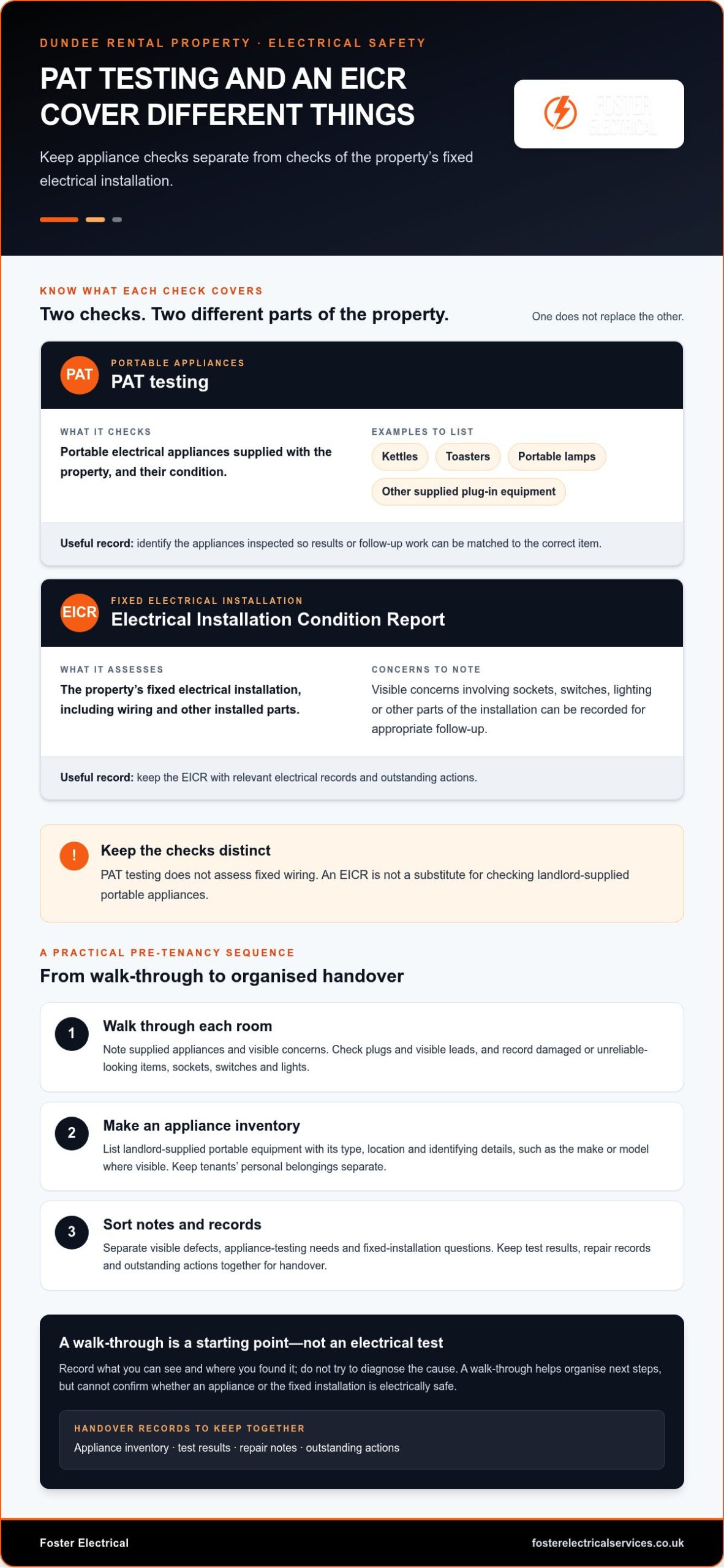
- Keep the checks distinct: PAT testing focuses on portable appliances, while an EICR assesses the fixed electrical installation.
- Use a checklist to track appliance condition, required checks, repairs and the records to organise for handover.
- Plan the work in order, from inspecting the property to arranging relevant checks, so electrical preparation is clear and manageable.
Getting a Dundee rental property ready: start with a safety walk-through
A rental home should be safe, functional and ready for its next occupants. A careful walk-through gives you a practical starting point: check each room, note what you supply and record anything electrical that looks damaged or unreliable. It won’t replace an electrical inspection, but it helps you make a clear list of what needs attention.
What to include in a pre-tenancy property walk-through
Move through the property methodically rather than relying on a quick look around. In each room, inspect supplied portable appliances, their plugs and visible leads for signs of damage. Note any sockets, switches, lights or other electrical equipment that appear cracked, loose, scorched or unreliable. Don’t try to diagnose the cause yourself; record what you can see and where you found it.
Make an appliance inventory as you go. Include each item’s type, location and identifying details, such as the make or model where visible. This makes it easier to match an appliance to test records or repair notes later. For a general overview of visual inspection and electrical testing, see What is PAT testing. Foster Electrical provides PAT testing and electrical safety services for properties in Dundee.
For landlords arranging PAT testing in Dundee, a well-kept inventory clarifies which supplied appliances should be included and makes the handover paperwork easier to organise.
How to turn inspection notes into a useful action list
Once you’ve completed the walk-through, sort your notes into three practical groups:
- Visible defects: record the item or fitting, its room and the concern you observed.
- Appliance-testing needs: list supplied portable appliances so relevant PAT testing can be arranged and results linked to the correct items.
- Fixed-installation questions: note concerns involving sockets, switches, lighting or other parts of the installation for appropriate follow-up.
Address apparent safety concerns before cosmetic work or convenience improvements. A damaged appliance lead, for example, deserves attention ahead of a scuffed lampshade. Keep the wording factual: “cracked socket face in the hall” is more useful than “hall electrics unsafe”, which makes a judgement a walk-through alone can’t establish.
A walk-through identifies visible concerns and helps organise next steps, but it is not an electrical test and cannot confirm whether an appliance or fixed installation is electrically safe. Keep your notes together with test results, repair records and outstanding actions. This gives you a clearer picture of the property’s readiness and makes handover more orderly.
PAT testing in Dundee rentals: what it checks and which appliances to include
PAT testing is the inspection and testing of portable electrical appliances. It focuses on the appliance and its condition, not the property’s fixed wiring. The Scottish Government’s statutory guidance for landlords explains electrical safety within the Repairing Standard, including checks relating to appliances supplied with a property.
For landlords, the practical starting point is to identify what you provide. A kettle in a furnished kitchen, a table lamp or another portable electrical item may need to be included in your appliance checks. The right approach depends on the equipment and its condition, so not every item has identical testing needs. Base your PAT testing plan on a clear inventory rather than an assumed one-size-fits-all list.
Which landlord-supplied appliances may need attention?
Walk through the property and list the portable electrical equipment you supply, including items in furnished lets. Depending on what’s provided, this might include:
- Kitchen appliances such as kettles or toasters
- Portable lamps and other plug-in lighting
- Other portable electrical equipment supplied for tenants’ use
Keep landlord-provided items distinct from tenants’ personal belongings. A simple inventory with each appliance’s type, location and identifying details helps organise inspection and testing, then match results or follow-up work to the correct item. Foster Electrical provides PAT testing in Dundee for residential and commercial properties.
How PAT testing differs from an EICR
PAT testing concerns portable appliances. An Electrical Installation Condition Report (EICR) assesses the fixed electrical installation, such as the wiring and other installed parts of the property. One doesn’t replace the other: appliance checks don’t assess fixed wiring, and an EICR isn’t a substitute for checking landlord-supplied portable equipment.
Keeping the two checks clear in your records makes it easier to see what each covers and what still needs attention. For more detail on the fixed installation assessment, read this Dundee landlord’s EICR guide. A suitable appliance-testing plan and a clear understanding of the installation help build a more complete picture of electrical safety before a tenancy begins.
PAT testing or an EICR? Match the electrical check to the rental property
These checks answer different questions. PAT testing focuses on portable appliances supplied with the property, while an Electrical Installation Condition Report (EICR) assesses the fixed electrical installation. Keeping their purposes separate helps you identify what needs attention and avoid assuming one check covers everything.
| Check | What it covers | When a landlord might consider it | Resulting record |
|---|---|---|---|
| PAT testing | Portable electrical appliances | When the property includes landlord-supplied appliances, particularly where their condition, use or testing history needs reviewing | A record of the appliances inspected and their test results |
| EICR | The fixed electrical installation | When the condition of the property’s installed electrical system needs assessing | An Electrical Installation Condition Report |
When does PAT testing belong on the preparation checklist?
Start with the inventory: what appliances are supplied, where are they used, and what do you know about their condition and history? A kettle used regularly may prompt different questions from a rarely used lamp, but appearance alone can’t confirm electrical safety. The appropriate approach depends on the appliance and its circumstances, so don’t assume every item needs identical attention or apply an unsupported universal testing interval.
The Health and Safety Executive’s Portable appliance testing FAQs provide further guidance on PAT testing principles. Clear records for PAT testing in Dundee help connect each appliance to its inspection and outcome, making follow-up easier to manage.
When should landlords consider an EICR?
Consider an EICR when you need an assessment of the fixed installation, rather than the portable items in your inventory. It addresses a different part of the property from PAT testing, and neither check should be treated as automatically satisfying every landlord responsibility. If both appliances and the installation need attention, keep the checks and records distinct.
Foster Electrical provides PAT testing and EICR inspections in Dundee. You can find an overview of our electrical safety services and organise the work around your property’s needs.
A practical Dundee rental-property checklist for checks, repairs and records
A clear property file makes it easier to see what’s been checked, what work remains and where the supporting records are kept. Before advertising or handing over your Dundee rental, use this checklist to bring the appliance inventory, inspection notes and follow-up actions together.
Prepare appliances and electrical records
- List supplied appliances: record each portable item provided with the tenancy, its location and identifying details where available.
- Gather existing paperwork: bring together previous appliance test records, inspection reports and repair documents relating to the property.
- Note visible concerns: write down the appliance or fitting, its location and what you observed. Keep observations factual rather than trying to diagnose the fault.
- Flag outstanding defects: mark unresolved issues clearly so they aren’t lost among completed work or routine improvements.
This gives you a useful starting point for arranging PAT testing for landlord-supplied appliances, while keeping those records distinct from paperwork relating to the fixed installation.
Arrange and document follow-up work
Group actions according to what they address. Appliance testing relates to supplied portable equipment; an EICR concerns the fixed electrical installation; repairs address identified faults. Keeping these purposes separate helps you arrange the appropriate work and understand what each result records.
- Set out the next action: note which check or repair is needed and which item or area it concerns.
- Track agreed repairs: record what has been approved, what remains outstanding and when the work is completed.
- File the evidence: retain test results, inspection reports and repair records with the property’s electrical paperwork.
- Review before handover: check that completed work is documented and unresolved items are clearly recorded for follow-up.
Foster Electrical is based in Dundee and provides PAT testing, EICR inspections, electrical maintenance and repairs. Our local service covers Dundee, Perth, Angus, Fife and St Andrews. See our electrical services in Dundee for an overview. A tidy, up-to-date property file helps you track the work and provides a practical reference for future inspections and tenancy changes.
Arrange PAT testing in Dundee and complete your rental handover confidently
A straightforward handover starts with knowing what the property contains and what work has already been done. Walk through each room, list the portable appliances you supply and note visible concerns. Then arrange relevant appliance testing, installation checks or repairs, and keep the results and follow-up paperwork together. PAT testing is an important part of preparation when landlord-supplied appliances need attention, but it doesn’t assess the fixed installation or replace other suitable checks.
What information to have ready when arranging the work
A few clear details help make the next steps practical. Note the property’s location and whether it’s furnished or unfurnished. Prepare an appliance list that names each item and its room, and describe any concerns you’ve observed without trying to diagnose them. If a lead looks damaged or an appliance behaves unreliably, record that clearly.
Gather existing reports, appliance test records and repair paperwork as well. These documents help explain the property’s history and show what has already been addressed. For PAT testing in Dundee, an accurate inventory helps connect each result with the right appliance and makes handover records easier to manage.
What a completed preparation process should leave you with
At the end, aim for a property file that gives you a clear account of the work, not just a pile of paperwork. It should show which supplied appliances were considered, which checks or repairs were completed and whether any actions remain outstanding. Keep appliance records distinct from reports on the fixed installation, so the scope of each check stays clear.
Foster Electrical is based in Dundee and provides PAT testing, EICR inspections and other electrical safety services. Organised records make future tenancy preparation easier to manage and provide a useful reference when the property’s electrical work is reviewed again. Read more about our electrical services in Dundee.
For help arranging electrical checks for a rental home, contact Foster Electrical about rental-property electrical checks. A clear outline of the property, supplied appliances and existing records is a practical place to begin.
Prepare your Dundee rental for a confident handover
A smooth electrical handover starts with a careful walk-through, a clear list of landlord-supplied appliances and notes on visible concerns. PAT testing focuses on portable appliances, while an EICR assesses the fixed installation. Keeping their purposes and records distinct helps you see what has been checked and what still needs attention.
A practical plan for PAT testing in Dundee also includes gathering previous reports, recording repairs and keeping the paperwork together for future reference. PAT testing is one part of thoughtful preparation, not a substitute for other suitable electrical checks.
Foster Electrical is based in Dundee and serves Dundee, Perth, Angus, Fife and St Andrews. We provide PAT testing and EICR inspections, helping landlords organise electrical checks for their properties. Arrange electrical checks for your Dundee rental property and take the next step towards a well-documented handover.
Frequently Asked Questions
What does PAT testing involve in a rental property?
PAT testing involves inspecting and testing portable electrical appliances supplied with the rental property. It focuses on the appliance, not the fixed wiring. The process considers the item and its condition, with findings recorded against the relevant appliance. For landlords arranging PAT testing in Dundee, an inventory of supplied items helps identify the equipment to consider and makes it easier to keep results with the property’s electrical records.
Is PAT testing a legal requirement for landlords in Scotland?
Scottish Government guidance on the Repairing Standard requires landlords to ensure electrical appliances supplied with a property are inspected and tested as part of electrical safety checks. This applies to landlord-provided appliances, rather than a tenant’s own belongings. The guidance describes the expected safety approach; it’s sensible to keep relevant inspection and test records together. PAT testing addresses appliances, while an EICR assesses the fixed installation, so one doesn’t replace the other.
How often should rental-property appliances be PAT tested?
Scottish Government statutory guidance sets an interval of no more than five years for the electrical safety inspection, including checks of supplied appliances. The appropriate testing approach may also depend on the equipment, its condition, use and history, so some items may warrant attention sooner. Keep a record of test dates and outcomes, and consider the appliances’ circumstances when planning the next checks rather than assuming every item needs the same schedule.
Does an EICR include PAT testing?
No. An Electrical Installation Condition Report assesses the fixed electrical installation, while PAT testing focuses on portable appliances supplied with the property. They produce different records and address different parts of electrical safety. If your property has both supplied appliances and a fixed installation that needs assessment, arrange and file the relevant checks separately. This makes it clear what each report covers and helps identify any outstanding follow-up work.
Do unfurnished rental properties need PAT testing?
It depends on what the landlord supplies. An unfurnished property may still include portable electrical appliances, so check the inventory rather than relying on the furnished or unfurnished label alone. If you provide no portable appliances, there may be no landlord-supplied items for PAT testing, but this doesn’t assess the fixed installation. Keep appliance checks distinct from any installation assessment and record what equipment is included with the tenancy.
What should I do if an appliance fails a PAT test?
Take the result seriously and prevent the appliance from being used until the concern has been addressed. Record which item failed and keep it separate from appliances that have passed, so it can’t be returned to use by mistake. Arrange appropriate follow-up, such as repair or replacement, and retain the paperwork showing what was done. If the item is repaired, make sure its status is clear before it is supplied to tenants again.
Can a landlord arrange PAT testing in Dundee before tenants move in?
Yes. Arranging checks before a tenancy begins gives you time to identify supplied appliances, organise suitable testing and keep the results with the property records. Foster Electrical is based in Dundee and provides PAT testing and EICR inspections. Our local service covers Dundee, Perth, Angus, Fife and St Andrews, supporting landlords as they prepare electrical checks and organise rental-property records.