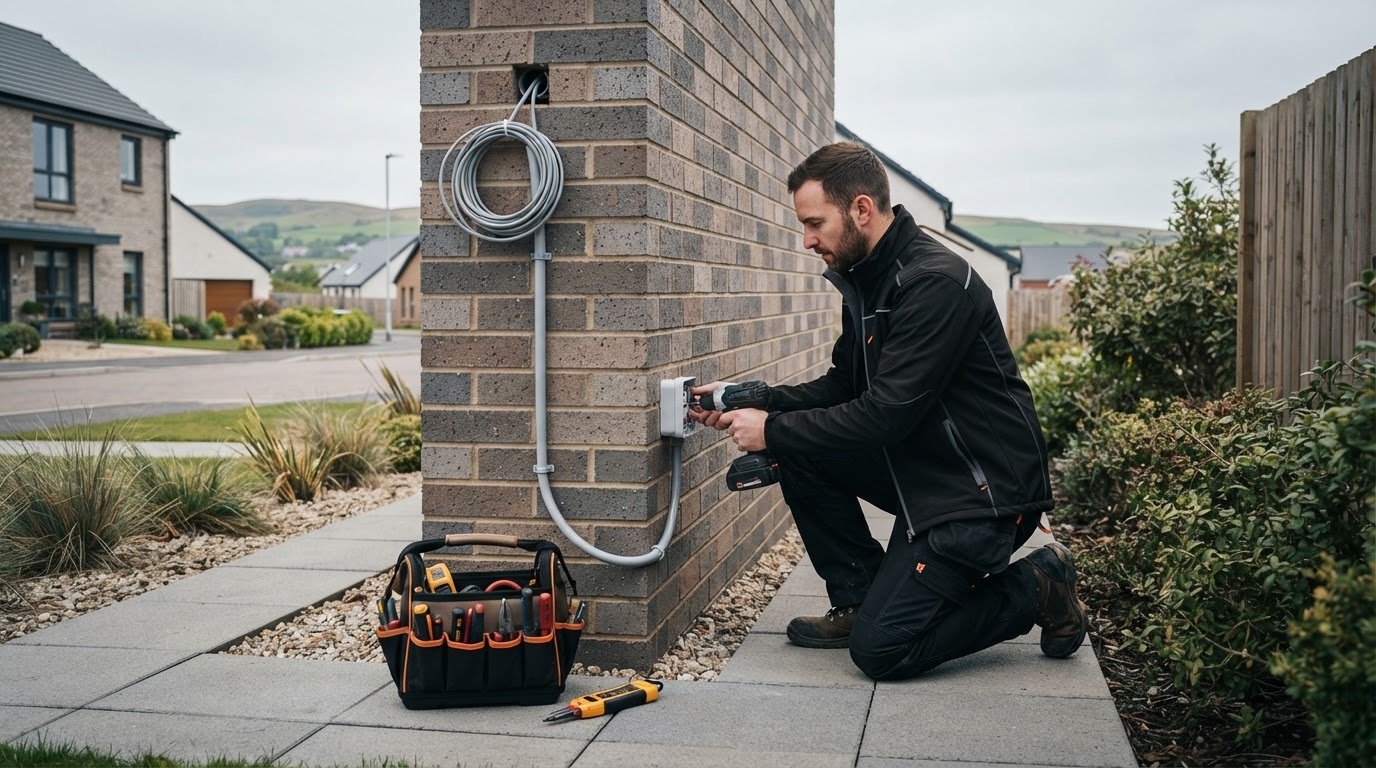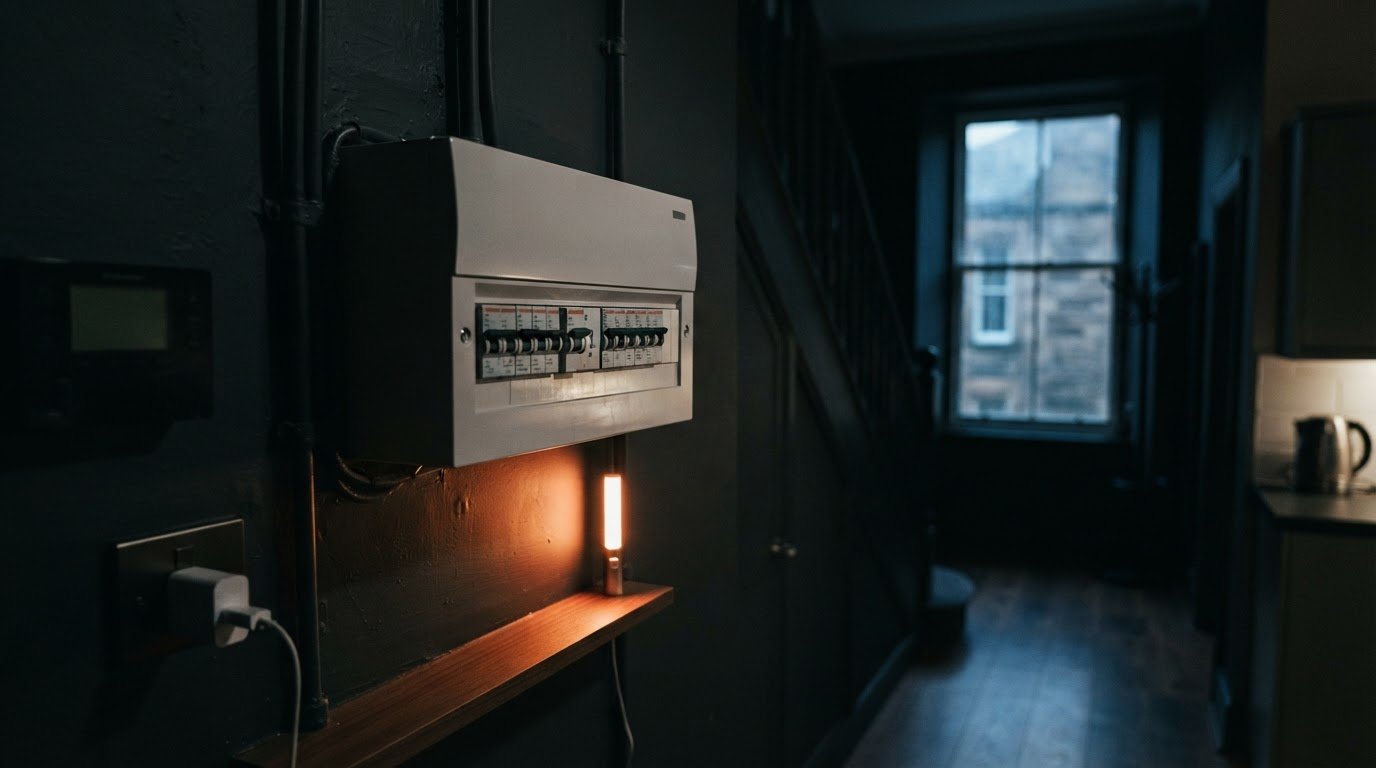
An installation certificate and an EICR aren’t interchangeable. That’s the key to the electrical installation certificate vs eicr distinction: one records qualifying electrical work after it is completed, while the other reports on the condition of an existing installation at the time of inspection.
If paperwork is missing or you’re trying to work out what an older property needs, start by identifying what you want the document to tell you. An Electrical Installation Certificate relates to work such as a new circuit or rewire; an Electrical Installation Condition Report assesses the installation already in place. Each document has a different purpose and scope.
In this guide, we explain what each document records, when it may apply in Scotland, and what to do if you’ve recently had electrical work done or are responsible for an existing property. Foster Electrical provides EICRs and electrical installation services in Dundee, Perth, Angus, Fife and St Andrews.
Key Takeaways
- The key to understanding electrical installation certificate vs eicr is knowing whether you need a record of completed work or an assessment of an existing installation.
- Match the document to the situation: recent electrical work, an existing property or paperwork you can’t locate each calls for a different next step.
- Use an EICR’s outcome and observations to understand what action may be recommended. The report records findings, rather than pricing remedial work.
- Keep installation documentation with your property records so you can refer to it later and see which work it covers.
- Foster Electrical provides EICRs and electrical installation services in Dundee, Perth, Angus, Fife and St Andrews.
Electrical Installation Certificate vs EICR: what does each document mean?
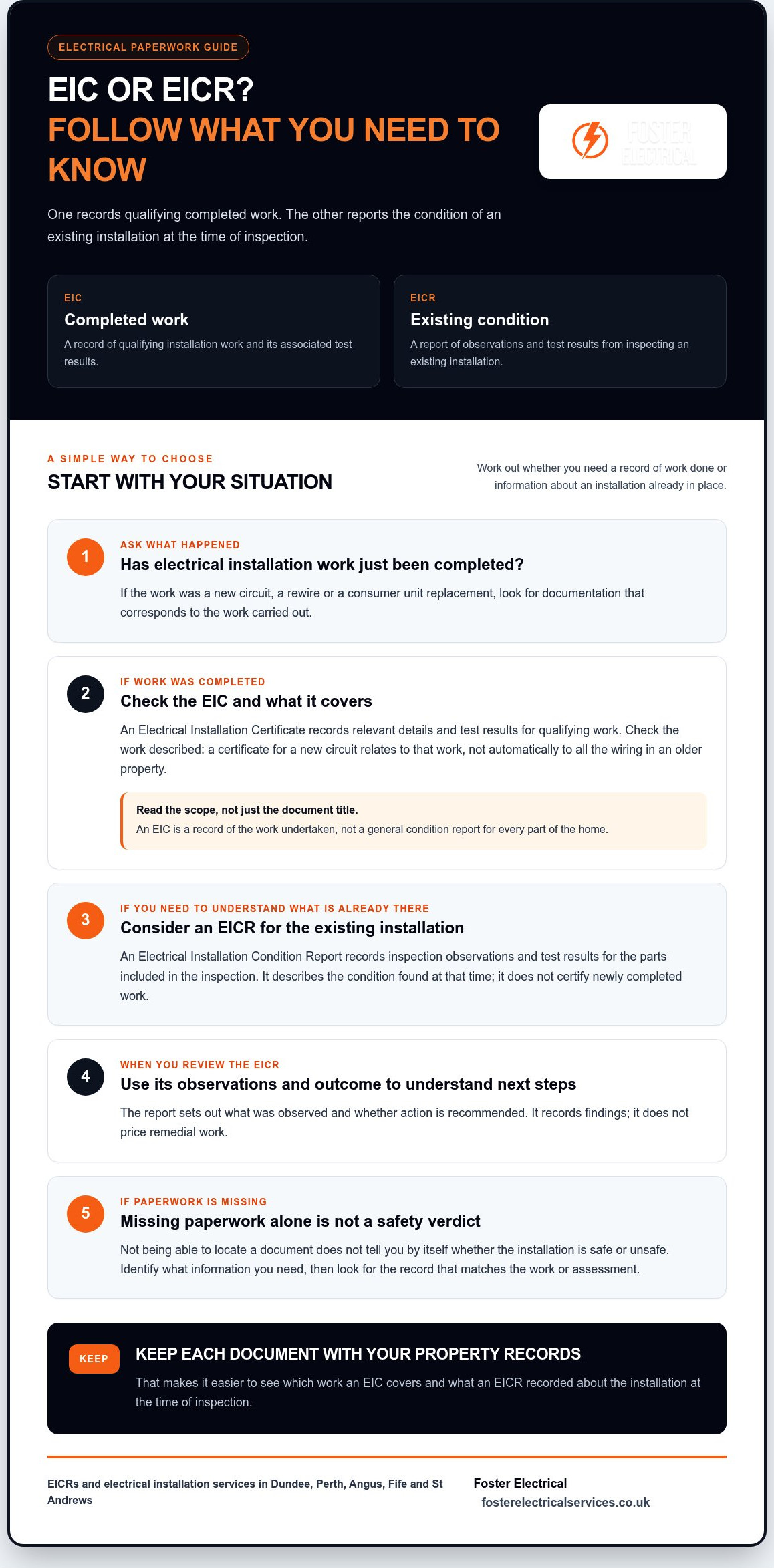
An Electrical Installation Certificate (EIC) records qualifying new electrical work. An Electrical Installation Condition Report (EICR) records findings from an inspection of an existing installation. That is the central difference in electrical installation certificate vs eicr: one documents completed work, while the other describes the condition of the installation inspected.
The documents apply at different stages and have different scopes, so they aren’t interchangeable. An EIC may relate to a new circuit, a rewire or a consumer unit replacement. An EICR, by contrast, considers an installation that is already in place. Both relate to electrical safety and the BS 7671 wiring regulations, but they record different things.
What information does an Electrical Installation Certificate record?
An EIC is associated with electrical installation work once it has been completed. It records relevant details about the work and the results of the tests carried out on it. This gives the property owner a record of what was installed and the test information relating to that work.
Pay attention to the work described on the certificate. An EIC for a new circuit, for example, relates to that work; it shouldn’t be read as an assessment of every part of an older property’s electrical installation. Keep the certificate with your property records so you can refer to it when planning later work or reviewing the installation history.
What does an EICR say about an existing installation?
An EICR records inspection observations and test results for an existing electrical installation. It reports on the condition of the parts included in the inspection at that time, helping you understand what was observed and whether action is recommended. It isn’t a record that new installation work has been completed.
An EICR reports the condition of an existing installation; it isn’t a completion certificate for electrical work. If an inspection identifies issues, the report sets out the findings to consider. Any subsequent repair or installation work has its own documentation. Keeping the purpose of each document clear makes it easier to see what your property records show and what information may still be needed.
How an EIC and EICR differ in purpose, timing, and scope
The main difference is what each document records. An EIC relates to qualifying electrical installation work once completed, whereas an EICR records findings from an inspection of an existing installation. Neither document guarantees that an installation will remain safe indefinitely; each relates to the work or condition recorded at a particular time.
| Point of comparison | Electrical Installation Certificate (EIC) | Electrical Installation Condition Report (EICR) |
|---|---|---|
| Purpose | Records relevant details and test results for qualifying installation work. | Reports observations and test results from an inspection of an existing installation. |
| Typical context | Associated with completed work, such as a new circuit or rewire. | Used to assess an installation that is already in place. |
| Scope | Relates to the work documented, not automatically the entire property. | Relates to the installation and areas covered by the inspection. |
| Resulting record | A record of the completed work and associated test results. | A report of the condition and findings at the time of inspection. |
Does an EIC cover the whole property?
Not necessarily. An EIC relates to the installation work it documents. If a new circuit is installed, for example, the certificate concerns that work; it doesn’t automatically assess all the existing wiring in the property. A full rewire covers broader installation work, but the certificate remains a record of the work undertaken rather than a general condition report for every part of the home. For more context, see our property rewiring services.
Does an EICR certify newly completed electrical work?
No. An EICR reports on the condition of an existing installation at the time of inspection. It doesn’t certify that a particular installation job has been completed. If you need a record of new work, the documentation associated with that work is the relevant record. An inspection may identify observations about an installation, but that doesn’t turn the report into a completion certificate.
In practical terms, electrical installation certificate vs eicr comes down to completed work versus an assessment of existing condition. Foster Electrical provides EICRs and electrical installation services in Dundee, Perth, Angus, Fife and St Andrews. Discuss an EICR or electrical installation project with Foster Electrical.
Which document applies to your property or electrical work?
Start with what has happened, or what you need to understand. If electrical work has just been completed, its associated documentation should relate to that work. If you want information about an existing installation, an EICR may be the relevant assessment. Missing paperwork is a reason to look into the records, but it doesn’t tell you by itself whether the installation is safe or unsafe.
| Situation | Useful next step | Document to consider |
|---|---|---|
| A rewire, new circuit or other installation work has been completed | Look for documentation that corresponds to the work carried out. | An EIC associated with qualifying installation work |
| You’re assessing an existing property’s electrical installation | Arrange an inspection to obtain information about its condition. | An EICR |
| You can’t find the property’s electrical records | Establish what work has been done and whether an assessment of the existing installation is needed. | The next step depends on the circumstances; missing paperwork alone doesn’t determine the installation’s condition. |
After a rewire, upgrade, or other installation work
Completion documentation should match the work undertaken. A full property rewire involves broader work than a targeted alteration, such as adding a circuit, so read the record in that context. An EIC connected with specific work doesn’t automatically describe every part of the property’s electrical installation. If you’re weighing up a larger project, read about our property rewiring services for further context.
If you’ve moved into a home and found a certificate but aren’t sure what it covers, check the work described in the record. Don’t assume it applies to the entire property.
When buying, managing, or maintaining an existing property
An EICR can provide a structured account of an existing installation’s condition at the time it is inspected. Read the observations and any recommended action to understand what the inspection found. The report doesn’t replace documentation for installation work completed separately. The practical difference in electrical installation certificate vs eicr is whether you’re looking for a record of completed work or information about an existing installation.
Landlords looking for background on electrical reports can read Propertymark’s explanation of electrical safety certificates and reports. As the article discusses the private rented sector, don’t assume it sets out Scottish requirements; keep the property’s location in mind when considering what applies. Foster Electrical provides EICRs in Dundee, Perth, Angus, Fife and St Andrews.
What EICR findings mean and what to do next
An EICR can feel technical at first glance, but it’s easier to work through in order. Start with the report’s overall outcome, then read each observation and its recommended action. The report records what was found during the inspection; it isn’t a quotation for remedial work or a diagnosis beyond what the report states.
How to read the inspection outcome and observations
Look first for the section that summarises the overall assessment, then read the detailed observations alongside it. Report layouts can vary, so connect each observation with its description and any recommended action rather than relying on the summary alone.
Use this simple sequence:
- Read the overall outcome. Note the conclusion recorded in the report.
- Review every observation. Match each item to the circuits or installation parts described.
- Check the recommended action. Follow the report’s wording and any stated urgency, rather than guessing what an observation means.
- Keep the report accessible. You can refer to it when discussing findings or planning further work.
If the report uses classification codes, read their explanations in the report and refer to current authoritative guidance if anything remains unclear. Check code meanings against the applicable guidance rather than inferring them from a label or brief summary.
What happens if the report identifies work to address?
The appropriate response depends on the findings and the work recommended. A short summary may not include enough detail to understand the issue or decide what work is needed, so don’t try to diagnose a fault from that alone. Read the relevant observation in full and use the report as the basis for deciding the next step.
An EICR and an Electrical Installation Certificate serve different purposes: the report describes inspection findings, while installation documentation relates to completed electrical work. If remedial work is carried out, keep its associated documentation with the report so the property records show both the inspection findings and any later work.
For help understanding an EICR or discussing electrical work in Dundee, discuss your EICR findings or electrical work with Foster Electrical. A clear conversation about the observations helps establish a practical next step without assuming more than the report says.
Arrange an EICR or electrical installation work in Dundee and nearby areas
The right service depends on what you need to find out or have done. An EICR assesses the condition of an existing electrical installation, while an Electrical Installation Certificate relates to qualifying work once it has been completed. Keeping that distinction in mind helps you describe your property’s needs clearly and identify which type of record is relevant.
Foster Electrical is based in Dundee and provides EICRs and electrical installation services across Dundee, Perth, Angus, Fife and St Andrews. Explore our electrical services to see how we support property owners with installation work and electrical safety.
When an EICR is the relevant service
If you’re looking for a report on an existing installation, an EICR provides findings from an inspection of its condition. It doesn’t document a new installation or replace the certificate associated with completed electrical work. The report gives you information to consider, including observations and recommended actions, so you can understand what was found during the inspection.
Landlords seeking information focused on rental properties can also review our general guidance for landlords. For Scottish properties, keep local requirements in mind when considering landlord responsibilities.
When electrical installation work is needed
If the job is to carry out electrical work rather than assess an existing installation, the work and its associated documentation address a different need. A rewire and a consumer unit upgrade are examples of installation work; an EICR, by contrast, reports on the condition of an existing installation at inspection. One document shouldn’t be treated as a substitute for the other.
This is the practical meaning of electrical installation certificate vs eicr: installation documentation relates to work carried out, while a condition report concerns what an inspection finds. Foster Electrical carries out electrical installation work and EICRs for homeowners and property managers in Dundee, Perth, Angus, Fife and St Andrews.
If you’re ready to discuss an inspection or installation project, contact Foster Electrical to discuss your electrical requirements.
Make the right next step for your property
The distinction in electrical installation certificate vs eicr comes down to purpose: an installation certificate records relevant completed work, while an EICR reports on the condition of an existing installation at inspection. If paperwork is missing, that alone doesn’t establish the installation’s condition. Consider what work has been carried out and whether an inspection is needed.
Foster Electrical is a Dundee-based electrical contractor providing EICRs and electrical installation services across Dundee, Perth, Angus, Fife and St Andrews. Whether you need an assessment of an existing installation or are planning electrical work, we can discuss the practical next step for your property.
Contact Foster Electrical to discuss an EICR or electrical installation work. Share whether you need an inspection or have a specific installation project in mind so the conversation can focus on the right next step.
Frequently Asked Questions
Is an Electrical Installation Certificate the same as an EICR?
No. An Electrical Installation Certificate (EIC) records qualifying electrical installation work and the relevant test results for that work. An Electrical Installation Condition Report (EICR) records findings from an inspection of an existing installation. The distinction in electrical installation certificate vs eicr is whether the document relates to completed work or reports on existing condition. One doesn’t replace the other, and each should be read in light of what it covers.
Can an EICR replace an Electrical Installation Certificate?
No. An EICR reports on the condition of an existing installation at the time of inspection; it isn’t a completion record for new electrical work. If a circuit, consumer unit or other installation work has been completed, the relevant installation documentation relates to that work. An EICR may provide information about the wider installation, but it doesn’t confirm the details and test results of a separate job.
When should I receive an Electrical Installation Certificate?
An EIC is associated with qualifying installation work once that work has been completed. For example, following a new circuit or a full rewire, the certificate records relevant details and test results for the work undertaken. Its scope depends on the job, so it may not cover every part of the property’s electrical installation. Keep the document with your property records, alongside any other relevant electrical paperwork.
What does an EICR tell me about my property?
An EICR records inspection observations and test results, giving you information about the condition of the installation within the inspection’s scope at that time. Read the overall outcome alongside the detailed observations and recommended actions. It doesn’t describe every part of a property unless included in the inspection, nor does it guarantee future condition. Foster Electrical provides EICRs across Dundee, Perth, Angus, Fife and St Andrews.
Do I need an EICR after a house rewire?
A house rewire is installation work, so its associated completion documentation is relevant to the work carried out. An EICR has a different purpose: it assesses the condition of an existing installation at inspection. The rewire itself doesn’t mean an EICR automatically replaces the installation certificate. Whether an additional condition inspection is appropriate depends on what you need to assess and the circumstances of the property.
What should I do if an EICR identifies issues?
Read the report’s overall outcome, then review each observation and its recommended action in context. The appropriate next step depends on the findings recorded, so don’t try to diagnose a fault from a brief summary alone. An EICR records inspection findings; it isn’t a quotation for remedial work. If work is carried out, keep its associated documentation with the report for a clear property record.
Is an EICR a legal requirement for landlords in Scotland?
Yes. Private landlords in Scotland are required to arrange an electrical safety inspection that includes an EICR at least every five years. This requirement applies to private rented properties, not automatically to every homeowner. Landlord obligations can depend on the property’s circumstances, so check current Scottish guidance if you need to understand how the requirement applies to a particular tenancy or property.