Did you know that over 53% of accidental home fires have an electrical origin? For many Dundee landlords and business owners, the thought of an upcoming safety audit feels like a looming burden rather than a protective measure. It’s natural to feel confused about how Scottish laws differ from those in England, or to worry that a day of PAT testing will bring your workplace to a standstill. We believe your safety is a shared responsibility, and we approach every inspection with the same care we would use in our own homes.
We’ve put together this complete professional checklist to help you navigate your legal duty of care and prepare your premises for a smooth inspection. By following these practical steps, you’ll ensure your property meets the latest standards, including the May 2026 requirements for social tenancies. We’ll walk you through the essential visual checks you can do yourself and explain how a reliable local expert can help you stay compliant without any unnecessary fuss.
Key Takeaways
- Understand how the Scottish Repairing Standard applies to your Dundee property to maintain full legal compliance and safety.
- Discover why a thorough visual inspection is the most important part of identifying potential electrical hazards before technical testing begins.
- Learn how to determine the right frequency for PAT Testing using a risk-based approach tailored to your specific equipment and environment.
- Use our practical preparation checklist to ensure a seamless visit that respects your property and minimises disruption for tenants or staff.
- Find out why choosing a local expert ensures your workspace or home is treated with the highest standards of care and integrity.
What is PAT Testing? Understanding Your Legal Obligations in Scotland
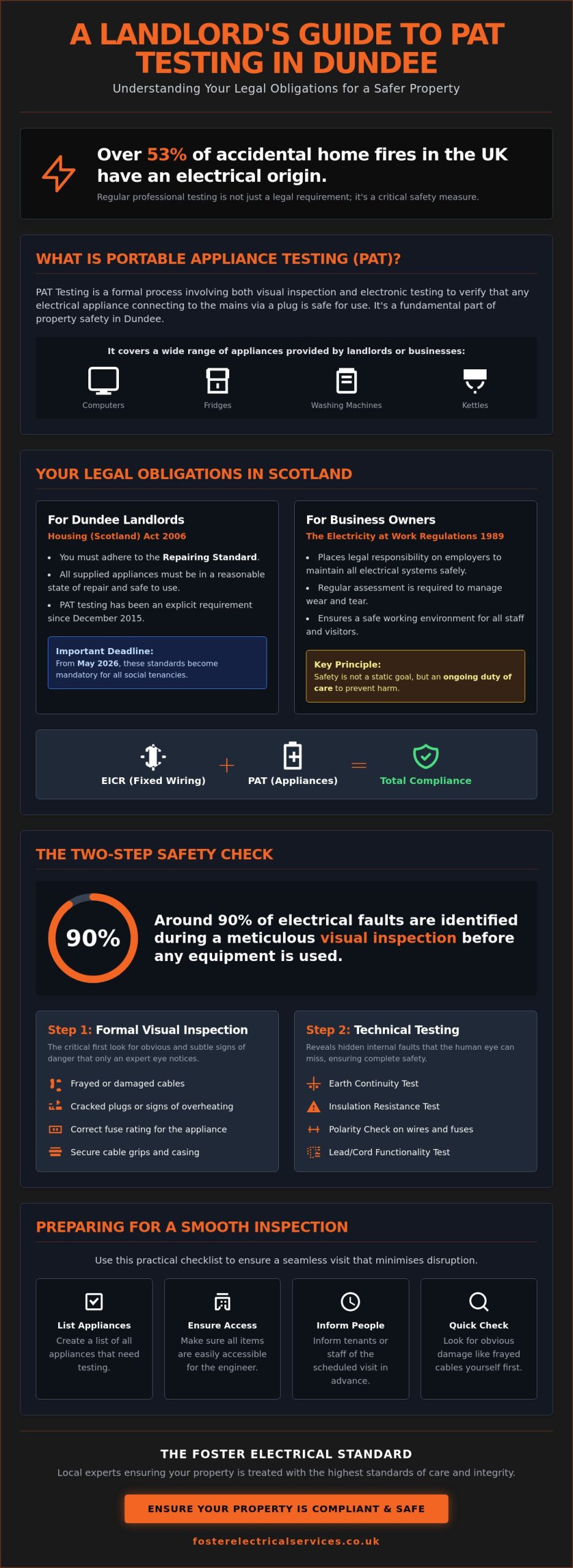
At its heart, PAT Testing is about peace of mind and the safety of our local community. It stands for What is Portable Appliance Testing (PAT)?, which is a formal process involving both a thorough visual inspection and electronic testing of electrical equipment. While the word “portable” might make you think of small items like kettles or laptops, it actually covers any appliance that connects to the mains with a plug. In Dundee, this isn’t just a box-ticking exercise; it’s a vital part of keeping our homes and workplaces running without the fear of electrical accidents.
For landlords in Scotland, the rules are more specific than in other parts of the UK. Under the Housing (Scotland) Act 2006, you must adhere to the Repairing Standard. This law requires you to ensure that the electrical installation and any appliances you provide are in a reasonable state of repair and safe to use. Since December 2015, this has explicitly included the requirement for regular appliance testing. It’s a duty of care that protects your tenants and your property investment alike. We believe this grounded approach to safety is the best way to maintain high standards across our city’s rental market.
The Electricity at Work Regulations 1989
If you run a business or employ staff in Dundee, the Electricity at Work Regulations 1989 apply to you directly. This UK-wide law places a legal responsibility on employers to keep all electrical systems in a safe condition at all times. Safety isn’t a static goal. It’s a moving target that requires regular professional assessment. Wear and tear happens in even the cleanest offices or shops, and what was safe last year might have developed a dangerous fault today. We view our role as a protective guardian of your workspace, helping you avoid the disruption and worry that follows a safety failure.
Specific Requirements for Dundee Landlords
The Scottish Private Rented Sector (PRS) has clear, strict guidelines that set it apart. Your PAT Testing isn’t a standalone task but works alongside your five-yearly EICR (Electrical Installation Condition Report). While the EICR looks at the fixed wiring behind your walls, the appliance testing covers the items your tenants touch every day. From the microwave in the kitchen to the washing machine in the utility room, everything provided by the landlord must be fit for purpose. As of May 2026, these standards are now mandatory for all social tenancies too, with significant penalties for those who don’t stay compliant.
We often hear the myth that a quick visual check is enough. Whilst looking for frayed cables or cracked plugs is the first step, it can’t detect internal faults like a broken earth wire or degrading insulation. In busy commercial environments or high-turnover rentals, these hidden issues are common. Professional testing uses calibrated equipment to find what the human eye misses, ensuring that “safe” is a factual statement rather than a hopeful guess. We take personal pride in this level of detail, treating every property with the diligence it deserves. As a Dundee landlord, it’s also worth noting that your wider fire safety obligations — including interlinked smoke & heat alarm installation — work hand in hand with your electrical appliance duties to keep your tenants fully protected.
The Two-Step Safety Check: Visual Inspection vs Technical Testing
Safety isn’t just about a green sticker. It’s a two-stage process that combines human experience with technical precision. Most people are surprised to learn that around 90% of electrical faults are identified during a meticulous visual inspection before a machine is even turned on. This is why we don’t just rush through a building with a scanner. We take the time to look, touch, and assess every item. Following UK Health and Safety Executive (HSE) guidance, we ensure that your equipment isn’t just functional, but genuinely safe for daily use in your Dundee property.
Stage 1: The Formal Visual Inspection
This first step is the most critical. We look for the obvious signs of trouble that anyone could spot, but also the subtle markers of danger that only an expert eye notices. We check for frayed cables where the internal wires are starting to peek through, and we examine plugs for any cracks or signs of overheating like brown discolouration. We also verify that the fuse rating is correct for the specific appliance; a kettle with a 3-amp fuse is a nuisance, but a lamp with a 13-amp fuse can be a hazard. We ensure cable grips are tight so that a sharp tug doesn’t pull the wires loose from their terminals.
Stage 2: Technical Combined Inspection and Testing
Once we’re satisfied the item looks sound, we move to the technical testing. This is where we plug the appliance into a calibrated PAT Testing machine to find “invisible” internal faults. We distinguish between Class I equipment, which relies on an earth wire for safety, and Class II equipment, which is double insulated. For Class I items, we perform an earth bond test to ensure the safety path is clear. For all items, we run insulation resistance tests to check for internal leakage that could lead to a shock. This level of technical precision is what separates a DIY check from a professional safety shield.
We also look at the environment where the equipment is used. A toaster sitting next to a sink or a heater tucked under a desk covered in paperwork presents a different level of risk. We consider these factors whilst we work, providing you with a report that reflects the real-world conditions of your premises. If you’re looking for a thorough and honest assessment, our team provides professional PAT testing that respects your property and your time. We treat every socket and cable with the care it needs to keep your business or rental home running safely.
How Often is PAT Testing Required? A Risk-Based Approach
There’s a common misconception that every electrical item in a building needs a fresh green sticker exactly once a year. This “annual test” myth often leads to unnecessary costs for low-risk items whilst high-risk equipment might not be checked often enough. Following official HSE guidance, we advocate for a risk-based approach that considers how an item is used, who is using it, and the environment it lives in. This method ensures your safety efforts are focused where they matter most, providing a practical shield for your property and people.
Determining the right frequency for PAT Testing isn’t about following a rigid calendar. It’s about understanding the wear and tear an appliance faces. A kettle in a busy staff room will degrade much faster than a desktop computer that stays tucked under a desk for years. We work with our Dundee clients to organise a sensible schedule that satisfies legal requirements without causing needless disruption to your daily operations. We believe in transparency and honesty, helping you understand why some items need more vigilance than others.
High-Risk vs Low-Risk Environments
The setting of your equipment dictates the testing interval. Consider the difference between a hand-held power tool used on a construction site in Angus and a monitor in a quiet city centre office. Because power tools are moved constantly and used in harsh conditions, they often require testing every 3 to 6 months to ensure the internal wiring hasn’t been shaken loose. Conversely, stationary office equipment like PCs and monitors are considered low risk; these might only need a formal inspection every 2 to 4 years. Public-facing equipment in high-traffic areas, such as a vacuum cleaner in a hotel or a communal toaster in a rental property, requires more frequent checks because the risk of accidental damage is significantly higher.
Creating Your Own Maintenance Log
A maintenance log is more than just a list of appliances; it’s your documented evidence of fulfilling your duty of care. Should an insurance company or a health and safety inspector ever ask for proof of your safety standards, a professional inventory is your best asset. We provide clear pass or fail labels for every item we test, which offers immediate reassurance to your staff and tenants that their environment is being looked after. Keeping these records organised allows you to track the health of your electrical equipment over time, making it easier to plan for future upgrades or replacements. It’s a simple, diligent way to take personal pride in the high standards of your premises.
Your Pre-Inspection Checklist: Preparing Your Property
We want your inspection day to be as smooth and stress-free as possible. A little bit of preparation goes a long way in ensuring we can do our job thoroughly whilst keeping your day on track. We’ve found that when our Dundee clients take these simple steps, the whole process feels less like a hurdle and more like a helpful safety check-up. By working together, we can protect your property with minimal fuss and total transparency.
- Identify every portable item: Walk through your building and note anything with a plug. We need to reach these items easily, so please ensure they aren’t buried under boxes or hidden behind heavy furniture.
- Clear the workspace: Cables tucked behind desks or under kitchen counters can be tricky to access. Clearing these areas in advance allows us to work quickly and efficiently without disturbing your setup.
- Don’t forget the ‘hidden’ appliances: It’s easy to overlook the microwave in the staff room, the kettle in the back office, or the hoover tucked in the cleaning cupboard. If you provide it, we need to test it.
- Power down sensitive equipment: Please ensure all computers and servers are safely shut down before we arrive. We’ll need to briefly unplug items to test them, so saving your work in advance is essential.
Pre-Visit Logistics for Businesses
For our commercial clients, timing is everything. We recommend organising a visit during a quieter period to cause the least disruption to your daily operations. It’s also helpful to designate a contact person who can guide us through the building and answer any quick questions. If you have locked cupboards, server rooms, or basement areas that contain electrical equipment, please ensure access is arranged in advance so we don’t miss a single socket. This diligent approach ensures your business stays compliant without the headache of a second visit.
The Landlord’s Prep List for Rental Properties
If you’re a landlord, clarity is your best friend. It’s incredibly helpful to provide us with a list of the appliances you provide versus the items that belong to your tenants. We only need to test what you are legally responsible for under the Repairing Standard. Whilst you’re preparing, take a quick look to ensure extension leads aren’t “daisy-chained” together; this is a common fault that we can help you rectify. We also suggest reminding your tenants of their responsibility to report any damaged leads they notice between our visits. If you’re ready to secure your property, book your professional PAT testing with a local team that takes personal pride in high standards.
Professional PAT Testing in Dundee: The Foster Electrical Standard
Choosing a contractor to enter your home or business is an act of trust. We understand that you aren’t just looking for a technician; you’re looking for a diligent neighbour who treats your property with the same care they would their own. Unlike anonymous national corporations that prioritise volume over value, our family-run team focuses on the human connection. We take personal pride in every PAT Testing job we undertake across Dundee, ensuring that our work is as thorough as it is respectful. We believe in traditional values of diligence and integrity, which means we never cut corners on your safety.
Our commitment to tidiness is a cornerstone of our service. We know the disruption that an electrical inspection can cause, so we make it our mission to leave your premises exactly as we found them. We don’t leave behind a trail of moved furniture or messy paperwork. Instead, we provide transparent reporting that speaks your language. You won’t find any opaque technical jargon in our results; we offer honest advice and clear outcomes so you can make informed decisions about your safety compliance without any guesswork. It’s a straightforward approach that mirrors our practical attitude toward every project.
A Personal Service for Tayside and Beyond
We’ve spent years building relationships with local shop owners, office managers, and private landlords throughout Tayside. These connections are built on the traditional values of honesty and hard work. We don’t believe in high-pressure sales or hidden fees. Our goal is to keep your costs fair and predictable whilst maintaining the highest standards of execution. The Foster Electrical guarantee is simple: we arrive on time, we work meticulously, and we stand by the quality of our results. It’s a time-tested method of working that larger firms simply cannot replicate, and it’s why our clients return to us year after year.
Next Steps for Your Safety Compliance
Staying on top of your electrical safety shouldn’t be a complicated ordeal. We’ve streamlined our process to ensure that booking a visit is easy and fits around your busy schedule. For many of our clients, it makes sense to combine PAT Testing with a comprehensive EICR (Electrical Installation Condition Report). This provides a full safety health check for your property, covering everything from the portable kettle to the consumer unit and fixed wiring behind the walls. It’s the most efficient way to ensure total peace of mind for you and your tenants whilst keeping all your certificates in one place.
We are here to help you navigate your legal duties with quiet confidence. Whether you manage a single rental flat or a bustling city centre office, we provide the same level of artisanal care and technical precision. Your safety is our priority, and we’d be privileged to help you protect your environment. Contact Foster Electrical today for a straightforward PAT testing quote and experience a service built on trust, respect, and local expertise.
Securing Your Dundee Property for the Year Ahead
Navigating electrical safety doesn’t have to be a burden for your business or rental property. We’ve seen how a risk-based approach to PAT Testing ensures your safety efforts are focused exactly where they’re needed most. By understanding your specific legal duties under the Scottish Repairing Standard and following a simple preparation checklist, you can maintain a safe environment with total confidence. Our expert Dundee electricians are dedicated to providing the thorough inspections and full compliance reports you need to protect your investment and your people.
We believe in straightforward service and honest communication. Our trusted local reputation is built on the personal care we bring to every job, ensuring your premises are treated with respect and diligence. If you’re ready to tick safety off your to-do list, we’re here to help you get it done right the first time. We look forward to helping you keep your Dundee home or workplace safe and sound.
Book Your Professional PAT Testing with Foster Electrical
Frequently Asked Questions
Is PAT testing a legal requirement for landlords in Scotland?
Yes, PAT Testing is a legal requirement for all private landlords in Scotland under the Housing (Scotland) Act 2006. This regulation has been in place since December 2015. As of May 2026, these rules also apply to all social tenancies. It’s a vital part of your duty of care to ensure every appliance you provide is safe for your tenants to use throughout their stay.
Do I need to test brand-new electrical equipment?
You generally don’t need to formally test brand-new equipment, as it should be safe from the manufacturer. However, we always recommend a thorough visual check for any shipping damage before it’s used. Many of our Dundee clients choose to include new items in their safety log immediately. This keeps their records tidy and ensures every item is accounted for from the very start.
What happens if one of my appliances fails the PAT test?
If an appliance fails, it must be taken out of use immediately to prevent any risk of injury or fire. We will clearly label the item with a “fail” sticker and explain exactly why it didn’t pass. You’ll then need to decide whether to have the item replaced or professionally repaired before it can be safely used on your premises again.
Can I carry out PAT testing myself if I have a tester?
You can only carry out the testing yourself if you are considered “competent,” which involves having the correct training and calibrated equipment. For most landlords and business owners, providing professional evidence of safety is a requirement for insurance and legal compliance. We take the guesswork out of the process, providing you with a reliable, expert report you can trust.
How much does PAT testing typically cost for a small Dundee office?
The cost of PAT Testing for a small office depends on the number of items requiring inspection and the specific environment they are in. We believe in fair and transparent pricing, so we don’t use opaque structures or hidden fees. We’ll provide a straightforward quote based on your unique needs to help you plan your safety budget with certainty and ease.
Do I need to test items that are always plugged in, like a fridge?
Yes, items like fridges, dishwashers, and washing machines must be tested even if they are rarely moved. These are classified as “stationary” or “fixed” appliances. Whilst they might not face the same wear and tear as a handheld drill, they still require regular professional assessment. This ensures their internal components and earthing remain safe for daily use.
How long does a PAT testing visit usually take?
A typical visit duration depends entirely on the volume of equipment you have on-site. For a small office or a standard rental flat, we can often complete the work within an hour or two. We pride ourselves on being punctual and diligent. We work efficiently to ensure your day continues with as little disruption as possible for you or your tenants.
Will the electrician need to turn off my power during the test?
We don’t need to turn off the power to your entire building at any point during our visit. Each appliance is only unplugged briefly whilst it is being tested. We’ll work with you to ensure that computers or sensitive equipment are powered down safely at a time that suits your staff, keeping your workspace running smoothly.