Did you know that electrical hazards are responsible for 53.4% of all accidental house fires? It’s a startling figure that hits home for many of us living in Dundee’s historic properties, where the need for electrical safety upgrades becomes more apparent as old wiring struggles to keep up with modern life. You might feel a lingering sense of unease every time you plug in a new gadget or hear a faint hum from an old fuse box. We understand how stressful it is to face conflicting advice while simply trying to stay on the right side of Scottish safety legislation.
This article will help you compare the most effective solutions available in 2026, showing you how to bridge the gap between outdated systems and the latest safety standards. We’ll explore the critical differences between essential compliance for your peace of mind and optional enhancements like Arc Fault Detection Devices. By the end, you’ll have a clear, honest roadmap for securing your home; this ensures you only invest in the work that truly keeps your family safe and your property protected.
Key Takeaways
- Learn why modern RCD-protected consumer units offer vastly superior protection compared to traditional wire-and-fuse systems.
- Compare the benefits of RCBOs and AFDDs to understand which modern circuit protection best suits your household’s daily demands.
- Identify the clear warning signs that demand a full rewire whilst discovering how targeted electrical safety upgrades can often secure your home with less mess.
- Navigate the specific Scottish safety mandates for interlinked alarms and EICRs to ensure your property remains fully compliant and safe.
- Gain the confidence to choose a trusted local expert who prioritises honest advice and meticulous standards over corporate sales targets.
Comparing Traditional Fuse Boxes with Modern RCD-Protected Consumer Units
Walking into a classic Dundee tenement, we often find ourselves looking at a piece of history tucked away in a hallway cupboard: the old-fashioned fuse box. These systems served their purpose for decades, but the fundamental shift to modern consumer units represents a massive leap in how we protect our families. While a traditional fuse relies on a piece of wire literally melting to break a circuit, modern circuit breakers use precision components to snap off the power instantly. This isn’t just a technical change; it’s a total shift in philosophy from merely protecting the house’s cables to actively protecting the people living inside.
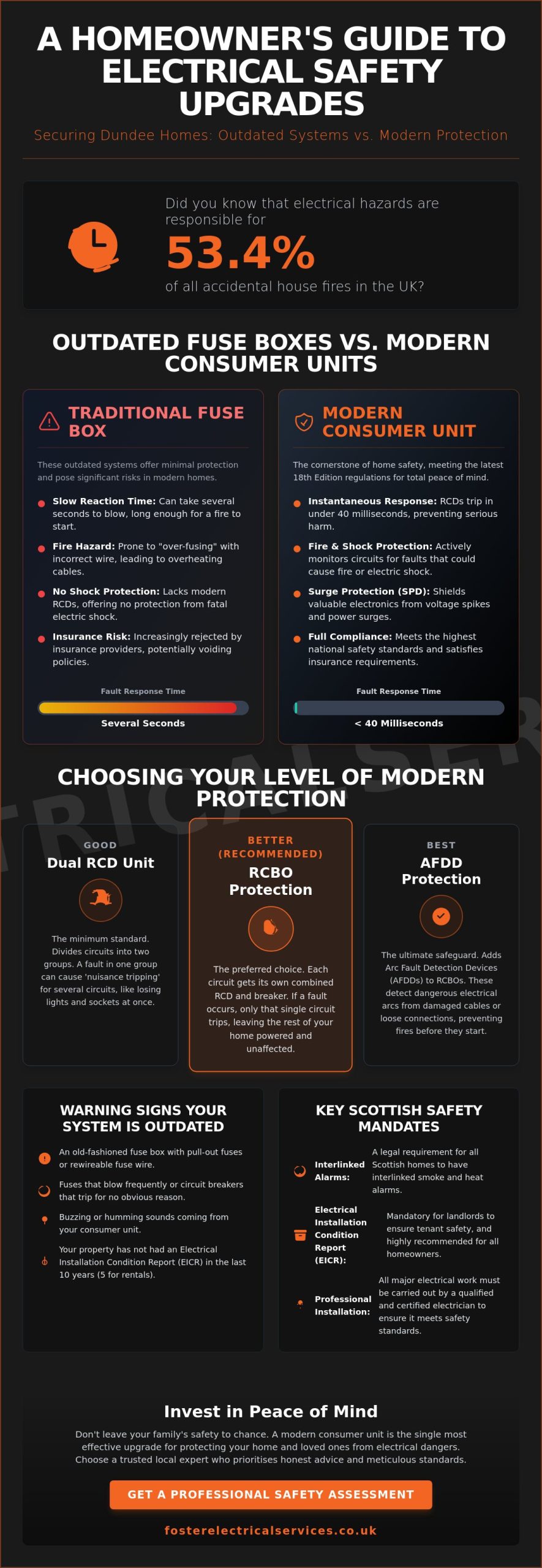
The difference in reaction time is truly staggering. In a fault scenario, a traditional fuse might take several seconds to blow, which is more than enough time for a fire to start or a person to suffer a fatal shock. Modern Residual Current Devices (RCDs) act as a protective guardian, monitoring the flow of electricity with incredible sensitivity. If they detect even a tiny leak, they trip in less than 40 milliseconds. We believe this level of responsiveness is the cornerstone of any effective electrical safety upgrades plan for your home. It provides a layer of security that older technology simply cannot match.
The Old Fuse Box: Risks and Limitations
Older boards in Dundee properties often suffer from “over-fusing,” a dangerous practice where the wrong thickness of fuse wire is used to stop frequent blowing. This leads to cables overheating behind your walls and is a primary cause of domestic fires. These traditional units also lack earth leakage protection, meaning they won’t trip if you accidentally touch a live part. Because of these inherent flaws, insurance providers are increasingly wary of wire-fuse systems, often requiring a modern replacement to ensure your policy remains valid.
The Modern Consumer Unit: A Safety Revolution
The latest electrical safety upgrades are governed by the 18th Edition wiring regulations, ensuring your home meets the highest national standards. These units now frequently include Surge Protection Devices (SPDs). These are essential for shielding your expensive electronics from voltage spikes caused by Tayside grid fluctuations or distant lightning strikes. Beyond the technical specs, a professional installation brings a sense of order to your home. We take pride in neatly organising and labelling every circuit; this ensures a fault in your kitchen toaster doesn’t leave your entire house in total darkness. It’s about providing a service that is as meticulous and tidy as it is safe. Before committing to any work, it’s worth understanding the realistic consumer unit cost for a fuse board upgrade in 2026 so you can budget confidently and avoid hidden fees.
RCDs, RCBOs, and AFDDs: A Comparison of Modern Circuit Protection
Understanding the components inside your consumer unit is the first step toward making informed decisions about electrical safety upgrades. In the UK, the Residual Current Device (RCD) is our baseline for safety. It’s a life-saving component designed to prevent fatal electric shocks by instantly disconnecting the power if it detects electricity leaking to earth. While older homes may have had one RCD protecting the entire house, modern standards have evolved to provide more granular, reliable protection. We believe in providing solutions that don’t just meet the bare minimum but offer genuine resilience for your daily life.
When we look at the hierarchy of protection, we often use a “Good, Better, Best” framework to help our neighbours decide what’s right for their property. A “Good” setup involves a dual-RCD consumer unit, which is the standard requirement for many. A “Better” solution utilises RCBOs for individual circuit independence. The “Best” protection adds Arc Fault Detection Devices (AFDDs) to the mix, creating a comprehensive shield against both electric shock and electrical fires. If you aren’t sure where your current system sits on this scale, a professional EICR (Electrical Installation Condition Report) is a sensible place to start.
Why RCBOs are the Preferred Choice for Dundee Homes
In many older Dundee properties, a single fault in a kitchen appliance can plunge half the house into darkness. This is known as “nuisance tripping.” We prefer installing RCBOs (Residual Current Breaker with Overcurrent) because they combine the functions of a circuit breaker and an RCD into one single unit for every circuit. If your toaster develops a fault, only the toaster circuit trips; your lights, fridge, and home office remain powered. Whilst the initial investment is slightly higher than a dual-RCD board, the cost-to-benefit ratio is excellent because it eliminates the frustration of total blackouts. We take personal pride in the artisanal tidiness of these installations, ensuring every wire is meticulously dressed and labelled for future ease of use.
AFDDs: The Ultimate Fire Prevention Upgrade
An AFDD is a sophisticated device that uses microprocessors to detect dangerous electrical arcs caused by loose connections or damaged cables that traditional breakers might miss. These devices are now mandatory in certain high-risk settings, such as HMOs and student accommodation, as outlined in the Scottish building standards. However, they are a wise voluntary upgrade for any homeowner. Traditional breakers are great at detecting short circuits, but they can’t always “see” the tiny, sparking micro-arcs that generate intense heat behind your walls. By adding this layer of protection, you’re addressing hidden faults before they ever have the chance to become a fire statistic. It’s a straightforward, practical way to achieve true peace of mind.
Full Property Rewire vs. Targeted Safety Upgrades: Which Do You Need?
Many Dundee homeowners worry that any electrical work inevitably leads to floorboards being ripped up and walls being chased out. This fear often prevents people from seeking necessary electrical safety upgrades, even when they suspect their system is struggling. However, the choice between a full rewire and targeted improvements isn’t a guessing game. We start every conversation with an EICR (Electrical Installation Condition Report). This is the essential diagnostic tool that tells us exactly what your home needs. It’s an honest assessment that separates “essential” from “desirable,” ensuring you aren’t paying for work your property doesn’t require.
We believe in a straightforward, practical approach to home safety. For many properties in our community, the existing wiring is actually in good condition, but the protective devices are simply out of date. By focusing on the most critical areas, we can often achieve a high standard of safety without the cost or upheaval of a complete overhaul. This decision is always based on the physical evidence found during our inspection, mirroring a diligent and transparent service that prioritises your well-being over high-pressure sales.
When a Full Rewire is the Only Safe Path
Sometimes, the condition of the cabling leaves no room for compromise. If we find old black rubber (VIR) or lead-sheathed cables, a full rewire is non-negotiable. Other red flags include “green goo” (a chemical reaction in older PVC cables), round-pin sockets, or a complete lack of earthing. Whilst this sounds daunting, a rewire acts as a total safety “reset” for your property. We understand the anxiety regarding the “mess” involved. By using meticulous installation techniques and industrial dust extraction, we ensure the process is as tidy and respectful of your home as possible. It’s a long-term investment that adds significant value and durability to any Dundee tenement or villa.
The Power of Targeted Upgrades
In many cases, your wiring is perfectly sound, but the “brain” of the system is outdated. A modern consumer unit upgrade, combined with essential earth bonding to your gas and water pipes, can bring an older system up to current Scottish Government electrical safety guidance. This provides the life-saving RCD protection we’ve discussed without the disruption of a full rewire. We might also suggest a partial rewire for high-load areas like a new kitchen or extension. Another simple but effective upgrade is adding additional sockets. This eliminates the danger of daisy-chained extension leads, which are a common fire hazard in older homes. Our neighbourly approach means we only recommend what is truly necessary to keep your family safe and your home compliant.
Scottish Safety Mandates: Comparing Requirements for Homeowners and Landlords
Living in Dundee means being part of a community that values its heritage, but our older homes often need a helping hand to meet modern legal standards. Since February 2022, every home in Scotland has been required to meet a specific fire safety standard. This isn’t just a suggestion; it’s a mandate designed to protect every resident. Whilst the core requirements for electrical safety upgrades apply to everyone, the level of scrutiny varies depending on whether you own your home or rent it out. We believe in helping our neighbours navigate these rules without the stress of conflicting advice.
For private homeowners, the responsibility for compliance rests on your shoulders. For landlords, the rules are much stricter. Dundee landlords must provide proof of safety through a mandatory EICR every five years. They also face a legal requirement to ensure at least one RCD is present in the consumer unit. Failing to meet these standards doesn’t just put tenants at risk; it can completely invalidate your property insurance. We always recommend using a SELECT or NICEIC registered contractor in the Tayside area. This ensures your certificates are recognised by local authorities and insurers alike, providing a paper trail of grounded professionalism.
Interlinked Alarms: Is Your Home Legally Compliant?
The “one in every room used for daytime living” rule is now the law across Scotland. You must have one smoke alarm in your main living area, one in every circulation space like hallways or landings, and a heat alarm in the kitchen. Crucially, these alarms must be interlinked. If a fire starts in the kitchen, the alarm in your bedroom must also sound. Battery-only, non-interlinked alarms no longer meet the Scottish standard. We also ensure that carbon monoxide detectors are fitted in any room with a fuel-burning appliance. It’s a straightforward, life-saving system that we install with the same care we’d use in our own homes.
The EICR: Your Property’s Health Check
Think of an EICR as an MOT for your home’s wiring. It’s a thorough inspection that identifies hidden dangers before they cause trouble. We use a simple coding system to help you understand your safety budget. A “C1” code means danger is present and we must act immediately. “C2” signifies a potential danger that needs urgent attention. “C3” is simply a recommendation for improvement. We’re committed to honest, transparent reporting. You won’t find any corporate jargon or high-pressure tactics here; just clear facts from a diligent local expert. If you’re unsure about your property’s current status, you can ensure your property is legally compliant by booking a professional inspection today.
Investing in Peace of Mind: Choosing Your Safety Partner in Dundee
Securing your home shouldn’t be a source of constant worry or confusion. We’ve explored the technical side of modern protection, from the life-saving speed of RCDs to the legal necessity of interlinked alarms. However, the true path to a safe property isn’t just about the hardware; it’s about the person you trust to install it. The journey from identifying a flickering light to holding a safety certificate is a process of building trust. We believe that choosing the right partner for your electrical safety upgrades is just as important as the technology itself. It’s about knowing that the work has been done correctly, without shortcuts, by someone who truly cares about your family’s well-being.
There’s a significant difference between a large, anonymous corporation and a local expert who lives in your community. Large firms often treat homes like numbers on a spreadsheet, but we treat them as private sanctuaries that deserve respect. We’ve built our reputation on a grounded, professional approach that prioritises direct, human interaction. You won’t find yourself trapped in an automated phone system or deciphering opaque pricing structures with us. We take a fierce pride in our work, treating every property with a level of care that borders on the artisanal. This means we don’t just fix the problem; we ensure the wiring is meticulous and the workspace is left spotless. We see it as a privilege to enter your private space, and we honour that by being punctual, diligent, and honest.
The Foster Electrical Difference
Our anti-corporate philosophy is simple: we provide straightforward advice and high standards of execution. We don’t believe in high-pressure sales tactics or hidden fees that surprise you at the end of a job. Instead, we focus on time-tested methods of working that ensure durability and moral character in everything we do. Our clients in the Dundee community know us for our reliability and our commitment to leaving a home exactly as we found it, only safer. This artisanal approach to wiring ensures that your consumer unit isn’t just functional, but a model of organised, professional craftsmanship.
Next Steps for a Safer Home
If you feel uncertain about the state of your wiring, the best thing you can do is seek clarity. A professional EICR is the most sensible first step for any homeowner or landlord in Dundee, Angus, or Fife. It provides a clear, factual baseline for your property’s health without any guesswork or technical complexity. We offer a calm, service-oriented approach to these assessments, focusing entirely on your safety and compliance with Scottish law. Whether you need a simple socket replacement or a comprehensive consumer unit upgrade, we’re here to act as the protective guardian of your home environment.
Organise your electrical safety assessment with Foster Electrical today and take the first step toward lasting peace of mind with a no-obligation safety consultation.
Securing Your Family’s Future with Correct Electrical Standards
We’ve explored how modern technology can transform your home’s safety, moving from the risks of old fuse boxes to the instant protection of RCDs and AFDDs. You now understand that whilst a full rewire is sometimes essential, targeted electrical safety upgrades often provide a practical, cost-effective path to compliance. Whether you’re a homeowner meeting Scottish interlinked alarm standards or a landlord preparing for an EICR, the focus remains on durability and honest workmanship.
As a SELECT Registered Contractor and an expert in Scottish interlinked alarm legislation, we take personal pride in every circuit we wire. We maintain Dundee Trusted Trader standards of tidiness, ensuring your home is treated with the respect it deserves. We believe in providing a service that is as reliable as it is correct. Secure your Dundee home with a professional safety upgrade from Foster Electrical. Let’s work together to make your property a safer place for years to come.
Frequently Asked Questions
How do I know if my fuse box is unsafe or just old?
You can identify an unsafe or outdated fuse box by looking for a wooden back, a cast iron case, or a lack of a “test” button. These older units rely on rewirable fuses that don’t offer the life-saving protection of a modern RCD. If you notice scorch marks, flickering lights, or a persistent smell of burning, your system requires immediate attention from a professional.
Are interlinked smoke alarms mandatory for all homes in Scotland now?
Yes, every home in Scotland has been legally required to have interlinked smoke and heat alarms since February 2022. This legislation applies to all homeowners and landlords, regardless of the property’s age. You must have one smoke alarm in your main living area, one in every circulation space, and a heat alarm in the kitchen to remain compliant with the law.
What is the difference between an RCD and an RCBO?
An RCD protects a group of circuits at once, meaning a single fault can plunge several rooms into darkness. In contrast, an RCBO combines the functions of a circuit breaker and an RCD for one individual circuit. We prefer RCBOs for electrical safety upgrades because they isolate faults to a single area, ensuring your fridge and lights stay on even if a kitchen appliance fails.
Do I need to rewire my entire house to get a new consumer unit?
You don’t always need a full rewire to benefit from a modern consumer unit. If your existing cables are in good condition and have a solid earth connection, we can often upgrade the board as a standalone safety improvement. We always carry out a thorough inspection first to ensure your current wiring can safely handle the new, more sensitive protective devices.
How long does an electrical safety upgrade usually take?
A standard consumer unit upgrade typically takes between four and eight hours to complete. We aim to have your power back on by the end of the working day to keep disruption to a minimum. More extensive work, such as installing interlinked alarms or partial rewires, may take longer, but we’ll always provide a clear timeline before we start any work in your home.
Will upgrading my electrical system improve my home’s energy efficiency?
Upgrading your system often improves efficiency by allowing for the seamless integration of LED lighting and more efficient circuit management. Modern consumer units also reduce the risk of energy being wasted through heat caused by loose or corroded connections in older boards. Whilst safety is the main driver, these electrical safety upgrades help your home handle the demands of modern electronics more effectively.
Can I stay in my house whilst a rewire or upgrade is being carried out?
You can certainly stay in your property during a consumer unit upgrade, although you’ll be without power for a few hours. For a full rewire, the process is more disruptive as we’ll need to lift floorboards and access walls. We take personal pride in our meticulous tidiness, ensuring we leave your home as comfortable and clean as possible at the end of each day.
What happens if my EICR report comes back with “Unsatisfactory” results?
An “Unsatisfactory” result indicates that we’ve found C1 or C2 faults that pose an immediate or potential danger. You’ll need to have these specific issues fixed to receive a “Satisfactory” certificate. We’ll provide a transparent, honest breakdown of the work required to make your home safe, focusing only on the essential repairs needed to protect your family and meet legal standards. If you received multiple quotes for the remedial work and are unsure how to compare them fairly, our guide to consumer unit cost and fuse board upgrade pricing in 2026 can help you set a realistic budget and identify what fair value looks like.