The most affordable quote for your fuse board upgrade is often the most expensive mistake you can make for your family’s safety. We know it feels frustrating when you receive three different prices for what seems like the same job, and it is easy to feel overwhelmed by technical jargon like RCBOs or Surge Protection Devices. You want a fair consumer unit cost that reflects honest work, yet you are likely worried about hidden fees or the mess a contractor might leave behind in your home.
We believe you deserve a home that is both safe and compliant without the stress of opaque pricing. This guide will help you understand the real value of your investment, focusing on why the 18th Edition Amendment 4 regulations matter for your protection. We will explore the hardware requirements for 2026, the essential safety testing involved, and how to set a realistic budget for a project that secures your property for years to come.
Key Takeaways
- Learn why the traditional fuse box is being replaced by modern units that serve as a sophisticated safety hub for your entire property.
- Understand the vital role of Surge Protection Devices and RCBOs in protecting your sensitive electronics and preventing total power loss.
- Discover how a realistic consumer unit cost covers the essential, rigorous testing of every circuit to ensure your home meets the latest safety standards.
- Identify the specific markers of a professional estimate so you can invest with confidence and avoid the dangers of uncertified installations.
Understanding Consumer Unit Costs: More Than Just a Plastic Box
Many homeowners still refer to their electrical distribution centre as a “fuse box,” but that language belongs to a bygone era. Consumer units are the sophisticated safety hubs of the modern home; they act as a protective guardian for your family and your property. Their primary job is simple but vital: they prevent life-threatening electric shocks and stop electrical fires before they start. When you consider a consumer unit cost in 2026, you’re looking at a price that reflects the latest 18th Edition Amendment 4 safety requirements. These regulations mandate specific features like fire-rated metal enclosures and advanced surge protection. These aren’t just optional extras. They’re time-tested standards designed to ensure your home can safely handle the high-tech demands of today’s world. We take great pride in following these rules to the letter because we know they save lives.
Why “Cheap” Isn’t Always Safe
It’s tempting to hunt for the lowest possible price, but a cut-price installation often hides significant risks. We frequently see undersized or unbranded units that lack the durability needed for long-term safety. Modern homes are filled with sensitive electronics that create “electrical noise,” and older or inferior boards simply don’t have the internal components to manage these fluctuations. By choosing a high-quality, branded unit, you ensure your system remains stable. A professional installation also provides you with official certification upon completion. This document is your proof that the work was done with integrity and diligence, offering a level of security that a “quick fix” can never match.
The Components of a Professional Quote
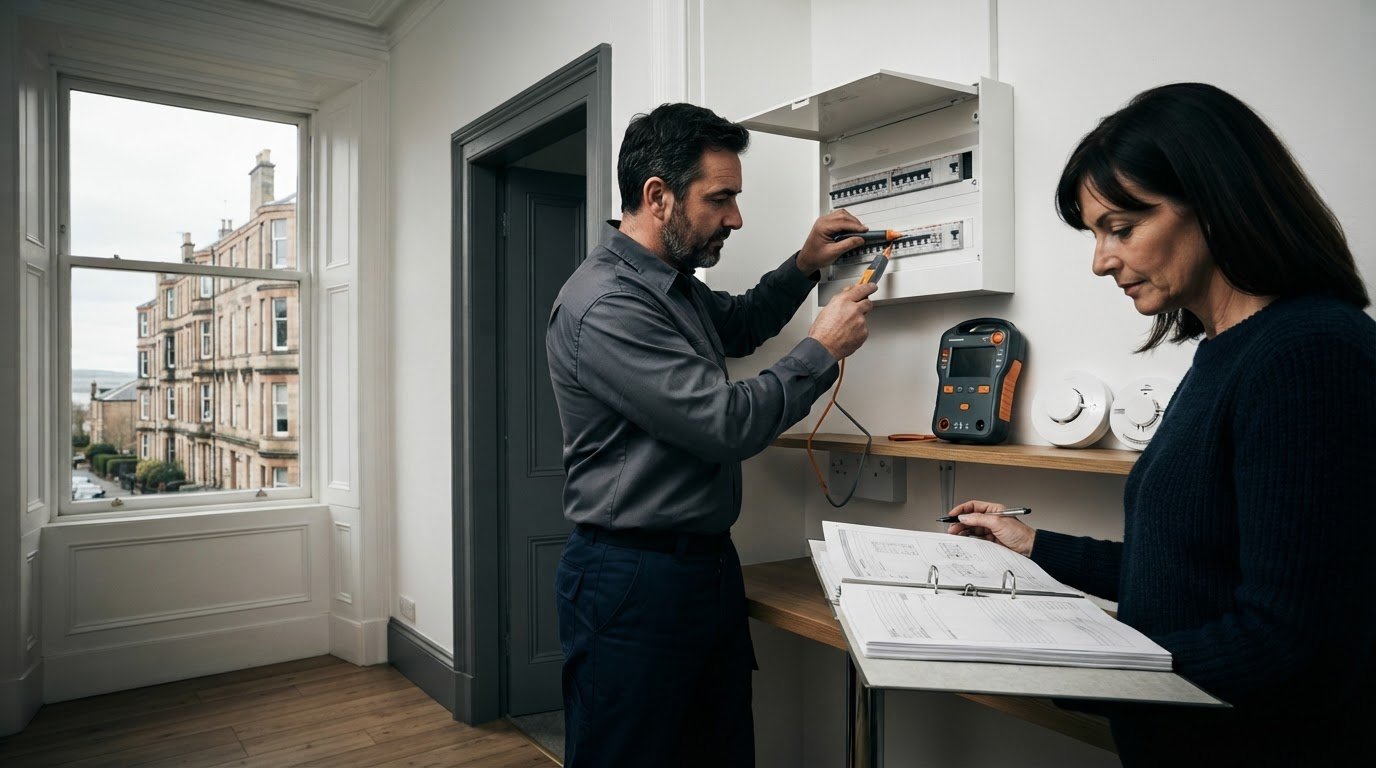
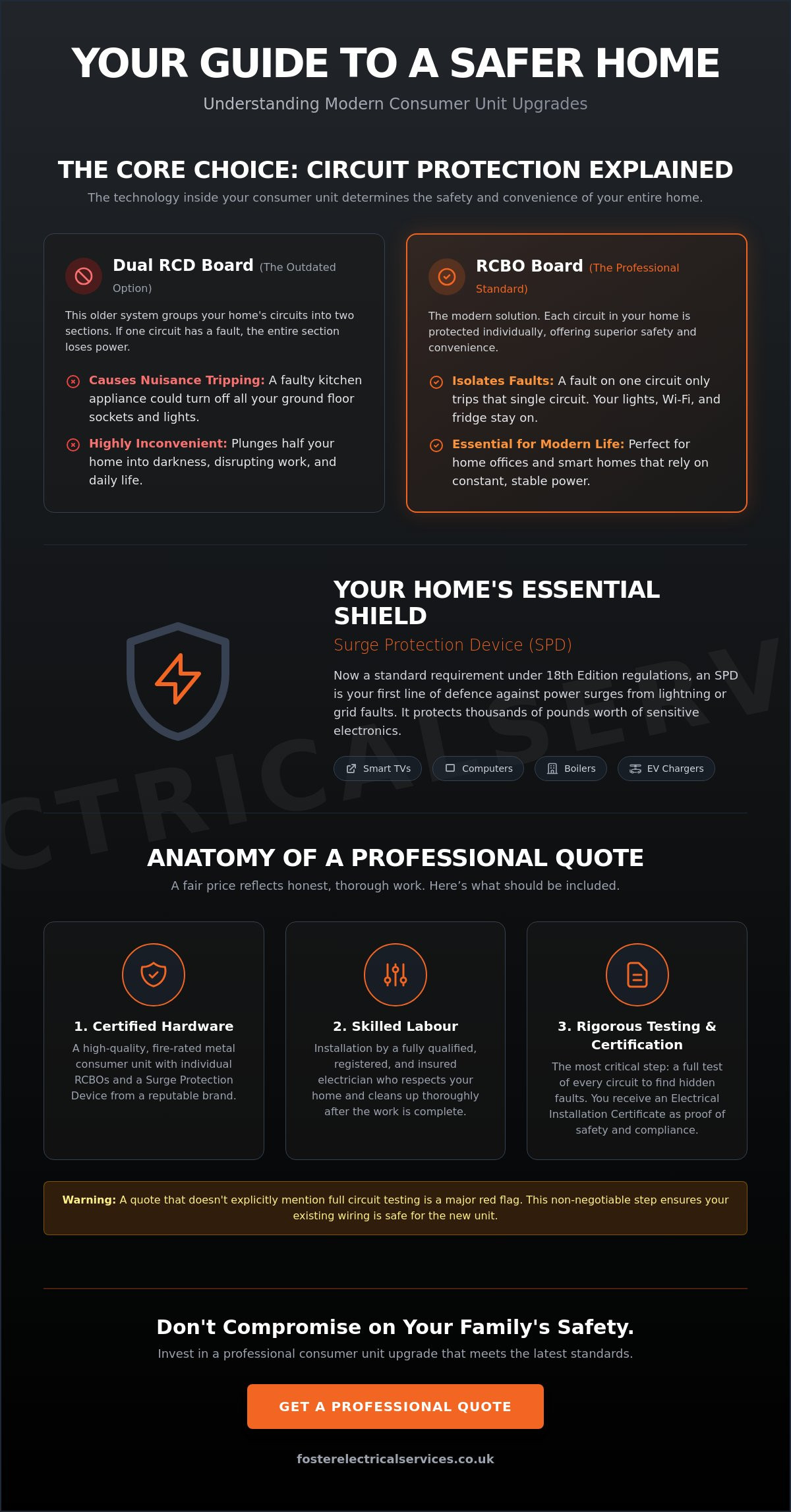
A transparent quote should never be a single, mysterious figure. We believe in breaking down the investment into three clear areas: high-quality hardware, skilled labour, and mandatory safety certification. Understanding your consumer unit cost means looking beyond the physical hardware on the wall. A professional upgrade includes a full, rigorous test of every circuit in your home to identify hidden faults. This process ensures that your existing wiring is safe to be connected to a new, more sensitive unit. We don’t just “swap” the box and hope for the best; we verify the integrity of your entire system. If a contractor offers a price without mentioning these tests, they’re likely skipping the most important part of the job. A true upgrade treats your home with the respect it deserves, ensuring every wire is verified before the power is turned back on.
Hardware Choices: Comparing Dual RCD, RCBO, and Surge Protection
While the external metal casing might look similar across different models, the internal components define the reliability of your home’s power. In 2026, the market offers three primary configurations. Selecting the right one is about balancing your initial consumer unit cost with the long-term convenience of your household. We often see homeowners frustrated by “nuisance tripping,” where a single faulty toaster knocks out half the lights in the building. This is a hallmark of older Dual RCD designs. Modern standards have moved toward more resilient solutions that treat your home with the care it deserves.
Dual RCD vs. RCBO: Which is Right for You?
A Dual RCD board is the traditional budget-friendly option. It splits your home into two groups of circuits. If a fault occurs on one wire, the safety switch cuts power to every circuit in that group. For a typical Dundee semi-detached home, this could mean the entire ground floor goes dark because of a minor issue in the garden shed. We believe there is a better way. RCBO units provide individual protection for every single circuit. If the kettle trips the power, your home office, fridge, and lights remain unaffected. Whilst the initial consumer unit cost for an RCBO board is slightly higher, it prevents the chaos of total blackouts. This is especially vital for those amongst us who work from home and rely on a stable connection. If you are unsure which board fits your needs, we can help you choose the right consumer unit upgrade for your specific property.
The Role of Surge Protection (SPD)
Under the latest 18th Edition Amendment 4 regulations, Surge Protection Devices (SPD) are now a standard requirement for most domestic installations. Our homes are now filled with sensitive, expensive technology, from EV chargers to smart home hubs. An SPD acts as a shield against voltage spikes caused by lightning or grid switching. Without one, a single surge can fry the delicate circuit boards in your boiler or television. Citing the latest Electrical Safety Standards, it is clear that protecting the system is as much about the equipment as it is the people. We integrate SPDs as a standard part of our modern safety installs. It is a simple, hardworking component that offers a massive cost-benefit when compared to replacing a house full of damaged appliances. We take great pride in future-proofing your home with these artisanal safety standards.
The Hidden Costs: Why Testing and Certification Matter
You might see online forums claiming a fuse board swap is a simple two-hour task. This is a dangerous myth that ignores the reality of professional electrical work. In truth, a significant portion of your consumer unit cost covers the meticulous, four-to-six-hour process of testing every individual circuit in your home. Under the BS 7671 standards, an electrician cannot simply “swap” the box and walk away. We have a moral and legal duty to ensure that the wiring we are connecting to is safe. Connecting a modern, highly sensitive consumer unit to old, degraded wiring is like putting a high-performance engine into a car with perished tyres; it simply won’t end well. We believe in doing the job correctly the first time.
For homeowners in Scotland, choosing a contractor registered with SELECT or NICEIC is essential. These professional bodies verify that we maintain the highest standards of execution and that our testing equipment is properly calibrated. We view ourselves as protective guardians of your domestic comfort. This means we take the time to do the job with traditional sincerity, even when the hard work is hidden behind your walls. We don’t believe in shortcuts because your safety is worth the extra diligence. Understanding the full consumer unit cost requires looking at this labour-intensive testing phase as an essential insurance policy for your property.
Pre-Installation Fault Finding
Before we even touch your old board, we must conduct a thorough investigation of your existing circuits. This is particularly important in older Dundee properties, where decades of DIY additions or simple wear and tear can hide “pre-existing faults.” We frequently find neutral-to-earth faults or poor earthing that went unnoticed with old-fashioned fuses. Modern RCBOs are incredibly sensitive; they will trip immediately if these faults are present. By identifying these issues early, we can discuss any necessary remedial work before the new board is installed. This transparency ensures you aren’t left with a home that won’t turn back on at the end of the day. It is about respect for your space and your schedule.
The Final Certificate and Building Standards
Once the installation is complete, we provide you with an Electrical Installation Certificate (EIC). This is a vital legal document that proves your home meets current safety regulations. You will need this certificate if you ever decide to sell your property or if you need to make a claim on your home insurance. In the Tayside area, major electrical works must also be notified to local building control. We handle this administrative burden for you, ensuring your upgrade is fully compliant with Scottish building standards. This artisanal approach to service means you can rest easy. Your investment is backed by professional accountability and a commitment to your long-term safety.
Budgeting for Your Home: Consumer Unit Costs by Property Size
Every property in Tayside has its own unique electrical DNA. When we assess a consumer unit cost, we aren’t just looking at the square footage of the building. We are counting the number of “ways,” or circuit slots, required to keep your home running safely. A larger board with more circuits naturally requires a higher investment in both hardware and the time needed for the rigorous testing we have described. We approach each project with a focus on durability and moral character, ensuring your new board is perfectly matched to your home’s specific demands. We treat your property with the same care we would our own.
For a typical 1-2 bedroom Dundee tenement flat, the requirements are usually contained. These properties often have a more modest number of circuits, making the installation process more straightforward. Moving up to a medium 3-bedroom semi-detached family home, the complexity increases. These houses generally have more sockets, kitchen appliances, and outdoor lights, which means a larger board is needed to prevent the nuisance tripping discussed earlier. For large 4+ bedroom detached properties, especially those with outbuildings or data cabling, the scale of the work expands significantly. You are essentially building a more robust safety engine for a much larger system. If you want to understand exactly what this process involves for your property type, our detailed guide to Consumer Unit Upgrades in 2026 covers the full scope of modern safety requirements and what to expect from a professional installation.
Factors That Increase the Price
Sometimes, the job involves more than just a direct replacement. If your current board is tucked away in an inaccessible cupboard, we might suggest relocating it to a safer, more convenient spot. This relocation work will naturally affect the total consumer unit cost due to the additional cabling and labour required. We also check your main earthing and bonding to gas and water pipes. If these are outdated, they must be upgraded to provide a safe foundation for your new system. Integrating high-load circuits, such as for EV charger installation or electric showers, will also influence the final scope of the project.
Commercial vs. Domestic Costs
Tayside business owners face a different set of challenges and regulatory requirements. Commercial consumer units are often more complex, requiring three-phase power or specialised protection for industrial machinery. We understand that for a local business, time is money. Our goal is always to minimise downtime whilst ensuring the premises are fully compliant with the latest safety standards. Whether you are upgrading a local shop or a large office, we provide the same artisanal care and personal commitment that we bring to every residential home. If you are ready to secure your property, you can request a professional consumer unit upgrade quote from our team today.
Comparing Quotes: How to Ensure You’re Getting Professional Value
When you receive multiple estimates for your home upgrade, the variation in prices can be unsettling. It is tempting to choose the lowest figure, but a cut-price quote often indicates that essential safety steps are being overlooked. We believe that a true consumer unit cost should always be presented with absolute transparency. A professional estimate is more than just a number on a page; it is a firm promise of reliability and safety. You should look for a detailed breakdown that includes the specific brand of components, the hours dedicated to rigorous testing, and the provision of all legal certification. We reject opaque pricing structures because we value the trust you place in our hands.
We strongly warn against “cash in hand” quotes that lack a formal paper trail. Whilst these offers might seem like a bargain today, they often skip the mandatory testing and certification required by Scottish Building Standards. Without an official certificate, you have no legal proof that the work is safe. This can lead to significant complications with your home insurance or during a future property sale. We approach every project with traditional sincerity, ensuring that every wire is verified and every connection is secure. We are not just installing hardware; we are acting as the protective guardians of your domestic comfort.
Questions to Ask Your Electrician
Before you commit to a contractor, you must feel empowered to ask direct questions about their methods. We encourage homeowners to be thorough. You should ask if the quote includes a full Electrical Installation Certificate as standard. It is also vital to confirm if Surge Protection is included, as some quotes omit this to appear cheaper despite it being a modern requirement. Finally, verify that the electrician is registered with a professional body like SELECT or NICEIC. These organisations hold us to high standards of execution, ensuring that our work amongst the community remains beyond reproach.
The Foster Electrical Commitment
We are fiercely proud of our local Dundee roots and our dedication to the Tayside community. As your trusted local experts, we view the privilege of entering your private space with a high degree of sensitivity. Our team is meticulous about tidiness; we take personal pride in leaving your home exactly as we found it. We operate with a strict “no hidden extras” policy for every consumer unit cost we provide. This means the price we agree upon is the price you pay, with no surprises at the end of the day. We treat your property with the same care and respect as our own homes, combining artisanal standards with a personal commitment to your safety. If you are ready for a safer home, you can request a transparent, no-obligation quote from Foster Electrical today.
Securing Your Home’s Future and Safety
Choosing to upgrade your electrical system is a vital step toward protecting your family and your property. You now understand that a fair consumer unit cost covers more than just hardware. It represents the diligent testing and professional certification required to meet modern safety standards. We believe in providing a service rooted in traditional sincerity. The integrity of our work is always matched by our respect for your home.
We are proudly serving Dundee, Angus, and Fife as SELECT Registered Electricians. Every installation we perform includes expert fault finding as standard. This ensures your home is secure from the moment the power is restored. We treat every property with the same care as our own, offering you the peace of mind that comes from a job done correctly. If you are ready to invest in a safe and compliant home, please Get a Professional Quote for Your Consumer Unit Upgrade from our team. We look forward to helping you protect what matters most.
Common Questions About Fuse Board Upgrades
How long does it take to replace a consumer unit?
It typically takes between four and eight hours to complete a professional installation. This timeframe allows us to perform the physical hardware swap and conduct the mandatory safety testing on every individual circuit in your property. We take great pride in our thoroughness, ensuring your home is left tidy and fully compliant by the time we finish our work.
Will my power be off all day during the installation?
You should expect your power to be off for the majority of the working day. We must isolate the supply to protect our electricians and your property whilst we work on the central safety hub. We always aim to keep disruption to a minimum, and we will let you know exactly when we are ready to restore your domestic comfort.
Can I replace a consumer unit myself if I am good at DIY?
You cannot legally replace a consumer unit yourself as it is classified as notifiable work under Scottish Building Standards. This project requires a high degree of technical expertise and professional testing equipment to ensure every connection is secure. Attempting this as a DIY task risks your family’s safety and will likely invalidate your home insurance policy.
Do I need to rewire my whole house if I get a new consumer unit?
A new unit does not automatically mean your whole house requires a full rewire. We test your existing cables to ensure they are safe to be connected to the modern protection devices. If our expert fault finding reveals dangerous degradation or poor earthing, we will discuss the necessary repairs with you before we proceed with the upgrade.
What is the difference between a fuse box and a consumer unit?
A traditional fuse box uses sacrificial wire that melts during a fault, whereas a consumer unit uses modern, resettable circuit breakers. Consumer units are significantly safer because they react much faster to electrical issues. Understanding your consumer unit cost involves recognising that you are moving from basic, outdated protection to a sophisticated safety hub for your home. For a comprehensive overview of what this transition involves and why it matters in 2026, our homeowner’s essential guide to consumer unit upgrades explains the full regulatory landscape and what modern compliance looks like.
Is surge protection mandatory in 2026?
Surge protection is now a standard requirement for domestic installations under the 18th Edition Amendment 4 regulations. These devices are essential for protecting your expensive electronics, such as EV chargers and smart home systems, from voltage spikes. We include them as standard to ensure your home meets the highest possible safety requirements.
Why is my new consumer unit tripping when the old one didn’t?
Your new unit is likely tripping because it has detected a pre-existing fault that your old fuse box was simply unable to see. Modern RCBOs are incredibly sensitive to tiny leaks of electricity that could cause a shock. This is a sign that the system is doing its job as a protective guardian of your safety.
Does a new consumer unit increase my property value?
A modern, certified upgrade can make your property more attractive to potential buyers and satisfy the requirements of home surveyors. It serves as proof that you have maintained the property with diligence and integrity. When you evaluate the consumer unit cost, it is helpful to view it as a wise investment in the long-term security of your home.