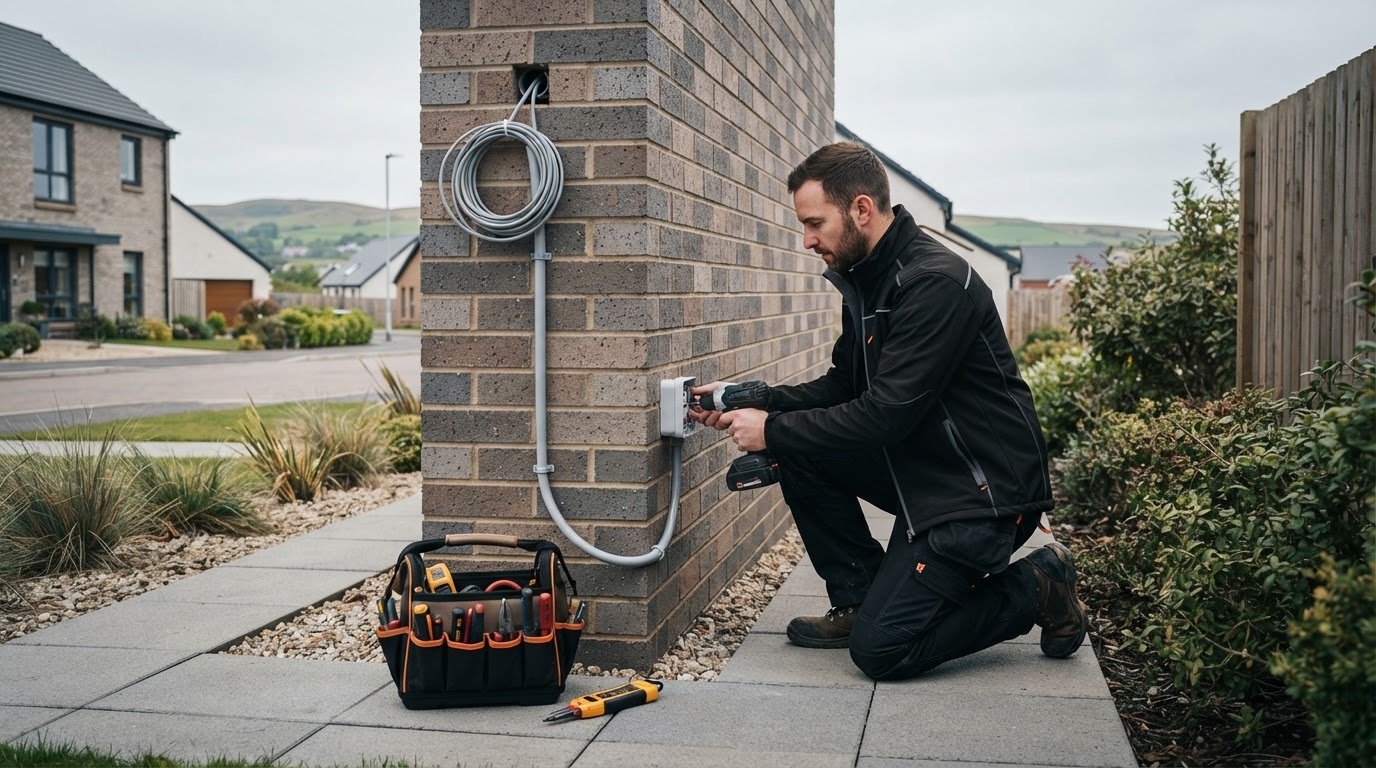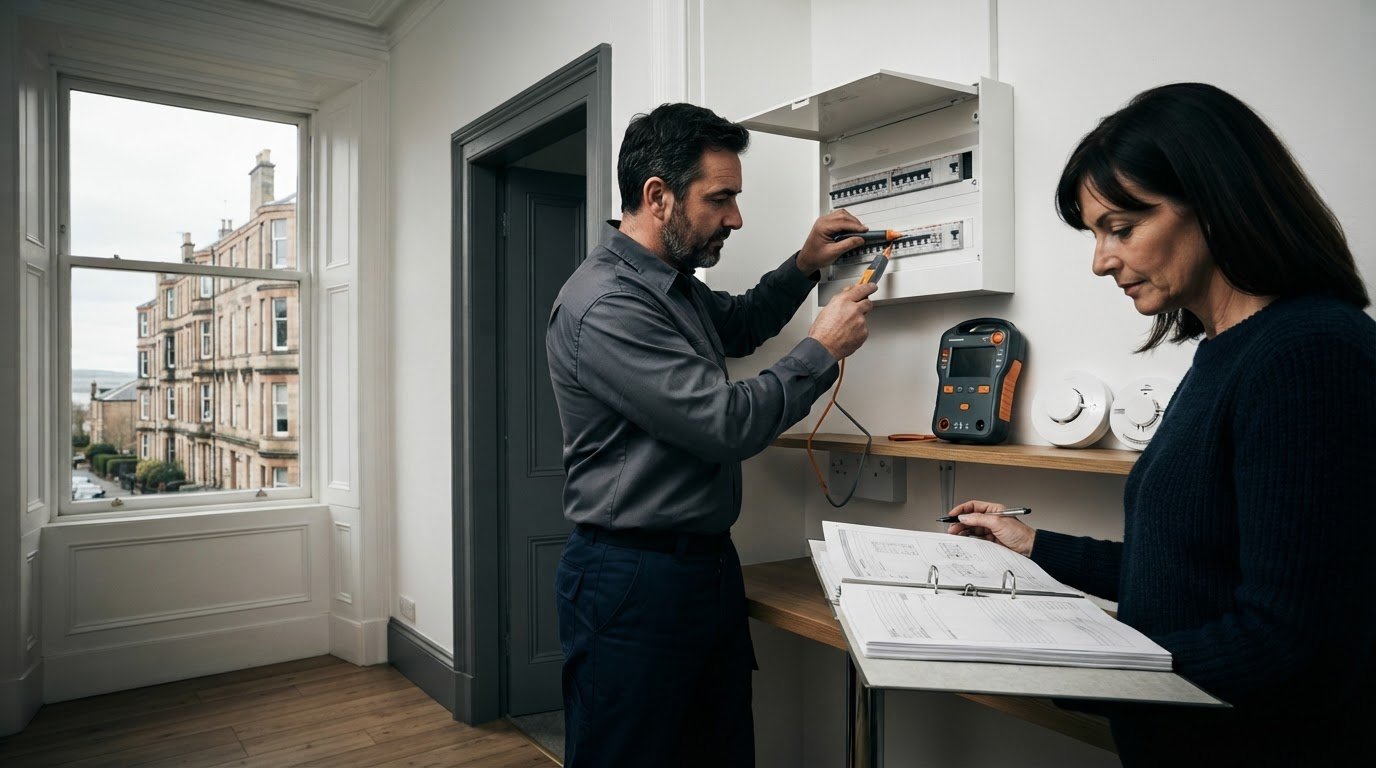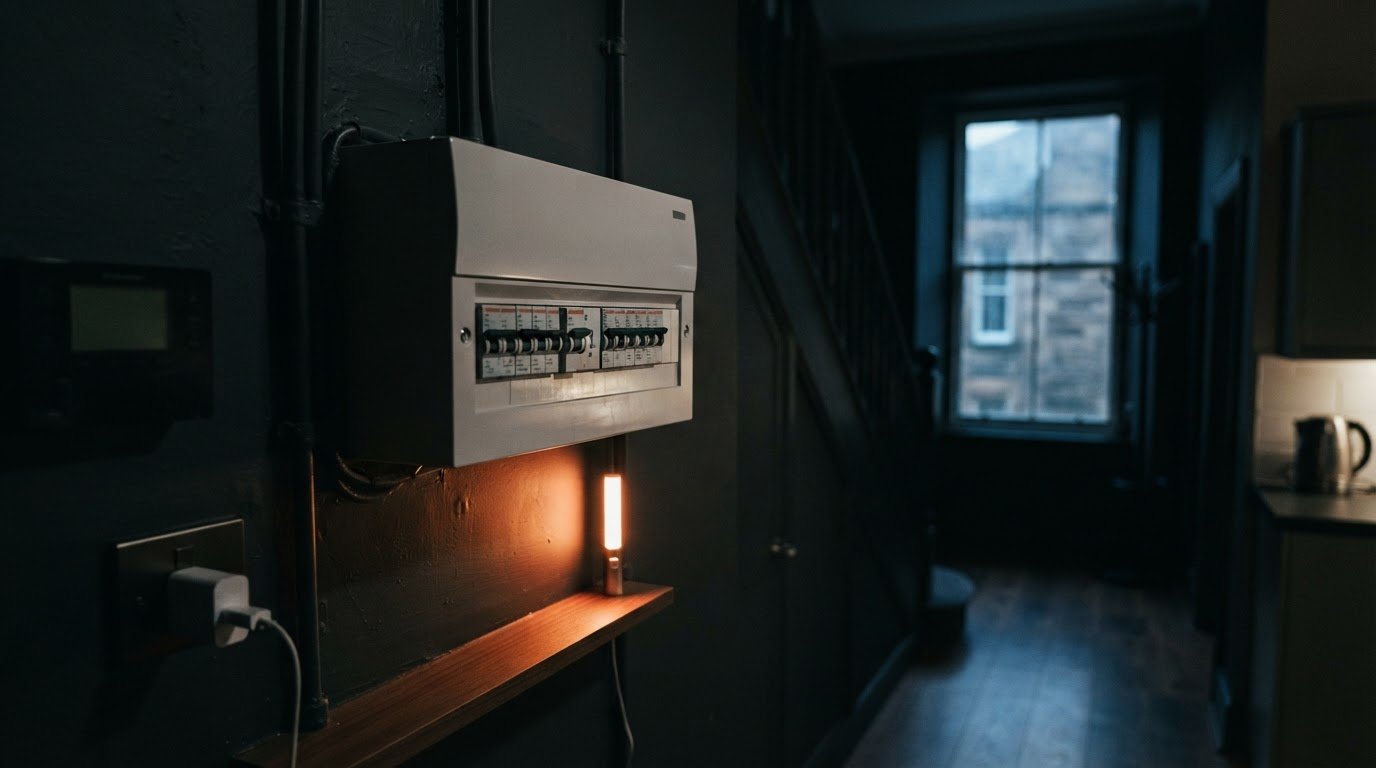
Imagine sitting down for tea in your West End home when the lights flicker and the power cuts out, leaving you in total darkness. It’s a moment that brings instant worry about the safety of your family and the hidden state of your wiring. If you find yourself in this position, finding an electrical fault in house Dundee properties requires a methodical approach rather than a panicked guess. We understand that a sudden trip in your consumer unit feels like more than just an inconvenience; it’s a source of genuine concern regarding fire risks and the potential for “cowboy” electricians to take advantage of your situation.
You deserve to feel safe in your own home, and this guide provides the expert local guidance you need to identify, manage, and safely resolve electrical issues. We will walk through the common signs of trouble, explain how a professional diagnosis works under the latest 2026 regulations, and show you how to find a reliable local sparkie who treats your house with the respect it deserves. From understanding if you need a simple repair to knowing when a rewire is necessary, we’ll ensure you have the clarity to move forward with quiet confidence.
Key Takeaways
- Understand that professional fault finding is a systematic process of elimination that identifies hidden defects rather than just resetting a tripped switch.
- Learn to recognise common warning signs, such as flickering lights or a persistent RCD trip, when finding an electrical fault in house Dundee properties.
- Master a safe DIY sequence to isolate faulty appliances at the consumer unit, potentially saving time and restoring power to unaffected circuits.
- Discover how specialised diagnostic equipment, such as insulation resistance testers, allows a qualified electrician to pinpoint issues deep within your wiring.
- Ensure your home remains safe and compliant with the latest wiring regulations by choosing a local expert who values integrity and thorough workmanship.
What is Electrical Fault Finding and Why is it Essential?
When your power suddenly cuts out, your first instinct is likely to head to the consumer unit and flip the switch back up. We understand that reaction; you want your home back to normal as quickly as possible. However, finding an electrical fault in house Dundee properties requires a more methodical approach than a simple reset. Fault finding is the systematic process of identifying defects within an electrical circuit or installation. To truly understand what is an electrical fault?, one must recognise it as a symptom of an underlying issue that demands a professional eye. Ignoring these warning signs doesn’t just lead to another trip; it can cause irreversible damage to your expensive appliances and internal wiring.
Modern safety standards are our primary guide in keeping your family safe. The latest UK wiring regulations, BS 7671:2018+A4:2026, were published in April 2026 to address evolving risks in domestic environments. These standards prioritise the prevention of domestic electrical fires through advanced technology and stricter risk assessments. By prioritising a thorough investigation over a quick fix, we ensure your home remains a protective guardian rather than a source of hidden danger. We believe in doing things correctly the first time, following time-tested methods that honour the integrity of your property and your safety.
The Anatomy of a Domestic Electrical Fault
Understanding the basics helps demystify why your power is behaving unexpectedly. A short circuit occurs when electricity takes an unintended path with low resistance, whilst an earth fault happens when a live conductor makes contact with the earth wire or a metal casing. Open circuits are breaks in the loop that stop the flow entirely. Most issues occur at “junction points” like sockets or light fittings where wires are joined and terminated. It is vital to distinguish between a “nuisance trip” caused by a single faulty appliance and a genuine safety hazard hidden within your walls. We use our services to provide clarity and peace of mind during these stressful moments.
Dundee Housing and Typical Electrical Quirks
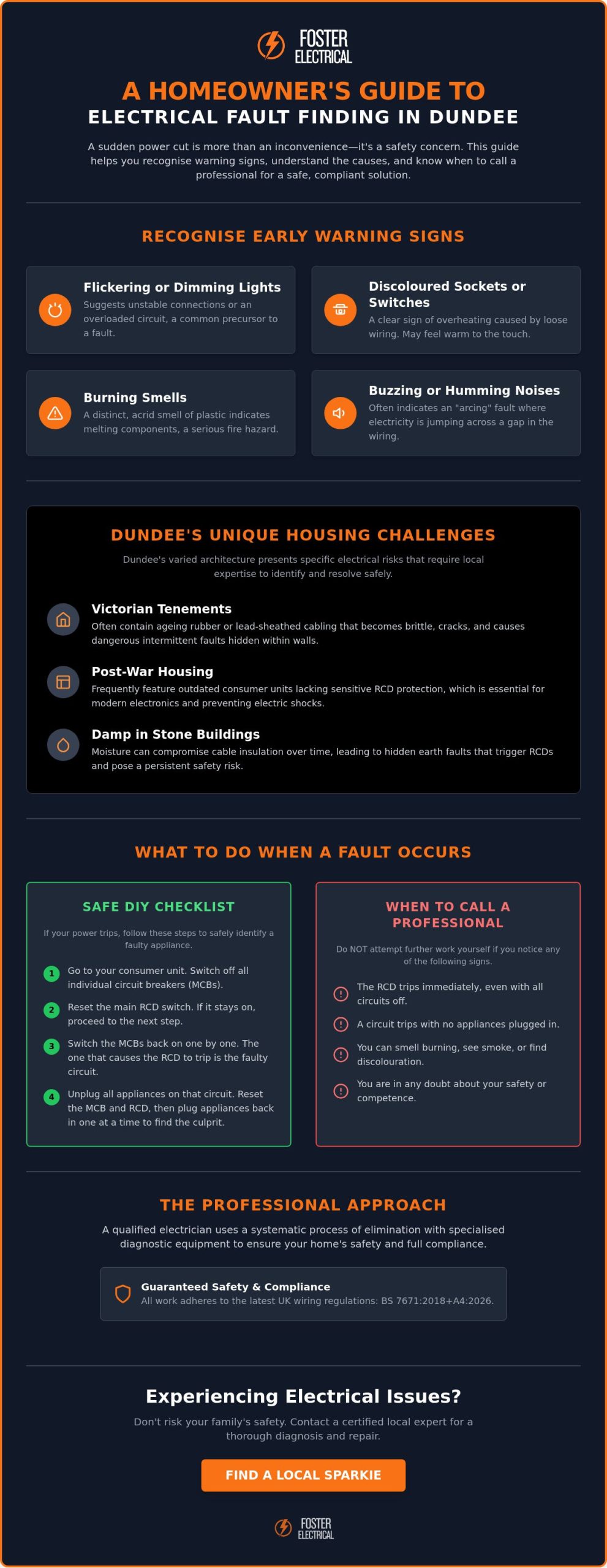
Dundee’s varied architecture brings its own set of challenges. In our historic Victorian tenements, we often find ageing rubber or lead-sheathed cabling that has become brittle over many decades. These materials can crack and fail, leading to dangerous intermittent issues. In post-war housing schemes across the city, we frequently encounter outdated consumer units that lack the sensitive RCD protection required for modern electronics. Additionally, local environmental factors like damp in older stone buildings can trigger faults by compromising cable insulation. Finding an electrical fault in house Dundee homes means knowing these local nuances and treating every property with the diligent care it deserves.
Common Signs of Electrical Faults in Dundee Homes
Spotting a problem early is the best way to protect your property from long-term damage. When finding an electrical fault in house Dundee homeowners often notice small, unusual behaviours before a total power loss occurs. You might see a socket that looks slightly brown or discoloured around the pinholes. This isn’t just dirt; it’s a sign of heat caused by a loose connection or an overloaded circuit. If a switch feels warm to the touch, it’s a clear warning that the internal components are struggling to manage the current flow safely. We believe in a straightforward approach to safety, where these small signs are treated with the seriousness they deserve.
Sensory clues are equally important. A distinct, acrid smell of burning plastic near a light fitting or the fuse board is an immediate red flag. Similarly, if you hear a faint buzzing or humming noise coming from your walls or consumer unit, it often indicates an “arcing” fault where electricity is jumping across a gap. These issues require a meticulous eye to resolve correctly. If you’re worried about specific symptoms in your own home, we recommend checking a home electrical safety checklist to help you audit your living space for obvious hazards.
Tripping Circuits: The Most Frequent Warning
Your consumer unit is a protective guardian. It’s designed to “trip” and cut power in milliseconds to prevent electric shocks or fires. Whilst it’s frustrating when the lights go out, that RCD is likely saving your life. Finding an electrical fault in house Dundee properties often starts with identifying which circuit has failed. Is it just the kitchen sockets, or perhaps the upstairs lighting? By narrowing down the location, you provide vital information for a permanent fix. For a more detailed look at how to handle these events, you can read our guide on Fault Finding and Repairs.
Intermittent Power Loss and “Ghost” Faults
Few things are as vexing as a “ghost” fault that appears and vanishes without warning. You might notice flickering or dimming lights specifically when the washing machine starts its spin cycle or the kettle is boiled. These intermittent issues often stem from loose neutral wires, which can cause voltage fluctuations across multiple rooms. In Tayside, our damp and windy weather can also play a role. Moisture entering outdoor security lights or garden sockets frequently triggers intermittent trips that seem to have no rhyme or reason. If these “ghosts” are haunting your home, it might be time to chat with a local expert who can offer a straightforward, honest assessment of your wiring.
The Professional Fault Finding Process: What to Expect
When we arrive at your door, our goal is to restore your peace of mind through a steady, logical approach. Finding an electrical fault in house Dundee properties isn’t about guesswork; it’s a disciplined sequence of checks designed to protect your home’s integrity. We begin with a thorough visual inspection, looking for obvious signs of wear, overheating, or previous DIY errors that might be causing the disruption. This initial step often reveals simple issues like loose terminals or damaged cables that are visible to the trained eye. We believe in being transparent from the very first minute, explaining what we see in plain language without hiding behind technical jargon.
Next, we employ a rigorous process of elimination to narrow down the fault to a single point. By systematically isolating different sections of your installation, we can identify exactly where the circuit is failing. This method ensures we don’t waste time on unaffected areas, allowing us to provide a clear and honest explanation of the required repairs. Our commitment to grounded professionalism means we take the time to ensure the root cause is addressed, rather than just patching over a symptom. You’ll receive a straightforward breakdown of any costs involved, reflecting our rejection of opaque pricing structures in favour of artisanal, person-to-person service.
Diagnostic Tools and Technical Accuracy
Precision is vital for safety. We use calibrated multi-function testers to perform professional electrical troubleshooting that goes far beyond what a standard multimeter can achieve. These tools allow us to test “continuity,” ensuring that the copper conductors inside your walls aren’t broken or damaged. We also perform insulation resistance tests, which check if the protective coating on your wires is failing. This technical accuracy makes finding an electrical fault in house Dundee homes faster and significantly safer than trial-and-error methods. It’s a meticulous way of working that we take great pride in maintaining.
Repair or Replace? Making the Right Choice
Once the fault is found, we’ll discuss the best path forward. In many cases, a simple repair like replacing a faulty socket or a damaged light pendant is all that’s required to restore safety. However, if a fault reveals that your system is struggling to cope with modern demands, we might suggest Consumer Unit Upgrades to provide better protection. We always balance immediate safety needs with the long-term reliability of your property. Our advice is rooted in sincerity; we’ll never recommend a full replacement if a diligent repair will suffice, ensuring you get the most practical and honest solution for your Dundee home.
DIY Safety Checks vs. When to Call a Dundee Electrician
When your power cuts out, it’s natural to feel a sense of urgency to get things back to normal. We want to provide you with a safe, steady way to triage the situation before you reach for the phone. Whilst finding an electrical fault in house Dundee properties can be stressful, following a logical sequence helps you rule out simple appliance failures. This “process of elimination” is the same method we use, and it often identifies a faulty kettle or toaster as the culprit rather than a problem with your actual wiring.
If your consumer unit has tripped, follow these five steps with care:
- Step 1: Head to your consumer unit and identify which circuit breaker has flipped down. It’s usually the one that looks out of alignment with the others.
- Step 2: Go through your home and unplug every single appliance that is on that specific circuit. Don’t just turn them off at the switch; pull the plugs out entirely.
- Step 3: Return to the consumer unit and attempt to flip the RCD or MCB switch back up to the “on” position.
- Step 4: If the power stays on, begin plugging your appliances back in one-by-one. When the circuit trips again, you’ve found your faulty device.
- Step 5: If the circuit trips immediately with nothing plugged in, or if you smell burning, you must call a professional immediately.
The Limits of Homeowner Troubleshooting
Safety is our absolute priority, and there is a firm line where DIY checks must end. We strongly advise that you never unscrew socket plates, light fittings, or the cover of your consumer unit unless you are a qualified electrician. There is also a significant fire risk in “blind” resetting. If a switch refuses to stay up, do not force it. Doing so can cause a massive heat build-up behind your walls. We often encounter “cowboy” fixes from previous owners, such as oversized fuses or bypassed safety devices, which require a meticulous eye to identify and correct. If you’ve reached the end of your safe checks and the power still won’t stay on, it’s time to get in touch with our team for a professional resolution.
Choosing a Trusted Dundee Trader
Finding an electrical fault in house Dundee homes requires more than just technical skill; it requires local knowledge of our city’s unique housing stock. When choosing a sparkie, always check for professional registration with bodies like NICEIC or SELECT. These certifications ensure the individual is competent and up-to-date with the latest 2026 regulations. We take great pride in our “diligent neighbour” approach, treating every home with the same respect and tidiness we would expect in our own. Unlike anonymous national firms, we are rooted in the local community and committed to providing honest, artisanal service that you can rely on for years to come.
Expert Electrical Repairs with Foster Electrical
At Foster Electrical, we see ourselves as more than just contractors; we are protective guardians of your home’s safety. Our commitment to sincere, grounded professionalism means that every time we enter a property in Dundee, Perth, or Angus, we treat it with the same meticulous care we would our own. Finding an electrical fault in house Dundee properties is a task we approach with traditional diligence, ensuring that every wire is checked and every connection is secure. We reject the impersonal nature of modern service industries, choosing instead to build relationships founded on trust, respect, and high standards of execution.
Whether you require minor repairs to a single circuit or find that your home’s condition necessitates Full Property Rewires, we provide lasting solutions that prioritise your family’s wellbeing. Our advice is always honest and our pricing remains transparent, ensuring you never feel overcharged or misled. We take immense pride in our reputation as a hardworking local business that delivers artisanal quality with a straightforward, practical attitude. We believe that finding an electrical fault in house Dundee homes is a privilege, and we honour that by providing a service that is both thorough and reliable.
A Protective Guardian of Your Home Safety
Our fault finding services often serve as the first step in broader safety assessments, integrating seamlessly with comprehensive EICR inspections. This thoroughness ensures your entire installation meets current standards, providing a cumulative sense of security for homeowners and landlords alike. We are particularly proud of our standards for tidiness; we believe that leaving a client’s home exactly as we found it is a hallmark of true professional character. When you call us, you’ll experience direct, human interaction. We don’t believe in automated queues or impersonal call centres; we prefer the human connection that comes from being a diligent neighbour and local expert.
Booking Your Fault Finding Appointment
Booking an appointment with us is a simple, logical step toward restoring your power and your peace of mind. Whether you need assistance for a persistent trip or wish to schedule routine maintenance, we are here to support you. Every repair we undertake comes with a safety guarantee, reflecting our personal commitment to the work and our pride in high-standard execution. We understand the inconvenience of power loss and the worry it brings, which is why we aim to provide a steady, reassuring presence from the moment you get in touch. Don’t let electrical worries linger in the back of your mind. Contact our team today for professional electrical support.
Restoring Safety and Certainty to Your Home
Dealing with a tripped circuit or a flickering light is a source of genuine frustration, but you now have the knowledge to handle these moments with calm. We have explored how a methodical process of elimination helps you identify a faulty kettle or toaster before you need to call for assistance. However, when the issue lies deeper within your wiring, finding an electrical fault in house Dundee properties requires a level of technical precision that only a professional can provide. We believe that your home should always be a protective guardian for your family, and maintaining its integrity is a responsibility we take very seriously.
By choosing a local expert, you benefit from Local Dundee Expertise and the reassurance of working with NICEIC Registered Specialists. We maintain meticulous safety standards and a commitment to tidiness that respects your private space at all times. We don’t hide behind automated phone lines or opaque pricing; we offer straightforward, honest advice that you can trust. If you are ready to resolve your electrical worries for good, please Contact Foster Electrical for Professional Fault Finding in Dundee. We look forward to helping you restore power and safety to your property with quiet confidence.
Frequently Asked Questions
How much does electrical fault finding cost in Dundee?
The cost of finding an electrical fault in house Dundee properties typically depends on the time taken to isolate the issue. Most local electricians charge an initial diagnostic fee followed by an hourly rate for the investigation. We recommend choosing a professional who offers transparent, honest pricing rather than a vague estimate, as this ensures you only pay for the diligent work required to secure your home and restore your power.
Is it an emergency if my fuse box keeps tripping?
A fuse box that keeps tripping is a clear signal that a safety hazard exists within your installation. Whilst the device is doing its job by cutting power to protect you, the underlying cause could be a serious issue like a short circuit or an earth fault. If you cannot identify a faulty appliance through the DIY steps mentioned earlier, you should treat the situation as an urgent matter to prevent potential fire risks or further damage.
Can a faulty appliance cause my whole house to lose power?
Yes, a single faulty appliance can certainly cause your entire house to lose power if your consumer unit uses a split-load RCD arrangement. In these older setups, one safety device often protects multiple circuits, meaning a faulty kettle in the kitchen could shut off the power to every room. Upgrading to a modern consumer unit with individual protection for every circuit can prevent this total loss of power by isolating the fault to a single area.
How long does it typically take to find an electrical fault?
Most domestic electrical faults are identified and diagnosed within one to two hours of systematic testing. Complex issues, such as intermittent ghost faults or damage hidden deep within wall cavities, may naturally take longer to pinpoint. We use a methodical process of elimination to ensure finding an electrical fault in house Dundee homes is as efficient and thorough as possible, respecting your time and the integrity of your property.
Why does my RCD trip only when it rains?
Moisture ingress is the most common reason for an RCD to trip during wet weather. Rainwater can seep into outdoor security lights, garden sockets, or even junction boxes under the eaves, causing a small amount of electricity to leak to the earth. This earth leakage is immediately detected by your consumer unit, which cuts the power to prevent a dangerous situation from developing in your garden or external walls.
Do I need a full rewire if I have one electrical fault?
One electrical fault rarely necessitates a full property rewire on its own. Most issues are localised to a single socket, switch, or cable run and can be repaired with a diligent, targeted fix. However, if the fault finding process reveals that your cables are brittle or have reached the end of their natural lifespan, we will provide an honest assessment of whether a rewire is the safest long-term choice for your home’s safety.
What should I do if I smell burning but can’t see any smoke?
You should turn off the power at the main switch immediately if you notice an acrid, burning smell. This scent often indicates that plastic insulation is melting due to a loose connection or an overloaded circuit. Even if you don’t see smoke, the heat buildup behind a socket or within a ceiling rose is a significant fire hazard that requires professional investigation before the power is safely restored.
Are old fuse boxes more prone to electrical faults?
Older fuse boxes are often more prone to issues because they lack the sensitive safety components found in modern consumer units. Ageing copper connections can loosen over time, leading to heat buildup and intermittent faults. Additionally, older systems weren’t designed to handle the high electrical demand of modern appliances, which puts extra strain on the installation and increases the likelihood of a circuit failure.