You are sitting down for tea when a sudden spark behind the sofa or a persistent flickering in the hallway makes your heart sink. It is a quiet anxiety that many homeowners across Dundee and Angus face, wondering if their property’s hidden cables are still fit for purpose. We understand that the thought of faulty electrics is frightening; it’s even more stressful when you’re worried about the potential mess and confusion of conflicting trade advice. You want to ensure your family is safe without being pushed into unnecessary work by an anonymous corporation.
In this 2026 safety guide, we’ll help you identify the clear signs you need a house rewire so you can move from uncertainty to total peace of mind. We believe in being a diligent neighbour you can trust, so we’ve stripped away the technical jargon to give you the honest facts. We’ll provide a practical checklist of danger signs, explain how an Electrical Installation Condition Report (EICR) works, and show you how the latest 2026 wiring regulations protect your modern home. By the end, you’ll know exactly how to keep your household running safely and efficiently.
Key Takeaways
- Learn how to spot the physical signs you need a house rewire, such as persistent fishy odours or discolouration on your socket faces.
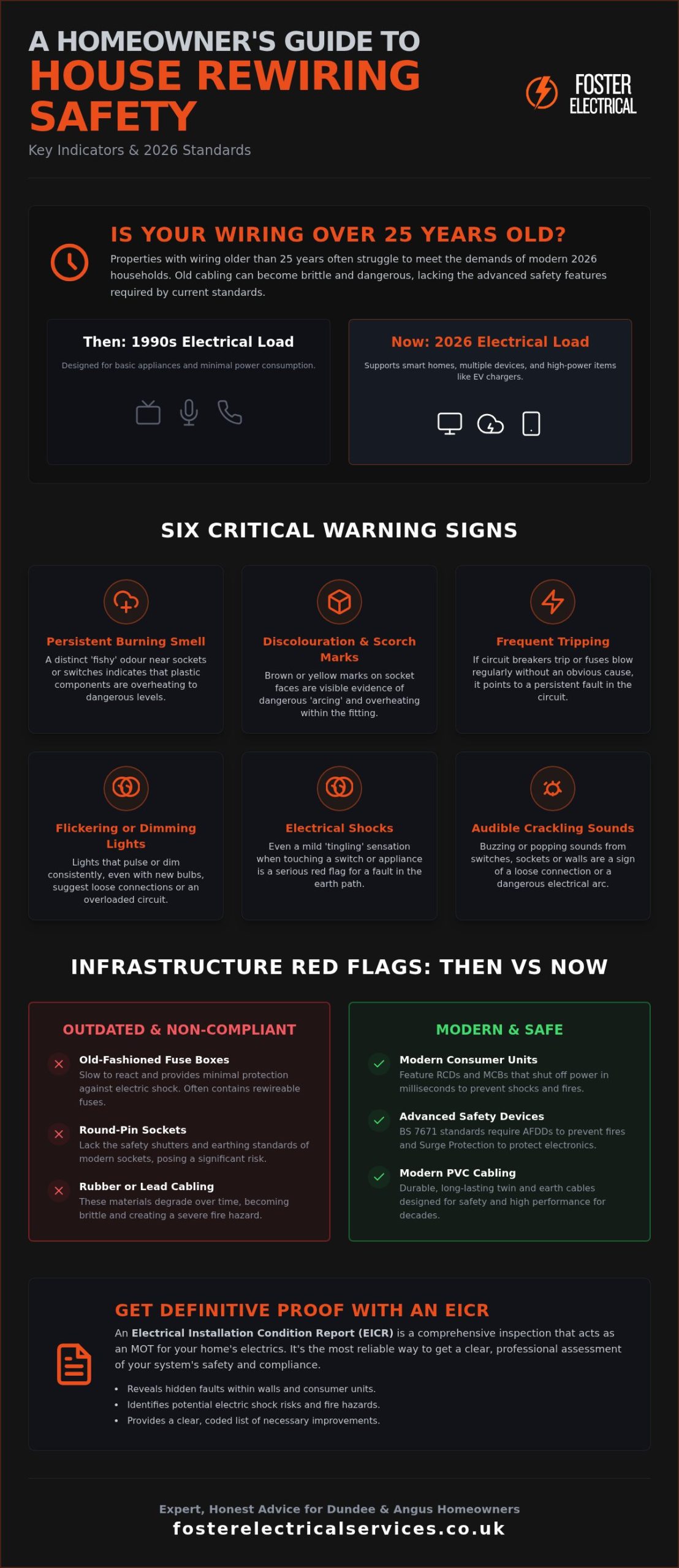
- Understand why properties over 25 years old often require an upgrade to handle the heavy electrical demands of a modern 2026 household.
- Discover how an Electrical Installation Condition Report (EICR) acts as a vital safety check to reveal hidden faults within your walls.
- Identify outdated infrastructure red flags, including old-fashioned fuse boxes and round-pin sockets that no longer meet current safety standards.
- Find out how a professional property rewire can be meticulously organised to protect your home and minimise mess during the process.
Understanding Property Rewiring: Why Age and Standards Matter in 2026
A property rewire is more than just a maintenance task; it is a vital investment in your family’s safety and your home’s future. When we undertake a full rewire, we replace every length of cable, all switches, and every socket throughout the building. We also install a modern consumer unit, which acts as the protective shield for your entire electrical system. One of the clearest signs you need a house rewire is simply the age of the installation. Whilst a system might have been perfectly adequate thirty years ago, it was never designed to handle the heavy load of modern life.
In 2026, our homes work harder than ever. The Electrical wiring standards have evolved to meet these demands, specifically through the 18th Edition (BS 7671:2018+A4:2026). This latest update, which became mandatory for all new work in October 2026, introduces enhanced requirements for Arc Fault Detection Devices (AFDDs) and surge protection. These are not just technical checkboxes; they are essential tools that prevent electrical fires and protect your expensive electronics from power spikes. If your wiring predates these standards, you are missing out on the highest level of protection available.
The Evolution of Home Power Demands
Think back to the mid-1990s. A typical home might have had a single television and a few kitchen appliances. Today, we have smart home hubs, multiple high-powered computers, and perhaps an EV charger in the driveway. This shift has placed immense pressure on old circuits. If your home still relies on old rubber (VIR) or lead-sheathed cabling, these materials are likely brittle and dangerous. We view the consumer unit as the brain of your home. If that brain is outdated, it cannot react fast enough to shut off the power when a fault occurs.
When a Partial Rewire is the Better Option
We don’t believe in selling you work you don’t need. Sometimes, a full overhaul isn’t necessary. If your property has been extended or certain sections were updated recently, those circuits might still be in excellent condition. A Partial Property Rewire is often the ideal solution during a kitchen or bathroom renovation. It allows us to modernise high-use areas whilst leaving safe, compliant wiring untouched. We always start with an honest assessment to determine if this targeted approach is right for your home, ensuring you get the safety you need without unnecessary disruption.
Six Critical Warning Signs That Your Home Needs a Rewire
When you live in an older property, it’s easy to dismiss small electrical quirks as “character”. However, these quirks are often the primary signs you need a house rewire. Ignoring them can lead to devastating consequences, so it’s vital to know what to look for. We believe that a safe home starts with an informed homeowner who knows how to spot trouble before it escalates.
Keep a close eye on these six red flags in your property:
- Persistent burning smells: A distinct “fishy” odour near sockets or switches.
- Visible scorching: Discolouration, charring, or brown marks on socket faces and plug tops.
- Frequent tripping: Circuit breakers that “flip” off or fuses that blow without an obvious cause.
- Flickering lights: Bulbs that dim or pulse, even after you’ve replaced them with new ones.
- Electrical shocks: A sharp “tingling” sensation when you touch an appliance or a switch.
- Audible crackling: Buzzing or popping sounds coming from behind your walls or inside outlet boxes.
The Danger of Arcing and Overheating
The “fishy” smell many homeowners report isn’t just an odd coincidence. Older electrical components were often made from urea-formaldehyde. When these plastics overheat due to a loose connection, they release a chemical scent that mimics rotting fish. This heat is caused by “arcing”, where electricity jumps across a gap in a damaged wire. Arcing is the primary cause of domestic electrical fires because it generates intense heat that can ignite nearby insulation or timber. If you notice discoloured sockets, it means the arcing has already reached a dangerous temperature. This isn’t just old age; it’s a sign of immediate failure.
Nuisance Tripping vs. Safety Shutdowns
Many clients feel frustrated when a modern consumer unit trips frequently. We often explain that a “sensitive” board is actually a sign of a high-standard safety system. Modern Residual Current Devices (RCDs) are designed to detect tiny leaks of electricity that old-fashioned wire fuses would simply ignore. If your breakers are tripping, it’s often because the system has detected a fault that could have caused a shock or a fire. This is especially relevant for landlords, who must follow strict government guidance on electrical safety to protect their tenants. If you’re experiencing persistent issues, you should speak with a professional electrician in Dundee for a thorough fault-finding inspection. We can help you determine if a simple repair will suffice or if your home requires more extensive work. If you have concerns about your home’s safety, please get in touch with us for a friendly, honest chat about your options.
Infrastructure Red Flags: Beyond the Visible Symptoms
Whilst scorched sockets are obvious warnings, many signs you need a house rewire are hidden in plain sight within your home’s physical infrastructure. We often visit properties across Dundee where the electrical “bones” are simply too old to support the power demands of 2026 technology. One of the most telling indicators is an old-fashioned fuse box. If you still have to replace individual strands of fuse wire when a circuit fails, your system lacks the sophisticated, rapid-response protection of modern circuit breakers. These older units cannot provide the level of safety required for a modern household.
Another serious red flag is the presence of green “goo” or surfactant. This sticky, green substance occasionally leaks from older plastic-sheathed cables or appears inside switches. It is the result of a chemical reaction between the cable’s plasticiser and the copper conductors over several decades. This liquid is not just a mess to clean; it can cause high-resistance connections and eventually lead to the total failure of your accessories. If you see this green residue, it is a clear signal that your cabling is reaching the end of its natural life.
Identifying Outdated Components
If you spot round-pin sockets or light switches mounted on wooden blocks or made of black Bakelite, your wiring likely dates back to the 1950s or 60s. These archaic fittings were never designed for the rigorous earthing requirements of modern appliances. In many Tayside tenements, we still find fabric-coated or lead-sheathed cables tucked behind skirting boards or under floorboards. These materials degrade over time, becoming brittle and prone to short-circuiting. Aluminium wiring, which was common in certain mid-century builds, also requires specialist attention because it expands and contracts differently than copper, often leading to loose and dangerous connections at the terminal.
Modern Sockets for Modern Lives
A professional rewire is a perfect opportunity to fix the “extension lead trap”. Many Dundee homeowners rely on daisy-chained extension leads because their rooms only have one or two single sockets. This creates a significant fire risk through overloading. By modernising your system, we can install USB-integrated sockets exactly where you need them, whether that’s by the bedside or in a home office. Crucially, a full rewire ensures your property is robust enough for high-demand upgrades like EV charger installation. Modern electric vehicle chargers and heat pumps place a massive strain on old cabling; upgrading now ensures your home remains safe and efficient for years to come.
The EICR Process: How to Get Definitive Proof
Whilst you can spot some signs you need a house rewire yourself, many dangers remain hidden beneath your floorboards and behind your plasterwork. An Electrical Installation Condition Report, or EICR, is essentially an MOT for your property’s electrics. It is the only way to get definitive proof of your home’s safety. We recommend this formal inspection for anyone living in an older property in Dundee, Perth, or Angus, especially if the wiring has not been checked in the last ten years. It provides a clear, documented snapshot of the system’s health and identifies precisely where improvements are needed.
During the process, we use a specific coding system to grade our findings. A C1 code signifies that danger is present and there is a risk of injury; we will act immediately to make these issues safe. A C2 code indicates a potential danger that requires urgent attention. Finally, a C3 code means that an improvement is recommended but not mandatory. This transparent grading ensures you aren’t left guessing about which repairs are priorities and which can wait.
What Happens During an Inspection?
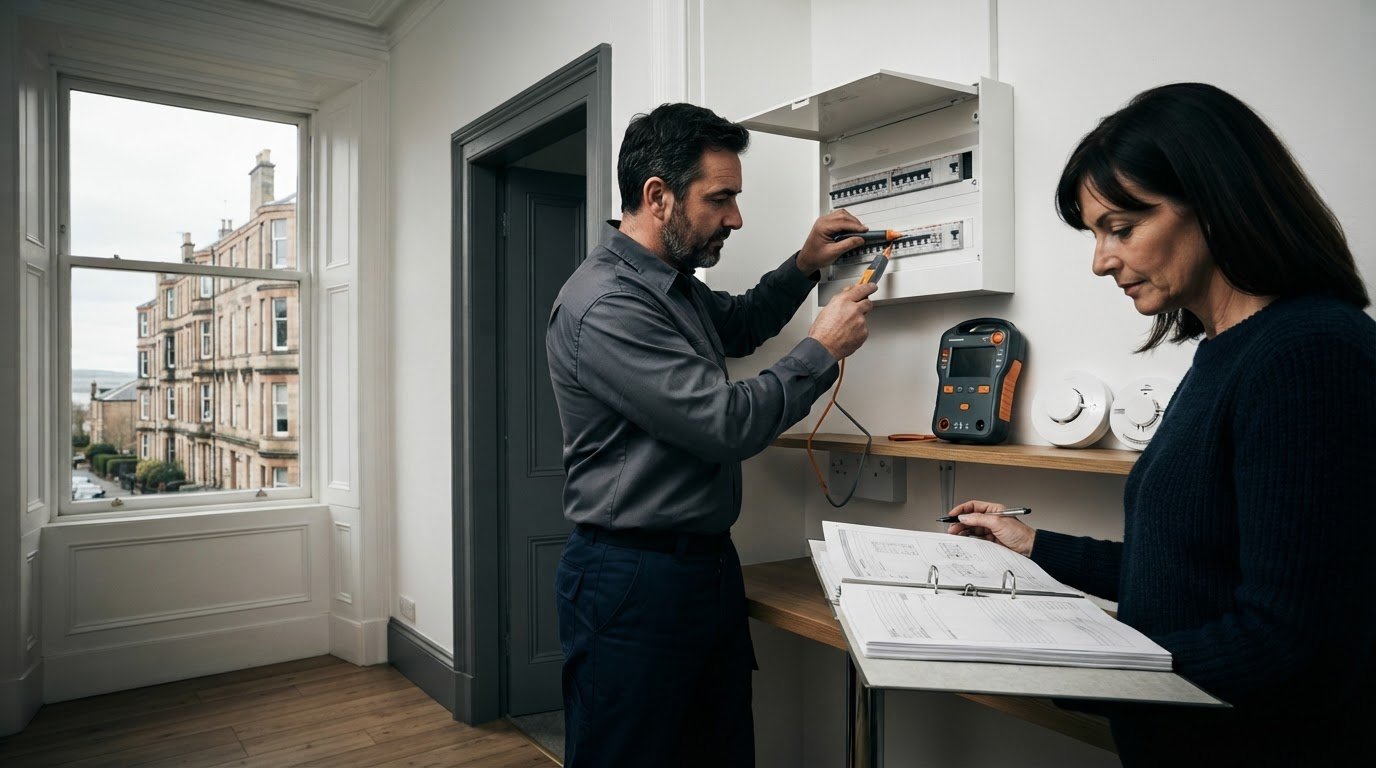
We approach every inspection with the same meticulous care we would give our own homes. Our team conducts a series of rigorous tests to check circuit continuity, insulation resistance, and the effectiveness of your earthing arrangements. We don’t just look at the surface; we open up a representative sample of sockets and switches to check for heat damage or loose connections. Once the physical testing is complete, we provide a straightforward, honest report. We avoid confusing technical jargon because we want you to feel confident and informed about the state of your property.
EICR Requirements for Scottish Landlords
For those who rent out property, these checks are a legal necessity rather than a choice. Current Scottish safety legislation requires landlords to have an EICR performed at least every five years. This includes ensuring that your property meets the 2026 standards for interlinked smoke and heat alarms, which are vital for early fire detection. If you are a property owner, our EICR Certificate Dundee guide offers a full breakdown of your compliance duties. Whether you are a landlord or a homeowner, getting a professional assessment is the only way to ensure your family or tenants are truly protected. If you’re unsure about the state of your wiring, book an EICR with our friendly team today for total peace of mind.
Planning Your Rewire: Professional Standards and Local Expertise
Deciding to act on the signs you need a house rewire is a significant step toward securing your property’s future. We understand that the prospect of a full rewire can feel overwhelming. You might worry about the mess, the cost, or the disruption to your daily routine. This is why we approach every project as your diligent local expert, combining technical precision with a level of personal care that larger, corporate firms often lack. Whether you are looking for local help or researching established professionals like Fawcett Plumbing to understand the service standards you should expect, choosing the right expert is key. We take pride in our reputation across Dundee and Angus, knowing that our work protects our neighbours and friends.
We operate with a “no-mess” philosophy. We know we are entering your private sanctuary, and we treat your furniture and flooring with absolute sensitivity. A rewire is organised into two distinct stages to keep your home functional. During the “First Fix”, we install the hidden cabling and back boxes. This is the most intensive part of the work, but we use meticulous dust-management techniques to protect your space. The “Second Fix” follows, where we fit the sockets, switches, and the new consumer unit. We coordinate these stages carefully to minimise the time you spend without power, ensuring the process is as smooth as possible.
Future-Proofing Your Home
A rewire is the perfect time to prepare your property for the energy demands of the future. We can integrate energy-efficient LED lighting throughout your rooms, reducing your bills whilst improving the atmosphere of your home. It’s also essential to ensure your Consumer Unit Upgrade includes modern surge protection and AFDDs to safeguard your electronics. Safety is our ultimate priority, which is why we always include the installation of interlinked smoke and heat alarms to meet current Scottish legislation. When we finish, you’ll receive full safety certification, giving you the quiet confidence that your home is a safe haven once again.
Securing Your Home’s Future and Safety
Your home is your sanctuary, and keeping its hidden systems in top condition is the best way to protect the people inside. We’ve explored the physical signs you need a house rewire, from those distinct fishy odours to the infrastructure red flags of a bygone era. By understanding the EICR process and the rigorous requirements of the 18th Edition Wiring Regulations, you can move from worry to clear, actionable knowledge. A modern rewire isn’t just about safety; it’s an investment that prepares your property for the high-tech demands of 2026 and beyond.
We take immense personal pride in being the trusted local experts for families across Dundee, Angus, and Fife. Our team remains dedicated to meticulous tidiness and high execution standards, ensuring we treat your property with the same respect as our own. You don’t have to navigate electrical concerns alone or settle for impersonal, corporate service. We are here to provide honest advice and professional care every step of the way.
Take the first step toward total peace of mind today. Book a Professional Electrical Safety Inspection in Dundee with our friendly team and let us help you keep your household safe and compliant.
Frequently Asked Questions
How long does a full house rewire typically take?
A full property rewire typically takes between five and ten working days to complete. The exact duration depends on the size of your home and whether the property is occupied or empty during the works. We organise the process into two stages to ensure efficiency. Whilst the first fix involves the heavy lifting of installing new cables, the second fix focuses on the final installation of sockets and switches to restore your power quickly.
Can I stay in my house whilst it is being rewired?
You can remain in your home whilst the work is carried out, but you should prepare for significant disruption. We will need to turn off the power during the day to work safely, though we aim to restore essential circuits each evening. Because the process involves lifting floorboards and chasing into walls, there will be unavoidable noise and dust. We take immense pride in our tidiness and use protective coverings to keep your space comfortable.
How much does it cost to rewire a three-bedroom house in Dundee?
The cost of a rewire depends on several factors, including the number of sockets required and the accessibility of your floorboards and loft. Every property in Dundee is unique, so we provide bespoke quotes rather than generic estimates. We believe in transparent, honest pricing that reflects our high execution standards and quality materials. This ensures you receive a safe, compliant installation without any hidden surprises or opaque corporate fee structures that confuse homeowners.
Will rewiring my house cause a lot of damage to my decor?
Rewiring involves chasing into plaster and lifting floorboards, which will inevitably impact your current decor. However, we use a meticulous approach to minimise the footprint of our work. We use professional dust extraction systems and carefully plan our cable routes to keep the number of wall chases to a minimum. Once we finish the second fix, the walls will require some filling and redecoration, but we always leave the property tidy and respectful of your private space.
Do I need a full rewire if I am just getting a new kitchen fitted?
You don’t always need a full rewire for a kitchen project, but a partial rewire is often essential for this high-demand area. Modern kitchens require dedicated circuits for ovens, hobs, and multiple appliances that old wiring simply cannot support. If your existing installation shows signs you need a house rewire elsewhere, it is far more cost-effective to upgrade the entire system whilst the kitchen is already stripped back and accessible for our professional team.
Is a house rewire mandatory if my wiring is over 25 years old?
A rewire isn’t legally mandatory based on age alone, but properties over 25 years old often fail to meet current safety standards. Older systems were never designed for the heavy electrical loads of 2026 living. We recommend an Electrical Installation Condition Report (EICR) to assess the health of your cables. This professional inspection provides definitive proof of safety, ensuring your installation is robust enough to protect your family from the risks of fire or shock.
What is the difference between a fuse box and a modern consumer unit?
An old-fashioned fuse box uses replaceable wire that melts to stop a fault, which is a slow and outdated method. A modern consumer unit uses sophisticated circuit breakers and Residual Current Devices (RCDs) that flip off in milliseconds. These modern units are the brain of your home’s safety, detecting tiny electrical leaks that could cause a fire. Upgrading to a compliant unit is one of the most effective ways to modernise an old electrical installation.
Does a house rewire include new smoke and heat alarms?
Yes, we include the installation of interlinked smoke and heat alarms as part of our full rewiring service. This ensures your property is fully compliant with current Scottish government legislation for 2026. These alarms are hard-wired into your new system, providing a reliable early warning that battery-only units cannot match. Identifying the signs you need a house rewire is the perfect opportunity to bring your entire home up to the highest possible safety and fire protection standards.