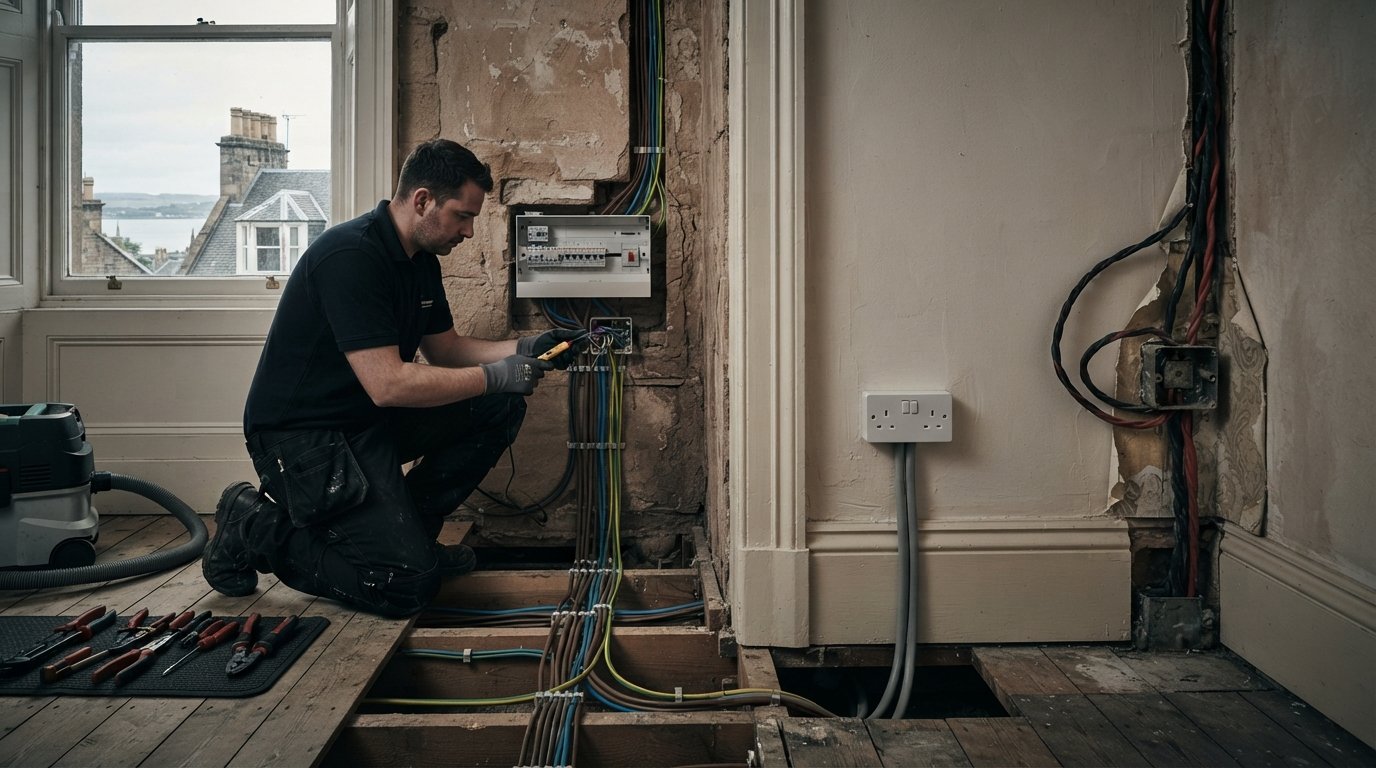
You open the email from your electrician, hoping for a simple “Satisfactory” result, only to find your report marked as a failure. It is a sinking feeling that immediately brings up questions about local council fines, the stress of organising tenant access, and the daunting prospect of a full rewire. We know that as a landlord, you take your responsibilities seriously and want to provide a safe, comfortable environment for your residents. Knowing exactly what to do after a failed EICR in Scotland is the first step toward regaining your peace of mind and protecting your investment.
We believe that electrical safety shouldn’t be a source of constant anxiety or a reason for high-pressure sales tactics. This guide provides a straightforward roadmap through the latest Scottish regulations, including the 28-day rule for providing reports to tenants and the mandatory RCD protections required since March 2024. You will learn how to decode those technical C1 and C2 markings and how to find a diligent local expert who values artisanal standards over corporate speed. We have outlined everything from repair deadlines to finding a trustworthy professional who leaves your property spotless, ensuring your compliance journey is as smooth and respectful as possible.
Key Takeaways
- Understand that an “Unsatisfactory” result is a safety blueprint rather than a disaster; it identifies precisely where your property needs attention to meet legal standards.
- Master the legal requirements of the Housing (Scotland) Act, including the 28-day window for completing essential remedial works.
- Follow our clear step-by-step guide on what to do after a failed EICR in Scotland to achieve compliance while protecting your tenants and your investment.
- Learn how to navigate the specific challenges of Tayside properties, such as the legacy wiring found in Dundee tenements and traditional Angus cottages.
- Discover the benefits of choosing a local, artisanal electrician who prioritises personal care and meticulous standards over impersonal corporate speed.
Decoding Your ‘Unsatisfactory’ EICR Report
An ‘Unsatisfactory’ result on your Electrical Installation Condition Report (EICR) means your property has failed to meet the minimum safety standards required by law. We know this news can feel like a setback, but we encourage our clients to see it differently. At Foster Electrical, we view an unsatisfactory report as a safety blueprint rather than a list of failures. It is a detailed map that shows us exactly how to protect your residents and your property investment. There is a real sense of psychological relief in having a clear path to electrical safety. You are no longer guessing about the hidden state of your wiring; you have a plan. If you are unsure what to do after a failed EICR in Scotland, remember that this document is simply the first step toward a safer home.
Understanding the Classification Codes (C1, C2, FI)
When you sit down to read your report, you will see specific codes assigned to different observations. These codes help us prioritise the work needed to keep your property safe. We treat these markings with the utmost seriousness, acting as protective guardians for your environment.
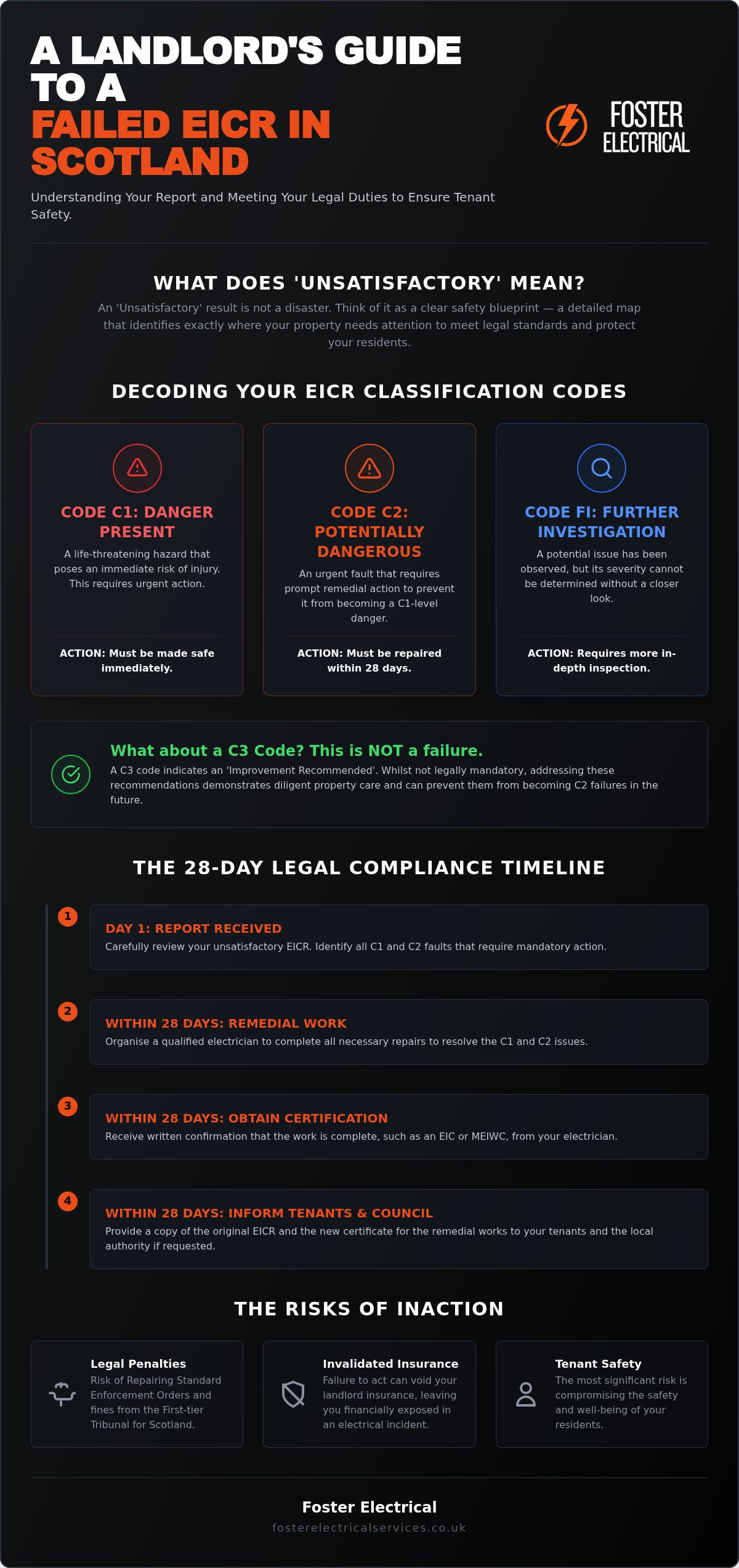
- Code C1: This is the most serious classification. Code C1 is a life-threatening hazard requiring immediate isolation. We often ‘make safe’ these issues before we even leave the site to ensure nobody is at risk.
- Code C2: This indicates a potentially dangerous situation. Whilst not an immediate threat, it is the ‘urgent’ category that requires action within 28 days. You must address these faults to achieve legal compliance.
- Code FI: This stands for Further Investigation. It means we have spotted something that doesn’t look right, but we need to look deeper into the system to be certain. We do this to ensure total safety for everyone in the home.
Why C3 Codes Don’t Mean Failure
You might also see Code C3 on your report. This does not mean your property has failed the inspection. A C3 indicates that improvements are recommended but they are not legally mandatory for compliance. We often give ‘Diligent Neighbour’ advice here; addressing these minor issues now can prevent them from becoming C2 failures in the future. There’s a difference between the legal minimum and the ‘Foster-standard’ of safety that we pride ourselves on delivering. We believe in doing the job correctly the first time. If you need help resolving any of these points, our team provides fault finding and repairs to get your property back to an artisanal standard of safety. We take pride in this. By choosing to fix recommended items, you are actively choosing durability and long-term peace of mind for your property.
The 28-Day Deadline: Legal Requirements for Scottish Landlords
Receiving an unsatisfactory report starts a clock that every landlord must respect. Under the Scottish Government Repairing Standard, you have a duty to ensure the electrical installation in your property is safe and functioning correctly. Whilst the legislation focuses on maintaining these standards, the practical expectation is that any C1 or C2 faults are resolved within 28 days. This window is your opportunity to act as a protective guardian of your property, ensuring that small faults don’t escalate into dangerous hazards. If you are feeling overwhelmed by the technical jargon, knowing exactly what to do after a failed EICR in Scotland will help you stay on the right side of the law and maintain the trust of your tenants.
Ignoring these deadlines carries heavy risks. Non-compliance can lead to intervention from the First-tier Tribunal for Scotland, which has the power to issue Repairing Standard Enforcement Orders. Beyond legal fines, a failed report that isn’t addressed can invalidate your landlord insurance, leaving you financially exposed if an electrical fire occurs. We take pride in helping our local community avoid these pitfalls. Our team works with diligence to provide the necessary repairs quickly, ensuring your property meets the highest safety standards without the stress of corporate bureaucracy.
The Step-by-Step Compliance Timeline
Managing the repairs requires a logical approach to ensure nothing is missed before the deadline expires. We suggest following this structured path:
- Day 1-7: Carefully review the report findings. This is the time to gather professional quotes for the remedial works and confirm the scope of the repairs needed.
- Day 8-21: Schedule the work with a qualified electrician. This middle period is crucial for completing the physical repairs, such as consumer unit upgrades or fixing faulty sockets, whilst managing tenant access with sensitivity.
- Day 22-28: Once the work is finished, your electrician will issue a Minor Electrical Installation Works Certificate (MEIWC) or an Electrical Installation Certificate (EIC). You must then provide this documentation to your tenants to prove the property is safe.
Scottish Specifics: SELECT and Local Authorities
In Scotland, the quality of the professional you hire matters. Membership in trade bodies like SELECT or NICEIC is a mark of trust that ensures the work meets rigorous national standards. When dealing with properties in Dundee, Angus, or Fife, you may also need to communicate with the local council if they have requested proof of your EICR status. You have a legal duty to provide written confirmation of completed works to every existing tenant within 28 days of the inspection. If you need a reliable partner to help you navigate this process, you can reach out to our local team for straightforward, honest advice on your next steps.
Common Reasons for EICR Failure in Dundee & Tayside Properties
Dundee’s rich industrial heritage is reflected in its architecture, from grand Victorian villas to the sturdy tenements that once housed generations of mill workers. Whilst these buildings possess immense character, their electrical systems often tell a different story. We frequently find that 19th-century infrastructure simply cannot keep pace with the demands of modern living. When a landlord asks what to do after a failed EICR in Scotland, we often begin by looking at how the property has been maintained over the decades. In traditional Angus cottages, we frequently encounter the legacy of well-intentioned but dangerous ‘DIY’ electrical work amongst previous owners. These hidden faults require a meticulous eye and a deep understanding of local building methods to uncover. Our team specialises in Fault Finding and Repairs within these complex local properties, acting as protective guardians for your home’s safety and durability. We understand the unique ‘DNA’ of Tayside homes, which allows us to spot issues that anonymous, corporate contractors might overlook.
The Absence of RCD Protection
A missing Residual Current Device (RCD) on socket circuits is one of the most frequent reasons for an automatic C2 failure. We often refer to the RCD as the ‘Silent Sentinel’ because it monitors the flow of electricity and cuts the power in a fraction of a second if a fault is detected. This rapid response is what prevents fatal shocks in domestic environments. Since March 2024, all rental properties in Scotland must have at least one RCD in the consumer unit protecting socket circuits. If your report highlights this absence, it is a clear sign that your system is outdated. Upgrading to a modern 18th Edition consumer unit is the most effective way to achieve total peace of mind for both you and your tenants.
Outdated Consumer Units and Earthing Issues
Many tenement flats across Tayside still rely on old ‘fuse wire’ boards. These units were never designed to handle the heavy load of modern appliances and lack the sophisticated safety features of contemporary hardware. We take personal pride in replacing these relics with systems that offer genuine protection. Shared earthing systems in older Dundee properties also lead to ‘Unsatisfactory’ results during an inspection. If an older building lacks a dedicated, high-quality earth connection, the risk of fire or electric shock increases significantly. A comprehensive Consumer Unit Upgrade solves the majority of EICR failures we encounter. It replaces brittle, outdated components with durable technology that meets current regulations. Understanding these common pitfalls helps you decide what to do after a failed EICR in Scotland, allowing you to invest in repairs that provide long-term reliability rather than just a quick fix.
Managing Remedial Works: From Failure to Certification
Once you have digested the report, the next hurdle is deciding how to move from failure back to compliance. Many landlords worry that they need to pay for a completely new inspection once repairs are finished. In most cases, you don’t. Instead, you need ‘Written Confirmation’ alongside the relevant safety certificates for the work carried out. This documentation proves to the local authority and your tenants that the specific hazards identified have been correctly resolved. If you are wondering what to do after a failed EICR in Scotland, your priority should be finding a properly registered electrician, ideally one with NICEIC or SELECT accreditation, who can issue the correct certification. We provide clear, honest quotes that address the root cause of the fault, ensuring the same issue doesn’t reappear in six months.
Standard Repair vs. Full Property Rewire
Sometimes, a simple component replacement, like an RCD or a new socket, is enough to secure a ‘Satisfactory’ status. However, if the wiring itself is brittle or lacks a proper earth path throughout the building, a Full Property Rewire may be the only safe and cost-effective path forward. We always aim to be the ‘Diligent Neighbour’ who tells you the truth about your property’s health. We won’t suggest a full rewire if a partial fix will suffice, but we also won’t compromise on your safety. We believe in durability over quick fixes.
- Minor Electrical Installation Works Certificate (MEIWC): This is used for minor repairs, such as replacing a single faulty light fitting or adding one new socket to an existing circuit.
- Electrical Installation Certificate (EIC): This is required for major upgrades, such as a consumer unit replacement or installing entirely new circuits.
Tenant Management During Repairs
We understand that having tradespeople in a rental home can be intrusive. Our ‘Protective Guardian’ approach means we prioritise minimal disruption to your tenants’ daily lives. Meticulous tidiness is our signature; we treat every client’s private space with the sensitivity it deserves, ensuring we leave the property spotless. By communicating the safety benefits clearly to your tenants, we help you manage access with ease. This turns a stressful repair into a positive safety upgrade for the home. If you need a straightforward path to certification, contact our local Dundee team for a transparent assessment of your remedial needs and a clear plan on what to do after a failed EICR in Scotland.
Why Local Expertise Matters for Your Property’s Safety
Choosing the right partner to handle your remedial works is as important as the repairs themselves. We believe that an electrical contractor should be more than just a name on an invoice; they should be a trusted advisor who understands the unique ‘DNA’ of Tayside homes. When you are deciding what to do after a failed EICR in Scotland, the choice often comes down to a national corporate firm or a local specialist. We reject anonymous, corporate behaviour in favour of direct, person-to-person service. Our team takes personal pride in every job, following an ‘Artisanal Standard’ where every screw is tightened correctly and every workspace is left spotless. We view our work as a long-term safety partnership that extends far beyond the delivery of an initial EICR Certificate. This commitment to durability and honesty is what sets us apart in a crowded industry.
Our Commitment to Dundee, Perth, and Fife
Being local isn’t just about geography; it’s about accountability. Our presence in the heart of the community allows us to respond quickly to urgent faults, often reaching properties before a national firm has even processed the paperwork. We take immense pride in maintaining the safety of our local housing stock, from the grand tenements of Dundee to the modern developments in Fife. Our reputation amongst Tayside landlords is our most valued asset, built on years of honest advice and meticulous execution. We are your diligent neighbours. We treat your property with the same care we would our own, ensuring that every remedial task is completed with the highest level of integrity and respect for the private space we enter. This commitment to professional pride is shared by experts globally; you can find out more about GA PERRY to see how these standards are upheld by leading service providers in Western Australia.
Compliance is the starting point, but we aim to help you build a more sustainable and valuable asset. Once your property is safe, we can discuss moving beyond basic requirements to energy-efficient LED Lighting Upgrades. These improvements reduce costs for your tenants and enhance the appeal of your home. We also help landlords prepare for the future with EV Charger Installation, ensuring your property remains competitive in an evolving market. We don’t just fix faults; we provide a vision for a safer, more efficient environment that protects your investment for years to come. Contact Foster Electrical to organise your remedial works and secure your property’s safety.
Securing Your Property’s Future with Confidence
A failed electrical report shouldn’t be a source of dread. By viewing your ‘Unsatisfactory’ EICR as a clear roadmap for safety, you can protect your tenants and your investment with absolute certainty. You now understand the importance of the 28-day window for remedial works and the specific challenges of Tayside’s unique housing stock. Knowing what to do after a failed EICR in Scotland allows you to move beyond basic compliance toward a higher standard of property care.
We take personal pride in being the protective guardians of our local community’s homes. As SELECT and NICEIC registered specialists, we guarantee meticulous tidiness and artisanal standards in every repair we undertake. We are proud to serve as local experts across Dundee, Perth, and Fife, offering straightforward, honest advice without the high-pressure tactics of national corporations. You can trust us to treat your property with the respect it deserves, ensuring every workspace is left spotless.
Book Your EICR Remedial Works with Dundee’s Trusted Experts and let us help you achieve lasting peace of mind. Your property is in safe, diligent hands.
Frequently Asked Questions
How long do I have to fix a failed EICR in Scotland?
You generally have 28 days to complete remedial works to meet the Repairing Standard. Whilst enforcement in Scotland is managed through the First-tier Tribunal rather than automatic fines, acting within this window demonstrates you are a responsible landlord. It is essential to understand what to do after a failed EICR in Scotland to avoid legal complications. We recommend scheduling repairs as soon as the report arrives to ensure your property remains a safe environment.
Do I need to pay for a whole new EICR after the repairs are done?
You do not usually need a completely new report. Once we complete the remedial tasks, we provide you with a Minor Electrical Installation Works Certificate or an Electrical Installation Certificate. These documents, when kept alongside your original unsatisfactory report, serve as written confirmation that the property now meets the required safety standards. This approach is more cost-effective and straightforward than paying for a second full inspection of the entire residential property.
Can my tenant refuse entry for EICR remedial works?
Tenants are legally required to provide access for essential safety repairs, provided you give them the correct notice. Under most Scottish tenancy agreements, this is at least 24 hours. We find that a person-to-person conversation often resolves any hesitation. By explaining that the work is for their personal safety, most residents are happy to cooperate. We always treat their private space with the utmost sensitivity and take pride in leaving the workspace spotless.
Is a C3 code an automatic fail in Scotland?
A C3 code is not a failure. It stands for “Improvement Recommended” and indicates that your wiring does not meet the very latest standards but isn’t currently dangerous. Your report will only be marked as “Unsatisfactory” if it contains C1, C2, or FI codes. Whilst C3 works aren’t legally mandatory for compliance, we often suggest addressing them to future-proof your investment and prevent more serious faults from developing in the years ahead.
What happens if I don’t fix a C2 fault within 28 days?
Failing to address a C2 fault puts you in breach of the Repairing Standard. The First-tier Tribunal for Scotland can issue an enforcement order or a rent reduction order if repairs aren’t carried out. Perhaps more importantly, your landlord insurance may become invalid if a fire occurs due to an unaddressed fault. We act as protective guardians for our clients, helping them meet these deadlines to keep their properties and tenants safe from harm.
Can any electrician carry out the remedial work after a fail?
Any competent electrician can technically perform the work, but we strongly advise using a SELECT or NICEIC registered professional. From October 2026, electricians must hold specific Level 3 qualifications to perform these inspections. Using an accredited local expert ensures that your remedial certification is robust and will be accepted by local authorities. We take personal pride in our artisanal standards, ensuring every repair is executed with the highest level of integrity.
Do I need to notify the local council if my EICR is unsatisfactory?
You don’t usually need to notify the council immediately after an unsatisfactory result. However, you must be able to produce a satisfactory report if they request one during a routine check or a license application. If you are an HMO landlord, the requirements are stricter, and you must provide proof of compliance to maintain your license. Knowing what to do after a failed EICR in Scotland ensures you have the right paperwork ready when needed.
How much does it cost to fix a failed EICR in Dundee?
The cost depends entirely on the nature of the faults identified. A simple socket replacement will be significantly cheaper than a full consumer unit upgrade. Whilst we cannot provide fixed pricing without seeing the report, UK industry averages for electrician labour sit around £55 per hour. We focus on providing honest, transparent quotes that address the root cause of your electrical issues, ensuring you receive long-term durability rather than a temporary, low-quality fix.