What if receiving an “unsatisfactory” mark on your electrical safety certificate isn’t a failure, but actually the most important safety net for your Dundee property? We know that for many local landlords, seeing that red box ticked feels like a heavy burden. You might be worried about the strict 28-day deadline or the potential costs of remedial work. It’s a common concern, especially with the latest requirements for RCD protection under the Scottish Repairing Standard. We understand that your priority is keeping your tenants safe while managing your investments with integrity. We’re here to help you understand what is an eicr unsatisfactory report and how you can move forward with confidence.
In this guide, we’ll explain exactly what those confusing C1, C2, and FI codes actually mean for your fuse box. We promise to provide a clear, honest roadmap to help you achieve compliance and protect your tenants. We will walk you through the essential steps to fix faults, from simple repairs to necessary consumer unit upgrades. By the time you’ve finished reading, you’ll have the knowledge to handle your electrical obligations and find a trustworthy local partner who treats your property with the respect it deserves.
Key Takeaways
- Understand what is an eicr unsatisfactory report by learning how professional electricians identify immediate and potential dangers within your property’s wiring.
- Decipher the critical safety codes, including C1, C2, and FI, to help you prioritise necessary repairs and ensure your tenants remain protected from electrical hazards.
- Navigate the strict 28-day deadline for remedial works required by Scottish law to maintain your legal status as a compliant and responsible landlord.
- Discover how a modern consumer unit upgrade can often resolve multiple safety failures at once, bringing older Dundee tenements up to modern standards.
- Learn the practical steps for moving from a failed inspection to a satisfactory certificate through professional remedial works and proper documentation.
Defining the Unsatisfactory EICR Report
When we step into a local home or business to conduct an Electrical Installation Condition Report (EICR), we carry the responsibility of being a protective guardian for that property. Many clients feel a sense of dread when they hear the word “failed,” but in our industry, we use more specific language to describe the situation. If you are wondering what is an eicr unsatisfactory report, it’s best to think of it as a professional safety verdict. “Unsatisfactory” is the formal regulatory term used by electricians to indicate that an installation has not met the necessary safety criteria. An EICR unsatisfactory report is a legal document stating the installation is unsafe for continued use.
This status isn’t meant to be a punishment. It’s an identification of immediate or potential danger that could lead to fire or injury. From an insurance perspective, the difference is stark. A “Satisfactory” outcome provides proof that you’ve exercised due diligence and maintained your property to a high standard. An “Unsatisfactory” status, however, signals to your insurer that the property poses an active risk. We often find that insurance cover for fire damage can be jeopardised if a known unsatisfactory report hasn’t been addressed through professional remedial works.
The Purpose of the Inspection
We focus on the health of the entire system rather than just checking if the lights turn on. During our inspection, we look for circuit overloading, which frequently happens when modern high-draw appliances are plugged into older wiring systems. We also identify defective electrical work or a critical lack of proper earthing and bonding. These components are the silent safety features that prevent metal pipes or appliance casings from becoming live during a fault. Our goal is to ensure your installation meets the 18th Edition Wiring Regulations, which are the current gold standard for safety in the UK. You can find out more about how we handle these safety checks by viewing our services page.
Who Needs to Worry About an Unsatisfactory Result?
Landlords in Scotland face the most immediate pressure because they must comply with the Housing (Scotland) Act and the Repairing Standard. An unsatisfactory report triggers a mandatory 28-day window to fix the faults or face significant fines. Homeowners should also take these results seriously to protect their families from hidden dangers and avoid complications during a future property sale. For business owners, staying on top of these reports is vital for maintaining workplace safety and ensuring their insurance remains valid. We take pride in helping our Tayside neighbours navigate these requirements with honest, straightforward advice and a commitment to doing the job correctly.
Deciphering the Codes: C1, C2, and FI Explained
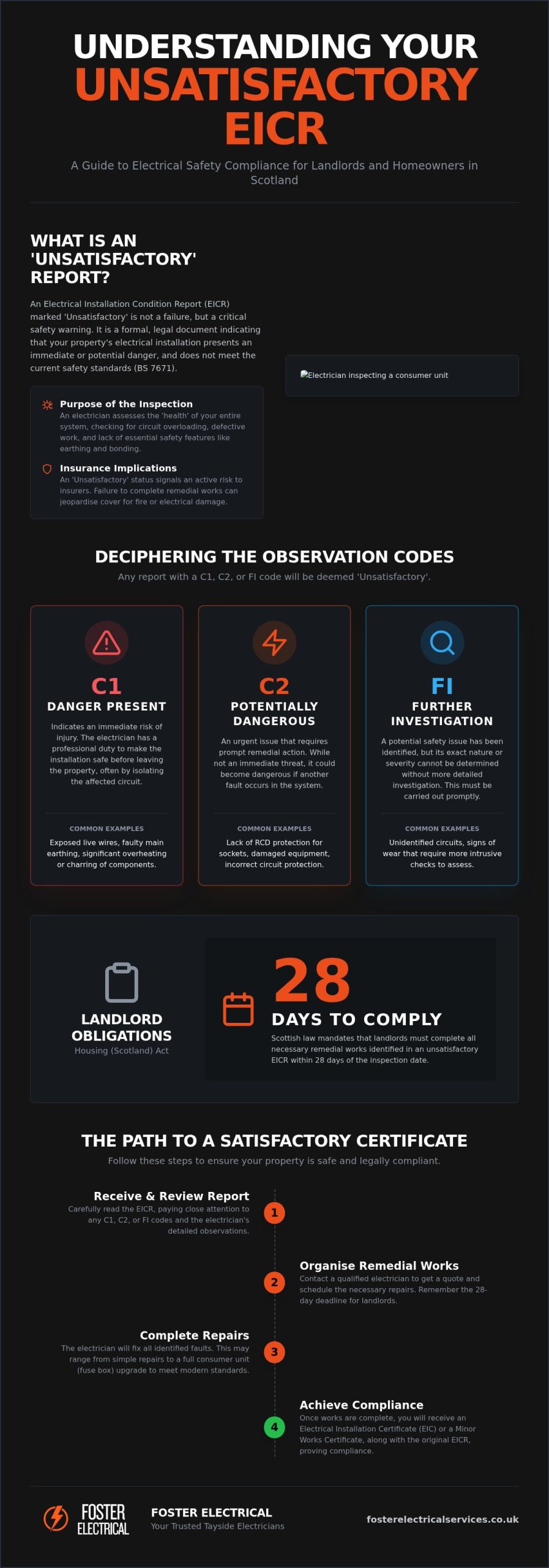
Understanding the “Observations and Recommendations” section is the first step in learning what is an eicr unsatisfactory report. We don’t just provide a simple pass or fail; we provide a detailed, coded list of findings that explain the health of your home’s electrical system. If you see a C1, C2, or FI code anywhere on your Foster Electrical report, the overall result will be “Unsatisfactory”. These codes are the heart of the document, acting as a prioritised list of safety concerns that require your attention to keep your property legal and safe.
Code C1: Danger Present
This is the most serious classification we can give. It means the risk of injury is immediate and requires action right now. In older Dundee flats, we sometimes find exposed live wires or sockets that have charred significantly from overheating. If we encounter a C1, we have a professional duty to make the installation safe before we leave your site. This often involves disconnecting the dangerous circuit to prevent a fire or electric shock. It’s a heavy responsibility, but one we take seriously to protect our Tayside neighbours.
Code C2: Potentially Dangerous
A C2 code indicates that urgent remedial action is required to prevent future danger. While the fault might not be an immediate threat today, it could become one if a fault occurs elsewhere in the system. According to the Scottish Government’s statutory guidance, landlords must address these issues within 28 days. In our experience across Angus, C2 codes are the most frequent reason for a report being unsatisfactory. Common examples include a lack of RCD protection or an outdated fuse board that lacks modern safety features.
Code FI: Further Investigation Required
Sometimes we find something suspicious that we cannot fully verify during a standard inspection. An FI code means we need to look deeper into a specific area, perhaps involving hidden circuits or unverified wiring from a previous partial rewire. Because we cannot guarantee the safety of these elements without further work, an FI code automatically defaults the entire report to “Unsatisfactory” until the investigation is complete. It is a cautious approach that ensures nothing is left to chance.
You might also notice C3 codes on your report, which mean “Improvement Recommended.” These do not make a report unsatisfactory. They are simply our way of helping you plan for the future durability of your property. If you’ve received a report from another provider and need help understanding the results, feel free to reach out to us for a straightforward, person-to-person chat about your next steps.
Legal Requirements and the 28-Day Rule in Scotland
In Scotland, the Private Rented Tenancies (Scotland) Act sets a high bar for property standards. We believe this is a positive step for our community, as it ensures every tenant in Tayside has a safe place to call home. When you receive a report marked as “Unsatisfactory,” the clock starts ticking immediately. Under the Scottish Repairing Standard, landlords have a mandatory 28-day window to complete all necessary remedial works. This isn’t just a recommendation; it’s a strict legal obligation that we help our clients navigate with efficiency and care.
Ignoring the findings of your report can lead to severe consequences. If a landlord fails to address the faults identified, local authorities can intervene, and the First-tier Tribunal for Scotland may issue a Repairing Standard Enforcement Order. This can result in significant fines and a “rent relief order,” which prevents you from charging rent until the property is made safe. Understanding what is an eicr unsatisfactory report in a legal context means recognising it as a formal notice that your property currently falls below the legal minimum standard for habitation. Scottish landlords must provide a copy of the remedial proof to tenants and local councils to demonstrate that the safety issues have been fully resolved.
Compliance for Dundee Landlords
For those managing properties in the city, staying compliant involves regular vigilance. An EICR must be renewed at least every five years, or sooner if a change of tenancy occurs. We often refer our clients to our EICR Certificate Dundee guide for a deeper look at local safety compliance. In Tayside, the “Landlord’s Electrical Safety Certificate” is the bedrock of your reputation. It proves to your tenants and the council that you take your role as a provider of housing seriously, valuing their safety over short-term savings.
Insurance and Home Sales in Fife
The impact of an unsatisfactory report extends beyond the rental market. If you own your home in Fife, an unsatisfactory EICR can actually void your home insurance policy in the event of an electrical fire. Insurers expect homeowners to maintain their property to a reasonable standard of safety. Furthermore, if you’re planning to sell, an unsatisfactory report will likely be flagged during the home report or survey process. This can negatively affect property valuations and even stall mortgage approvals for potential buyers. Organizations like Electrical Safety First highlight that a satisfactory report is a key indicator of a well-maintained home. We always suggest securing a “Satisfactory” result before putting a house on the market to ensure the sale proceeds without any hidden surprises.
Next Steps: Managing Remedial Works and Retesting
Moving from a state of non-compliance back to safety is a logical, step-by-step process that doesn’t have to be overwhelming. Once you understand what is an eicr unsatisfactory report, the next phase is about correction rather than repetition. You should know that you don’t always need a brand-new full EICR after the repairs are done. Instead, you need valid evidence that the specific faults identified have been professionally resolved. If your report contains multiple C2 observations, we help you prioritise the work. This ensures the most critical potential dangers are addressed first, keeping your tenants safe whilst managing your maintenance budget effectively.
It’s vital to distinguish between the different types of paperwork you’ll receive during this process. While the EICR describes the condition of the existing installation, an Electrical Installation Certificate (EIC) or a Minor Works Certificate is issued to prove that new work or repairs meet current safety standards. These certificates act as the formal “cure” to the “diagnosis” provided in your initial report. We take personal pride in ensuring this transition is as smooth as possible for our Tayside neighbours, providing a clear path from a failed inspection to a fully compliant home.
Getting a Quote for Remedial Work
When you look for a remedial quote, demand transparency and detail. A professional quote should provide clear descriptions of the work required for each specific fault code mentioned in your report. We recommend checking our Fault Finding and Repairs guide to understand how we track down and resolve these issues. Choosing a local Dundee expert ensures the work meets regional standards and the unique requirements of our local tenement buildings. We believe in honest, person-to-person service without any hidden corporate surcharges or opaque pricing structures.
The Proof of Compliance
Once the faults are cleared, you will receive your Minor Works Certificate or EIC. These documents “marry up” with your original unsatisfactory report to create a complete safety record for your property. You don’t need to throw away the old report. Keeping them together is essential for your records. Organise these certificates amongst your other property documents, such as insurance papers or gas safety records. This creates a clear, undeniable trail of diligence that satisfies the local council and your insurers. It proves you’ve acted as a responsible guardian of your property’s safety. If you’re ready to clear your report and secure your property, contact our team today for a straightforward remedial plan.
How Foster Electrical Resolves Unsatisfactory Reports in Tayside
We view every unsatisfactory report as a puzzle to be solved with diligence and integrity. When you’re trying to understand what is an eicr unsatisfactory report and how to fix it, you need a partner who values your safety as much as you do. We’ve built our reputation in Tayside on honest, straightforward advice. You won’t find any high-pressure sales tactics here. We simply explain the faults and provide a clear, artisanal approach to fixing them. Being a local family-run business means we’re your neighbours, and we take personal pride in every job we complete.
Time is often against you when dealing with the Scottish 28-day remedial deadline. Our local presence in Dundee, Perth, Angus, and Fife allows us to respond rapidly. We prioritise these assessments because we know the stress a pending deadline can cause for landlords. We don’t just fix the wires; we provide peace of mind whilst ensuring absolute safety. We also understand that your property is your private space. We’re meticulous about tidiness and treat your home with the sensitivity and respect it deserves, leaving everything exactly as we found it.
Expert Consumer Unit Upgrades
Many older properties in Dundee tenements struggle to meet modern standards due to outdated fuse boards. A single strategic upgrade can often be the most cost-effective way to resolve multiple C2 codes simultaneously. By installing a modern board with full RCD protection, we bring your home in line with current regulations in one visit. You can learn more about this in our Consumer Unit Upgrades 2026 guide. We ensure every circuit is protected, providing a durable solution that stands the test of time and protects your family or tenants from harm.
Contact Our Dundee Team Today
If you’re still feeling confused about what is an eicr unsatisfactory report and what your next move should be, let’s have a chat. We’re happy to review your existing report and provide a transparent, detailed quote for the remedial work. Our City & Guilds qualified engineers are ready to help you achieve compliance across Dundee, Perth, and Fife. We focus on clear, person-to-person communication rather than automated channels. You can request a quote and clear your EICR faults through our contact page. We’ll handle the technical complexity so you can focus on your life, knowing your property is safe and sound.
Securing Your Property and Peace of Mind
Receiving an unsatisfactory result is simply the first step toward making your property truly safe for the people who live there. We’ve explored how prioritising C1 and C2 codes ensures you meet the strict 28-day deadline required by Scottish law. Now that you understand what is an eicr unsatisfactory report, you can move forward with a clear plan to achieve compliance and protect your investment. There is no need to feel overwhelmed by the technical details when you have a roadmap to safety.
As an NICEIC Approved Contractor with deep roots in the Dundee community, we provide the honest, person-to-person service you deserve. We don’t believe in hidden corporate fees or complex jargon. We just believe in doing the job correctly. Our team is here to handle your remedial works with the same care we’d show our own homes, ensuring your records are tidy and your tenants are secure. We take personal pride in being the protective guardians of your electrical systems.
Book your EICR remedial work with Foster Electrical today to clear your faults and restore your safety standards. We look forward to helping you keep Tayside safe, one circuit at a time.
Frequently Asked Questions
Can I ignore a C3 code on my EICR report?
You don’t have to fix a C3 code to achieve a satisfactory result, as it simply means an “Improvement is Recommended.” These observations often highlight where your system doesn’t meet the very latest standards but isn’t currently dangerous. We advise our Dundee clients to view C3 codes as a helpful maintenance roadmap for the future. Addressing them early can prevent more costly repairs or potential C2 failures during your next inspection, which typically occurs every five years.
How long do I have to fix an unsatisfactory EICR in Scotland?
Landlords in Scotland have a mandatory 28-day window to complete all necessary remedial works once they receive an unsatisfactory result. This strict timeline is set by the Scottish Repairing Standard to ensure tenant safety is never compromised. If you’re managing a property in Perth or Angus, it’s vital to book your repairs early to avoid missing this legal deadline. We prioritise these urgent remedial jobs to help local landlords stay compliant and avoid potential enforcement actions.
Do I need a whole new EICR report after the remedial work is finished?
You do not need a brand-new EICR report after the faults are fixed. Instead, your electrician will issue a Minor Works Certificate or an Electrical Installation Certificate (EIC) for the repairs completed. These documents serve as the formal proof of compliance when presented alongside your original report. It’s a common point of confusion when people ask what is an eicr unsatisfactory report, but the remedial certificates effectively “close” the safety loop without needing a full re-test.
What happens if I don’t fix a C1 code immediately?
A C1 code represents an immediate danger to life or property, so it cannot be left unaddressed even for a few hours. When we find an exposed live wire or a charred component, we have a professional duty to make the installation safe before leaving the site. This usually involves isolating the dangerous circuit. If you refuse these immediate safety measures, you are knowingly leaving your tenants or family at extreme risk of fire or electric shock.
Can a landlord be fined for an unsatisfactory EICR report in Dundee?
Dundee City Council has the power to take enforcement action against landlords who fail to maintain electrical safety standards. If the First-tier Tribunal for Scotland determines you haven’t met the Repairing Standard, they can issue an Enforcement Order. Failure to comply can result in significant fines and Rent Relief Orders. This means you could be legally barred from collecting rent until the system is brought up to a satisfactory standard, protecting the safety of our local community.
Is an unsatisfactory EICR the same as a ‘failed’ MOT for a car?
While the terminology is different, the comparison to a car’s MOT is a helpful way to think about electrical safety. Just as a “major fault” on an MOT prevents you from legally driving, an unsatisfactory EICR means your property’s wiring is legally “unroadworthy.” You cannot ignore the results and continue as normal. However, unlike an MOT, an EICR is a deeper investigation into the hidden infrastructure of your home, requiring a specialist’s touch to resolve properly.
Can I carry out the remedial works myself if I am competent?
We strongly advise against carrying out remedial works yourself unless you are a fully qualified and registered electrician. To clear an unsatisfactory result, you must provide formal certification like an EIC or Minor Works Certificate. These documents must be signed by a competent person who takes legal responsibility for the work’s safety. For landlords in Fife and Angus, using a professional ensures your insurance remains valid and your legal obligations under the Repairing Standard are fully met.
Why did my report come back as FI (Further Investigation)?
An FI (Further Investigation) code is issued when an inspector finds something suspicious that cannot be fully verified during the initial visit. This might happen if a circuit is hidden or if we find unverified wiring in an older property. Because we cannot confirm these areas are safe, the result remains part of what is an eicr unsatisfactory report until the investigation is complete. It’s a cautious measure we take to ensure no hidden dangers lurk within your property.