Imagine settling down for a quiet evening at home in Dundee, only to be interrupted by a persistent, low-frequency hum vibrating through the hallway wall. That unsettling buzzing sound from your consumer unit is more than just a nuisance; it’s often the first warning sign from your home’s electrical heart that something isn’t quite right. We understand the immediate flash of anxiety that follows, as you find yourself wondering if your family is truly safe or if a complex repair is looming on the horizon.
It’s perfectly natural to feel concerned when your fuse box starts making itself heard. In this guide, we’ll help you identify exactly what’s causing that noise and provide the clear, honest advice you need to decide when it’s time to call in a professional. We’ll explore the common culprits, from loose connections to failing components, whilst explaining how current 18th Edition safety standards protect your property. You’ll learn how to distinguish between a minor vibration and a genuine emergency, ensuring your home remains a secure sanctuary for years to come.
Key Takeaways
- Learn to distinguish between a faint, healthy hum and a concerning buzzing sound from consumer unit that signals a potential electrical fault.
- Identify the primary causes of electrical noise, including loose terminal connections and overloaded circuits that can lead to dangerous overheating.
- Recognise critical red flags like a “fishy” plastic smell or visible scorching that indicate an immediate need for professional intervention.
- Understand the safe troubleshooting steps you can take at home to narrow down the issue without risking contact with live components.
- Discover why a professional EICR or a modern consumer unit upgrade is the most reliable way to ensure your home meets current safety standards.
Why Is My Consumer Unit Making a Buzzing Sound?
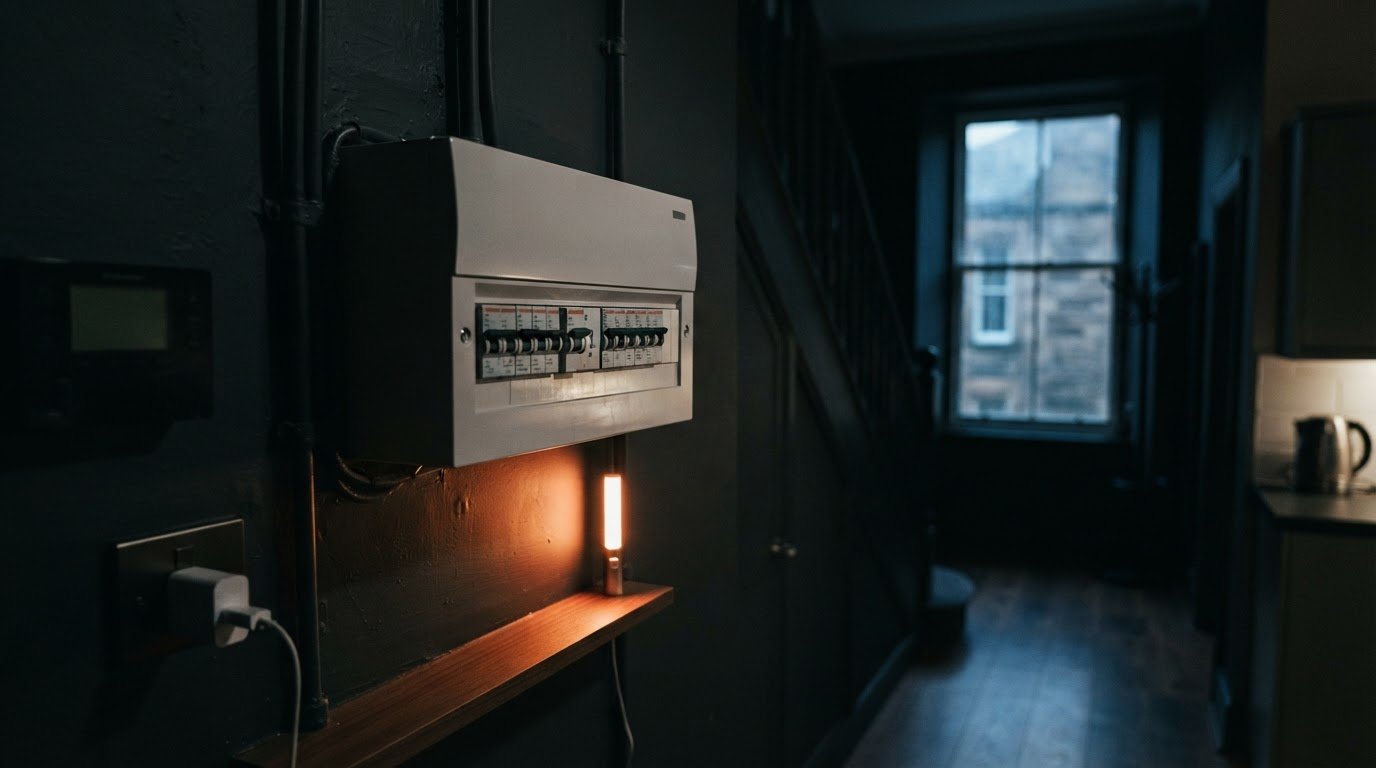
Your consumer unit is the silent guardian of your home, acting as the central hub that distributes power to every socket, light, and appliance. It’s the heart of your property’s electrical system, designed to keep you safe by cutting power if a fault occurs. Because it handles significant electrical current, hearing a faint hum isn’t always a cause for panic. However, a distinct buzzing sound from consumer unit components often signals that something requires professional attention. Identifying these sounds early is the most practical way to protect your home from potential hazards.
Vibration vs. Arcing: Identifying the Noise
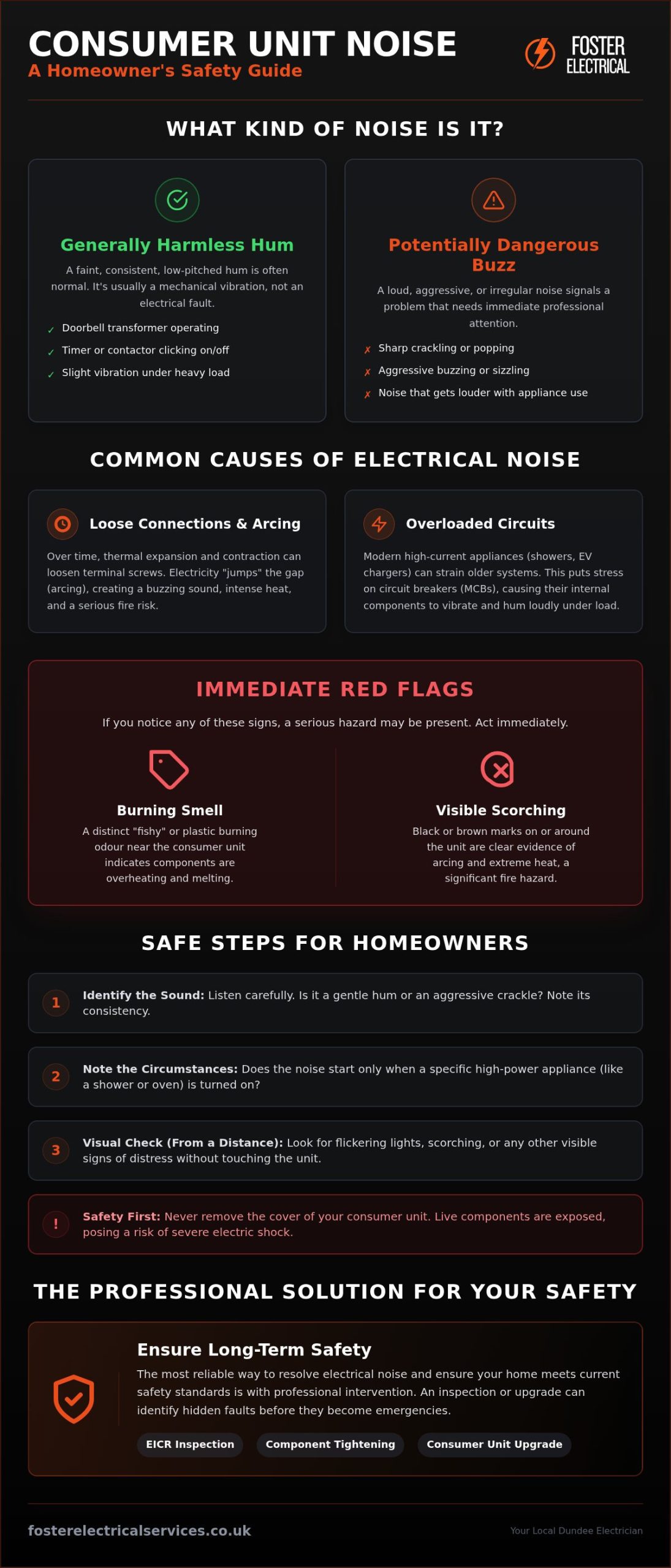
Understanding the character of the noise helps us determine the severity of the situation. A mechanical hum is typically low-pitched and consistent, often caused by the vibration of magnetic fields within a transformer or a component that has slightly loosened over time. It’s a physical vibration rather than a failure of the electricity itself. Electrical arcing, however, is far more aggressive. It sounds like a sharp crackling, popping, or sizzling. This occurs when electricity jumps across a gap, creating intense heat. If you hear this, it’s a clear sign of a developing fault that needs an expert eye.
Sometimes the noise follows a pattern. You might notice a persistent buzzing sound from consumer unit enclosures that only starts when you turn on the shower or the oven. This behaviour suggests that the sound is linked to a specific circuit being put under load. We often find that as more power flows through the unit, any minor mechanical looseness becomes amplified into a noticeable buzz that warrants a closer look.
Normal Operating Noises You Can Ignore
Not every sound from your fuse box is a warning of danger. Many modern homes have a doorbell transformer tucked away inside the unit, which naturally produces a very faint, constant hum. This is perfectly normal behaviour for that specific component. You might also hear a firm “click” when a timer for your outdoor lighting or a contactor for your heating activates. These sounds are generally harmless amongst modern units and simply show that the system is doing its job correctly.
If you feel unsure about a new or changing noise, our team provides comprehensive fault finding and repairs to give you total peace of mind. Taking a moment to listen closely is the first step toward maintaining a safe, reliable home for your family. By distinguishing between a harmless hum and a dangerous crackle, you can act before a small annoyance becomes a serious safety risk.
Common Causes of Electrical Buzzing and humming
While identifying the type of noise is a great first step, understanding the root cause is what truly keeps your home safe. In our experience across Dundee and Angus, the most frequent culprit behind a buzzing sound from consumer unit enclosures is a loose terminal connection. Electricity is a powerful force, and even a slightly loose screw can disrupt its intended path. When the flow of power is interrupted, the system has to work much harder to maintain a connection, leading to the audible protests you’re hearing now.
Loose Connections and Electrical Arcing
Copper wires naturally expand and contract as they heat up and cool down during daily use. Over several years, this repetitive movement can slowly back out the terminal screws that hold your circuits in place. When a connection becomes loose, electricity is forced to jump across the tiny gap to complete the circuit. This process, known as arcing, generates intense heat and is one of the most significant electrical fire warning signs homeowners should never ignore. It isn’t just a sound; it’s a physical breakdown of your home’s safety system that requires professional attention to tighten or replace damaged components.
Overloading and High-Current Appliances
We often see older fuse boards struggling to keep up with the pace of modern life. If you notice the buzzing only starts when you switch on the washing machine, electric shower, or kettle, your circuits might be reaching their maximum capacity. Modern technology places a heavy burden on systems that were never designed for today’s electrical demands.
Specifically, the addition of high-load equipment like EV chargers or heat pumps can push an aged Miniature Circuit Breaker (MCB) to its limit. While the MCB is designed to protect against prolonged overcurrent, the internal magnetic components can vibrate under heavy load, creating a persistent hum. If your board is more than 20 years old, it simply might not have the “headroom” required for these 21st-century additions. This stress can cause components to fail prematurely, making regular fault finding and repairs essential for older properties.
Beyond loose wires and heavy loads, internal components eventually wear out. A Residual Current Device (RCD) or an MCB contains delicate springs and magnets that can fail after decades of service. If a component is faulty, it may buzz as it struggles to maintain a solid internal connection. Identifying the source of the noise requires a methodical approach and the right tools. If your unit is making its presence known, it’s often a polite request for a professional check-up. You can always reach out to us for a chat if you’re worried about a new sound in your hallway.
Warning Signs: When a Buzzing Fuse Box Becomes a Danger
While we’ve explored the mechanical reasons behind a buzzing sound from consumer unit components, we must now look at the physical red flags that signal a genuine emergency. Your electrical system is the central nervous system of your home. Like any vital organ, it gives off specific symptoms when it’s under extreme stress. Recognising these signs early allows us to step in as protective guardians of your property before a small spark turns into a significant fire risk.
One of the most peculiar yet certain indicators of danger is a pungent, fishy odour. This isn’t a plumbing issue or a leftover meal. It’s the chemical signature of burning plastic and wire insulation. When terminal connections arc, the heat becomes so intense that the surrounding components begin to melt. If you encounter this smell alongside an audible buzz, the situation has already progressed past a simple repair and requires immediate professional intervention.
The Danger Checklist for Homeowners
We recommend a quick, safe visual check if you’re concerned. Do not open the unit, but look for these critical warnings:
- Visible Scorching: Any brown or black soot marks around the circuit breaker toggles or the casing edges.
- Heat Levels: A unit that feels hot to the touch or radiates noticeable warmth from the front panel.
- Flickering Lights: Lights that dim, pulse, or shimmer throughout the whole house, suggesting a loose main connection.
- Frequent Tripping: An RCD or MCB that refuses to stay in the ‘on’ position or trips repeatedly alongside the noise.
Secondary Symptoms of a Faulty Unit
Sometimes the danger isn’t immediately obvious. You might notice a sharp crackling sound that increases in volume whilst you’re using high-load appliances like the oven or electric shower. This suggests that the arcing is worsening under load. You might also spot slight discolouration on the plastic switches, which indicates long-term exposure to excessive heat that has already begun to compromise the integrity of the unit.
Ignoring these signals whilst they are minor is a common mistake. Most electrical fires are preceded by these “polite” warnings from the system. If your unit is showing any of these symptoms, our fault finding and repairs service is designed to pinpoint the exact failure point. We take great pride in our meticulous standards, ensuring that every connection is tightened and every component is verified for safety, giving you back the peace of mind you deserve.
Troubleshooting and Immediate Steps for Homeowners
When you first hear that buzzing sound from consumer unit components, it’s tempting to want to investigate the source of the noise yourself. However, your safety is our absolute priority. Under no circumstances should you attempt to remove the cover or open the consumer unit. Domestic electricity is lethal, and live busbars are exposed the moment that casing is removed. Instead, focus on what you can observe from a safe distance through a logical, step-by-step approach.
We recommend starting with a simple visual check of what appliances are currently running in your home. Are you using the electric shower? Is the kettle boiling, or is an electric vehicle charging outside? Often, a buzzing sound from consumer unit enclosures is linked to a specific high-load circuit. By identifying which appliances are active, you provide us with a vital head start in diagnosing the fault before we even arrive at your door.
Isolating the Problem Circuit
You can safely narrow down the issue by using a process of elimination. Try switching off the individual circuit breakers—the smaller toggles—one at a time. If the noise stops when a particular switch is down, you’ve successfully isolated the faulty circuit. We also suggest unplugging heavy-load appliances like tumble dryers or dishwashers to see if reducing the stress on the board silences the hum. This helpful detective work ensures your electrician can move straight to the root of the problem. For more detailed guidance on this process, see our Fault Finding and Repairs guide.
Emergency Actions During Power Loss or Smoke
If the buzzing is accompanied by a burning smell, visible smoke, or if the unit feels hot, you must take immediate action. Reach for the main isolator switch. This is usually the large red switch located on the far side of the unit. Flipping this to the ‘off’ position cuts all power to the property and significantly reduces the risk of an electrical fire. Once you’ve isolated the power, keep a clear path to the unit. Our team will need quick, unobstructed access to the hallway or cupboard to begin our safety checks.
Taking these steps doesn’t just protect your property; it gives you back a sense of control during an unsettling situation. If you’ve isolated a noisy circuit or feel uneasy about the sounds coming from your fuse box, get in touch with our local team for professional advice and a thorough safety inspection. We pride ourselves on our honest, no-pressure approach to keeping your home secure.
Professional Consumer Unit Repairs and Upgrades in Dundee
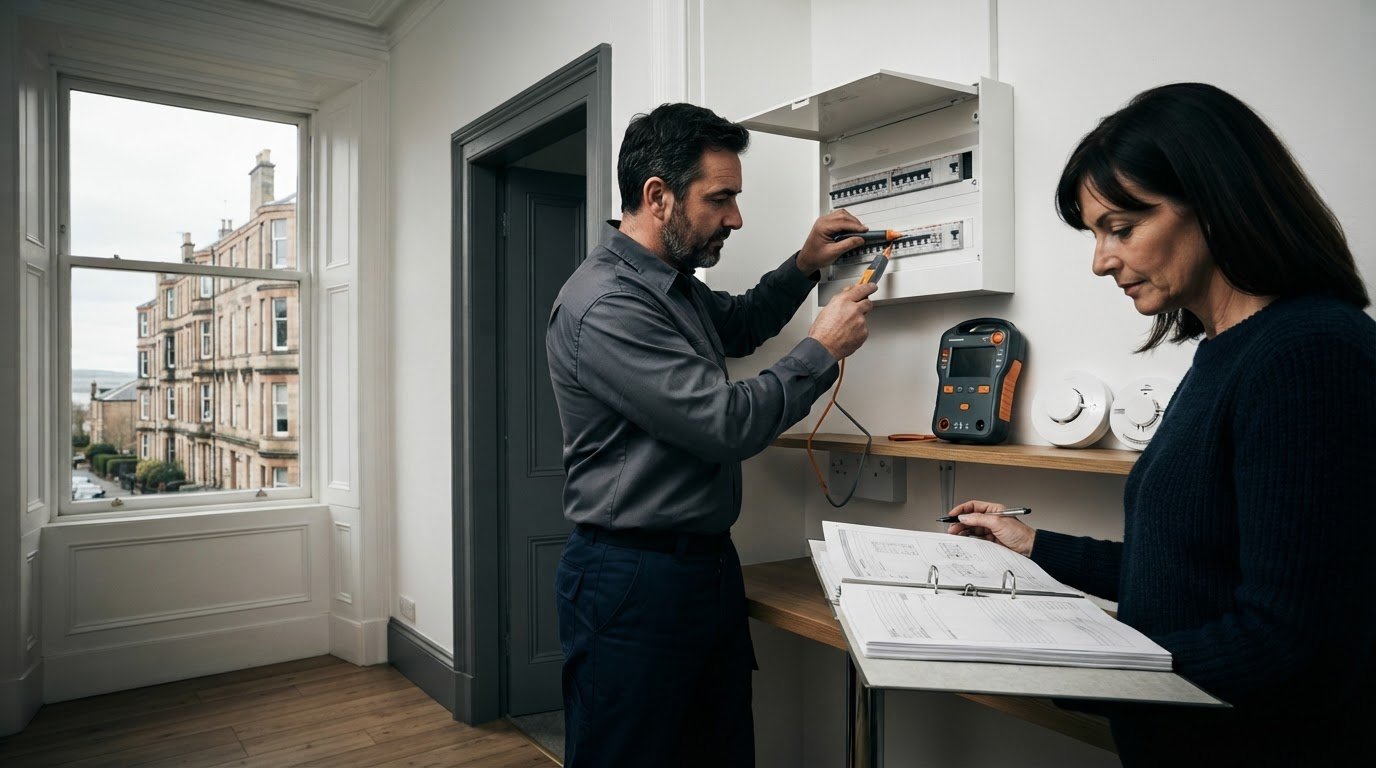
When a buzzing sound from consumer unit components persists despite your best efforts to isolate the cause, it’s time to bring in a professional. We believe that an Electrical Installation Condition Report (EICR) is the single most effective way to uncover hidden dangers lurking behind your hallway wall. This comprehensive inspection doesn’t just look for the source of a noise; it tests the integrity of every circuit in your home. This ensures your property meets the rigorous safety standards set out in the current 18th Edition Wiring Regulations.
Modern electrical standards have moved forward significantly to protect families from modern risks. Under BS 7671:2018+A4:2026, which was introduced on 15 April 2026, new installations must feature non-combustible metal enclosures and enhanced protection. Upgrading to a modern unit provides your property with Surge Protection Devices (SPDs) to guard against voltage spikes and Arc Fault Detection Devices (AFDDs). These advanced components can sense the microscopic arcing that causes buzzing sounds before it ever has the chance to develop into an electrical fire.
Repair or Replace: Making the Right Choice
In many instances, we find that a buzzing sound from consumer unit terminals is solved by simply tightening connections to the correct torque settings. However, if your fuse box still uses old-fashioned rewireable fuses or lacks modern RCD protection, it might be reaching the end of its safe working life. We provide honest, no-pressure advice on whether a repair is a viable fix or if a full Consumer Unit Upgrade 2026 is the more responsible long-term investment for your family’s safety.
Why Choose Foster Electrical in Dundee & Angus
As a local, family-run business, we take immense pride in acting as the protective guardians of our neighbours’ homes. We reject the impersonal approach of large, anonymous corporations in favour of direct, human interaction and artisanal standards of work. Our team is meticulous about tidiness and execution, ensuring that every connection is verified and every circuit is tested to the highest possible standard. We treat your property with the respect it deserves, leaving your home safe and your mind at ease. You can explore our full range of Our Electrical Services to see how we help homeowners across Tayside maintain a compliant and reliable electrical system.
Securing Your Home’s Electrical Future
A persistent buzzing sound from consumer unit components is more than a simple household annoyance; it’s a vital signal that your electrical system requires professional attention. By recognising the difference between a harmless hum and a dangerous crackle, you’ve already taken the first step toward safeguarding your property. Addressing these warnings early prevents minor faults from becoming serious hazards and protects the integrity of your home’s wiring.
We take immense pride in serving our local community as trusted Dundee electricians. Our family-run team specialise in 18th Edition compliant installations and thorough fault finding to ensure your home meets the highest safety standards. We don’t just fix problems; we provide full EICR safety certification and the peace of mind that comes from meticulous, artisanal workmanship. You shouldn’t have to live with the uncertainty of a noisy fuse box or the fear of hidden electrical risks.
Book a professional safety inspection with Foster Electrical today to secure your home’s electrical heart. We’re here to provide the honest, expert guidance you need to keep your environment safe and sound for years to come.
Frequently Asked Questions
Is it normal for a consumer unit to hum slightly?
A faint, consistent hum is often normal, especially if you have a doorbell transformer or certain contactors located inside the enclosure. However, this should be a quiet, background sound that doesn’t change suddenly. If the noise evolves into a distinct buzzing sound from consumer unit components or becomes aggressive, it’s a sign that a mechanical or electrical fault is developing. We recommend a professional check to ensure the unit remains a safe guardian for your property.
Can a buzzing fuse box cause a fire?
A buzzing fuse box can definitely lead to an electrical fire if the noise is caused by loose connections or arcing. These faults generate extreme localised heat that can melt plastic insulation and ignite surrounding materials. Because the consumer unit is the heart of your home’s power, any sign of distress should be treated with caution. Taking swift action protects your family and prevents a minor vibration from escalating into a dangerous emergency.
Why does my consumer unit buzz when the shower is on?
Your unit buzzes during a shower because the electric shower is one of the highest-load appliances in a typical home. This heavy current puts significant stress on the circuit breaker and its connections. If a terminal is slightly loose or a breaker is failing, the increased electrical flow causes magnetic vibrations or arcing. We often find that older boards struggle with these modern demands, making an inspection essential to ensure the circuit can safely handle the load.
What should I do if my fuse box smells like fish?
You must isolate the power immediately by flipping the main red switch and calling a qualified electrician. That fishy odour is a critical warning sign that plastic components or wire insulation are overheating and melting. This chemical reaction is a precursor to an electrical fire. Don’t wait for smoke or flames to appear; once you detect this specific smell, the situation has already become a serious safety risk that requires urgent professional intervention.
How much does it cost to fix a buzzing consumer unit in Dundee?
The cost of a repair depends entirely on whether we are tightening a loose connection or replacing a faulty component like an RCD or MCB. Whilst we don’t provide fixed prices without an inspection, we always offer honest, transparent advice based on our local experience in Tayside. A simple fault find and repair is a straightforward process, whereas a full upgrade to modern standards is a more comprehensive safety investment for your property and your family.
Can I tighten the loose connections in my fuse box myself?
You should never attempt to tighten connections inside a consumer unit yourself. Even with the main switch off, there are live parts inside the unit that can deliver a fatal electric shock. Professional electricians use specialised, insulated tools and precise torque screwdrivers to ensure connections are safe and compliant with current regulations. It’s a task that requires expert training to protect both your safety and the integrity of your home’s complex electrical system.
Does a buzzing noise mean I need a full house rewire?
A buzzing sound from consumer unit components doesn’t always mean you need a full property rewire. Most noises are localised to the unit itself and can be resolved by replacing a single faulty breaker or upgrading to a modern board. A full rewire is typically only necessary if your existing wiring is severely aged or fails a comprehensive EICR safety inspection. We always aim to provide the most practical and cost-effective solution for your home.
What is electrical arcing and why is it dangerous?
Electrical arcing occurs when current jumps across a gap between loose or damaged connections. This creates a miniature lightning bolt that generates temperatures exceeding several thousand degrees Celsius. It’s dangerous because this heat can easily ignite the plastic casing of your consumer unit or nearby materials. Modern 18th Edition boards often include Arc Fault Detection Devices (AFDDs) specifically designed to trip the power the moment this dangerous behaviour is detected, preventing a fire before it starts.