Assuming that electrical safety rules are the same across the UK is a mistake that could cost you dearly. In reality, the Scottish Repairing Standard places much stricter demands on property owners than those found south of the border. We understand that the confusion surrounding EICR frequency Scotland can feel overwhelming; it’s a lot of responsibility to shoulder when you’re just trying to provide a safe home or a functional workplace. You shouldn’t have to guess whether a new tenancy or a simple calendar date triggers your next legal obligation.
We believe in straightforward, honest advice that protects your reputation and your residents. This guide will clarify exactly how often you must organise an inspection to remain fully compliant with Scottish law in 2026. We’ll walk you through the mandatory timelines, explain the specific requirements for landlords and businesses, and show you how to maintain your electrical systems with total peace of mind. By the end, you’ll have a clear roadmap to ensure your property remains a safe and legal environment for everyone inside.
Key Takeaways
- Understand the specific demands of the Scottish Repairing Standard to ensure your property remains fully compliant with local safety laws.
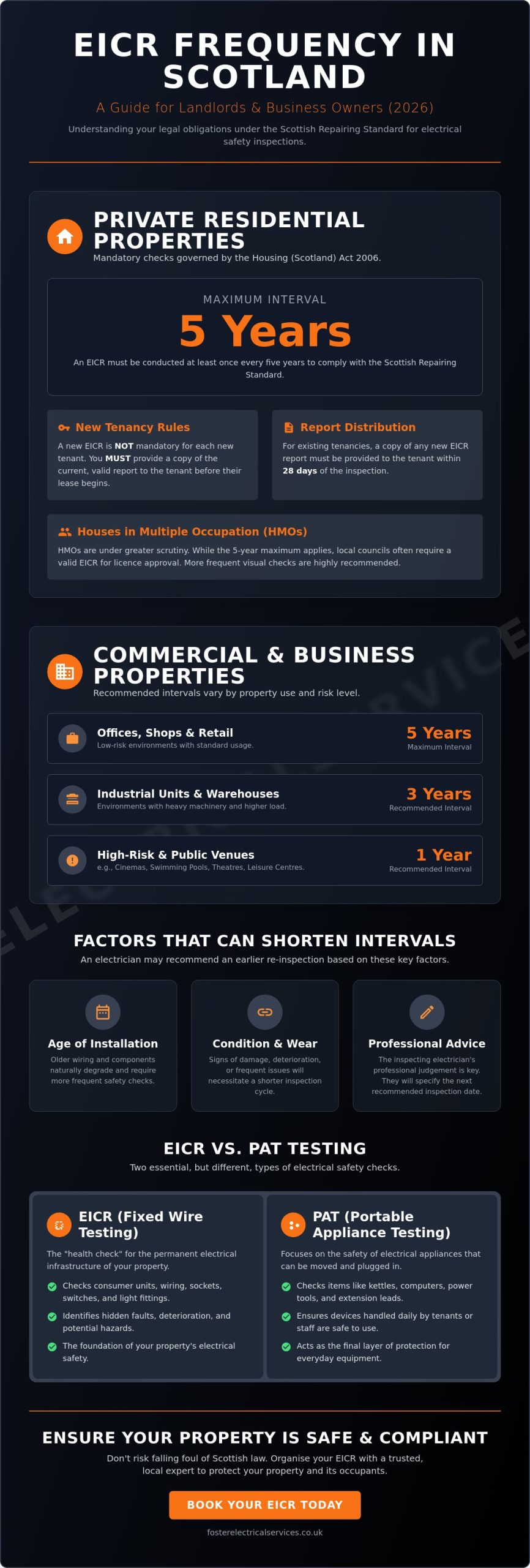
- Learn why the mandatory EICR frequency Scotland for private rentals is every five years and how new tenancies affect your report status.
- Identify the different inspection intervals required for commercial spaces, ranging from five years for offices to more frequent checks for high-risk environments.
- Discover how the age and condition of your electrical system can lead to shorter intervals between inspections based on professional recommendations.
- Find out how a diligent, local approach to testing helps you maintain safety standards whilst minimising disruption to your home or business.
What is an EICR and Why is Scotland Different?
An Electrical Installation Condition Report (EICR) isn’t just a piece of paperwork; it’s a deep dive into the health of your building’s wiring. We see it as a vital health check for the circuits, sockets, and consumer units that keep your property running. In Scotland, the rules are distinct because they’re governed by the Housing (Scotland) Act 2006. This legislation ensures that every tenant lives in a home that meets a specific safety benchmark known as the Repairing Standard. It’s a grounded, practical way to make sure that no hidden faults are lurking behind your walls.
Whilst the rest of the UK has its own guidelines, Scotland leads with a more proactive approach to domestic and commercial safety. You might hear people in the trade talk about “Fixed Wire Testing” when discussing offices or local shops. This is simply another name for an EICR, often used in commercial settings to describe the same thorough assessment of the permanent electrical infrastructure. Understanding the required EICR frequency Scotland demands is the first step in protecting your investment and the people who use it. We take pride in helping our neighbours navigate these rules with total transparency.
The Legal Necessity for Scottish Properties
The updated 2024 Repairing Standard guidance has made things even clearer for landlords. It’s no longer a suggestion; it’s a firm legal duty that we take very seriously. We’ve seen how these rules have evolved to include not just the wiring, but also the mandatory Interlinked Smoke & Heat Alarm Installation of interlinked smoke and heat alarms. This “duty of care” isn’t limited to residential homes either. Scottish businesses must also prove their installations are safe to protect employees and the public. It’s about building a culture of safety that goes beyond simple compliance and focuses on genuine protection.
EICR vs PAT Testing: Understanding the Difference
We often find that clients are confused about the difference between an EICR and PAT testing. An EICR looks at the “fixed” parts of your building, such as the cables under the floorboards and the main consumer unit. Portable Appliance Testing, or PAT testing, focuses on the items you plug in, like kettles, printers, or power tools. You need both to be truly safe and legally compliant. Think of the EICR as the sturdy foundation of your property’s safety, whilst PAT testing acts as the final layer of protection for the devices your tenants or staff handle every day. We provide both services to ensure your premise is covered from the fuse box to the toaster.
EICR Frequency for Residential Landlords in Scotland
Safety in a rental property isn’t just about ticking a box on a form. It’s about ensuring that every person who sleeps under that roof is protected from hidden electrical dangers. For private landlords, the EICR frequency Scotland requires is a mandatory check every five years. This rule, rooted in the Repairing Standard, ensures that wiring, sockets, and consumer units are fit for purpose. We believe that every tenant deserves a home that is as safe as it is comfortable, and we take our role as guardians of that safety very seriously.
One area that often causes confusion is the “Change of Tenancy” trigger. Unlike some regions where a new report is strictly required for every new tenant, Scottish law focuses on the validity of the existing report at the start of the lease. If you have a valid EICR that is three years old, you don’t legally need a new one for a fresh tenancy. However, you must provide a copy of that valid report to the new tenant before they move in. For existing tenants, you are required to supply a copy of any new report within 28 days of the inspection being completed. If you’re unsure about your current certificate, we can help you organise a thorough inspection that puts your mind at ease.
For those managing Houses in Multiple Occupation (HMOs) in Dundee and Angus, the scrutiny is even higher. Local councils often tie HMO licence approvals to the presence of a clean, current EICR. Whilst the five-year maximum still applies, many diligent landlords choose to have more frequent visual checks to ensure their high-occupancy properties remain in top condition. We understand the unique pressures of managing these homes and aim to provide a service that is both meticulous and respectful of your tenants’ space.
The 5-Year Maximum and Tenancy Triggers
It’s vital to remember that five years is the absolute maximum limit. An inspector might recommend a shorter interval if the property’s wiring is ageing or showing signs of wear. To remain legal, your report must be dated within five years of the start of any tenancy. We recommend planning your renewals at least six months in advance. This avoids a last-minute rush and ensures your property stays compliant even if remedial repairs are needed whilst a tenant is still in situ.
Owner-Occupiers: Is it Mandatory for Homeowners?
If you live in the home you own, an EICR isn’t a legal requirement in the same way it is for landlords. However, we strongly recommend a full safety check every ten years. Electrical systems degrade over time, and a domestic property can hide many faults behind its walls. Furthermore, if you’re selling a house in Dundee, a valid EICR is often a key component of the Home Report. Many insurance providers also look more favourably on homes with a proven track record of electrical maintenance, as it demonstrates a commitment to preventing fire risks.
Commercial EICR Frequency: Offices, Shops, and Industrial
We believe that a safe workplace is the foundation of any successful business. In Scotland, commercial electrical safety isn’t just about the Repairing Standard; it’s governed by the Health and Safety at Work Act 1974. This legislation requires employers and building owners to maintain electrical systems in a state that doesn’t pose a risk to staff or the public. Determining the correct EICR frequency Scotland businesses must follow depends largely on the nature of your operations and the environment of your premises. It’s about more than just legal boxes; it’s about protecting your livelihood.
The ‘Duty Holder’ is a central figure in this process. In many commercial lease agreements, the responsibility for electrical safety rests with the tenant, though this can vary depending on the specific contract. It’s your job to ensure that a competent person carries out a thorough inspection of the fixed wiring. We often find that business owners appreciate the clarity of a formal report. It provides a transparent record of your commitment to safety and diligence, which is vital for any professional operation. We take pride in being a steady partner for local firms, helping you stay on the right side of the law without the stress of complex jargon.
Frequency by Business Type
While a five-year interval is the standard for low-risk environments like offices and retail shops, other sectors require more frequent attention to remain safe. We’ve seen how different environments can impact the lifespan of an electrical system.
- Hospitality and Pubs: High footfall and the heavy use of commercial kitchen equipment mean that wear and tear happen quickly. Whilst five years is the maximum, we often recommend regular visual checks to catch issues early.
- Industrial and Factories: These environments are tough on wiring. Constant vibration from machinery, high dust levels, and heavy electrical loads can degrade components rapidly. Some industrial sites may need testing every 1 to 3 years to ensure durability.
- Educational and Healthcare facilities: These public-facing buildings must adhere strictly to five-year cycles. They often combine this with annual visual inspections to ensure total safety for vulnerable users.
Consequences of an Overdue Commercial EICR
Neglecting your electrical safety checks can lead to severe disruptions that no business wants to face. Many insurance providers amongst Tayside businesses will refuse to pay out for fire damage claims if a valid EICR isn’t in place. The Health and Safety Executive (HSE) also has the power to intervene, which can result in significant fines or even the temporary closure of your business. A ‘satisfactory’ rating on your report is more than just a legal requirement; it’s a promise of business continuity and a shield for your reputation. We work meticulously to ensure your inspection is completed with minimal fuss, keeping your doors open and your people safe.
Factors That Influence and Shorten Inspection Intervals
While the five-year maximum is the standard most people recognise, the actual EICR frequency Scotland properties require often depends on the unique character of the building itself. We see a wide variety of property types across our region, from the historic tenements of Dundee to the exposed coastal homes in Angus. These environments present different challenges that can significantly shorten the time between safe inspections. A property facing the salty winds of the North Sea or the persistent dampness of an older stone building will naturally see its electrical components degrade faster than a modern, climate-controlled office.
We believe in giving you an honest assessment based on what we actually find behind the walls. If an installation is heavily used or shows signs of environmental stress, we might recommend a retest after three years instead of five. This isn’t about creating extra work; it’s about our commitment to your safety. High-intensity environments, such as busy laundrettes or homes with high tenant turnover, experience a level of wear and tear on sockets and switches that can lead to loose connections or heat damage long before the five-year mark arrives. If you are concerned about the state of your wiring, we invite you to book an EICR with our team for a transparent and thorough evaluation.
Identifying High-Risk Systems
Age is a significant factor in how we determine the safety of a system. When we encounter older installations featuring rubber-coated cables or wooden-backed fuse boards, the risk profile changes immediately. These materials were not designed for the electrical loads of a modern 2026 household. We also look closely for signs of poor-quality DIY work, which is often a hidden danger in older properties. Previous water leaks or fire damage can also compromise the integrity of your wiring, making a more frequent inspection cycle a practical necessity for your peace of mind.
The Role of the NICEIC or SELECT Registered Electrician
The final word on your certificate’s Next Inspection date belongs to the professional who carries out the work. We take this responsibility seriously, drawing on years of local experience to make a grounded judgement. You should always ensure your inspector is registered with a recognised body like SELECT or the NICEIC. These organisations verify that we have the correct training to spot subtle faults that others might miss. When you look at your report, that date is a firm promise of when you need to act to keep your property safe and legal.
Booking Your EICR in Dundee: The Foster Electrical Approach
We believe that a safety inspection should be a conversation, not just a transaction. Choosing a partner to manage your EICR frequency Scotland requirements is a matter of trust. We approach every property with the diligence of a good neighbour and the expertise of a seasoned professional. Our pricing is straightforward and honest. We reject the opaque fees and automated call centres of larger corporations in favour of a personal, artisanal service. We also help local landlords stay fully compliant by installing interlinked smoke and heat alarms and carrying out PAT testing during the same visit. This joined-up approach ensures your property meets all the requirements of the Repairing Standard in one go.
The Inspection Process Simplified
We’ve designed our process to be as smooth as possible. Determining the correct EICR frequency Scotland demands for your specific building is part of our commitment to you. We start with a thorough visual check of your consumer unit, sockets, and wiring to spot any obvious signs of wear or damage. This is followed by dead testing to check circuit integrity and live testing to ensure your safety devices trip correctly. If we find issues, we categorise them using industry-standard codes. A ‘C1’ means immediate danger is present; a ‘C2’ indicates a potential hazard that needs urgent attention. ‘C3’ observations are recommendations for improvement that aren’t strictly mandatory but would enhance safety. We explain these findings in plain English so you can make informed decisions about your property’s safety. A ‘satisfactory’ outcome is your green light for another five years, whilst an ‘unsatisfactory’ result means we’ll help you plan the necessary repairs to get back to standard.
Why Local Expertise Matters in Tayside
Dundee has a unique mix of property stock that requires a nuanced eye. The challenges found in a Victorian tenement on the Perth Road are very different from those in a modern build in Broughty Ferry. We understand these nuances because we live and work amongst these buildings every day. We see ourselves as the protective guardians of your environment. Our goal is to ensure your building remains a safe haven for your family or a secure space for your staff. We take personal pride in leaving every property tidy and every client feeling reassured. If you need a team that values integrity and high standards, please Contact Foster Electrical today for a reliable EICR quote.
Securing Your Electrical Safety for the Future
Staying on top of your electrical obligations shouldn’t be a source of stress. We’ve seen how the Scottish Repairing Standard and the Health and Safety at Work Act create a specific set of rules for our local area. By understanding the required EICR frequency Scotland demands, you’re taking a vital step towards protecting your tenants, your staff, and your investment. Whether you manage a historic tenement in Dundee or a modern office suite, a valid safety report provides the legal peace of mind you deserve.
We are proud to serve our community as specialists in Dundee landlord compliance. As NICEIC Registered Electricians, we provide a service rooted in traditional values of diligence and integrity. We promise transparent, honest pricing with no hidden fees. This ensures you receive the artisanal care your property requires without any corporate complexity. It’s our privilege to help you maintain a safe and legal environment through our meticulous approach.
When you’re ready to secure your property’s future, book your professional EICR inspection with Dundee’s trusted experts. We look forward to working with you to keep your electrical systems in perfect health for years to come.
Common Questions About Electrical Safety in Scotland
Is an EICR a legal requirement in Scotland for all homeowners?
An EICR is not a legal requirement for homeowners who live in their own property. However, we strongly recommend a safety check every ten years to ensure your wiring remains in good health and hasn’t degraded over time. If you decide to sell your home, a valid report is typically required as part of the Home Report process to provide peace of mind to the new buyers.
How much does a landlord EICR cost in Dundee?
The cost of an inspection depends on the size of your property and the number of electrical circuits that need testing. A small flat involves less work than a large commercial unit or a detached family home with multiple consumer units. We believe in honest, transparent pricing based on the specific needs of your building rather than a one-size-fits-all corporate rate.
Can I rent out my property if the EICR is ‘unsatisfactory’?
You cannot legally rent out a property if the report is marked as ‘unsatisfactory’ due to C1 or C2 observations. These faults indicate immediate or potential danger that must be resolved to meet the Scottish Repairing Standard. Once the remedial work is finished, we provide a Minor Works Certificate or an Electrical Installation Certificate to prove the installation is now safe for your tenants.
Does a ‘Change of Tenancy’ in Scotland always require a new EICR?
A new tenancy doesn’t automatically trigger the need for a fresh report if your current one is still valid. In Scotland, the law requires that an EICR is dated within five years of the tenancy start date. As long as your certificate hasn’t expired and the installation hasn’t been altered, you can provide the existing document to your new residents without needing a retest.
What is the difference between an EICR and a Landlord Safety Certificate?
There is no difference between these two terms in a legal or technical sense. The Electrical Installation Condition Report is the formal name for the document that people often call a Landlord Safety Certificate. It provides the same essential evidence of compliance required by local councils and insurance providers to prove your property is safe for habitation.
How long does an EICR inspection usually take for a 3-bedroom house?
A thorough inspection of a standard three-bedroom house usually takes between two and four hours to complete. This timeframe allows us to carry out the necessary visual checks and the technical live and dead testing of every circuit. If your property has an older fuse board or complex wiring, it might take a little longer to ensure we’ve checked every connection with the care it deserves.
What happens if I don’t have a valid EICR for my Scottish business?
Operating a business without a valid report puts you at risk of heavy fines and legal action from the Health and Safety Executive. Most commercial insurance policies also require a current report to remain valid in the event of a fire or accident. Maintaining the correct EICR frequency Scotland laws dictate is essential for protecting your staff and ensuring your business can continue to run without legal disruption.
Are there any exemptions to the EICR frequency rules in Scotland?
Most properties must follow the standard rules, but new builds and recent rewires are common exceptions. A new installation is covered by an Electrical Installation Certificate (EIC) which usually serves as proof of safety for the first five years. After this initial period, you must switch to the regular EICR frequency Scotland requires for older buildings to remain fully compliant with the law.