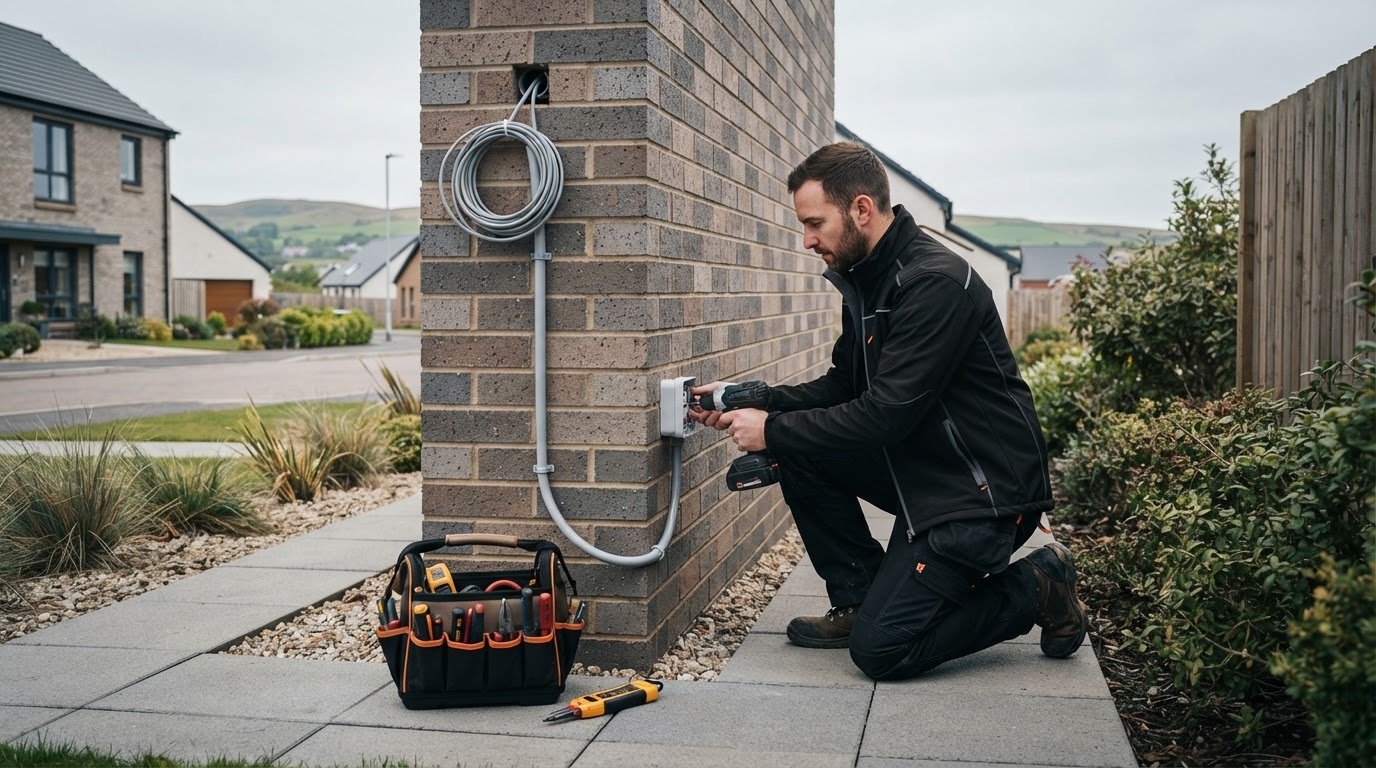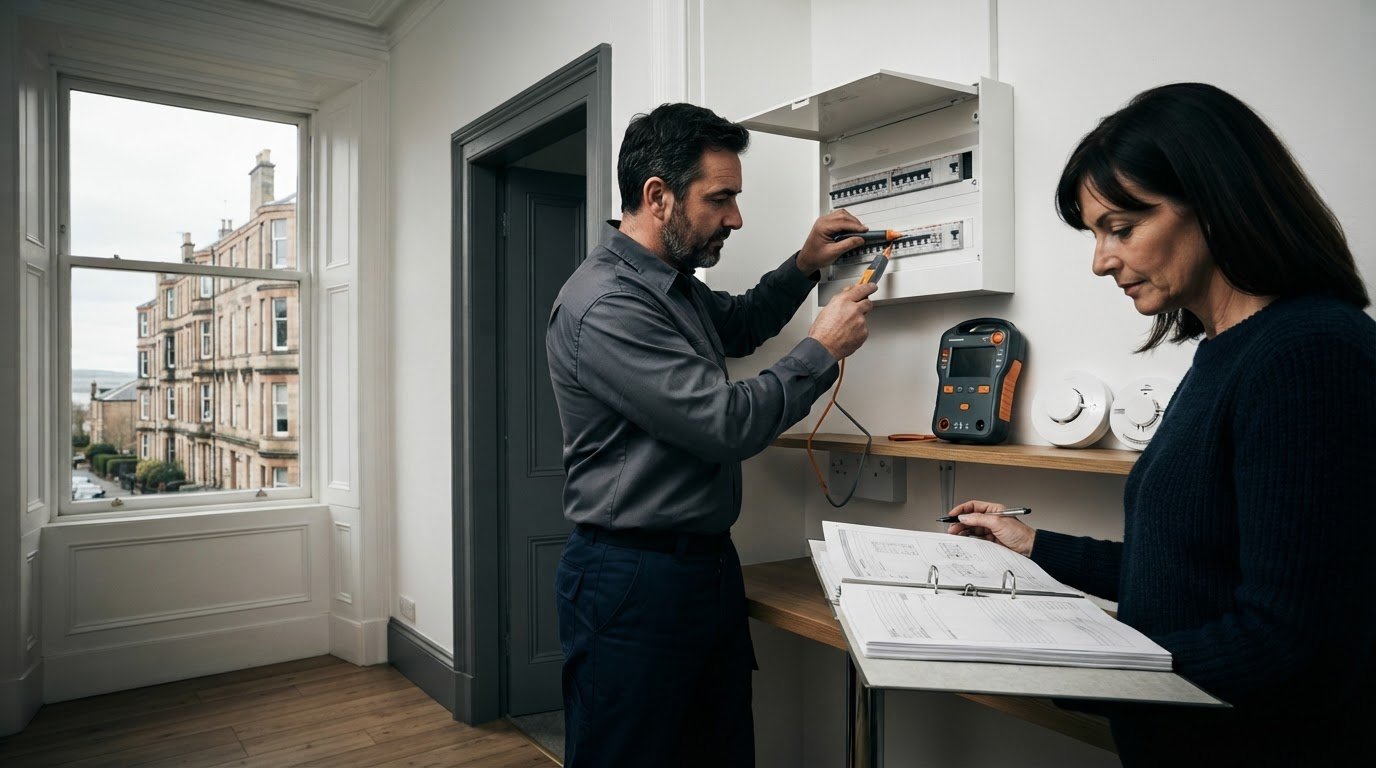
Around two-thirds of all house fires in Scotland are caused by electrical faults. It’s a sobering statistic, especially if you’ve spent the evening worrying about a flickering light or an old, scorched socket. We know that many people feel hesitant to “make a fuss” or bother their landlord about maintenance, but your safety should never be a matter of luck. Understanding electrical safety for tenants rights scotland is essential for anyone living in a rented home, as these protections are legal requirements designed to keep you and your family out of harm’s way.
We’ve created this guide to help you navigate the Scottish Repairing Standard and the peace of mind it provides. You’ll discover exactly which certificates you’re entitled to see, including the EICR, and we’ll clarify the latest rules on interlinked smoke alarms and RCD protection. We’ll also provide clear, practical steps on how to handle situations where safety requests are being ignored. Our goal is to ensure you feel confident that your home is safe, compliant, and properly looked after by those responsible for it. By knowing your rights, you can protect your household and ensure your living space meets the high standards you deserve.
Key Takeaways
- Understand how the Scottish Repairing Standard protects you and learn about the 2024 updates that mandate RCD protection in every rental property.
- Learn why a valid EICR is the cornerstone of electrical safety for tenants rights scotland and how often your landlord must provide a fresh certificate.
- Discover the specific requirements for interlinked smoke alarms and how PAT testing ensures the appliances provided with your tenancy are fit for use.
- Follow a simple, two-step action plan to document faults and formally notify your landlord if you suspect your home is no longer safe.
- Gain the confidence to ask for the right documentation by understanding the high standards of care and diligence expected from local Scottish contractors.
The Scottish Repairing Standard: Your Legal Right to a Safe Home
The Housing (Scotland) Act 2006 established a clear baseline for every private rental in the country: the Repairing Standard. We view this not just as a set of rules, but as a promise that your home will be wind, watertight, and safe to live in. For a property to be considered “reasonably fit for human habitation,” the electrical system must be more than just functional. It has to be modern and protective. We’ve seen how the rules have matured over the years to better protect occupants, ensuring that the invisible risks behind your walls are managed with the same care as a leaking roof.
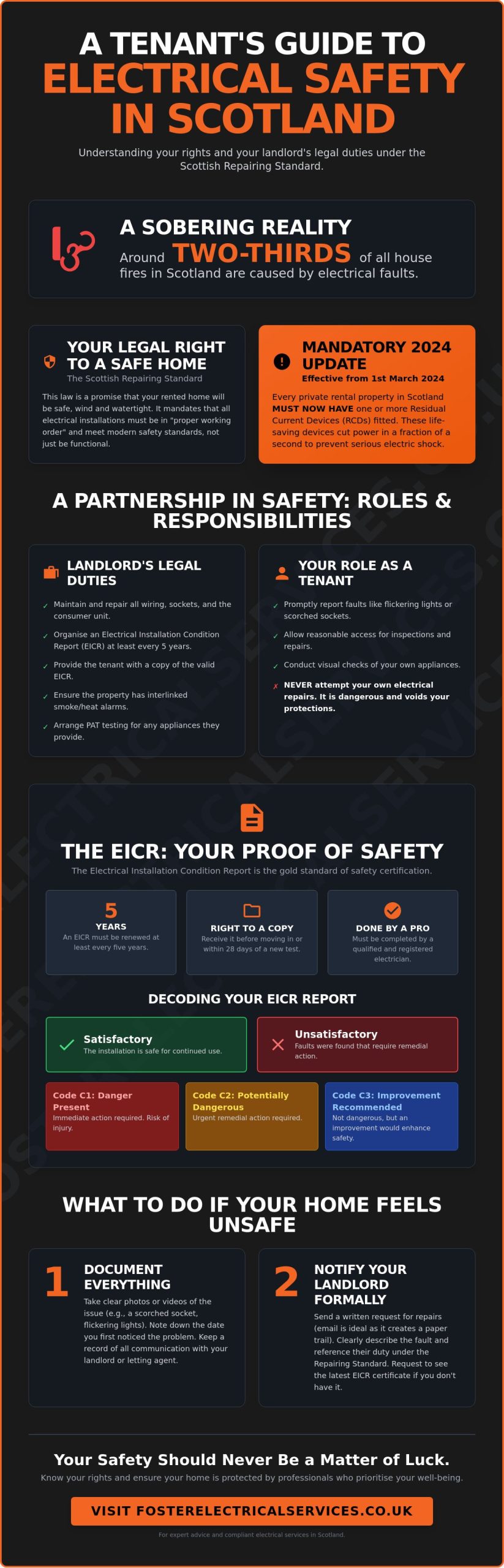
On 1st March 2024, these regulations reached a significant milestone. New measures were added that compel every private landlord to ensure their property’s consumer unit includes one or more Residual Current Devices (RCDs). This isn’t a suggestion; it’s a mandatory requirement. These devices are designed to trip the power in a fraction of a second if a fault is detected, potentially saving lives. If you are looking into electrical safety for tenants rights scotland, knowing about this specific 2024 update is your first step toward ensuring your home is truly compliant.
What the Law Says About Your Electrics
The law is clear that all electrical installations must be in “proper working order.” However, we often remind our clients that “working” and “safe” are two very different things. In many of our historic Dundee tenements, an old circuit might still turn on a light, but it may fail to meet current UK electrical wiring standards. The March 2024 legislative shift ensures that landlords cannot rely on outdated systems that lack modern safety backups. Your landlord must organise a professional inspection before you even move in to verify these standards are met.
Who is Responsible for Electrical Safety?
Your landlord carries the absolute legal duty to maintain and repair the electrical installation. They are responsible for the big picture: the wiring, the consumer unit, and the sockets. We believe in a partnership approach to safety. Your role as a tenant is to report any flickering lights or scorched outlets promptly. You must also allow access for the mandatory five-year inspections. We strongly urge you to never attempt your own electrical repairs. It’s a risk to your life and your tenancy; leave the technical work to a diligent professional who takes pride in doing the job correctly.
The EICR: The Gold Standard of Electrical Safety Certification
We believe every tenant deserves a home that is fundamentally safe. The Electrical Installation Condition Report, or EICR, is the primary document that guarantees this peace of mind. It acts as a deep dive into the hidden parts of your house, checking the health of cables and connections you never see. Understanding electrical safety for tenants rights scotland means knowing that this report isn’t just a recommendation; it’s a legal necessity that must be renewed at least every five years. You have a right to receive a copy of this document before you move in, or within 28 days if a new inspection is carried out during your tenancy.
Safety shouldn’t be left to chance or uncertified handymen. The law insists that these reports are completed by a “competent person,” which typically means a registered electrician with the right qualifications and insurance. This ensures the person signing off on your safety has the integrity and expertise to spot genuine risks. If your landlord cannot produce a valid, in-date certificate, they are failing in their duty of care. You can find more detailed advice on your rights to electrical safety through housing charities like Shelter Scotland, who help tenants hold landlords accountable.
Decoding Your EICR Report
When you receive your report, the most important word to look for is “Satisfactory.” If the report is marked as “Unsatisfactory,” it means the electrician has found faults that require urgent attention. These are usually highlighted using specific codes. A C1 code indicates that danger is present and there is a risk of injury, requiring immediate action. A C2 code suggests a potentially dangerous situation that needs urgent repair. Finally, a C3 code is for improvements that are recommended but not strictly required for safety. If your report contains C1 or C2 faults, your landlord must organise repairs to bring the property back to a safe standard. If you are concerned about the state of your wiring, we can help clarify the requirements for a professional EICR to ensure your home meets the current regulations.
What Happens During the Inspection?
An EICR is a mandatory safety MOT for your homes wiring. It goes far beyond a simple visual check of your sockets and light switches. During the process, an electrician will test the consumer unit, the earthing of the property, and the integrity of the circuits throughout every room. They use specialised equipment to send signals through the wires to check for hidden breaks or insulation failures. This thorough approach ensures that the system can handle the electrical load of modern appliances without the risk of fire or shock. It is a meticulous process that reflects our commitment to high standards and personal safety for every resident.
PAT Testing and Interlinked Alarms: Essential Pillars of Safety
Safety in a rental property extends far beyond the wiring inside the walls. It includes every appliance your landlord provides and the alarm systems designed to alert you in an emergency. Under the current rules for electrical safety for tenants rights scotland, your landlord has a non-negotiable duty to ensure that items like fridges, kettles, and washing machines are fit for use. They must also provide a sophisticated fire detection system that offers a higher level of protection than the basic battery-operated alarms of the past. These measures are the pillars of a secure home, providing a safety net that catches faults before they become disasters.
The Scottish Government mandates that every home must have a carbon monoxide detector in any room containing a carbon-fuelled appliance, such as a boiler or a gas fire. These devices are silent guardians against an invisible threat. When we visit properties across Dundee and the surrounding areas, we often find that tenants feel much more secure knowing these specific legal requirements are being met with diligence and care. It’s about more than just ticking a box; it’s about the integrity of the environment you call home.
Is Your Smoke Alarm System Legal?
Since February 2022, Scotland has led the way with strict interlinked smoke alarm laws. This means that if an alarm in your kitchen detects a problem, every other alarm in the house will sound simultaneously. You should have a smoke alarm in your living room, one in every hallway or landing, and a dedicated heat alarm in the kitchen. These must all be “talking” to each other, either through a physical wire or a secure radio frequency. We take great pride in our meticulous approach to Interlinked Smoke & Heat Alarm Installation, ensuring that every device is positioned correctly to meet BS EN14604:2005 standards. If your alarms are standalone units that don’t trigger each other, your home does not meet the current Scottish Repairing Standard.
Landlord Appliances vs. Your Own
Portable Appliance Testing (PAT) is the industry-standard method for verifying that landlord-provided electrical goods are safe. Your landlord should organise these checks regularly, especially for items that are moved frequently or used daily. This covers everything with a plug that came with the tenancy. However, your own favourite gadgets, from hair straighteners to laptop chargers, remain your responsibility. We recommend that you perform your own visual checks for frayed cables or cracked plugs on your personal devices. Whilst we handle the professional testing of the landlord’s inventory, your vigilance remains the first line of defence against domestic electrical accidents. A quick look at a plug before you use it costs nothing but can prevent a significant fault.
Action Plan: What to Do if Your Rental Feels Unsafe
If you suspect your home isn’t meeting the safety standards we’ve discussed, it’s time to take structured action. Living with the worry of a potential fire or shock is a burden no one should carry. We recommend a clear, calm approach that prioritises your safety whilst maintaining a professional relationship with your landlord. Most property owners want to do the right thing; they simply need to be alerted to the problem with clear evidence. Following a logical path ensures your concerns are taken seriously and resolved with the diligence they deserve.
- Step 1: Document the issue. Take clear photos or videos of any visible faults, such as scorched sockets, cracked switches, or lights that won’t stop flickering.
- Step 2: Formal notification. Write an email or letter to your landlord or letting agent to create a vital paper trail of your concerns.
- Step 3: Request records. Explicitly ask for the most recent EICR and PAT records to verify that the property has been professionally inspected.
- Step 4: Contact the Housing and Property Chamber. If your landlord fails to act, you can apply to the First-tier Tribunal for Scotland for assistance.
- Step 5: Seek expert advice. Speak with a trusted local Dundee electrician to understand the severity of the electrical fault and what repairs are required.
How to Talk to Your Landlord About Safety
Approaching a landlord doesn’t have to be a confrontation. We find that a service-oriented tone works best. Frame your request as a way to help them protect their property and stay compliant with the law. Remind them that under the Repairing Standard, they have a duty to keep the electrical installation in proper working order. Understanding electrical safety for tenants rights scotland empowers you to have these conversations with confidence. Most landlords appreciate being told about a buzzing socket before it becomes an expensive emergency or a safety hazard.
When to Call in the Experts
Some signs are too dangerous to wait for a tribunal hearing. If you notice burning smells, sparking from a switch, or a persistent buzzing sound, these are “Danger Present” indicators. In these moments, professional Fault Finding and Repairs are essential to prevent a fire. The First-tier Tribunal can legally compel a landlord to carry out essential repairs. However, your immediate safety comes first. If you’re unsure about a specific issue in your rental, reach out to our team for a straightforward assessment. We take pride in our honest, artisanal approach to electrical safety, ensuring your home remains the sanctuary it’s meant to be.
Foster Electrical: Protecting Dundee Homes with Integrity
We believe that everyone in our community deserves to sleep soundly at night. Our commitment to traditional sincerity means we don’t just “do a job”; we look after the people inside the buildings. We understand that navigating electrical safety for tenants rights scotland can feel overwhelming for both residents and property owners alike. That is why we bridge the gap between complex legal requirements and the practical comfort of your own home. We provide honest advice, meticulous safety standards, and a firm promise that we’ll never hide behind technical jargon or opaque pricing structures. Our goal is to ensure 100% compliance whilst maintaining the human connection that defines our service.
We approach every task with a sense of grounded professionalism. Whether we are visiting a property to check a single socket or to verify a complex alarm system, we bring a level of diligence that reflects our artisanal values. We know that a rental property is more than an asset to a landlord; it’s a sanctuary for a tenant. By emphasizing integrity and thoroughness, we protect the environment you live in and the reputation of the people who manage it.
A Local Service You Can Trust
We have a long history of serving the Dundee community with genuine pride. Our team understands the unique character and specific property styles across Fife and Angus, from the historic sandstone tenements to modern residential developments. We treat every rental property with the same level of care we’d give our own homes, ensuring that no detail is overlooked. This personal touch is often missing in larger, more anonymous corporations. When you choose a professional electrician Dundee for an EICR or safety certification, you’re inviting a diligent neighbor who takes personal pride in high standards of execution and meticulous tidiness.
Securing Your Safety Today
We help landlords navigate the increasingly complex Scottish safety landscape with straightforward, practical solutions. We provide the clarity needed to meet the Repairing Standard without the stress of automated or impersonal communication. When safety is compromised, we offer a thorough approach to Full Property Rewires, ensuring the new installation is durable and built to last. We believe that a safe home is a non-negotiable right for every tenant. By focusing on moral character and time-tested methods, we ensure that every property we visit is a safer place for families to grow. Your safety is our favourite priority, and we’re here to make sure your home meets every standard of correctness and care.
Securing Your Peace of Mind in a Modern Rental
Your home should be a place of absolute security, not a source of worry about flickering lights or outdated wiring. We’ve explored how the Scottish Repairing Standard provides a robust framework for your protection, from the mandatory five-year EICR checks to the life-saving requirements for interlinked smoke alarms. Understanding electrical safety for tenants rights scotland is the first step toward ensuring your living space is compliant and, most importantly, safe for you and your family. By keeping a clear paper trail and knowing which certificates to ask for, you hold the keys to a well-maintained home.
We are Dundee-based local experts with a deep understanding of Scottish Landlord Compliance. Our team takes immense pride in our meticulous standards of execution and safety, treating every property with the artisanal care it deserves. If you’re a tenant concerned about your wiring or a landlord looking to meet your legal duties, we’re here to help. Ensure your property is safe and compliant with a professional EICR from Foster Electrical. We believe in providing honest, straightforward service that protects our community one home at a time. You deserve to feel safe in your sanctuary.
Frequently Asked Questions
Does my landlord have to provide an EICR certificate in Scotland?
Yes, your landlord is legally required to provide you with a valid EICR. This document must be handed over before you move into a property, or within 28 days of any new inspection carried out during your tenancy. It is a fundamental part of electrical safety for tenants rights scotland, proving that the wiring has been checked by a professional at least every five years.
What happens if my landlord refuses to do an electrical safety check?
If a landlord ignores your requests for a safety check, you can apply to the First-tier Tribunal for Scotland. They have the authority to issue a Repairing Standard Enforcement Order, which legally compels the landlord to act. Local authorities can also step in, and landlords who fail to comply may face significant financial penalties of up to £30,000.
How often should PAT testing be carried out in a Scottish rental?
While the law doesn’t specify a timeframe by the name “PAT testing,” landlords have a statutory duty to ensure all provided appliances are safe. Annual testing is the widely accepted standard for furnished rentals to demonstrate that items like kettles and fridges are well-maintained. For Houses in Multiple Occupation (HMOs), this yearly check is typically a mandatory condition of their licensing.
Are interlinked smoke alarms a legal requirement for all tenants in Scotland?
Yes, since February 2022, every rental property in Scotland must have an interlinked smoke and heat alarm system. This means that if a fire is detected in the kitchen, every alarm in the house will sound at once. This system must include smoke alarms in living areas and circulation spaces, plus a heat alarm in the kitchen to meet the Repairing Standard.
Can I be evicted for asking for an electrical safety inspection?
You cannot be legally evicted for requesting that your landlord meets their safety obligations. Scottish law protects tenants from retaliatory actions when they are simply asking for repairs that fall under the Repairing Standard. It is your right to live in a safe environment, and the Housing and Property Chamber is there to protect you if a landlord tries to act unfairly.
What should I look for on my EICR report to know if it is valid?
A valid EICR must be dated within the last five years and clearly state that the overall condition of the installation is “Satisfactory.” Check that the report features your correct address and has been signed by a registered, competent electrician. If any “C1” or “C2” codes are present, the report is unsatisfactory, and the landlord must organise repairs to fix these dangerous faults immediately.
Does the landlord have to pay for electrical safety repairs?
The landlord is responsible for all costs associated with electrical safety inspections and any necessary repairs. This includes the price of the EICR itself and the cost of installing mandatory safety features like RCDs or interlinked alarms. You should never be asked to contribute financially toward making the property meet the basic legal safety requirements of the Repairing Standard.
Who can I contact in Dundee if I think my house wiring is dangerous?
If you suspect your wiring is an immediate danger, you should contact a qualified local expert like Foster Electrical to perform a professional assessment. For disputes where a landlord refuses to carry out essential work, you can reach out to Dundee City Council’s private sector housing team. We believe in providing our neighbors with honest, artisanal service to ensure every home in our community is safe and secure.