A safe rented home depends on clear responsibilities, not guesswork. This electrical safety in rented property scotland guide explains which checks matter, what records to ask for and how landlords and tenants can act when something doesn’t seem right.
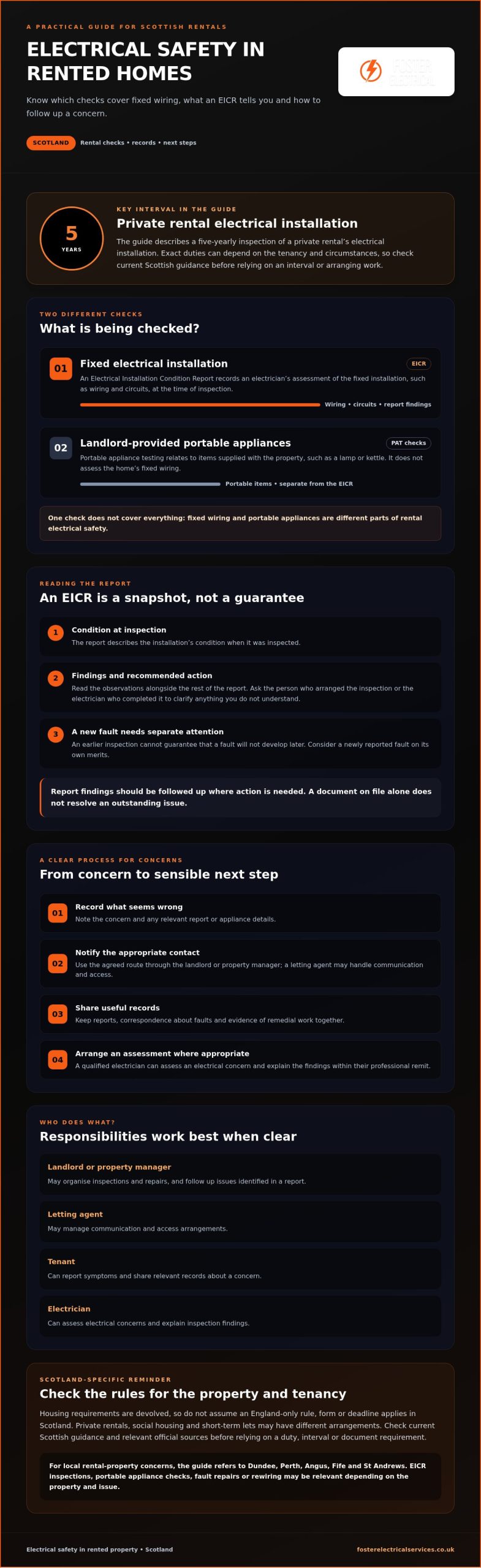
It’s easy to confuse an Electrical Installation Condition Report (EICR), checks on landlord-provided appliances and everyday electrical safety. Scotland has its own requirements, including a five-yearly inspection of a private rental’s electrical installation and checks of landlord-provided portable appliances. The exact duties can depend on the tenancy and circumstances, so check current Scottish guidance before arranging work or relying on a deadline.
This guide sets out practical checks, explains what an EICR can tell you and outlines what to do if a report identifies a defect or you spot a possible hazard. It also covers records landlords should provide and keep, what tenants can report and when to contact a qualified electrician. For concerns in Dundee, Perth, Angus, Fife or St Andrews, a local electrician can assess the issue and explain sensible next steps.
Key Takeaways
- This electrical safety in rented property scotland guide helps you distinguish checks of fixed wiring from checks of landlord-provided portable appliances.
- Learn what an EICR can tell you, which records to request or keep, and how to understand the findings.
- Compare scheduled inspections, investigations into reported faults and remedial work to identify the appropriate next step.
- Use a clear process to record a concern, notify the right contact and share useful details with an electrician.
- Find out when EICR inspections, PAT testing, fault repairs or rewiring may be relevant for a rented property in Dundee and surrounding areas.
Electrical Safety in Rented Property: Guide Overview
Electrical safety in a rented home means having an installation that is safe to use, arranging checks suited to the property and following up concerns found during an inspection or reported by a tenant. Keeping a document on file is not enough if it records issues that still need attention. Equally, a new fault reported after an inspection needs to be considered on its own merits.
This electrical safety in rented property scotland guide focuses on homes in Scotland. Housing rules are devolved, so requirements can differ between Scotland and England. Don’t assume an English rule, form or deadline applies to a Scottish tenancy. Electrical work may refer to BS 7671 wiring regulations, but a technical standard is not a substitute for checking the legal duties that apply to a particular property.
Which rented homes and people does the guidance concern?
Responsibilities may depend on the tenancy and who manages the home. Private rented homes, social housing and short-term lets may not all follow the same arrangements. Check the type of let and current Scottish guidance rather than applying one rule to every situation.
Landlords, tenants, letting agents and electricians each have a role. A landlord or property manager may organise inspections and repairs; a letting agent may handle communication and access; tenants can report symptoms and share relevant records; and an electrician can assess electrical concerns and explain findings within their professional remit. Before a problem arises, establish who receives reports, arranges access and follows up repairs. If responsibility is unclear, check the tenancy documents and ask the landlord or agent to confirm the process.
Why Scottish rental guidance should not be confused with English rules
Housing and electrical safety requirements are devolved, so legislation and guidance can vary across the UK. A duty or deadline described for England may not apply in Scotland, and requirements can depend on the tenancy or property circumstances. For legal duties, check current Scottish Government guidance and relevant official sources before relying on an inspection interval, deadline or document requirement.
Check Scotland-specific rental guidance against Scottish rules. Don’t treat an England-only requirement as a Scottish duty without verifying it.
Rules can change, so note the source and date of any guidance you use when arranging checks or discussing a concern. This helps landlords and tenants agree on practical next steps without treating a general explanation as legal advice.
What electrical checks and records can reveal in a Scottish rental
Electrical checks cover different parts of a rented home, so one document may not address every concern. An Electrical Installation Condition Report (EICR) records an electrician’s assessment of the fixed electrical installation, such as wiring and circuits, at the time of inspection. Portable appliance testing (PAT) relates to portable electrical items provided with the property. Check current Scottish requirements for the tenancy and appliances involved rather than assuming rules elsewhere in the UK apply.
What an EICR can tell a landlord or tenant
An EICR describes the installation’s condition when it was inspected and records findings or recommended action. Read the observations alongside the rest of the report. If the wording or next steps aren’t clear, ask the person who arranged the inspection or the electrician who completed it to explain. The report is useful evidence, but it doesn’t replace investigating a new fault reported after the inspection. For a more detailed explanation, see the existing guide, “EICR Certificate Dundee: The Complete Landlord’s Guide to Electrical Safety Compliance”.
An inspection records the condition and findings at the time. It can’t guarantee that a new fault won’t develop later.
How appliance checks and supporting records fit into the picture
Fixed installation checks and portable appliance checks serve different purposes. PAT testing concerns portable items, such as a landlord-provided lamp or kettle, rather than the property’s fixed wiring. Whether and how appliance testing applies can depend on the circumstances, so landlords should verify the relevant Scottish guidance before deciding what checks are needed.
A clear record trail makes concerns easier to follow up. Keep copies of reports, evidence of remedial work and correspondence about faults. Note when a problem was reported and what action followed. Tenants can record which appliance or fitting is affected, what they observed and when it happened, then share those details with the landlord or agent. Electrical Safety First offers general electrical safety advice for tenants; check Scottish official guidance separately for Scotland-specific legal duties.
If you’re unsure what an EICR finding means or whether a concern needs investigation, Foster Electrical provides EICRs, PAT testing, fault finding and repairs. Review its electrical services and discuss the property and its requirements directly with the business.
How to compare electrical safety concerns, reports and repair options
A scheduled inspection, a response to a reported fault and repair work are separate steps. The right option depends on what is happening in the property, what an inspection found and the condition of the installation. This electrical safety in rented property scotland guide can help you describe the concern, but an electrician needs to assess the installation to determine the cause and suitable action.
| Situation | What it involves | Practical next step |
|---|---|---|
| Scheduled condition check | An inspection of the electrical installation to assess its condition and record findings. | Arrange the relevant inspection and read the report carefully. |
| Reported fault | Investigation of a specific symptom, such as repeated tripping or a damaged socket. | Tell the landlord or agent and provide clear details so they can arrange an assessment. |
| Remedial work | Work to address a defect or concern identified during an inspection or investigation. | Ask what work is recommended, who will arrange it and what evidence will be provided afterwards. |
When a routine inspection differs from a fault investigation
A condition inspection assesses the installation as a whole within the scope of the inspection. Fault finding focuses on a particular problem. Repeated tripping, a damaged electrical accessory or an unexplained burning smell should be reported as a specific symptom. Don’t assume a routine check has already explained it.
Don’t open fittings or carry out electrical repairs yourself. If an item appears damaged or may be hazardous, stop using it and promptly tell the landlord or agent so appropriate help can be arranged. For suspected electrical faults, Foster Electrical’s fault finding and repair services are one option to discuss with the business.
How to understand findings and decide what happens next
Ask the inspecting electrician to explain observations and recommended action in plain language. Separate what the report records from any improvements it recommends, and check whether it identifies a concern that needs prompt attention. Don’t rely on a label or deadline without understanding the report and verifying what applies to the property.
Scottish private landlords can consult the Scottish Government statutory guidance for official information about the Repairing Standard. Keep the report and follow-up correspondence together, and ask the landlord or agent how identified work will be progressed. Base the response on the report and circumstances, not a remote diagnosis or guess.
What Scottish landlords and tenants can do when safety concerns arise
A clear report helps a landlord or letting agent understand what’s happening and decide what assessment may be needed. Keep the process straightforward: record the concern, tell the responsible contact, arrange appropriate help and note what happens next. Don’t attempt electrical repairs yourself.
A practical reporting process for tenants and landlords
- Record what you’ve noticed. Note the affected fitting or appliance, the symptoms, when they occur and whether anything changes. Don’t touch damaged equipment or investigate exposed wiring.
- Notify the agreed contact. Tenants should use the landlord or letting agent’s usual reporting route and describe the concern plainly. If you’re unsure who to contact, check the tenancy information or ask the agent to clarify.
- Arrange an appropriate assessment. The landlord or agent can consider the report and organise an electrician where needed. Depending on the circumstances, the electrician may investigate a specific fault, inspect the installation or recommend remedial work.
- Keep a record of the follow-up. Save relevant messages, inspection reports and evidence of work arranged or completed. Landlords should acknowledge reports, record decisions and keep communication clear so everyone understands the next step.
When to arrange an electrician and what information to share
Report a recurring symptom, visible damage or unexplained burning smell rather than ignoring it. If there may be immediate danger, prioritise people’s safety, move away from the hazard and contact the appropriate emergency service where warranted. Don’t use suspect equipment or try to repair it. Tell the landlord or agent as soon as it’s safe to do so.
For a useful assessment, share the property location, the affected room or fitting, what happened and when, whether the problem has occurred before, and any relevant EICR or repair records. These details help the electrician understand the concern, but they don’t replace an on-site assessment. If you contact an electrician about an urgent situation, ask about availability and response arrangements rather than assuming these.
Quick checklist: tenants report and describe; landlords or agents acknowledge and arrange appropriate follow-up; both sides keep relevant correspondence and reports. Foster Electrical provides EICRs, fault finding and repairs, PAT testing and property rewiring. See its electrical services for relevant work. If you’d like to discuss an electrical concern in a rental property, contact Foster Electrical about your property.
Arrange rental-property electrical safety support in Dundee and surrounding areas
An EICR may be appropriate when a landlord needs an assessment of the fixed electrical installation or wants to understand the condition recorded in an existing report. A specific symptom, such as a fitting that appears damaged or a recurring electrical problem, may call for fault investigation instead. If an electrician identifies a defect, they can explain whether remedial work is recommended. The right next step depends on the property, the concern and any available inspection findings.
Landlords, letting agents and tenants can start by gathering the property address, a description of the concern, previous reports and details of work already arranged. Tenants should raise concerns with the landlord or agent rather than assume they can commission work on the property themselves. Landlords and agents can share the report and symptoms with an electrician and clarify what assessment or work is being requested.
Choosing local electrical help for a rented property
Before arranging work, ask what inspection or investigation is suitable and what documentation will be provided afterwards. Sharing an existing EICR, repair record or tenant report can help the electrician understand the background. Foster Electrical provides EICR inspections, PAT testing, fault finding and repairs, and property rewiring. Its service area includes Dundee, Perth, Angus, Fife and St Andrews. Review the available electrical inspection and repair services and discuss which may fit your circumstances.
Discuss your rental-property electrical concern with Foster Electrical
This electrical safety in rented property scotland guide offers practical information, but it can’t determine the condition of a particular installation or settle a legal question. If you’re a landlord, agent or tenant with a concern, describe the property, what has happened and any relevant report when making an enquiry. That gives the conversation a clear starting point without assuming the cause or promising a particular outcome.
Discuss your rental-property electrical safety needs. For current legal duties, tenancy-specific questions or deadlines, check the latest official Scottish guidance.
Take the next step towards a safer rented home
This electrical safety in rented property scotland guide comes back to three practical habits: understand which checks apply to the property, keep reports and repair records together, and raise concerns clearly so they can be assessed. An EICR and an investigation of a reported fault serve different purposes, so match the next step to the findings and circumstances. Check current official Scottish guidance for legal duties or deadlines.
Landlords, letting agents and tenants can help concerns progress by sharing relevant reports, describing symptoms and agreeing who will arrange any necessary assessment. A clear record of what was noticed and what action followed makes communication easier.
Foster Electrical provides EICR inspections, PAT testing, fault finding and electrical repairs for customers in Dundee, Perth, Angus, Fife and St Andrews. If you’d like to discuss a rental property or electrical concern, contact Foster Electrical to discuss your rental-property electrical safety needs.
Frequently Asked Questions
Is an EICR required for every rented property in Scotland?
Whether an EICR is required depends on current Scottish rules and the tenancy circumstances. Check the latest Scottish Government guidance for the property rather than applying requirements written for England. An EICR records the condition of the fixed electrical installation at the time of inspection. It doesn’t remove the need to understand and address findings or respond to later concerns.
How often does a landlord need an electrical inspection in Scotland?
For private rentals, the article’s general guidance is that the electrical installation is inspected every five years. Confirm the current requirement for the particular property and tenancy in Scottish Government guidance rather than relying on an England-based schedule. Keep relevant reports and note when the inspection took place. A scheduled inspection is separate from an additional assessment prompted by damage, a reported fault or another reason for concern. Don’t wait for the next routine check to raise a new issue.
Can a tenant request an electrical safety report from their landlord?
A tenant can ask the landlord or letting agent about relevant electrical inspection records and raise a safety concern. Check current Scottish guidance and the tenancy arrangements for what information a tenant is entitled to receive and any response timeframe. Make the request in writing, identify the property and explain the concern clearly. Keep a copy of the message and any reply so the matter can be followed up.
What happens if an EICR identifies an electrical problem?
If an EICR identifies a problem, the landlord or responsible property manager should understand the findings and arrange appropriate professional advice or remedial work where needed. The next step depends on the report and the requirements that apply to the property. Tenants should report concerns promptly and share relevant details, but shouldn’t attempt electrical repairs themselves. Ask the inspecting electrician to explain recommended action in plain language and keep related correspondence.
Is portable appliance testing a legal requirement in every Scottish rental?
No single PAT-testing rule should be assumed to cover every Scottish rental. PAT testing checks portable appliances, such as landlord-provided lamps or kettles; it isn’t an inspection of fixed wiring. Landlords should confirm current Scottish requirements for the specific tenancy and appliances rather than importing rules from elsewhere in the UK. Keep suitable records of checks, findings and actions taken, and note which appliances were included if testing was arranged.
What should I do if I notice a burning smell or damaged socket in a rented home?
Don’t touch a damaged socket or electrical equipment, and don’t try to repair it. If it’s safe, stop using the affected outlet or item, then promptly tell the landlord or letting agent and seek suitable professional help. Describe what you noticed and when it happened. If you believe there’s immediate danger, move to safety and contact the appropriate emergency service. Avoid using the affected fitting until it has been assessed.