Could your home pass a safety check today, or are you relying on wiring that’s past its prime? Since the BS 7671:2018+A4:2026 update launched on 15 April 2026, the benchmark for electrical safety standards has shifted significantly to keep pace with modern technology. It’s natural to feel a bit uneasy about whether your property is still compliant, particularly with news of fines for landlords reaching £40,000 since late 2025.
We understand that you want your home to be a safe haven, not a source of worry or hidden costs. That’s why we’ve stripped away the technical jargon to give you a clear, honest look at the latest UK wiring regulations. You’ll gain total peace of mind by understanding your legal obligations and exactly how to keep your family protected.
We’ll walk you through the transition period ending on 15 October 2026, explain what a Dundee EICR should cost you, and show you how we treat every property like it’s our own. You’ll finish this guide knowing exactly what to ask an electrician to ensure your home is safe, dependable, and done the old-fashioned way.
Key Takeaways
- Learn how the new BS 7671:2018+A4:2026 update impacts your home and why staying up to date with modern electrical safety standards is essential for protection.
- Understand the specific legal requirements for Dundee property owners, including mandatory interlinked smoke alarms and the five-year EICR rule for landlords.
- Discover why older Dundee tenements often fail inspections and how to spot dangerous DIY electrical work before it leads to a fire or fault.
- Get a clear, jargon-free breakdown of the EICR inspection process so you know exactly what the “C” codes mean for your safety and your budget.
- Find out why choosing a local craftsman who values honesty over call-centre scripts ensures your work is done properly without hidden extras.
Understanding BS 7671: The Foundation of UK Electrical Safety
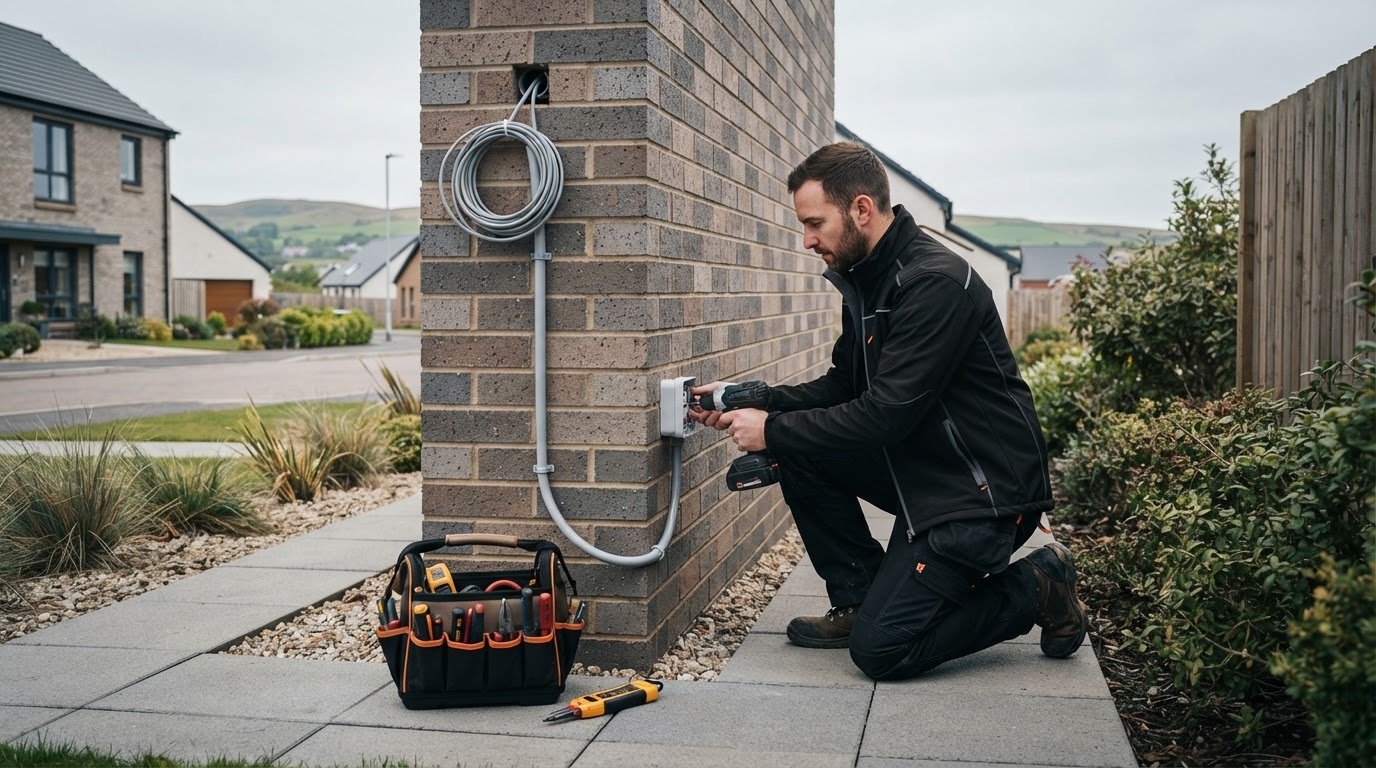
For most homeowners in Dundee, electrical wiring is something that stays hidden behind the walls. However, the way those wires are installed is governed by a very specific set of rules. BS 7671 is the national standard for all electrical installations across the UK. At Foster Electrical, we see these regulations as the blueprint for every job we undertake. BS 7671 serves as the authoritative framework for safe electrical design and maintenance in Britain.
It’s a common misunderstanding that these regulations are merely suggestions. Whilst the standards themselves aren’t technically law, they’re the primary benchmark used by the courts and the Health and Safety Executive to judge if you’ve met your legal obligations. If your property doesn’t meet these electrical safety standards, you could face significant issues with insurance claims or property sales. We focus on making sure your home isn’t just compliant, but genuinely safe for your family, without using confusing jargon or high-pressure tactics.
The Role of the IET and BSI
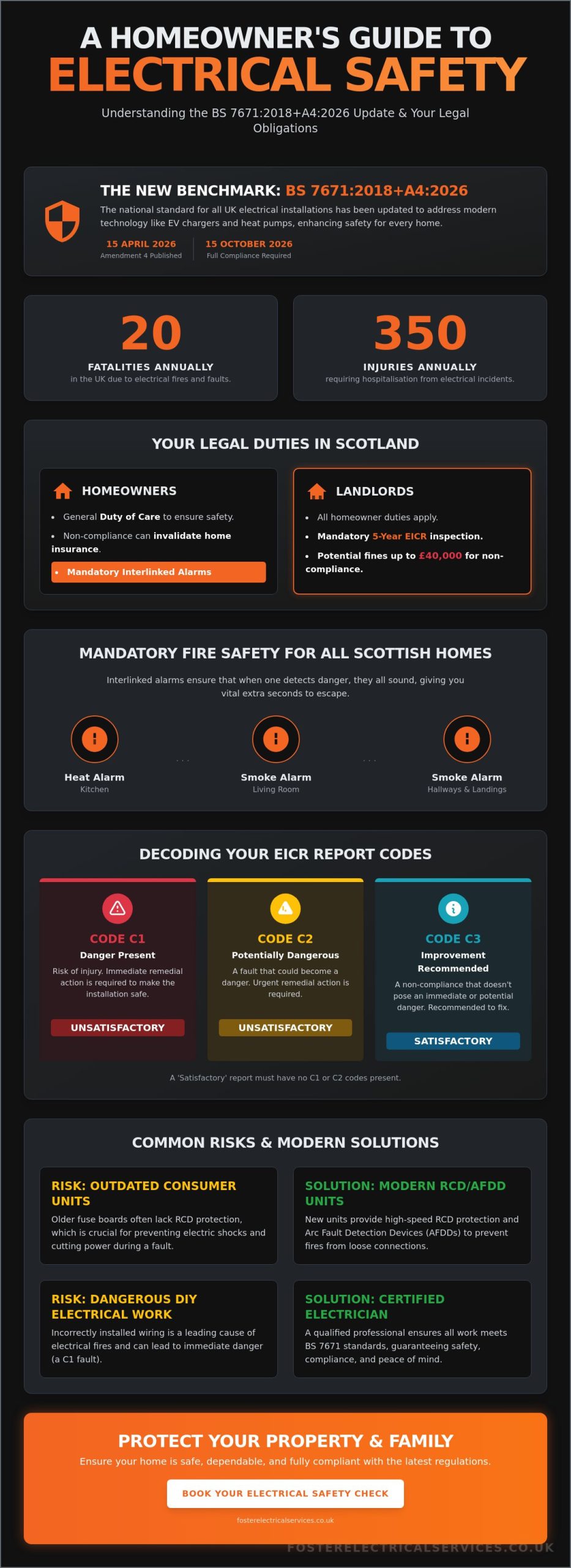
These standards are developed and updated by the Institution of Engineering and Technology (IET) and the British Standards Institution (BSI). They don’t change things just for the sake of it. Instead, they update the rules to reflect how our homes are evolving. With the rise of EV chargers and heat pumps, our domestic systems are under more pressure than they were twenty years ago. The latest update, Amendment 4, arrived on 15 April 2026 to address these new technologies. Staying up to date is the best way to prevent the 20 fatalities and 350 injuries that occur annually in the UK due to electrical fires.
What the 18th Edition Means for Your Home
The 18th Edition and its subsequent amendments have introduced life-saving technology to the average consumer unit. One major requirement is enhanced RCD protection for domestic circuits. These devices act as a high-speed safety net, cutting the power in a heartbeat if they detect a fault. We’ve also seen a move towards Arc Fault Detection Devices (AFDDs) in modern fuse boards. These units can identify the tiny, dangerous sparks caused by a loose connection or a pinched cable before a fire even starts. When we upgrade your consumer unit, we’re installing a modern shield for your property. It’s about providing a dependable service, done properly, so you can sleep soundly knowing your home is protected.
Mandatory Compliance: Safety Regulations for Landlords and Homeowners
Compliance isn’t just about ticking boxes for the council; it’s about making sure your home is fundamentally safe. In Scotland, the rules are often stricter than elsewhere in the UK. Whilst homeowners aren’t legally required to hold an EICR certificate like landlords are, they still have a duty of care to ensure their property doesn’t put people at risk. If an old fuse board causes a fire, and it hasn’t been checked in decades, your insurance provider might look for reasons not to pay out. Maintaining high electrical safety standards is a simple promise to yourself that your property is secure.
Scottish Interlinked Alarm Requirements
Every home in Scotland must now meet the same fire safety standard that used to only apply to private rentals. You need interlinked smoke alarms in the room you use most during the day, usually the living room, and in every circulation space like hallways or landings. You also need a heat alarm in the kitchen. Because they’re interlinked, if a toaster flares up in the kitchen, every alarm in the house will sound. This gives you those extra seconds that save lives. We can install these interlinked smoke and heat alarms quickly and without a mess, treating your home with the respect it deserves.
Landlord Duties in Dundee and Angus
For landlords, the law is clear and the penalties for ignoring it are heavy. You must have an Electrical Installation Condition Report (EICR) carried out at least every five years. This isn’t a quick visual check; it’s a deep dive into the “health” of your wiring. Following the Electrical Safety First guidance for landlords is the best way to stay on the right side of the law. It ensures your property meets the current regulations and protects your investment.
Since November 2025, fines for non-compliance have reached up to £40,000 per breach. Beyond the EICR, you’re responsible for any appliances you provide. While PAT testing isn’t a strict legal requirement for all private landlords yet, it’s the only way to prove you’ve taken reasonable steps to ensure your kettle or fridge is safe. We believe in doing things the old-fashioned way, which means providing honest advice and a dependable service that keeps you compliant and your tenants protected. Keeping up with modern electrical safety standards shouldn’t be a headache, and we’re here to make sure it’s done properly.
Identifying Common Risks: Why Older Properties Often Fall Short
It’s a phrase we hear often: “My lights turn on and the sockets work, so why would I fail an inspection?” It’s a fair question, but the reality is that electrical systems degrade invisibly. In Dundee’s historic tenements and older villas, wiring that was installed forty or fifty years ago simply wasn’t designed for the way we live today. Back then, a house might have had a handful of sockets for a television and a few lamps. Now, we’re plugging in high-powered computers, air fryers, and even charging electric vehicles. This puts a massive strain on ageing components that were never meant to carry such a load.
We frequently find “DIY” electrical work in older properties where previous owners have tried to add extra sockets or lights themselves. These “quick fixes” often bypass essential electrical safety standards, leaving behind loose connections or undersized cables that can overheat. While Scotland operates under its own building standards, the safety principles found in Part P of the Building Regulations highlight a universal truth: all electrical work must be designed and installed to protect residents from fire and electric shock. When we step into a home, we look for these hidden hazards to ensure everything is done properly and safely.
The Danger of Outdated Consumer Units
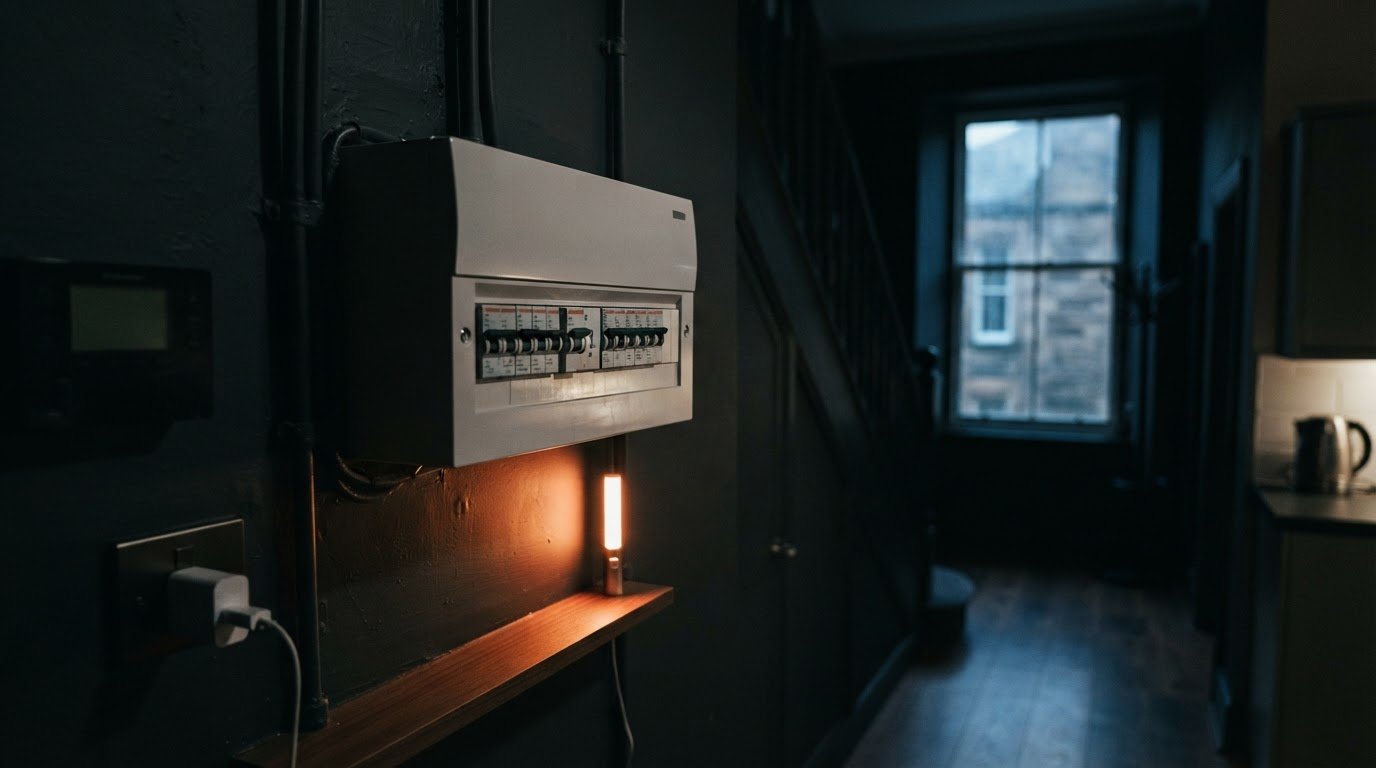
The consumer unit, or fuse box, is the heart of your home’s electrical system. Many older Dundee homes still use the old-fashioned re-wireable fuses. These offer very little protection compared to modern circuit breakers. The biggest risk with these older boards is the total lack of RCD (Residual Current Device) protection. An RCD can cut power in milliseconds to prevent a fatal shock. Without one, a simple fault in a toaster or a nicked cable while gardening could have devastating consequences. Upgrading to a modern unit isn’t just about compliance; it’s about installing a dependable shield for your family.
Degraded Wiring and Insulation
Wiring doesn’t last forever. If your property hasn’t been touched since the 1960s, there’s a chance you have Vulcanised Indian Rubber (VIR) or lead-sheathed cabling hidden under the floorboards. Over time, this insulation becomes brittle and flakes away, leaving live wires exposed. You might notice signs of this through flickering lights or small brown scorch marks on your sockets. These are urgent warning signs that your system is struggling. A professional rewire or a targeted partial rewire brings your property back in line with modern electrical safety standards, replacing dangerous relics with high-quality, durable materials that are built to last another generation.
The EICR Process: A Practical Guide to Certification
An Electrical Installation Condition Report (EICR) is essentially a deep-dive health check for your property’s heart. It ensures your wiring, sockets, and consumer unit meet the current electrical safety standards. We treat this process as a protective measure, not a sales opportunity. It’s important to remember that an EICR is an assessment, not a repair service. While we might find faults, our primary job during the visit is to provide an honest, jargon-free picture of your home’s safety. We believe in doing things the old-fashioned way, which means giving you the facts without any hidden extras or high-pressure tactics.
Step-by-Step: What Happens During the Inspection
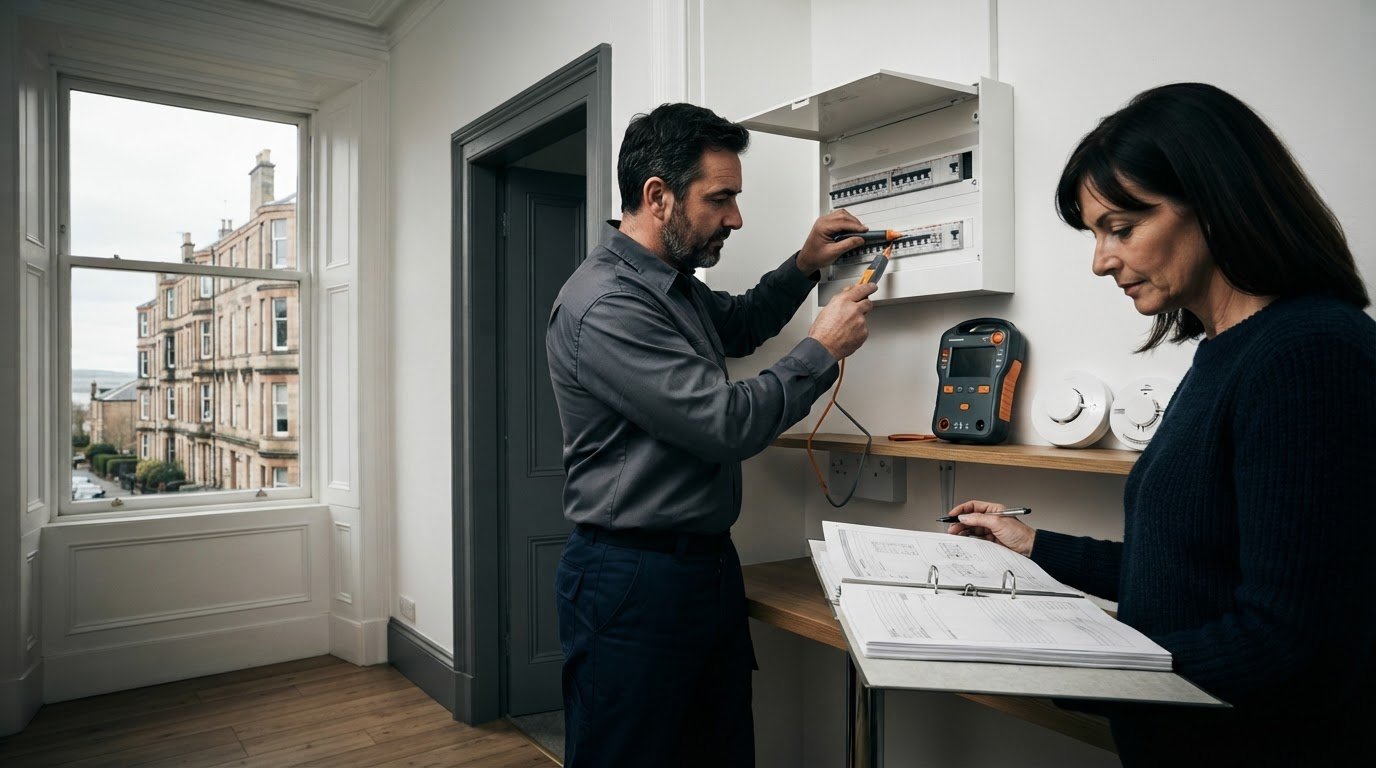
We start with a thorough visual inspection of every accessible part of your system. This includes looking for damaged sockets, signs of overheating, or outdated fuse boards that we discussed in previous sections. Following this, we perform “dead testing” whilst the power is off to check the integrity of the cable insulation. Finally, we conduct “live testing” to ensure your safety devices, like RCDs, trip fast enough to protect you during a fault. For a standard three-bedroom home in Dundee, this usually takes between 2 and 4 hours. We’re meticulous about tidiness and will always treat your property like it’s our own.
Understanding Your Report Results
Once the testing is complete, you’ll receive a report categorised by specific “C” codes. These codes help you prioritise any necessary work to keep your home safe:
- C1 (Danger present): There is a risk of injury and immediate action is required to make the installation safe.
- C2 (Potentially dangerous): Urgent remedial action is needed to remove a potential risk to your family.
- C3 (Improvement recommended): Your system is safe, but it doesn’t quite meet the latest 2026 regulations.
- FI (Further investigation): Something unusual was spotted that requires a closer look to be certain it’s safe.
If your report comes back as “Unsatisfactory” due to C1 or C2 codes, those issues must be resolved to achieve compliance. For private rentals, these certificates are a legal requirement every 5 years. For homeowners, a check every 10 years is the recommended benchmark to maintain high electrical safety standards. If you’re a landlord or a concerned homeowner, you can book a professional EICR with us to ensure your property is safe and done properly. We don’t hide behind call centres; you’ll speak directly to real people who care about your safety and peace of mind.
Professional Standards, Done Properly: The Foster Electrical Way
Choosing the right person to enter your home is just as important as the electrical work itself. We believe that high electrical safety standards shouldn’t be delivered through a headset in a distant call centre. When you’re looking for a professional to verify the safety of your property, you want someone who knows the local area and understands the specific challenges of Dundee’s housing stock. We’ve built our reputation on being more than just contractors; we’re a part of the community, acting as a protective guardian for homes across Tayside.
National firms often rely on automated systems and anonymous technicians who are under pressure to move to the next job as quickly as possible. We take the opposite approach. By focusing on traditional sincerity and grounded professionalism, we ensure that every inspection is thorough and every repair is durable. We don’t use high-pressure sales tactics or hide behind complex terminology. Our commitment to “no jargon” means you’ll always understand exactly what’s happening with your wiring and why it matters for your family’s safety.
Our Simple Promise to You
Our business is built on a simple promise: dependable service, done properly. This means we show up when we say we will, and we never cut corners. We understand that your home is your sanctuary, so we treat every property like it’s our own. This involves being meticulous about tidiness, using high-quality materials, and ensuring that everything we touch meets the latest 2026 regulations. You’ll deal with real people from the first phone call to the final signature on your safety certificate.
Integrity is at the heart of everything we do. We offer transparent, fixed pricing with no hidden extras, so you won’t face any nasty surprises when the bill arrives. Whether we’re performing a full rewire or a routine check, we apply the same level of care and honest advice. This “old-fashioned way” of working ensures that our electrical safety standards are never compromised for the sake of speed or profit.
Booking Your Safety Inspection in Dundee
If you’re unsure whether your home meets the current 2026 requirements, don’t leave it to chance. We provide expert safety compliance for both domestic and commercial properties across Dundee, Angus, and Fife. We’ll give you a clear, honest assessment of what’s needed to keep your property compliant and your family protected. From the initial visual check to the final report, we handle the entire process with the respect and attention to detail you deserve.
Getting started is straightforward. We offer no-obligation quotes and a logical, transparent booking process that respects your schedule. We’ve spent years honing our expertise in the local market, ensuring our neighbours receive a level of service that larger corporations simply can’t match. Contact Foster Electrical for a reliable safety inspection today and secure the peace of mind that comes from a job done properly.
Secure Your Home and Protect Your Family
Staying ahead of changing electrical safety standards doesn’t have to be a source of stress. We’ve explored how the BS 7671:2018+A4:2026 update ensures your property can handle modern power demands safely. Whether it’s installing interlinked alarms to meet Scottish law or identifying hidden risks in an older tenement’s wiring, taking action now prevents dangerous faults and costly repairs later.
As a NICEIC Registered firm and a participant in the Dundee Trusted Trader scheme, we bring decades of expertise in the 18th Edition Wiring Regulations to every job. We don’t hide behind automated menus or call centres. You’ll always get honest advice and a job done properly the first time. We treat your property with the same respect we’d show our own homes, ensuring every connection is secure and every certificate is accurate.
Ready to clear the confusion and ensure your property is fully compliant? Book your professional EICR or safety inspection with Foster Electrical today. We’re here to provide the dependable, jargon-free service you deserve to keep your home safe for years to come.
Frequently Asked Questions
What is the current electrical safety standard for UK homes in 2026?
The current standard is BS 7671:2018+A4:2026, which was introduced on 15 April 2026. This latest amendment focuses on the safe integration of new technologies like home battery storage and EV chargers. Whilst there’s a transition period until 15 October 2026, all new electrical designs must now follow these updated rules. It’s a vital update that ensures our older Dundee homes can safely handle the higher power demands of modern life.
Do I legally need an EICR certificate if I am not a landlord?
No, there’s no legal requirement for homeowners to hold an EICR, but it’s the best way to prove your home meets modern electrical safety standards. We recommend an inspection every 10 years to catch hidden issues like degraded wiring or loose connections. For landlords, however, the law is strict; you must have a valid report every 5 years or face fines that reached £40,000 in late 2025.
Are interlinked smoke alarms mandatory in all Scottish properties?
Yes, all Scottish homes have been required by law to have interlinked smoke and heat alarms since February 2022. This regulation applies to every homeowner and landlord in Dundee, not just those in the rental sector. The system must include a smoke alarm in the main living area, alarms in every circulation space like hallways, and a heat alarm in the kitchen. We can install these properly to ensure your home is fully compliant.
What happens if my property fails an electrical safety inspection?
If your property fails, you’ll receive an “Unsatisfactory” report containing C1 or C2 codes. A C1 code means there’s an immediate danger, whilst a C2 indicates a potential hazard that needs urgent attention. You must have these faults repaired to achieve a “Satisfactory” status and ensure your home is safe. We provide clear, fixed quotes for any remedial work, doing things the old-fashioned way with no hidden extras or jargon.
Can I carry out my own electrical safety checks?
You can perform basic visual checks, but a formal safety inspection must be done by a qualified professional. Official reports require specialist testing equipment to check things you can’t see, like the integrity of cable insulation deep inside your walls. By October 2026, new industry rules require everyone performing high-risk work to hold specific Level 3 qualifications. Hiring a trusted local expert ensures your certification is valid and your family is truly protected.
How much does a professional electrical safety inspection cost in Dundee?
Prices in Dundee typically start from around £89 for a small flat and can go up to £300 or more for a large house. On average, a standard flat costs between £100 and £230, whilst a typical house falls between £150 and £300. These rates depend on the size of your property and the number of circuits we need to test. We always provide honest, transparent pricing so you know exactly what to expect before we start.
What is the difference between an EICR and PAT testing?
An EICR checks the “fixed” parts of your home like the wiring, sockets, and fuse board, whilst PAT testing is for portable appliances. Think of the EICR as a health check for your home’s internal skeleton. PAT testing is for items you plug in, such as your kettle, toaster, or fridge. Both play a role in maintaining high electrical safety standards, especially in rental properties where the landlord provides the appliances.