Could your home’s fuse box react in less than 40 milliseconds to save a life? Most older systems in Dundee and Angus simply aren’t built for that level of precision, leaving families vulnerable to risks they can’t even see. Understanding the RCD safety benefits is about more than just following the latest 18th Edition regulations; it’s about installing a high-speed guardian that monitors every milliamp of electricity entering your living space. We know that many homeowners feel a lingering anxiety about the hidden wiring behind their walls, especially in our beautiful but ageing local properties.
We understand that electrical jargon can feel overwhelming, and it’s easy to confuse a standard fuse with a modern Residual Current Device. You’ve likely wondered if your current setup is truly enough to protect your children or tenants from a life-threatening shock. This guide will show you exactly how an RCD functions as the cornerstone of a safe household and why an upgrade is the most cost-effective safety improvement you can make. We’ll explore how these devices work, why Scottish landlord regulations are tightening, and how we can bring your home up to the very latest safety standards with minimal fuss.
Key Takeaways
- Understand how an RCD functions as a sensitive safety switch, detecting tiny electrical leaks to earth that traditional fuses simply cannot see.
- Discover the primary RCD safety benefits, including near-instantaneous power disconnection to prevent lethal shocks and significantly reduce the risk of electrical fires.
- Learn the crucial difference between MCBs and RCDs to ensure your home has the right balance of protection for both your wiring and your family.
- Identify your legal responsibilities under Scottish safety legislation and how modern RCDs are essential for a successful EICR certification in Dundee.
- Gain peace of mind by learning what a professional consumer unit upgrade involves and how we bring local homes up to the latest 18th Edition standards.
What is an RCD and How Does it Function?
A Residual-current device (RCD) is a sensitive safety switch that monitors the flow of electricity through your home’s circuits. In many older Dundee homes, you might still find ceramic “rewireable” fuses. These were designed to protect the building’s wiring from overheating and catching fire, but they offer very little protection to the people living inside. An RCD is different. It is a high-speed guardian designed specifically to prevent personal injury. It doesn’t just wait for a massive surge; it looks for tiny discrepancies that suggest electricity is escaping where it shouldn’t be.
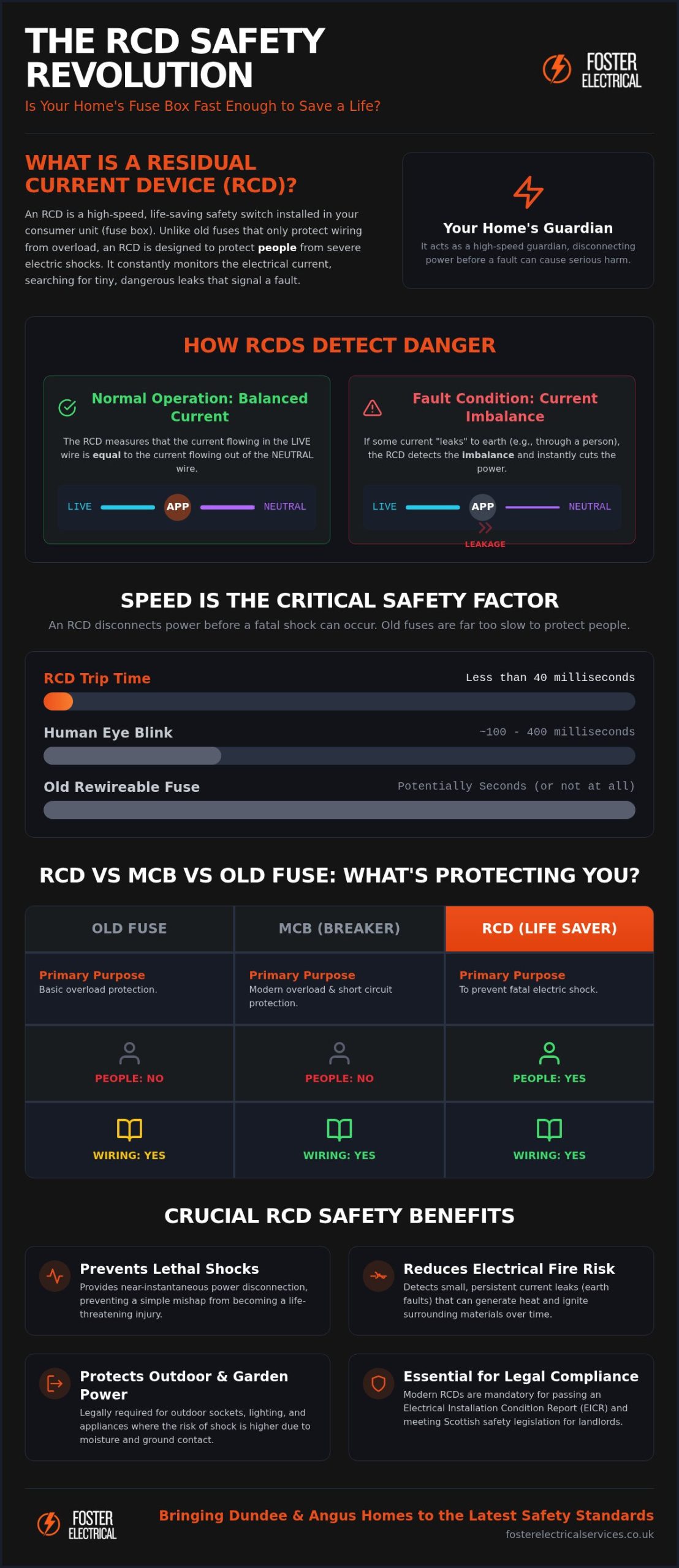
The primary RCD safety benefits are found in the device’s incredible response time. In the event of a fault, an RCD can disconnect the power in less than 40 milliseconds. This speed is critical. It ensures that the electricity is cut off before it can cause a fatal heart rhythm or serious internal burns. Whilst an old-fashioned fuse might take seconds to blow, an RCD reacts in the blink of an eye, making it the most vital safety component in any modern household.
The Science of Detection: How RCDs Save Lives
Inside the device, the RCD constantly measures the balance between the current flowing out through the live wire and returning through the neutral wire. Under normal circumstances, these two currents should be perfectly equal. If you touch a bare wire or a faulty appliance, some of that electricity might “leak” through your body to the ground. This creates an imbalance. The RCD detects this “residual” current immediately and trips the circuit. It is far more sensitive than a standard circuit breaker, which is only designed to trip when a circuit is overloaded by too many appliances.
Fixed vs Portable RCD Protection
Protection comes in several forms, but not all are created equal. You might be familiar with portable RCD adapters that plug into a single socket, often used for garden tools like hedge trimmers. Whilst these are better than no protection at all, they only safeguard that specific appliance. Fixed RCDs, which we install as part of our Consumer Unit Upgrades, provide comprehensive whole-house safety. By having the protection built into your main fuse board, you ensure every socket and light in your home is monitored. This permanent solution is the gold standard for domestic safety and provides the peace of mind that your family is protected in every room of the house.
Crucial RCD Safety Benefits for Your Household
The primary RCD safety benefits are most evident during the unpredictable moments of daily life. Whilst we all try to be cautious, accidents can happen in the blink of an eye. You might be hanging a new mirror and inadvertently drill into a live cable buried in the wall. Perhaps a family pet chews through a lamp cord, or a curious child explores a socket with a metal object. In these high-stress scenarios, the RCD functions as a protective guardian. It provides a near-instantaneous disconnection of power, ensuring that a simple household mishap doesn’t escalate into a life-threatening injury. This level of protection offers an invaluable sense of security for families, knowing that their home is equipped to handle human error safely.
Preventing Electrical Fires Before They Start
Electrical fires are a significant concern, often starting in places we cannot see. Small leakages of current, known as earth faults, can persist for years in older wiring. These faults generate persistent heat that can eventually ignite surrounding building materials like wooden beams or dry insulation. Because the current draw is small, a traditional fuse or circuit breaker often fails to detect any issue. By prioritising these RCD safety benefits, you are effectively installing an early-warning system against electrical fires. The device identifies the leak and shuts down the circuit before the heat can build up to dangerous levels. For residents in the older tenements of Dundee or traditional cottages in Fife, this fire-prevention capability is a cornerstone of modern property maintenance.
Guardian of the Garden and Outdoor Power
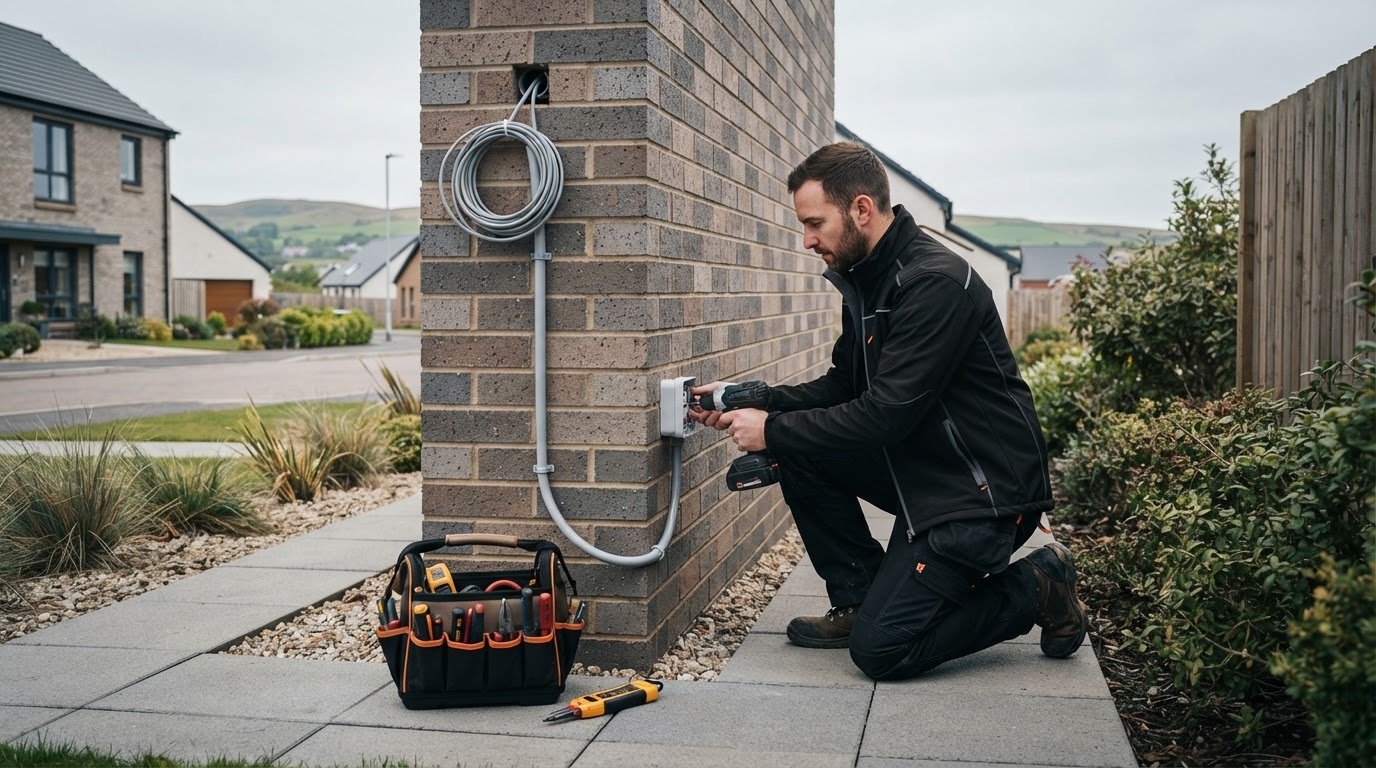
Safety shouldn’t stop at your back door. Outdoor electricity carries unique risks due to ground contact and the presence of moisture. Whether you are trimming the hedge with an electric lawnmower or powering a garden office, the environment is naturally less forgiving than your living room. RCD protection is a strict legal requirement for all Outdoor Power and Lighting installations. It acts as a dedicated sentry for your pond pumps, hot tubs, and security lights, ensuring that a damp connection doesn’t compromise the safety of your entire home. If you have concerns about your existing external sockets or want to ensure your outdoor space is fully compliant, you can speak with our local team for professional advice. We take great pride in ensuring every corner of your property, from the loft to the garden fence, remains safe and sound.
RCD vs MCB: Why You Need Both for Full Protection
Many homeowners assume that if a switch flips in the fuse box, the entire system has done its job to keep them safe. This is only half the truth. To truly understand the RCD safety benefits, we must distinguish between protecting your property and protecting your life. A standard fuse board contains Miniature Circuit Breakers (MCBs), which are designed to monitor the amount of current flowing through your cables. They are excellent at preventing house fires caused by overloaded circuits, but they are often blind to the tiny electrical leaks that can cause fatal accidents. You need both devices to create a complete safety net for your household.
Understanding the MCB (Fuse)
An MCB is a heavy-duty switch that guards against overcurrent. If you try to run a kettle, a tumble dryer, and an electric oven on the same circuit simultaneously, the MCB will trip to prevent the wires from melting behind your walls. However, an MCB will not trip if you touch a live wire. The amount of electricity required to stop a human heart is far less than the amount needed to trip a typical 32-amp circuit breaker. This is why older systems without RCDs are so dangerous; the power stays on even whilst someone is being electrocuted. During our Consumer Unit Upgrades, we replace these limited systems with modern technology that addresses both risks simultaneously.
The Synergy of Modern Circuit Protection
True safety comes from the partnership between these two distinct technologies. Whilst the MCB watches the cables, the RCD watches the people. In modern 18th Edition installations, which we carry out to the latest BS 7671:2018+A4:2026 standards, we often recommend using Residual Current Breakers with Overload (RCBOs). These clever devices combine the functions of an MCB and an RCD into a single, compact unit for every individual circuit in your home.
The shift towards this comprehensive approach offers significant practical advantages. If a fault occurs in your kitchen, an RCBO ensures that only the kitchen power cuts out. This leaves your hallway lights and other rooms active so you can navigate your home safely to investigate the issue. This level of circuit separation maximises the RCD safety benefits whilst minimising the inconvenience of a total blackout. We believe every home in Dundee and Angus deserves this level of technical precision and artisanal care, ensuring your property is as safe as it is functional.
Compliance and Testing: The Homeowner’s Responsibility
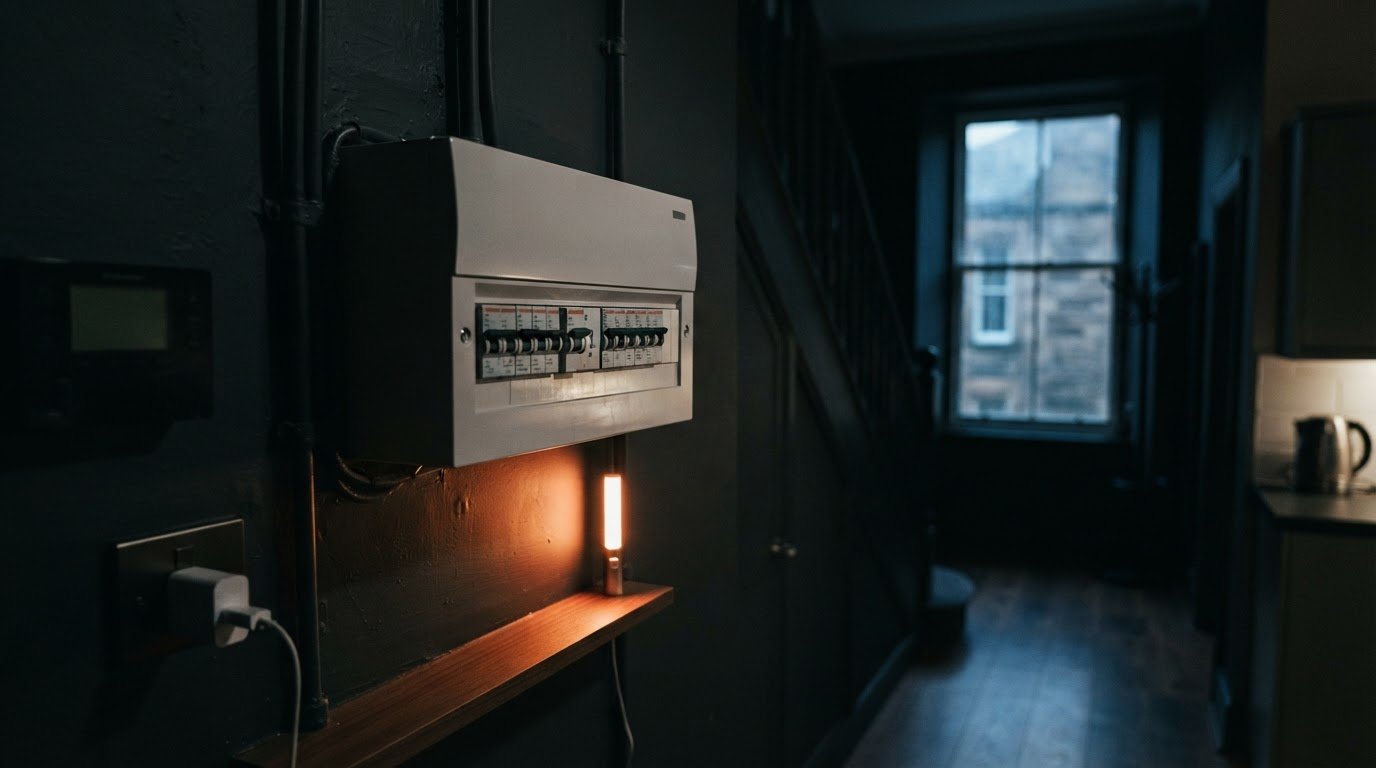
Owning a modern consumer unit is a vital first step, but ensuring it remains functional is your ongoing responsibility. An RCD is a mechanical device that can, over many years, become stuck or unresponsive if it isn’t exercised. To maintain the full RCD safety benefits, you should press the “Test” button on your consumer unit at least once every six months. This simple action simulates a fault and ensures the internal mechanism is still free to move. If the switch doesn’t trip immediately when you press the button, the device is faulty and requires urgent replacement by a qualified professional.
Scottish Landlord Regulations and RCDs
For property owners in the private rented sector, electrical safety isn’t just a recommendation; it’s a legal mandate. Under current Scottish legislation, landlords must ensure their properties meet strict safety standards, which includes providing the full RCD safety benefits to their tenants through modern protection on all circuits. This is a critical component of a successful EICR Certificate in Dundee. If our inspection reveals a lack of RCD protection or a failing device, the report will be marked as “Unsatisfactory.” This requirement often goes hand-in-hand with mandatory Interlinked Smoke & Heat Alarm Installation, as both are cornerstones of the Scottish Government’s drive for safer domestic environments.
What to Do When Your RCD Trips
If your power suddenly cuts out, don’t panic. A tripped RCD is usually doing exactly what it was designed to do: protecting you from a fault. You can often identify the culprit yourself using a simple process of elimination. Start by switching off and unplugging every appliance on the affected circuit, then reset the switch at the board. Plug your appliances back in one by one until the power trips again. This method often reveals a faulty kettle, a damp toaster, or a failing washing machine whilst saving you the cost of a call-out for a simple appliance fault.
However, if the RCD trips with nothing plugged in, or if you notice a burning smell or discolouration around the fuse box, you must stop immediately. These are signs of a more serious wiring issue that requires the attention of a professional electrician in Dundee. We recommend having your installation professionally assessed if you experience frequent nuisance tripping, as this can indicate that your protective devices are reaching the end of their reliable lifespan. If you’re unsure about the age or condition of your board, book a safety inspection with our team to ensure your home remains fully compliant and safe.
Modernising Your Home with Foster Electrical
We believe that every household in Dundee, Perth, and Angus deserves the highest standard of protection. Bringing a property up to the latest 18th Edition standards is about more than just ticking boxes; it’s about providing a robust electrical infrastructure that guards your family for years to come. Our team specialises in Consumer Unit Upgrades, replacing outdated fuse boxes with modern boards that deliver the full range of RCD safety benefits. We take immense pride in our work, treating every home with the same diligence and respect we would show our own.
Expert Consumer Unit Upgrades in Tayside
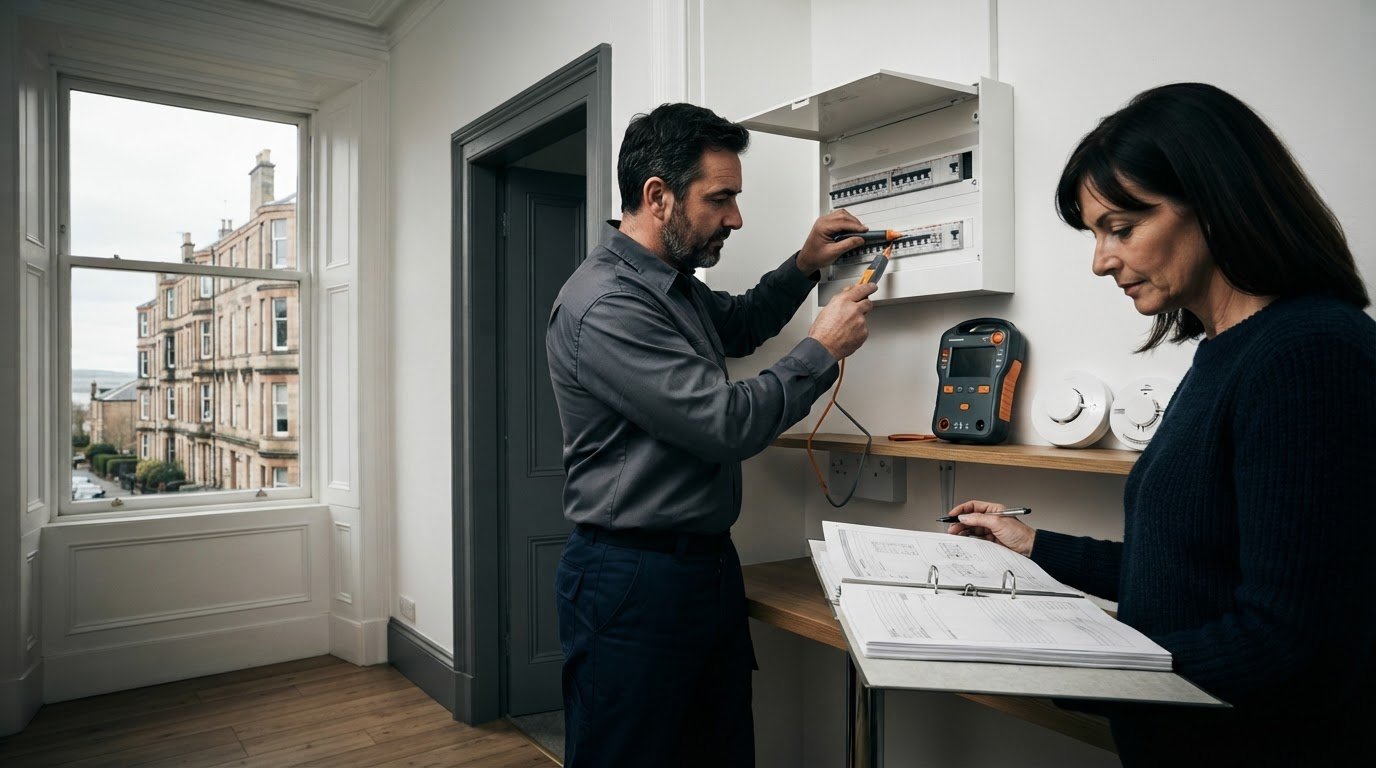
When you choose us for an upgrade, we manage the entire process with technical precision and clear communication. On the day of installation, we begin by safely isolating your power before removing the old equipment. We then install a modern, high-integrity consumer unit equipped with individual circuit protection. Once the hardware is in place, our NICEIC registered electricians perform a rigorous series of tests on every circuit in your home. This ensures that the RCD safety benefits are active and that your wiring is fully compliant with BS 7671:2018+A4:2026. After completion, we provide you with a full Electrical Installation Certificate (EIC), giving you a permanent record of your home’s safety and compliance.
A Personal Approach to Electrical Safety
We are a local, family-run business, and we understand that inviting a contractor into your private space is a matter of trust. We reject the impersonal, corporate approach in favour of direct, human interaction. Our “no-jargon” promise means we will explain your system’s condition in plain English, ensuring you feel confident in your home’s safety without being overwhelmed by technical complexity. We are also meticulous about tidiness; we always ensure our work area is spotless before we leave. We don’t believe in hidden fees or opaque pricing structures. Instead, we offer honest, transparent advice rooted in decades of local expertise.
Your electrical system is the heartbeat of your home, and an upgrade is the most cost-effective safety improvement you can make. If you haven’t had your fuse board inspected recently, or if you are worried about meeting the latest Scottish safety regulations, we are here to help. You can contact our Dundee team today to organise a thorough safety assessment. Let us help you secure your property with the modern protection it deserves, providing you with the peace of mind that only a professionally installed system can offer.
Secure Your Home with Modern Protection
Your home should be your safest sanctuary. A modern Residual Current Device isn’t just an optional extra; it’s a vital guardian that reacts in milliseconds to prevent tragedy. By prioritising the RCD safety benefits, you can transition from an outdated, vulnerable fuse box to a robust system that protects both your property and your family. Whether you’re a landlord needing to meet Scottish regulations or a homeowner looking for peace of mind, the right circuit protection is the most cost-effective safety investment you can make.
We are proud to be your expert Dundee-based installers. Our work is backed by the NICEIC Platinum Promise, and we guarantee full 18th Edition compliance with every installation. We treat your property with the utmost care, ensuring a tidy and professional service that puts your safety first. Don’t leave your household’s protection to chance with an ageing system that wasn’t designed for modern life.
Ensure your home is safe—book a Consumer Unit assessment with Foster Electrical today. We look forward to helping you create a more secure environment for your loved ones.
Frequently Asked Questions
What is the main benefit of an RCD over a standard fuse?
The main benefit of an RCD is its ability to protect human life from electrocution. Whilst a standard fuse is designed to protect your home’s wiring from overheating and catching fire, it is often too slow to prevent a fatal electric shock. An RCD monitors the current flow and disconnects the power in less than 40 milliseconds. This rapid response is what defines the primary RCD safety benefits in a modern household.
How often should I test my RCD using the test button?
You should test your RCD every six months by pressing the “Test” button on your consumer unit. This simple action ensures that the internal mechanical components haven’t become stuck over time. If the switch doesn’t trip immediately when pressed, it’s a sign that the device is faulty. We recommend setting a recurring reminder on your phone to keep your family’s protection in top condition without any guesswork.
Does an RCD prevent all types of electric shocks?
No, an RCD does not protect against every possible type of electric shock. It specifically detects electricity leaking to earth, which is the most common cause of domestic accidents. However, if you touch both the live and neutral wires simultaneously, the RCD may not detect a fault because the current remains balanced. It’s a powerful guardian, but it doesn’t replace the need for basic electrical caution and well-maintained appliances.
Why does my RCD keep tripping even when no appliances are on?
If your RCD trips when no appliances are active, it often indicates a fault within the fixed wiring of your property. This could be caused by moisture in an outdoor socket, a rodent damaging a cable, or a breakdown in wire insulation. It can also happen due to “nuisance tripping” where several small, safe leaks from modern electronics add up to exceed the RCD’s limit. This requires professional fault finding to resolve safely.
Is it a legal requirement to have an RCD in my UK home?
It is a legal requirement for all new electrical installations and for rental properties in Scotland under current safety legislation. Whilst owner-occupiers of older homes aren’t legally forced to upgrade retrospectively, any new circuits or alterations must comply with the 18th Edition (A4:2026) standards. We strongly advise an upgrade regardless of legal status, as older fuse boxes simply cannot provide modern levels of personal protection.
Can I install an RCD myself or do I need an electrician?
No, you should never attempt to install an RCD or a new consumer unit yourself. This is considered “notifiable work” under the Building Regulations and must be carried out by a qualified, registered electrician. A professional installation ensures the device is correctly rated for your home and includes the necessary testing and certification. We provide an Electrical Installation Certificate to prove the work meets all current safety and insurance requirements.
How long does it take to upgrade to an RCD-protected consumer unit?
A professional consumer unit upgrade typically takes between four and six hours to complete. This timeframe includes the physical installation of the new board and the mandatory safety testing of every circuit in your home. We strive to minimise disruption and always ensure your property is left tidy. Once the testing is finished, we walk you through your new system so you understand exactly how your home is protected.
Will an RCD protect my home from lightning strikes?
An RCD is not designed to protect your home from lightning strikes or large voltage spikes. Its job is to protect people from shocks. To safeguard your sensitive electronics from power surges, you need a Surge Protection Device (SPD). Under the latest A4:2026 amendment to the wiring regulations, we now install Type 2 SPDs as standard in most domestic upgrades to provide this additional layer of property protection.