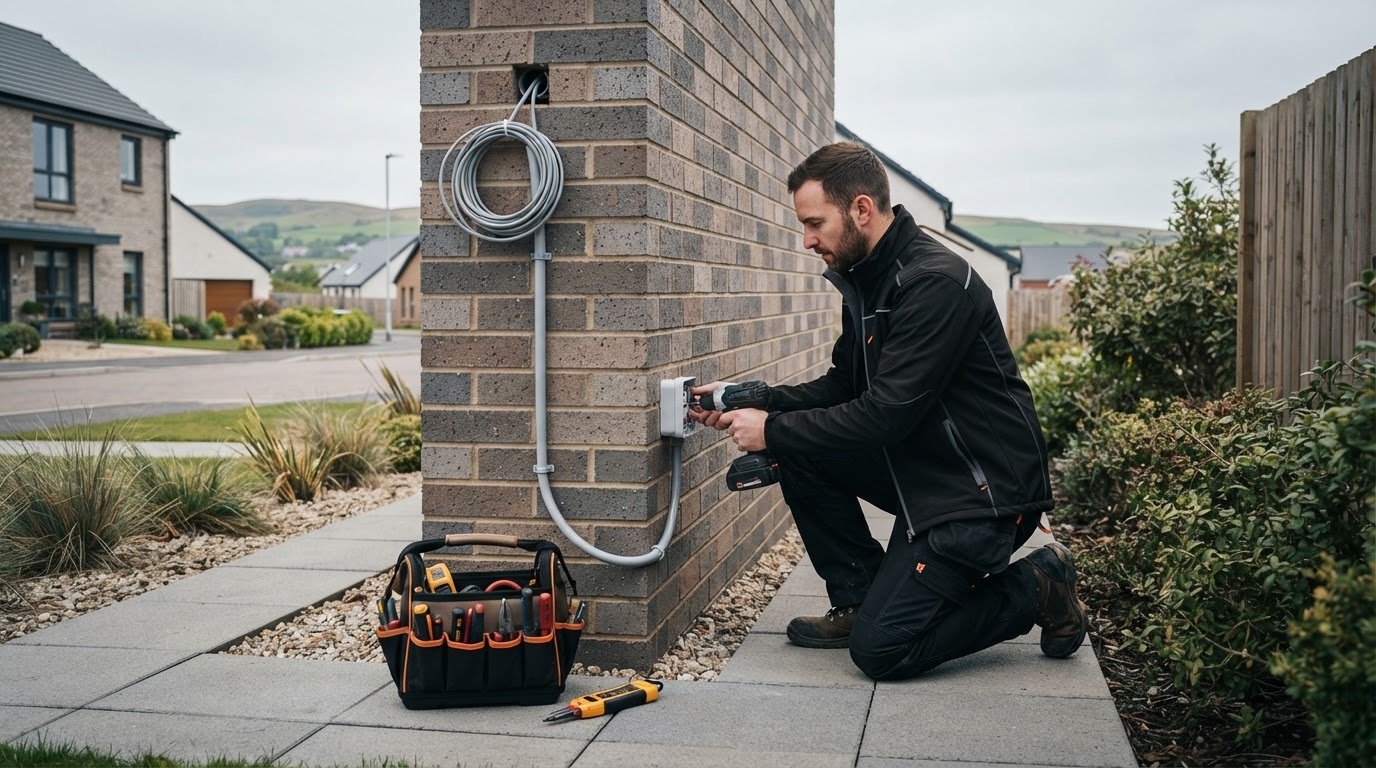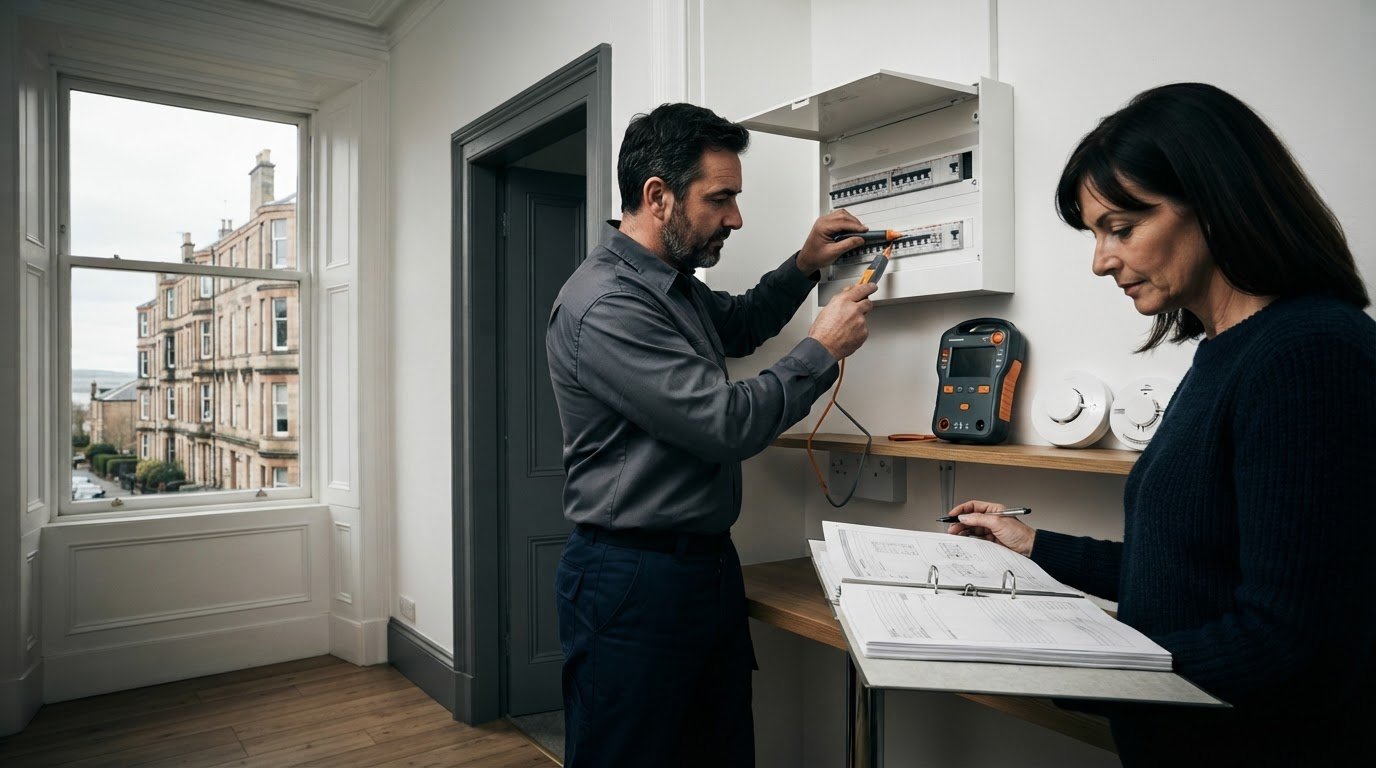
More than a quarter of house fires in Scotland during 2024-25 occurred in properties without a working smoke alarm, a statistic that underscores why the Scottish Government maintains such rigorous safety standards. For property owners across Dundee, Perth, and Angus, keeping pace with the scottish smoke alarm legislation for landlords can feel like a moving target, especially when your primary goal is simply to keep your tenants safe and your investment protected. We know that the pressure to get every sensor and heat detector in the right spot is heavy, particularly when a failed EICR or a hefty fine is on the line.
We agree that the technical jargon surrounding interlinked systems and 10-year lithium batteries is often more confusing than it needs to be. This guide is designed to strip away that complexity, offering you a clear path to total compliance and the peace of mind that comes from knowing your property is safe. We’ll walk you through the essential alarm checklist, explain how these systems impact your electrical safety certificates, and help you decide between mains-wired or sealed battery options for your specific property.
Key Takeaways
- Learn how the current scottish smoke alarm legislation for landlords requires an interlinked system across your entire property to ensure tenant safety and legal compliance.
- Identify exactly where to place smoke and heat alarms to meet the Repairing Standard, including specific requirements for living areas and circulation spaces.
- Understand the difference between mains-powered and tamper-proof lithium battery alarms so you can choose the most reliable setup for your rental home.
- Discover how your fire safety systems link to your mandatory Electrical Installation Condition Report (EICR) and why keeping these records updated is vital for local authorities.
- Find out why a professional installation from a trusted local expert ensures your system is robust, mess-free, and fully compliant with Tayside regulations.
What is the Scottish Smoke Alarm Legislation for Landlords?
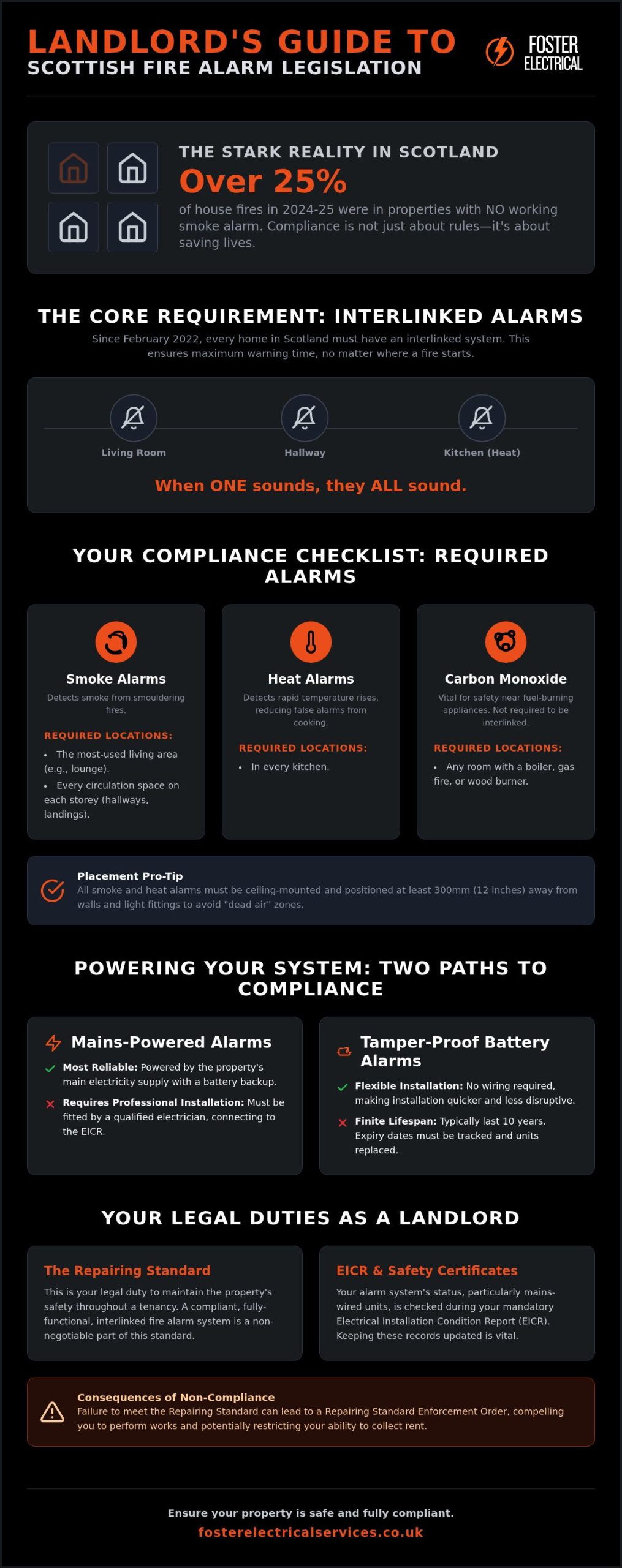
Since February 2022, every home in Scotland has been legally required to have a fully interlinked fire detection system. That means if one alarm triggers, every alarm in the property sounds simultaneously. The logic is straightforward: a fire starting in a kitchen at 2am should wake someone sleeping in a top-floor bedroom just as quickly as it alerts anyone standing nearby. Understanding scottish smoke alarm legislation for landlords begins with accepting that this isn’t a box-ticking exercise; it’s a system designed to give people the best possible chance of getting out safely.
The legislation draws its authority from the Housing (Scotland) Act 2006, which places clear duties on landlords to maintain properties to a defined standard. Where government guidance can feel heavy with legal terminology, the practical reality for a Dundee or Perth landlord is simpler: your property must have the right alarms, in the right places, working correctly, and linked together. The underlying smoke and heat alarm technology that makes interlinking possible has matured considerably, making compliant systems more reliable and accessible than ever before.
The Shift from Private Sector to All Tenures
These rules began life as requirements aimed specifically at private rented properties, but the Scottish Government extended them to cover every home in Scotland, regardless of tenure. For landlords in 2026, the critical question isn’t just whether a system was installed; it’s whether that system is still functional and whether individual units are approaching the end of their rated service life. Alarms installed in early 2022 are now several years old, and sealed battery units carry finite lifespans. Staying ahead of expiry dates is now part of responsible property management.
The Repairing Standard vs. The Tolerable Standard
Two distinct legal thresholds govern rental property safety in Scotland. The Tolerable Standard sets the absolute minimum: a property must be fit for human habitation. The Repairing Standard goes further, defining the legal duty of a landlord to actively maintain their property’s safety, structure, and installations throughout a tenancy.
For private landlords, the Repairing Standard is the one that demands attention. Failing to meet it exposes you to a Repairing Standard Enforcement Order issued by the First-tier Tribunal for Scotland, which can compel remedial works and, in serious cases, restrict your ability to collect rent. Compliance with the full scottish smoke alarm legislation for landlords sits firmly within the Repairing Standard’s scope, making a correctly installed, interlinked system a legal obligation rather than a recommendation.
Essential Alarm Types and Placement Requirements
Meeting the Scottish Government fire alarm standards involves more than just buying a handful of sensors. The scottish smoke alarm legislation for landlords is very specific about which devices you need and exactly where they must sit. To be fully compliant, your property requires a minimum of one smoke alarm in the room you use most frequently for general daytime living, such as the lounge. You also need a smoke alarm in every circulation space on every floor, which covers your hallways and landings. Finally, a heat alarm must be installed in every kitchen, as these are designed to detect significant temperature rises rather than just burnt toast.
Carbon monoxide detectors are a separate but equally vital requirement. You must install one in any room that contains a fixed carbon-fuelled appliance, such as a boiler, gas fire, or wood burner. Whilst these don’t necessarily need to be interlinked with your fire alarms, they remain a non-negotiable part of your safety duties. If you’re unsure about the layout of your particular property, it’s always worth asking a local professional to take a look and ensure nothing is missed.
Placement Rules for Tayside Properties
Correct positioning is what makes an alarm effective. Every smoke and heat alarm should be ceiling-mounted and kept at least 300mm away from walls or light fittings. This gap ensures that “dead air” trapped in corners doesn’t prevent smoke from reaching the sensor. In many of the traditional Dundee tenements we visit, long hallways are common. It’s important to remember that these circulation spaces are the primary escape routes, so the alarm must be positioned centrally to provide the earliest possible warning. We use heat alarms in kitchens because they ignore the steam and fumes that would cause a standard smoke alarm to trigger a false alert every time you cook.
Interlinking: The Core of the Legislation
The heart of the 2022 law is the requirement for all fire alarms to be interlinked. This can be achieved through physical wiring or, more commonly for existing homes, via secure radio frequency (RF) signals. The goal is the “always hear it” rule; the system must be loud enough to wake a tenant who is asleep behind a closed bedroom door. We often see DIY attempts where different brands of alarms are mixed together. This is a common pitfall because different manufacturers often use proprietary signals that don’t talk to each other, leading to a system that fails to trigger as a unit. Sticking to a single, high-quality brand ensures the interlinking remains robust and reliable for years to come.
Landlord Compliance: EICR and Safety Certification
Compliance isn’t just about fitting the alarms; it’s about proving they work. For most landlords, an EICR certificate Dundee is the most practical way to verify that their property’s fire detection system meets the current scottish smoke alarm legislation for landlords. During a standard electrical inspection, a qualified electrician doesn’t just look at the fuse board; they verify that your interlinked alarms are correctly positioned, powered, and communicating. This integrated approach ensures that your safety certifications are robust and that your property remains fully legal under the Repairing Standard.
Local authorities in Dundee, Perth, and Angus have the power to request proof of compliance at any time. Whilst you might not be inspected every year, having a clear paper trail is your best defence. This documentation becomes particularly critical for furnished rentals where fire risk management also involves regular PAT testing. Ensuring that every portable appliance is safe, alongside your interlinked alarm system, creates a comprehensive safety ecosystem that protects both your tenants and your investment.
Integrating Alarms into Your EICR Schedule
We understand that arranging multiple visits can be a headache for both you and your tenants. That’s why we organise our safety checks to be as efficient as possible, often combining alarm testing with the mandatory 5-year EICR cycle. If your alarms are found to be non-compliant during an inspection, it results in an “unsatisfactory” report, which can prevent you from legally letting the property. By addressing these issues during a scheduled visit, we help you maintain a seamless tenancy without the stress of emergency repairs or unexpected mess.
The Consequences of Non-Compliance
Failing to meet the required standards carries heavy risks that go beyond simple fines. In the Tayside and Fife regions, local authorities can issue enforcement orders that carry penalties of up to £5,000 for smoke alarm failures. Perhaps more concerning is the impact on your insurance validity. Many Scottish landlord insurance policies are predicated on the property meeting all legal safety requirements; if a fire occurs and your alarms aren’t interlinked, your claim could be rejected entirely. Amongst the local landlord community, there is a growing recognition that these regulations are a moral commitment to tenant safety as much as a legal hurdle. To further enhance your property’s safety profile, you may also want to explore Fire Door Compliance and Maintenance Services to ensure your structural protections are as robust as your detection systems.
Choosing between mains-powered and battery-operated units is a common point of confusion for many property owners. Under the scottish smoke alarm legislation for landlords, both options are legally acceptable, provided the units are interlinked and meet specific British Standards. Mains-powered alarms, technically known as Grade D1, are physically wired into your property’s electrical circuit and include a backup battery for power cuts. Conversely, Grade F1 alarms use sealed, tamper-proof lithium batteries designed to last for a full decade without needing a replacement.
Whilst both systems offer protection, the right choice often depends on the age and construction of your building. In many older properties across Angus and Fife, running new cables through thick stone walls or ornate ceilings isn’t always practical. Battery systems offer a faster, less invasive fix in these scenarios. However, for those looking for the most robust, permanent solution, mains-wired systems remain the preferred choice. We take personal pride in helping you choose the hardware that best fits your building’s character and your budget.
Pros and Cons of Mains-Wired Systems
We often recommend mains-wired systems for landlords who prioritise long-term reliability and minimal maintenance. Because these units draw power directly from the house, you don’t have to worry about a battery failing or being disconnected during a ten-year period. These systems are the gold standard for permanent rental compliance. They do require a professional electrician for installation and testing, as the wiring must be integrated into your consumer unit. We find they are most efficiently installed during Full Property Rewires, where the cables can be hidden away neatly without the need for surface trunking.
When to Choose Long-Life Lithium Alarms
Sealed lithium battery alarms are ideal for properties where running new cables would require significant redecoration. These units are self-contained and communicate with each other via radio frequency, making them a tidy solution for a quick upgrade. It is vital to remember that “user-replaceable” 9V batteries are no longer legal for Scottish rentals. The law now mandates “sealed” units to prevent tenants from removing batteries to silence an alarm or use them in other devices. If your current alarms still have batteries you can pop out with a thumb or screwdriver, they aren’t compliant with the scottish smoke alarm legislation for landlords.
Whether you opt for the permanence of a wired system or the convenience of lithium batteries, the goal remains a system that sounds everywhere when smoke is detected anywhere. We are here to ensure your installation is handled with the care and attention your home deserves. If you’re ready to upgrade your property’s fire safety, reach out to our local team for a straightforward, honest assessment of your needs.
Professional Alarm Installation in Dundee and Tayside
While some generic guides suggest you can fit these systems yourself, taking the DIY route as a landlord introduces unnecessary risks to your legal standing and your tenants’ safety. Ensuring your property meets the scottish smoke alarm legislation for landlords is about more than just sticking sensors to a ceiling. It’s about ensuring the interlinking is robust enough to communicate through thick tenement walls and that the placement provides the absolute best coverage for that specific layout. We bring a level of diligence to every job that larger, more anonymous corporations simply don’t match.
Our approach at Foster Electrical is rooted in grounded professionalism. We understand that your rental property is a home, not just a business asset. We work efficiently to minimise disruption, often combining alarm installations with other essential safety work like Consumer Unit Upgrades. This streamlined method means your property is upgraded to 2026 standards in a single visit, saving you time and keeping your tenants happy. By booking a comprehensive compliance survey, you can rest easy knowing every corner of your portfolio is protected by a system that actually works when it matters most.
The Foster Electrical Guarantee
We take personal pride in the high standards of our execution. Every property we enter is treated with the utmost respect; we make it a point of honour to leave every room as tidy as we found it. Navigating the electrical quirks of older Tayside buildings requires a specific kind of local expertise that we’ve built over years of service in Dundee, Perth, and Angus. We don’t believe in high-pressure sales or opaque pricing. Instead, we offer a straightforward, service-oriented approach that prioritises your peace of mind and your tenants’ protection.
Next Steps for Landlords
Compliance is an ongoing duty, not a one-time event. We recommend starting by reviewing the expiry dates on your current alarms; these are usually printed on the side or the base of the unit. If your system is approaching its ten-year limit or if you’re unsure about its interlinking capabilities, it’s time to act. You can reach out to us for a free, honest quote on a fully compliant system that fits your specific rental portfolio. We are here to help you navigate the scottish smoke alarm legislation for landlords with ease and confidence. View our full range of landlord electrical services to see how we can help you keep your property safe and legal.
Securing Your Property and Protecting Your Tenants
Staying on the right side of the scottish smoke alarm legislation for landlords doesn’t have to be a source of anxiety. We have seen that compliance is built on three pillars: choosing the right interlinked hardware, ensuring precise placement in hallways and living areas, and maintaining a clear paper trail through your 5-year EICR cycle. Whether you opt for the permanence of a mains-wired system or the efficiency of sealed lithium units, the goal is a property that stands ready to protect its occupants at a moment’s notice.
As specialists in Scottish landlord compliance, we take personal pride in delivering mess-free, professional installations that meet every legal benchmark. Our team consists of fully insured and qualified local electricians who value the trust our community places in us. We are proud of our Dundee Trusted Trader feedback and our reputation for honest, straightforward advice. Get a Professional Quote for Your Landlord Alarm Installation today. We look forward to helping you make your rental property as safe and reliable as it can be.
Frequently Asked Questions
Do all smoke alarms in a Scottish rental property have to be interlinked?
Yes, every smoke and heat alarm required by the scottish smoke alarm legislation for landlords must be interlinked so they all trigger at once. This includes the smoke alarms in your living room and hallways, plus the heat alarm in the kitchen. Whilst carbon monoxide detectors are mandatory in rooms with fuel-burning appliances, they don’t legally have to be part of the interlinked network, although many landlords choose to include them for extra safety.
Can I install the interlinked alarms myself as a landlord?
You are permitted to install sealed, long-life battery alarms yourself if you feel competent to do so. However, the scottish smoke alarm legislation for landlords mandates that all mains-powered alarms must be installed by a qualified electrician. We generally advise professional installation for all systems to ensure the interlinking is robust and the placement is legally compliant. This also provides you with a professional invoice as proof of diligence for your insurance provider or local authority.
What happens if my tenant removes the smoke alarms?
If a tenant removes an alarm, they are in breach of their tenancy agreement. As a landlord, your responsibility is to ensure the system is fully operational at the start of the tenancy and during regular inspections. We recommend using sealed lithium battery units. These prevent tenants from removing the batteries to silence the alarm, which is the most common form of tampering we see in Tayside homes.
Do carbon monoxide alarms need to be interlinked with smoke alarms?
No, carbon monoxide (CO) alarms do not need to be interlinked with your smoke alarms under current Scottish rules. However, you must have a CO detector in any room containing a fixed carbon-fuelled appliance, such as a gas boiler. These units must meet the EN 50291-1 standard. Whilst interlinking isn’t a legal requirement for CO units, it is often a sensible step to ensure the warning is heard throughout the entire property.
How much does it cost to install a compliant interlinked alarm system in Dundee?
The total cost depends on the size of your property and whether you choose mains-powered or sealed battery units. A typical three-bedroom house requires at least four alarms: two smoke, one heat, and one carbon monoxide. We don’t provide flat-rate pricing because every home in Dundee has its own unique layout. We prefer to offer an honest, bespoke quote after a survey to ensure you only pay for what you need.
How often should I test the alarms in my rental property?
We recommend that you test your alarms at the start of every new tenancy and encourage your tenants to press the test button once a month. It’s a simple task that takes seconds but ensures the interlinking is still communicating correctly. During our EICR inspections, we perform a more thorough check of the sensors and battery health to ensure the system remains reliable until the next scheduled safety report.
Are battery-powered interlinked alarms legal for the Repairing Standard?
Yes, battery-powered alarms are fully legal for the Repairing Standard, provided they are sealed, tamper-proof units with a lifespan of up to 10 years. You cannot use older models with user-replaceable 9V batteries. These long-life lithium units are a popular choice for older properties in Perth and Fife because they provide full compliance without the need for new wiring or redecoration, making them a tidy and efficient safety solution for any rental portfolio.
What is the maximum lifespan of a compliant smoke or heat alarm?
Most compliant smoke and heat alarms have a maximum lifespan of 10 years from the date of manufacture. After this point, the internal sensors can become less sensitive and may fail to trigger. You can find the expiry or replace by date printed on the side or base of each unit. We always check these dates during our safety surveys to ensure your property doesn’t inadvertently fall out of compliance due to ageing hardware.