A fire alarm that works in isolation is no longer enough to protect a modern Scottish home. We understand that many homeowners feel a bit lost when it comes to upgrading to interlinked heat alarms Scotland, especially with the worry that a DIY error might void a home insurance policy. It’s frustrating to face technical jargon when all you want is the simple assurance that your family is safe and your property is fully compliant. We believe that protecting your household should be a matter of pride and diligence, not a source of stress or messy ceilings.
This guide will help you discover exactly how to bring your home up to Scottish safety standards with our expert advice on interlinked smoke and heat alarms. We’ll walk you through the 2026 requirements for every room, explain the shift toward high-quality wireless technology, and show you how a professional installation provides the certification you need for total peace of mind. By the end of this article, you’ll know exactly how to achieve a tidy, legal, and reliable setup that stands the test of time.
Key Takeaways
- Understand why Scottish law requires every alarm in your home to communicate, ensuring that if one detector triggers, they all sound to provide vital warning time.
- Compare the practicalities of tamper-proof 10-year lithium battery units against mains-wired systems to determine the most reliable setup for your specific property.
- Protect your buildings insurance and simplify any future home sale by meeting the strict standards that surveyors and insurers now expect from every Scottish homeowner.
- Learn how upgrading to interlinked heat alarms Scotland ensures your kitchen and living areas are correctly monitored without the mess or stress of a DIY installation.
- Discover the value of professional certification and a meticulous installation process that respects your home while guaranteeing your family’s safety.
Understanding the Scottish Interlinked Alarm Legislation
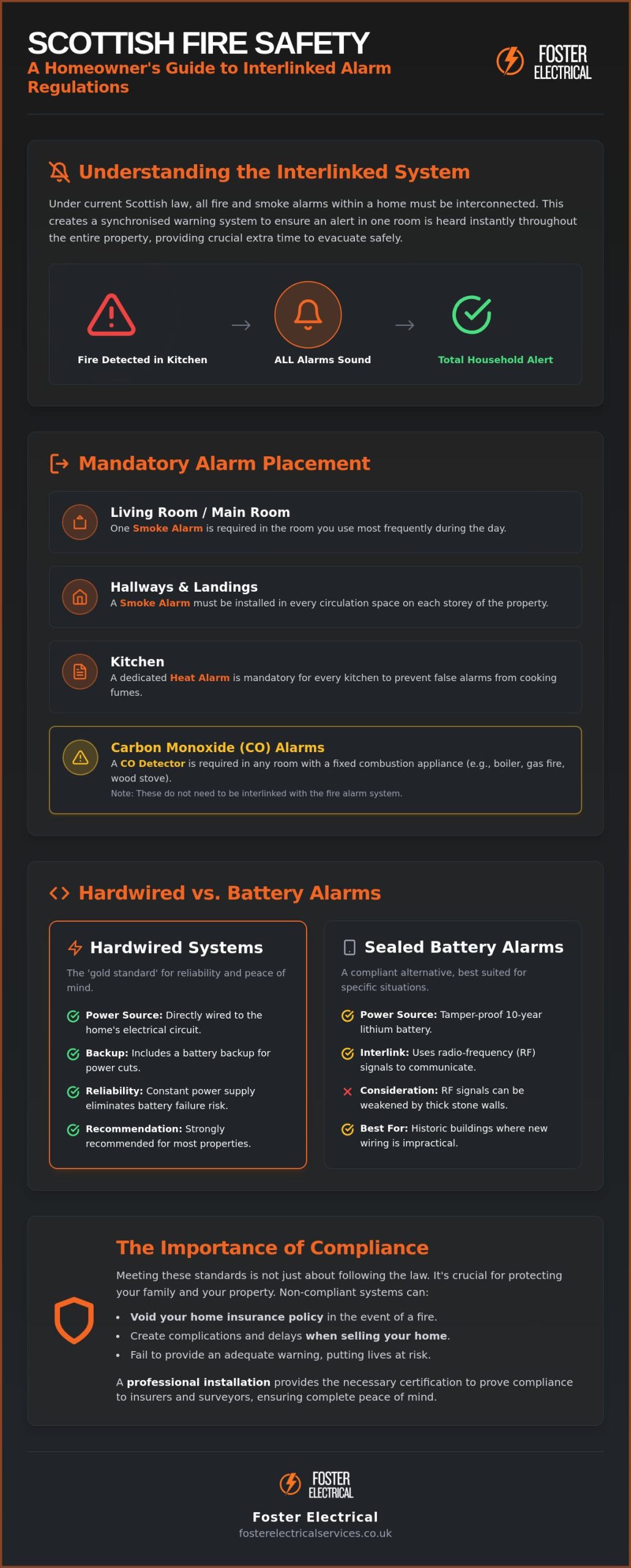
The concept of an interlinked system is straightforward but life-saving. In the past, a single smoke alarm might sound in the hallway while a fire grew unnoticed in the living room. Under the current Scottish standards, when one alarm sounds, they all sound. This ensures that a fire starting in your kitchen triggers an immediate alert in your bedroom, providing those vital extra seconds needed to evacuate safely. Upgrading to interlinked heat alarms Scotland is no longer a suggestion; it is a legal requirement designed to ensure that no one is left unaware of a developing emergency in another part of their home.
The journey to these standards began long before the 2022 deadline. Scottish building regulations have been heavily influenced by the tragic 1999 Tollcross fire in Edinburgh and the subsequent findings of the Grenfell Tower inquiry. These events highlighted critical gaps in how we detect and respond to fire within domestic settings. Whilst the legislation technically came into force in February 2022, the focus in 2026 has shifted toward ensuring every property meets these high-quality benchmarks. This responsibility falls squarely on the homeowner. Whether you live in a traditional tenement or a modern detached house, you are responsible for making sure your system is up to code.
The Mandatory Room-by-Room Requirements
To comply with the law, your home must have a specific configuration of sensors. You need one smoke alarm in the room you use most frequently, which is typically the living room. Additionally, you must install a smoke alarm in every “circulation space”, such as hallways and landings on every floor. These units rely on modern smoke detector technology to sense particles in the air, but they aren’t suitable for every environment. Because of this, the law mandates a dedicated heat alarm for every kitchen. Heat alarms are designed to trigger based on temperature spikes rather than steam or cooking fumes, which significantly reduces the frustration of false alarms while you’re preparing a meal.
Carbon Monoxide Alarms: The Often Forgotten Rule
While the focus is often on fire, carbon monoxide (CO) remains a serious threat, particularly in older Dundee properties with aging gas boilers or open fires. You must have a CO detector in any room containing a fixed combustion appliance. This includes boilers, gas fires, and wood-burning stoves. These detectors don’t legally have to be interlinked with your smoke and heat alarms, but they must be high-quality, sealed units. We often refer to carbon monoxide as the “silent killer” because it has no smell or taste. Ensuring your detectors are correctly placed is a vital part of our electrical services, providing a final layer of protection for your household.
Hardwired vs. Battery Alarms: Which is Best for Your Home?
Choosing the right power source for your safety system is a decision that impacts your home’s long term security. When you are upgrading to interlinked heat alarms scotland, you typically have two paths: mains-powered units or sealed battery detectors. Both options meet the legal requirements if they are interlinked, but the level of reliability and maintenance differs significantly. We often find that homeowners in Tayside prefer the permanence of a hardwired system, whilst those in historic stone buildings sometimes opt for the flexibility of battery powered units to avoid disturbing original cornices or plasterwork.
The official Scottish Government guidance specifies that battery alarms must be sealed, tamper-proof units with a 10-year lifespan. You cannot simply use an old-fashioned alarm with a replaceable 9V battery. These modern lithium units are designed to last a decade, but they still rely on radio-frequency (RF) signals to communicate with each other. In older properties with thick stone walls, these signals can sometimes struggle. This is where professional expertise becomes vital; we ensure the interlink is robust and the signal reaches every corner of your property without fail.
Why We Recommend Hardwired Systems
We consider mains-powered systems the gold standard for any Scottish household. A hardwired alarm is connected directly to your home’s electrical circuit and includes a battery backup for total peace of mind during power cuts. These systems offer a constant power supply, which means you never have to worry about a battery failing at the exact moment you need it most. If you are already considering Full Property Rewires, integrating your fire safety system at the same time is incredibly efficient. It adds tangible value to your property and ensures your electrical safety profile is impeccable.
When to Choose Sealed Battery Alarms
There are times when running new cables is simply too disruptive to your decor. In these cases, high-quality sealed battery units are an excellent alternative. It is essential to ensure these units meet British Standard BS EN 14604:2005 for smoke and BS 5446-2:2003 for heat. The ‘tamper-proof’ requirement is non-negotiable under Scottish law; the battery must be built into the unit so it cannot be removed or replaced by mistake. Whilst the initial cost of battery units might seem lower, they must be replaced entirely every ten years. If you aren’t sure which system suits your building’s layout, you can always discuss the best fit for your home with a member of our team.
The Risks of Non-Compliance: Insurance and Legalities
Ignoring the need for upgrading to interlinked heat alarms scotland isn’t just a safety risk; it’s a financial gamble. Whilst the Scottish Government hasn’t introduced immediate fines for private homeowners, the secondary effects on your property’s legal standing are profound. We’ve seen how a lack of proper documentation can cause unnecessary stress during a property sale or an insurance claim. Compliance is about more than just avoiding trouble; it’s about ensuring your home remains a protected, insurable asset for years to come.
The relationship between your fire safety system and your wider electrical health is closer than you might think. For many of our clients, ensuring their alarms are up to code is a vital step toward securing a successful EICR Certificate. This report is the definitive proof that your home is safe, and missing interlinked alarms are a common reason for a “Unsatisfactory” result. By taking a diligent approach to these regulations, you are protecting the integrity of your entire electrical installation.
Home Insurance and the ‘Duty of Care’
Insurance companies operate on a principle known as a ‘duty of care’. This means you are expected to take reasonable steps to protect your property from known risks. If you suffer a fire and it’s discovered that your alarms didn’t meet the Scottish government fire alarm regulations, your insurer may have grounds to reduce or even void your payout. Most insurers now assume compliance with the 2022 Scottish legislation. We believe it’s far better to have the peace of mind that comes with a certified installation than to worry about the fine print of a policy during a crisis.
Compliance for Landlords and Home Sellers
If you are planning to sell your home in Dundee or Angus, the Home Report will be your first hurdle. Surveyors are trained to check for interlinked systems, and a failure to comply will be noted clearly for any potential buyer to see. This can stall a sale or lead to awkward negotiations over the price. For landlords, the rules are even stricter under the Private Rented Sector (PRS) standards, where compliance is a mandatory part of your legal obligation to tenants. We often recommend that homeowners consider Consumer Unit Upgrades alongside their alarm installation to ensure there are dedicated, safe ways to power the system, providing total peace of mind for incoming tenants or buyers alike.
Professional Installation: The Foster Electrical Way
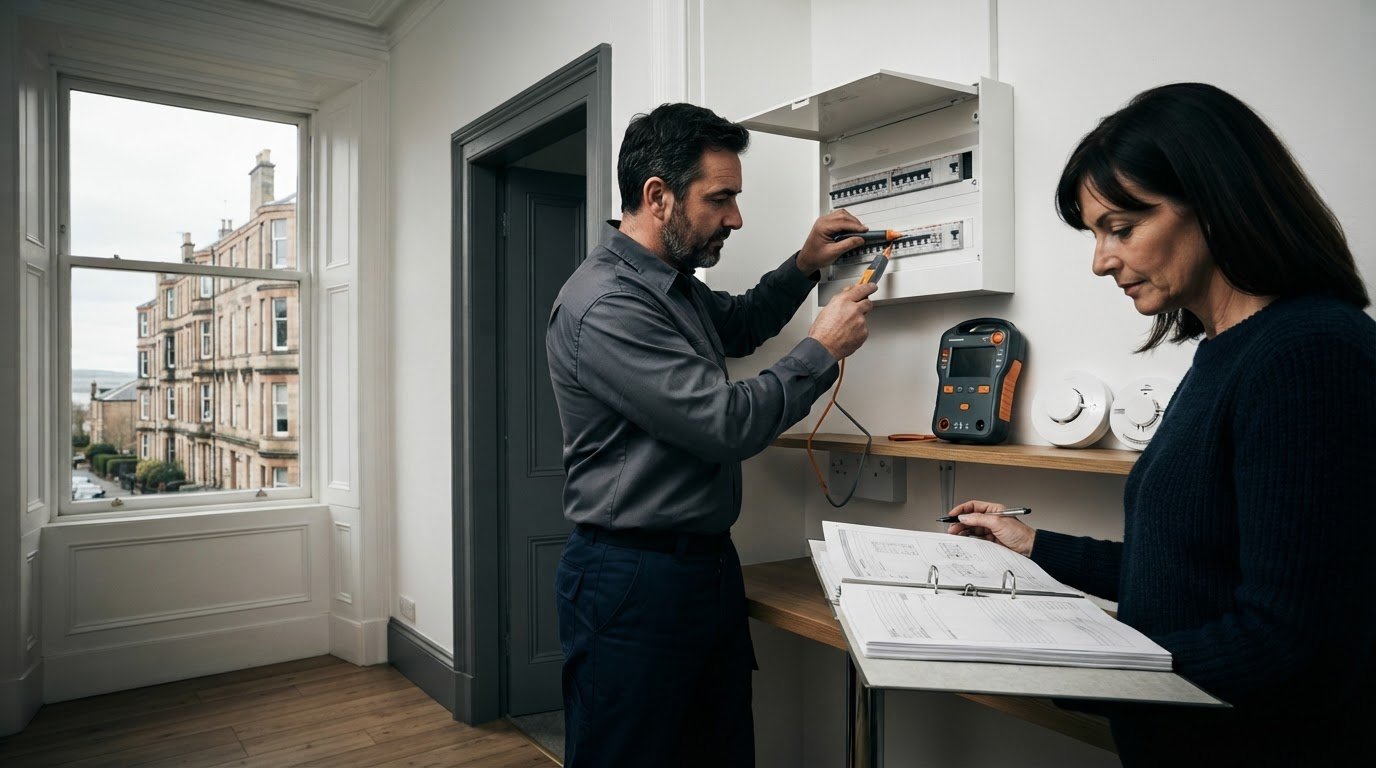
Entering your private space is a privilege we don’t take lightly. We understand that your home is your sanctuary, and the last thing you want is a contractor who leaves a trail of dust or unsightly cables behind. When you’re upgrading to interlinked heat alarms scotland, the process should be as seamless as the protection it provides. We take the time to assess every property individually, recognising that a high-ceilinged Dundee tenement requires a different approach than a modern semi-detached home in Angus. Our Interlinked Smoke & Heat Alarm Installation service focuses on providing a professional finish that looks like a natural part of your home’s architecture.
We take personal pride in our reputation for punctuality and honesty. Our process begins with a steady, logical walkthrough of your property to identify the most effective locations for each sensor. We don’t believe in the “one size fits all” approach often pushed by anonymous national companies. Instead, we look at the unique bones of your building to ensure that our work is as discreet as possible whilst remaining fully compliant with the latest safety standards. We treat your property with the same care we would our own, ensuring every cable run is considered and every unit is securely mounted.
Correct Placement to Prevent False Alarms
Correct positioning is the difference between a system that saves lives and one that simply becomes a nuisance. We ensure your kitchen heat alarm is situated at least 3 metres away from the cooker to prevent false triggers every time you open the oven door. We also avoid “dead air” spaces, those pockets in the corners of rooms or near vents where smoke might not reach the sensor quickly enough. Our final test is always about audibility. We verify that the hallway alarm is loud enough to wake every member of the family in their bedrooms, ensuring the interlink provides the early warning it was designed for.
Our ‘Clean and Correct’ Promise
We believe in traditional values of diligence and respect. This means using active dust extraction and protective covers whilst we work in your living areas to keep your carpets and furniture spotless. We use expert cabling techniques to hide wires behind the scenes, protecting your favourite wallpaper and original cornices from damage. Unlike large corporations that rely on automated booking systems, we prefer direct, human interaction. We’ll give you honest advice and a full walkthrough of how to test and maintain your new system once we’re finished. If you’re ready to secure your property with a team that cares about the details, you can book your home safety assessment here.
Securing Your Dundee Home with Interlinked Alarms
Completing the process of upgrading to interlinked heat alarms scotland is about much more than just following a set of rules. It represents a commitment to the safety of your family and the preservation of your home. When you choose a professional, hardwired installation, you’re investing in a system that remains vigilant for a decade, providing a level of reliability that DIY battery kits simply cannot match. We’ve seen first-hand how the right setup provides a cumulative sense of security, allowing you to rest easy knowing that your smoke and heat detection is robust, compliant, and correctly positioned.
Local expertise matters because every area in Tayside has its own architectural quirks. From the high ceilings of Perth’s Victorian villas to the compact layouts of modern builds in Angus, we understand the specific challenges these properties present. Our approach is steady and logical; we don’t just fit alarms, we integrate them into a wider home safety plan. This might include checking your existing circuits or suggesting Electrical Services like LED lighting upgrades or PAT testing to ensure every aspect of your home’s power is functioning safely and efficiently.
A Community-Focused Service
We’re proud to be a local business that serves our neighbours with diligence and integrity. Unlike large, anonymous corporations that are driven by sales targets and automated call centres, we value direct, human interaction. We see it as a privilege to work in your private space, and we maintain high standards of execution to ensure our reputation remains as solid as the work we do. Our service is built on trust and respect, focusing on providing honest advice that puts your domestic comfort first. By supporting a local expert, you’re ensuring that your safety is handled by someone who truly cares about the Tayside community.
Get Your Compliance Certificate Today
Once your installation is complete, we provide the necessary documentation to prove your home meets the official Scottish Government standard. This certificate is a vital piece of paperwork for your records, especially if you ever decide to sell your property or need to verify your safety measures with an insurance provider. We make the entire process transparent and straightforward, from the initial assessment to the final walkthrough of your new system. If you’re ready to bring your property up to standard with a tidy, professional finish, you can contact Foster Electrical for a reliable interlinked alarm installation. We’ll ensure your home is protected with the care and correctness it deserves.
Protect Your Household with Confidence
Your home should be a place of absolute sanctuary. By now, you understand that meeting the current fire safety standards isn’t just about avoiding a note on a Home Report; it’s about the genuine security of your family. Upgrading to interlinked heat alarms Scotland provides that vital early warning that single detectors simply cannot offer. We believe that every homeowner in Tayside deserves a system that is installed with diligence, integrity, and a respect for the property’s unique character.
We take pride in our NICEIC approved standards and our hard-earned reputation for meticulous tidiness. Our team brings local Dundee expertise to every project, ensuring your alarms are positioned for maximum audibility and zero false triggers. You don’t have to settle for impersonal corporate service or the disruption of a DIY attempt. Instead, you can rely on a neighbourly approach that puts your safety and domestic comfort first.
Secure your home today with professional interlinked alarm installation from Foster Electrical. We look forward to helping you achieve total peace of mind with a system you can trust for years to come.
Frequently Asked Questions
Do I really need to hardwire my interlinked alarms in Scotland?
No, you don’t legally have to hardwire them as long as the units are interlinked and meet the sealed-battery requirements. However, we always recommend hardwiring as a permanent, reliable solution that adds value to your property. Whilst sealed 10-year lithium battery units are a legal alternative, they must be replaced entirely when the battery dies, whereas mains-powered systems offer a more durable, long-term safeguard for your household.
Can I mix battery and mains-powered interlinked alarms?
We advise against mixing different power sources within the same interlinked network as it can lead to communication failures or technical instability. For a system to be truly reliable, all units should ideally use the same technology to ensure they “talk” to each other without interference. Sticking to a single type ensures that when you’re upgrading to interlinked heat alarms scotland, the system remains stable and trustworthy for the full decade.
How many alarms do I need for a standard three-bedroom semi-detached house?
A typical three-bedroom home usually requires five alarms to be fully compliant with the current legislation. This configuration includes one smoke alarm in the living room, one in the downstairs hallway, and one on the upstairs landing. You will also need a heat alarm in the kitchen and at least one carbon monoxide detector if you have a gas boiler, gas fire, or a wood-burning stove in any room.
Will my home insurance be void if I don’t have interlinked alarms by 2026?
It is a significant risk, as many insurers include a clause requiring you to comply with all local building regulations and safety laws. If a fire occurs and your home is found to be non-compliant with the 2022 legislation, your provider may have grounds to reduce or reject your claim entirely. We believe it’s far better to have a certified installation than to worry about the fine print during a crisis.
How do I know if my existing alarms are already interlinked?
The simplest way to check is to press and hold the test button on one of your alarms for several seconds. If the system is correctly interlinked, every alarm in the house should sound simultaneously within a few moments. If only the unit you are touching makes a noise, your alarms are working in isolation and do not meet the current Scottish standards, meaning an upgrade is required to ensure full protection.
What is the difference between a smoke alarm and a heat alarm?
Smoke alarms detect tiny particles in the air and are perfect for hallways and living rooms, but they are prone to false triggers from cooking fumes. Heat alarms are specifically designed for kitchens because they respond to sudden rises in temperature rather than smoke or steam. Using the correct type in each room ensures your system is effective without being a nuisance every time you open the oven door.
How often should I test my interlinked fire alarm system?
You should test your system once a week to ensure the interlink is still functioning correctly and the sensors are active. Regular testing is a simple, diligent habit that takes less than a minute but provides vital reassurance that your family is protected. It is also a good opportunity to wipe away any dust that might have settled on the sensors, which helps maintain the system’s sensitivity over time.
Do interlinked alarms require a special type of consumer unit?
They don’t require a special unit, but they do benefit from being on a dedicated, properly protected circuit within your fuse box. When we perform an installation, we check your existing board to ensure it can safely handle the new system. If your consumer unit is outdated, we might suggest an upgrade to provide a more stable and secure power supply for your safety devices and your home.