Could the elegant stone walls of your Dundee villa be hiding a network of outdated cables that no longer meet modern safety standards? Many homeowners feel a sense of pride in their historic properties, yet they often live with a quiet anxiety regarding victorian house wiring problems dundee specialists frequently encounter. It’s a unique challenge where 19th-century masonry meets 21st-century power demands, often resulting in a patchwork of DIY fixes and original wiring that simply wasn’t designed for today’s lifestyle.
We understand that the thought of hidden costs and the potential for damaging your precious lath and plaster features is enough to make any property owner hesitate. You want a safe home for your family, but you also want to protect the character that makes your house a home. This guide will help you identify the specific electrical risks common in our local heritage buildings and explain how to modernise your system whilst staying compliant with the latest BS 7671:2018+A4:2026 regulations. We’ll provide a clear path to achieving total peace of mind without losing the historic soul of your property.
Key Takeaways
- Learn why the phrase “it still works” is often the most dangerous misconception regarding the older electrical systems found in Dundee’s historic villas.
- Identify the most common victorian house wiring problems dundee homeowners encounter, including the hidden dangers of crumbling VIR insulation and lead-sheathed cables.
- Understand how to meet the latest 18th Edition Wiring Regulations by integrating essential safety features like RCDs and Surge Protection Devices.
- Discover a meticulous approach to modernising your home that protects original architectural features like ornate cornicing and period floorboards.
- Gain clarity on the difference between full and partial rewires so you can create a practical plan that ensures your family’s long-term safety.
The Unique Challenges of Victorian Wiring in Dundee Homes
Dundee’s architectural landscape is defined by its grand Victorian heritage, from the sprawling villas of Broughty Ferry to the stately tenements of the West End and Maryfield. This era of rapid expansion, fueled by the city’s industrial success, left behind a legacy of craftsmanship that we still admire today. However, beneath the ornate cornices and behind the solid stone walls lies a hidden reality. Many of these properties rely on electrical systems that have long outlived their intended lifespan, creating a unique set of victorian house wiring problems dundee specialists must address with care.
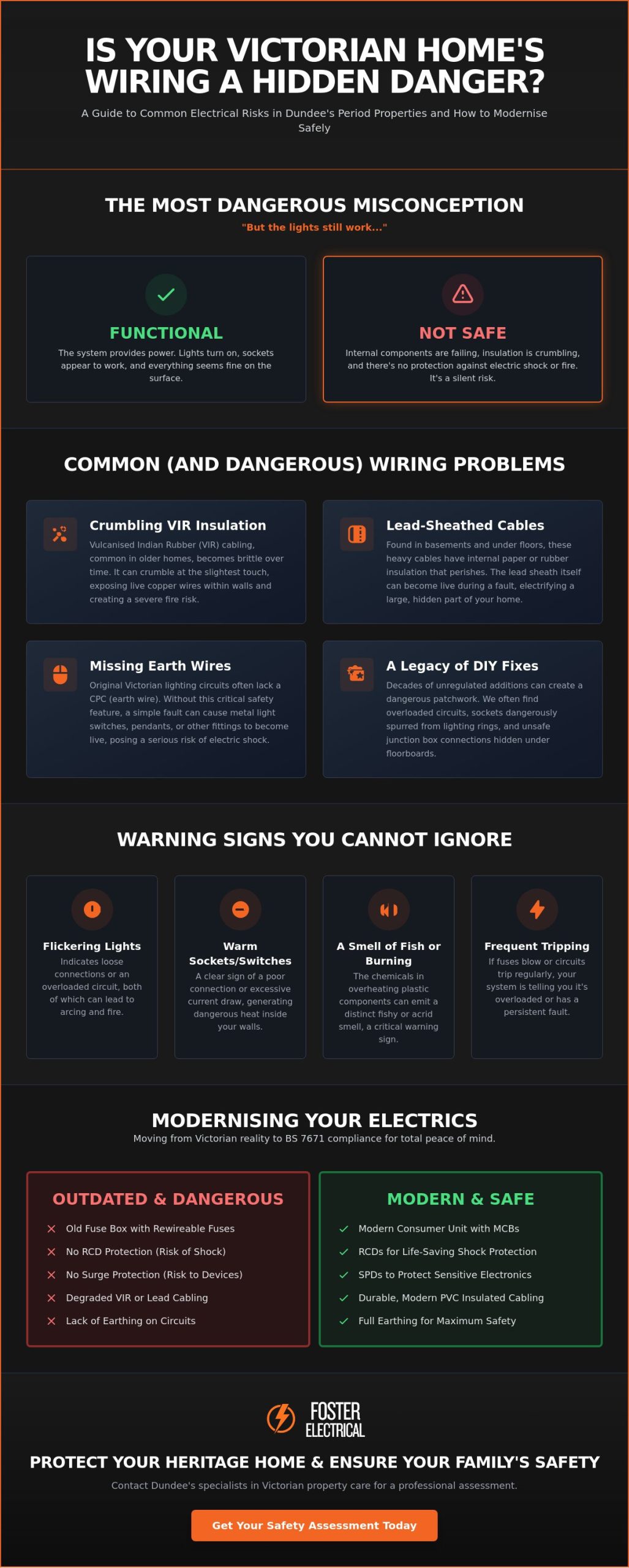
We often hear homeowners say, “But the lights still work.” In our experience, this is the most dangerous phrase in electrical safety. Functional is not the same as safe. A system might provide power whilst its internal components are silently failing. Our primary goal is to help you move from a merely “functional” setup to one that is fully compliant with the latest 18th Edition (BS 7671:2018+A4:2026) standards. This transition ensures your historic home remains a safe sanctuary rather than a hidden risk.
Why Dundee’s Period Properties are Different
Dundee’s Victorian stock presents physical challenges that modern builds simply do not have. Those famous thick stone walls, while excellent for insulation, make cable routing a complex task and frequently block modern wireless signals. We also encounter extensive use of lath and plaster, which requires a delicate touch to avoid expensive structural repairs during a rewire. Many homes underwent a wave of modernisation in the 1970s, but these attempts often introduced new issues, such as early plastic-coated cables that are now becoming brittle and dangerous.
Understanding the Risks of Ageing Infrastructure
Electrical fatigue is the invisible process where insulation becomes brittle and loses its ability to safely contain current after decades of thermal stress. In the late 1800s, Knob-and-tube wiring was a standard, but it lacks the earthing required for modern safety. Today’s technology creates a load demand that Victorian designers could never have imagined. From high-draw kitchen appliances to the EV chargers we install today, the pressure on 100-year-old circuits is immense. Addressing the victorian house wiring problems dundee homeowners face is about more than just wires; it is about the emotional weight of protecting a heritage asset for the next generation.
Common (and Dangerous) Wiring Problems in Period Properties
When we step into a period property, we often find a hidden timeline of electrical history. Some of it is original, whilst other parts are the result of decades of DIY additions. These layers of history create the specific victorian house wiring problems dundee homeowners must navigate to ensure their property remains safe for modern living. One of the most frequent discoveries is Vulcanised Indian Rubber (VIR) cabling. This material was once the height of technology, but today, it is a significant fire risk. When you touch old VIR, the insulation often crumbles away like dry biscuits, leaving live copper exposed within your walls or floor voids.
In many Dundee basements, particularly in the larger villas of the West End, we still find lead-sheathed cables. These are heavy, grey, and deceptively sturdy. However, the internal insulation is often perished, and the lead itself can become live if a fault occurs. Identifying victorian house wiring problems dundee residents might face often starts with simple observation. We frequently encounter original lighting circuits that completely lack a proper earth wire. Victorian designers did not account for modern metal light fittings. Without an earth wire, a simple fault can turn a decorative brass switch or a metal pendant into a lethal conductor.
Warning signs are often subtle before they become critical. You might notice flickering lights that aren’t solved by a new bulb, or sockets that feel strangely warm to the touch. Perhaps the most alarming sign is a mysterious “burning smell” that resembles fish or scorched plastic. This usually indicates that a connection is arcing and melting its housing. Furthermore, many homes carry a “DIY legacy” where previous owners added unsafe extensions, such as sockets spurred off lighting circuits. If you recognise any of these symptoms in your home, a professional fault finding and repair assessment can provide the clarity and safety you deserve.
Outdated Insulation Materials
Modern PVC cabling is typically grey or white with a smooth, flexible finish that lasts for decades. In contrast, dangerous older cables are often wrapped in braided fabric or black rubber that perishes over time. Rubber insulation is a primary cause of house fires in older Tayside homes because it becomes highly flammable as it degrades into dust. It is a sobering fact that vulcanised rubber insulation was only designed to last for thirty to forty years, yet it remains in use in homes that are well over a century old.
The Absence of Modern Circuit Protection
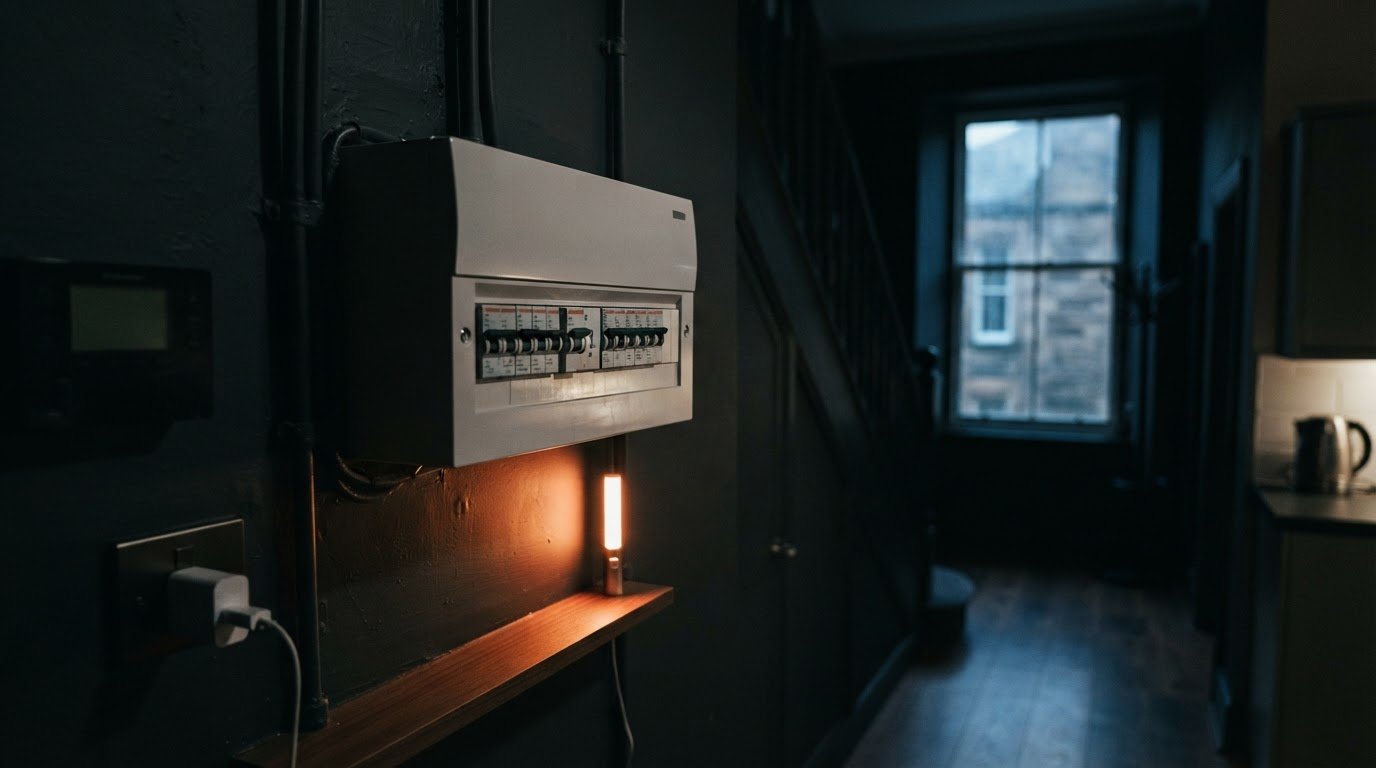
Old rewirable fuses, those porcelain blocks with a thin strand of wire, offer almost no protection against modern electric shocks. They are designed to protect the cable from melting, not to protect a human life. Many Victorian properties also suffer from “over-fusing,” where a previous resident has installed a thicker wire to stop a fuse from blowing, inadvertently creating a massive fire risk. Without modern RCD protection, a fault in a metal switch or appliance can be fatal because the power is not cut instantly.
Modern Standards vs Victorian Reality: What Needs to Change?
The 18th Edition Wiring Regulations (specifically BS 7671:2018+A4:2026, which took effect on 15 April 2026) aren’t just a list of technical hurdles. They represent the highest safety standards we’ve ever had in the UK. For those living in Dundee’s historic villas, these regulations bridge the gap between 19th-century charm and modern safety. Whilst the victorian house wiring problems dundee residents encounter can feel overwhelming, upgrading to these standards is a logical step toward protecting your family and your investment. We view these regulations as a blueprint for domestic security rather than a mere set of rules.
The heart of this modernisation is the consumer unit. Think of it as the brain of your home’s electrical system. In many older properties, we still see the original fuse boards with rewirable porcelain blocks. These old boards are passive; they only react when a major fault causes a cable to overheat. A modern consumer unit is proactive. It monitors every circuit for the slightest imbalance, ensuring that your home’s infrastructure can handle the demands of 2026 technology without compromise.
Consumer Unit Upgrades: Beyond the Fuse Box
A modern consumer unit does much more than just “hold the fuses.” It houses Residual Current Devices (RCDs), which can detect a leakage of current and cut the power in milliseconds, preventing fatal electric shocks. We also now include Surge Protection Devices (SPDs) as standard. With the increasing amount of sensitive electronics in our homes, from smart home hubs to expensive computers, SPDs protect your equipment from external voltage spikes that old Victorian wiring simply cannot filter out on its own.
Compliance with Scottish Safety Legislation
Dundee homeowners must also navigate specific Scottish laws regarding fire safety. Every home in Scotland is now required to have an interlinked smoke and heat alarm system. This means if a fire starts in the kitchen or basement, every alarm in the house sounds simultaneously. This is a life-saving requirement, especially in large Victorian properties where a fire could go unnoticed in a distant room. It’s a vital part of addressing victorian house wiring problems dundee families face when updating their homes.
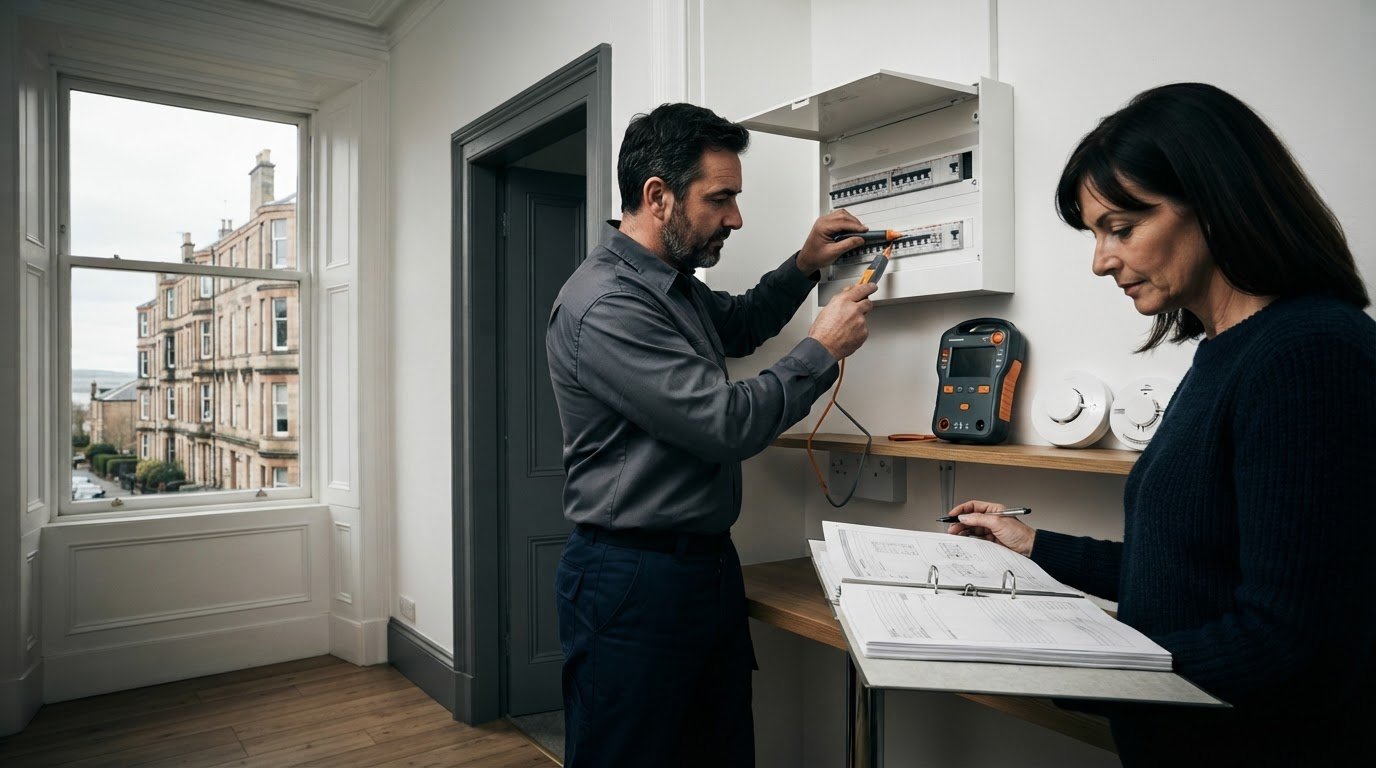
We always recommend starting with an Electrical Installation Condition Report (EICR). This is a comprehensive health check that identifies hidden issues that specialists can then address systematically. For those running a business from a home office, we also suggest PAT testing for your portable equipment. It’s a simple way to ensure your modern workspace doesn’t compromise the safety of your historic home. These steps provide a clear, documented path to total compliance and peace of mind.
The Rewiring Process: Preserving Dundee’s Architectural Heritage
The prospect of a rewire often brings a sense of dread to owners of Dundee’s period properties. You worry about the dust, the disruption, and the potential destruction of original features that have survived for over a century. We approach these projects with a deep respect for local craftsmanship. Our method isn’t about speed at any cost; it’s about being meticulous protectors of your home’s character. Whether you are dealing with specific victorian house wiring problems dundee specialists have identified or are simply planning a preventative upgrade, the process should be as non-invasive as possible.
Deciding between a full or partial rewire depends on the existing infrastructure. If your property still has the original rubber-insulated cables we discussed earlier, a full rewire is the only responsible path. However, if some circuits were properly updated in the last twenty years, we may be able to integrate them into a new, safe system. Our “Making Good” promise means we work carefully to minimise the impact on your high ceilings and ornate plasterwork. We understand that once we leave, you want your home to look as though we were never there, albeit with a significantly safer electrical heartbeat.
Sympathetic Installation Techniques
Working with Dundee’s solid stone tenements requires specialised knowledge. We don’t just chase indiscriminately into walls. Instead, we use existing voids and lift original floorboards using a lift-and-replace technique to ensure they can be returned to their exact positions. We take pride in our “tidy expert” philosophy, ensuring that your living space is respected throughout the project. By navigating lath and plaster with precision tools, we avoid the heavy-handed approach that often leads to crumbling heritage features.
Modern Conveniences in a Period Setting
A rewire is the perfect opportunity to bring your home into the modern age without ruining the aesthetic. We can strategically place additional sockets behind skirting boards or in subtle locations to meet the demands of modern technology. You might also consider LED lighting upgrades that provide high efficiency whilst mimicking the warm, inviting glow of traditional lamps. We also recommend future-proofing your property by including EV charger installation preparation or data cabling while the floorboards are already up. This forward-thinking approach saves you from further disruption down the line and ensures your home is ready for the next several decades.
Foster Electrical: Your Local Specialist for Victorian Property Care
Foster Electrical isn’t just another contractor; we’re a dedicated part of the Dundee community. We see ourselves as guardians of the city’s architectural legacy, understanding that the victorian house wiring problems dundee homeowners face require a specific set of skills and a high degree of empathy. Our family-run business is built on the values of traditional sincerity and grounded professionalism. We reject the opaque pricing and impersonal nature of large corporate structures in favour of direct, human connections that put your safety first.
When we enter your home, we treat it with the same care we would our own. This “Guardian” philosophy means we don’t just fix wires; we protect your environment and your history. We take personal pride in high standards of execution and meticulous tidiness, ensuring that the work we do today stands the test of time. You won’t find us cutting corners or leaving a mess behind those historic stone walls. Our commitment is to provide a service that is as durable as the properties we maintain.
Why Dundee Homeowners Trust Us
Our reputation in Tayside is rooted in punctuality and integrity. We know your time is valuable, so we arrive when we say we will and complete our work with diligence. There are no automated call centres or complex phone menus here. You speak directly to the experts who will be working in your private space. As a firm with Trusted Trader status, we uphold a standard of service that larger, anonymous corporations often fail to match. We believe in artisanal, person-to-person service that prioritises your comfort throughout the modernisation process.
Take the First Step Toward Safety
Addressing the victorian house wiring problems dundee families worry about starts with a clear, professional understanding of your system’s current state. We recommend an Electrical Installation Condition Report (EICR) as the essential “health check” for any period property. This report provides a transparent overview of what is safe and what requires attention, delivered without the pressure of high-sales tactics. We offer honest, straightforward advice aimed at giving you total peace of mind regarding your family’s safety.
We are ready to help you preserve the character of your home whilst ensuring it meets the highest modern safety standards. Taking action today prevents minor faults from becoming major hazards tomorrow. Book your Victorian home safety inspection with Foster Electrical to begin your journey toward a safer, more reliable home with a team you can trust.
Securing Your Dundee Heritage for the Next Generation
Your Dundee property is more than just stone and mortar; it is a legacy that requires a specialist’s touch to remain safe for the years ahead. We have explored how identifying victorian house wiring problems dundee specialists encounter is the vital first step in moving from a functional home to a fully compliant one. Upgrading your system isn’t just about meeting modern regulations; it is about ensuring your family’s daily environment is protected by the latest circuit technology.
Our team at Foster Electrical takes personal pride in being the local experts for these complex projects. As a family-run business, we combine 18th Edition technical precision with a deep respect for your home’s original features and a commitment to meticulous tidiness. We treat every project with the diligence and integrity your heritage home deserves.
Protect your period home—Request a professional safety survey from Foster Electrical today
We look forward to helping you preserve your home’s unique character whilst securing its future.
Frequently Asked Questions
How do I know if my Victorian house in Dundee needs a full rewire?
You can identify the need for a rewire by looking for specific warning signs such as black rubber, lead-sheathed, or fabric-coated cabling. If your property still relies on a fuse box with rewirable wire strands rather than modern circuit breakers, it is highly likely that the system is overdue for an upgrade. Persistent issues like flickering lights or sockets that feel warm to the touch are clear indicators that your home’s infrastructure is struggling with modern electrical demands.
Is it possible to rewire a house without damaging the original plasterwork?
Yes, we use sympathetic installation techniques specifically designed to protect your home’s historic features. By lifting original floorboards and utilising existing wall voids, we can often route new cables with minimal disruption to lath and plaster walls or decorative cornices. We take personal pride in our reputation as tidy experts; our goal is to ensure your property remains a beautiful, intact heritage asset whilst becoming a safe modern environment for your family.
What are the specific Scottish laws for smoke alarms in older homes?
Scottish law now requires every home to have an interlinked smoke and heat alarm system. This means you must have one smoke alarm in the room you use most during the day, one in every circulation space like hallways or landings, and a heat alarm in the kitchen. All these units must be interlinked so that if one detects danger, they all sound. This legislation is mandatory for all homeowners in Dundee, regardless of the age of the property.
How long does a full property rewire typically take in a Dundee tenement?
A full rewire typically takes between 6 and 10 days for a standard three-bedroom property. For larger Victorian villas with four or more bedrooms, the process can extend to one or two weeks depending on the complexity of the stone construction. We provide a clear timeline before work begins so you can plan accordingly. Our team works diligently to maintain a steady pace, ensuring that the project is completed thoroughly without unnecessary delays.
Can I stay in my home whilst the electrical rewiring is being carried out?
You can stay in your home, but you should be prepared for significant disruption, dust, and noise during the day. We always ensure that you have a safe, functional circuit for essential items like your fridge and a few lights at the end of each working day. However, many of our clients find it more comfortable to stay with friends or family for the duration of the most intensive work. We prioritise your comfort and keep you informed at every stage.
What is an EICR, and do I need one before buying a period property in Dundee?
An EICR is an Electrical Installation Condition Report, which serves as a comprehensive health check for a property’s wiring. It is an essential tool for identifying hidden victorian house wiring problems dundee buyers often overlook during a standard viewing. We strongly recommend commissioning an EICR before finalising a purchase. This report provides an honest assessment of any necessary repairs or safety upgrades, allowing you to understand the true condition of the home’s electrical system before you commit.
Will a new consumer unit stop my fuses from tripping frequently?
A new consumer unit will not “fix” faulty wiring, but it will identify exactly where the problems lie. Modern units use sensitive circuit breakers that trip to protect you from faults that old-fashioned fuses might ignore. If your power trips frequently after an upgrade, it is usually because the new unit is successfully detecting a leakage or a fault in your appliances or older circuits. This is a vital safety feature that prevents electrical fires and protects your family from shocks.
Are there grants or financial help for rewiring older homes in Scotland?
There are currently no direct national grants specifically for rewiring private domestic properties in Scotland. However, it is always worth checking with Dundee City Council or Home Energy Scotland for any local repair grants or energy efficiency schemes that might be applicable to your situation. Whilst the initial investment is the homeowner’s responsibility, a full rewire adds significant value to your property and ensures its long-term safety and compliance with current UK safety standards.