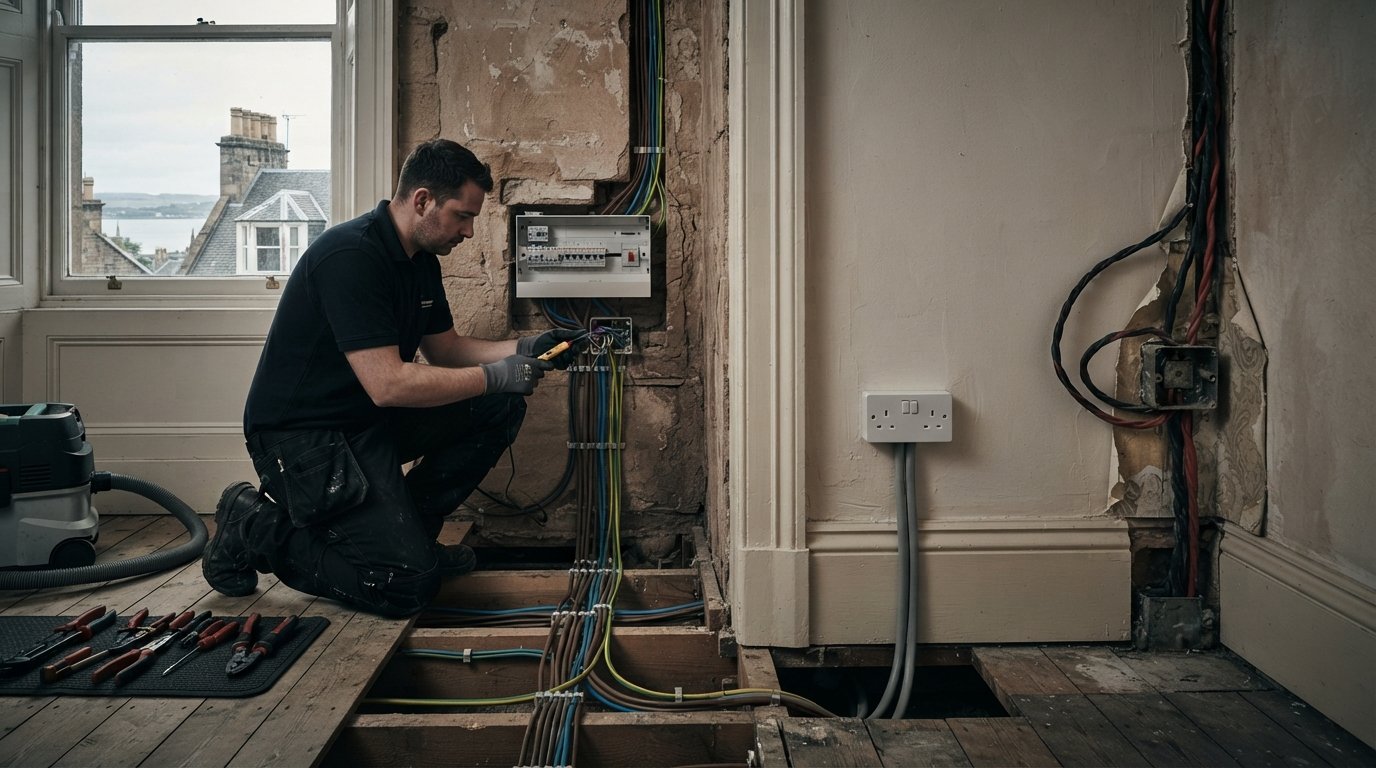
If those beautiful Victorian floorboards in your West End home could talk, they might tell you that the copper wiring hidden beneath them hasn’t been touched since the mid-1970s. It is a sobering thought for many residents, as common electrical faults in older homes Dundee often remain completely invisible until a socket scorches or a consumer unit begins to hum. You likely take great pride in the heritage of your period property, but we understand that the fear of electrical fires or the complex maze of Scottish safety regulations can weigh heavily on your mind. Nobody wants to face the prospect of a messy rewire or the uncertainty of what modern standards actually require.
We believe your home should be a sanctuary, not a source of stress. This guide is designed to give you peace of mind by identifying the specific dangers often found in Tayside’s historic buildings. You’ll learn about the essential updates required by the BS 7671:2018+A4:2026 standards that came into force on April 15, 2026, including the role of surge protection and arc fault detection. We will walk you through the practical, respectful steps needed to modernise your electrical system with the care your home deserves, ensuring it remains safe for your family for years to come.
Key Takeaways
- Understand why Dundee’s unique mix of Victorian tenements and post-war houses often struggles with the heavy power demands of modern living.
- Identify the common electrical faults in older homes Dundee, such as the absence of life-saving RCD protection or the presence of degraded, decades-old wiring.
- Recognise the subtle warning signs of circuit overloading, from scorched sockets to flickering lights, before they escalate into serious hazards.
- Learn why outdated earthing methods in period properties may no longer provide the necessary protection against electrical shocks.
- Discover the essential steps to modernise your home for 2026 safety standards through professional fault finding and targeted upgrades.
Common Electrical Faults in Older Homes: Why Dundee Properties Are at Risk
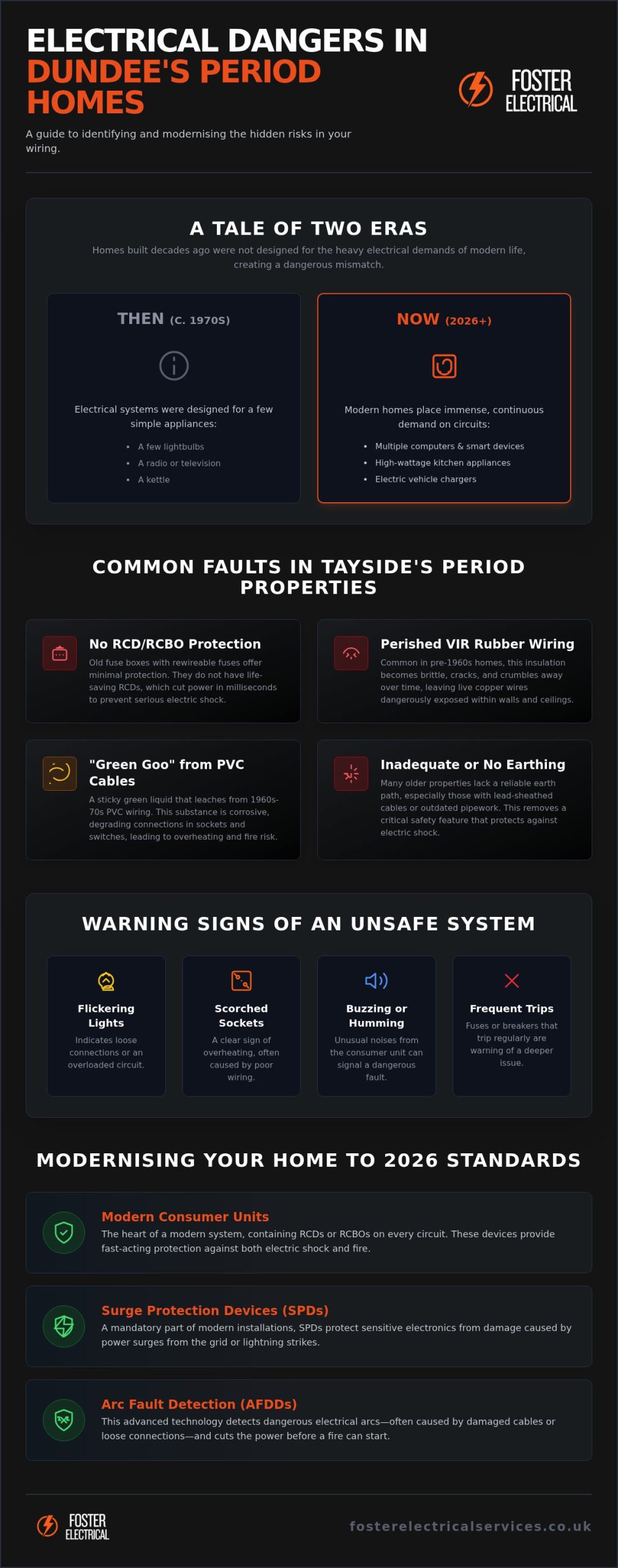
Dundee is a city built on history, from the grand Victorian terraces of the West End to the post-war developments that expanded our skyline. While these period properties offer character and craftsmanship, their electrical systems were never designed for the digital age. Most common electrical faults in older homes Dundee stem from a simple reality: the wiring was installed when a home only needed to power a few lightbulbs and a radio. Today, we ask those same circuits to handle high-wattage air fryers, electric vehicle chargers, and multiple computers. This mismatch creates heat, stress, and eventually, failure.
Ageing infrastructure across Tayside often suffers from perishing insulation and loose connections that have developed over decades. We frequently find that these issues are exacerbated by DIY “quick fixes” performed by previous owners. Understanding the specific era of your home is the first step in identifying potential hazards. We view ourselves as the protective guardians of these local treasures, ensuring that the hidden systems behind your walls are as durable as the stone they are built from.
The Architectural Legacy of Tayside and Fife
In stone-built Victorian tenements, we often find wiring that has been modified piecemeal over a century. These thick stone walls and heavy floorboards can hide perishing rubber insulation or lead-sheathed cables that have long since reached the end of their safe life. Mid-century homes built during Dundee’s post-war expansion face different challenges; they often feature early PVC wiring that is now becoming brittle. Properties over 40 years old are particularly prone to hidden faults because the infrastructure is tucked away behind lath and plaster or under original floorboards. This makes regular inspections vital for peace of mind.
Evolving Standards: From Post-War Wiring to the 18th Edition
The way we protect our homes has changed drastically since the 1970s. Modern Electrical wiring safety standards, governed by BS 7671, prioritise active protection. Older systems often rely on simple rewireable fuses that only blow under extreme circumstances. These lack the life-saving Residual Current Devices (RCDs) found in modern consumer units, which trip in milliseconds if they detect a fault. Without these mechanisms, an old circuit can remain live even while it is smouldering. We often see loose connections in these ageing fuse boxes, which generate heat and pose a significant fire risk. If you are concerned about the state of your installation, we offer comprehensive fault finding and repairs to ensure your home meets the safety requirements of 2026.
Dangerous Outdated Wiring and the Absence of RCD Protection
Outdated wiring remains the leading cause of electrical fires in older Scottish homes. We often visit properties where the electrical “heart” of the house is still a cast-iron fuse box using thin, replaceable strands of fuse wire. If your home relies on these legacy systems, it is overdue for an upgrade. Modern UK electrical safety standards now mandate that every circuit is protected by a sensitive RCD or RCBO. These components are designed to save lives by cutting power the moment a fault is detected, providing a level of safety that old fuse wire simply cannot match.
The Perils of Old Rubber and Lead Cabling
Before the 1960s, Vulcanised Indian Rubber (VIR) was the standard for cable insulation. Over time, this rubber dries out and becomes incredibly brittle. In many common electrical faults in older homes Dundee, we find that simply touching these cables causes the insulation to crumble away. This leaves bare, live copper exposed inside your walls or ceiling voids. We also keep a close eye out for “Green Goo.” This sticky green liquid leaches from PVC wiring installed in the 1960s and 70s. It is a chemical reaction between the cable’s plasticiser and the copper core. If left alone, it can corrode your switches and sockets, leading to poor connections and potential overheating. In Dundee’s deeper basements and cellars, lead-sheathed cables are another frequent sight. While they look sturdy, they often lack a reliable earth path and are prone to mechanical damage.
Why Modern Consumer Units Are Non-Negotiable for Safety
We believe that moving from an old fuse board to modern Consumer Unit Upgrades is the single most important safety improvement you can make. An RCD (Residual Current Device) acts as a guardian for your family. It monitors the flow of electricity and can detect a tiny leakage of current, such as one passing through a person, and shut off the power in less than 40 milliseconds. This is the difference between a minor startle and a fatal electric shock. The 2026 safety standards also place a high priority on Surge Protection Devices (SPD). These protect your modern electronics, from smart TVs to home servers, from the voltage spikes that occur on the grid. If you are unsure about the age or condition of your wiring, we can provide a thorough EICR inspection to give you a clear picture of your home’s health. Taking a proactive approach today prevents the mess and stress of an emergency tomorrow. If you’ve spotted any green residue or crumbling cables, please reach out for a professional assessment.
Signs of Overloaded Circuits in the Modern Digital Age
Modern life has outpaced the original design of our city’s housing stock. When many homes in the Ferry or Lochee were built, a single socket in a bedroom was considered plenty. Today, we expect those same circuits to power high-wattage air fryers, tumble dryers, and powerful gaming PCs. We are even seeing older homes struggling with the added demand of heat pumps and EV chargers. This mismatch is a primary driver of common electrical faults in older homes Dundee. When a circuit is asked to carry more current than its cables were designed for, it generates intense heat. This heat can cause the insulation to smoulder behind your walls, often without tripping a traditional fuse. If you notice your lights flickering when the kettle or shower is turned on, it’s a clear sign your system is gasping for breath.
Identifying Visual and Auditory Warning Signs
To ensure your home can safely handle these modern climate and energy needs, it is helpful to look at professional standards; for an example of expertise in electrical and air conditioning integration, you can visit Redlec Energy Solutions to explore their range of services.
We often tell our clients to trust their senses when it comes to electrical safety. A discoloured or charred socket faceplate isn’t just a sign of age; it’s an urgent warning that heat is building up at the connection point. You might also hear buzzing, popping, or crackling sounds coming from your switches. These sounds are the result of arcing, where electricity jumps across gaps in loose or damaged connections. Perhaps the most distinctive sign is a faint, fishy smell of burning plastic. If you notice this, it means the insulation is actively overheating. We take these signs very seriously, acting as a protective guardian for your home to prevent a minor fault from becoming a major incident.
The Danger of “Daisy-Chaining” Extension Leads
It is tempting to solve a lack of outlets by plugging one extension lead into another. We strongly advise against this behaviour. Relying on multi-way adapters is a temporary and risky fix that puts immense pressure on a single point of the circuit. To keep your home safe and tidy, we recommend installing additional Sockets to distribute the load correctly. Our team takes great pride in performing these upgrades with minimal disruption, ensuring we leave your home exactly as we found it. Through professional Fault Finding and Repairs, we can pinpoint exactly where your system is struggling. We provide durable, honest solutions that ensure your period property is equipped for the power demands of 2026 and beyond.
Inadequate Earthing and the Hidden Risks of Metal Pipes
Earthing is essentially your home’s emergency safety net. It provides a dedicated path for electricity to flow safely into the ground if a fault occurs, rather than passing through you or causing a fire. We find that inadequate earthing is one of the most frequent common electrical faults in older homes Dundee, often because the original methods used in the 1950s or earlier are no longer effective. In many Tayside tenements, the electrical system was traditionally earthed to the incoming lead water pipe. However, as Scottish Water replaces these old lead pipes with modern plastic ones, that vital safety connection is often severed, leaving the home without a reliable earth path.
Protective bonding is equally important for your peace of mind. This involves connecting the metal gas and water pipes in your home to the main earth terminal, ensuring these pipes cannot become live if a fault develops elsewhere. In Scotland, ensuring correct earthing is a critical part of any electrical safety inspection in Dundee. If your bonding is missing or undersized, it represents a significant safety gap that needs addressing to protect your household and your property.
Understanding Earthing and Bonding in Older Structures
We often encounter properties where the earthing system hasn’t been updated since the house was built. Relying on old lead pipes is a high-risk strategy; if a plumber replaces a section of pipe with plastic, your entire safety system could be rendered useless without you ever knowing. When we conduct a safety survey, we use precision instruments to verify the loop impedance. This tells us exactly how quickly your system would react to a fault. We take a diligent, artisanal approach to these checks, ensuring every connection is secure and every path is clear.
Scottish Safety Legislation: Interlinked Alarms and Compliance
Safety isn’t just about what is behind the walls; it is also about how you are alerted to danger. In Scotland, it is now a mandatory requirement for all homes to have interlinked smoke and heat alarms. This means if one alarm detects a problem in the kitchen, every alarm in the house sounds. This is particularly vital in Dundee’s larger, multi-storey period homes where a fire on the ground floor might not be immediately audible in top-floor bedrooms. Whilst we are performing a rewire or consumer unit upgrade, it is the perfect time to modernise your safety systems to ensure full legal compliance. We treat your property with the utmost respect, installing these life-saving systems with the tidiness and care you expect from a local expert. If you are worried your earthing might be compromised, book a comprehensive safety inspection today.
Professional Fault Finding and Future-Proofing Your Dundee Home
Identifying common electrical faults in older homes Dundee is a task that requires more than a simple visual check. It demands a systematic, professional approach to uncover what is happening behind the lath and plaster or beneath the floorboards. We believe that fault finding is about far more than just fixing a flickering light; it is a vital act of fire prevention. By addressing these hidden issues, you are not just maintaining a building. You are acting as a protective guardian for your family and your property’s heritage. Modernising your electrical system provides a level of peace of mind that allows you to enjoy the character of your period home without the nagging anxiety of hidden dangers. To ensure your home’s interiors are as well-maintained as its wiring, you can find out more about Darcy Bespoke Cleaning and their specialist carpet and upholstery care.
An Electrical Installation Condition Report (EICR) is the definitive health check for your property. During this survey, we meticulously test every circuit to ensure it meets current safety standards. This is particularly crucial for homebuyers in Angus and Fife, where we strongly recommend an inspection before any property transaction is finalised. Your report will categorise findings into three main codes:
- C1 (Danger Present): Risk of injury; immediate remedial action is required to make the site safe.
- C2 (Potentially Dangerous): Urgent remedial action is required to remove the risk of shock or fire.
- C3 (Improvement Recommended): Your system is safe, but it does not meet the latest 2026 regulations.
We take artisanal pride in the clarity of our reports, ensuring you understand exactly what is needed to keep your home secure without any technical jargon or opaque pricing.
Modernising for the Future: EV Chargers and Smart Tech
The electrical demands of tomorrow are already arriving. Many homeowners are surprised to find that their original wiring simply cannot support an EV Charger Installation Dundee. These chargers require a significant, sustained draw of power that can cause old, degraded cables to overheat rapidly. Similarly, preparing your home for smart lighting or high-speed Data Cabling requires a robust electrical foundation. For many properties, a Full Property Rewire is the most sensible long-term investment. It allows for the seamless integration of modern technology whilst significantly improving energy efficiency. We treat every home with the utmost respect, ensuring our work is as tidy as it is thorough, preserving the unique character of your Dundee property whilst bringing it firmly into the modern age.
Securing Your Home’s Legacy for the Future
Protecting a period property means looking beyond the surface. We have explored how common electrical faults in older homes Dundee, from brittle rubber cabling to inadequate earthing, can compromise the safety of your sanctuary. Modern life places a unique strain on these historic systems, but with the right care, they can be made safe for the next generation. As a NICEIC Approved Contractor and trusted local Tayside specialists, we take personal pride in modernising your electrics with the respect and tidiness your home deserves.
We provide full safety certification with every project, ensuring your property meets the rigorous safety standards of 2026. Taking a proactive step today prevents the stress of an emergency tomorrow. We are here to act as the diligent guardians of your domestic comfort, providing honest advice and artisanal standards of execution. Book Your Professional Electrical Safety Survey in Dundee Today. Your home is your most valuable asset; let’s ensure it remains safe and sound for years to come.
Frequently Asked Questions
How can I tell if my Dundee home has outdated wiring without opening the walls?
You can identify signs of age by examining your consumer unit. If it has a wooden backing, a cast iron casing, or rewireable fuses with small strands of wire, the system is likely decades old. Check the cables entering your electric meter; black rubber or lead sheathing indicates wiring from before the 1960s. Modern PVC cables are typically grey or white. Sockets mounted on skirting boards or those with round pins are also clear indicators of a legacy system.
Is it normal for lights to flicker in an older property?
Flickering lights are common in period properties but should never be considered safe. They often signal loose connections in the circuit or a consumer unit that is struggling with modern voltage demands. In Dundee’s older tenements, vibrations from heavy appliances or street traffic can loosen aged terminals over time. This is a symptom that requires professional fault finding to prevent arcing and potential fire risks. It’s a sign that your home’s electrical health needs attention.
Do I need a building warrant for electrical repairs in Dundee?
Most minor repairs and like-for-like replacements don’t require a building warrant. However, significant alterations like a full property rewire or installing a new circuit for an EV charger often do. It is essential to check the latest Scottish building warrant requirements for 2026 before starting major works. We always ensure our work complies with BS 7671 standards, providing the necessary certification to satisfy local authority building control and your insurance provider’s requirements.
What is the “Green Goo” found in some older electrical sockets?
This green liquid is a degraded plasticiser that leaches from PVC cables manufactured between the 1960s and 1970s. It results from a chemical reaction between the cable’s insulation and its copper core. Whilst it isn’t an immediate cause for panic, it is one of the common electrical faults in older homes Dundee that can lead to poor connectivity. The goo can travel into switches and sockets, eventually necessitating a partial or full rewire to maintain safety.
Can I just replace my fuse box instead of a full rewire?
A consumer unit upgrade is a vital safety step, but it cannot fix underlying wiring issues. If your cables are perishing or lack a proper earth, a modern box will simply detect those faults more frequently and trip constantly. We always assess the condition of your existing circuits first. If the wiring is sound, a modern unit with RCD and Surge Protection provides excellent protection. If the cables are degraded, a rewire is the only durable solution.
How often should an older domestic property have a safety inspection?
We recommend that homeowners of older properties in Tayside and Fife arrange an EICR at least every ten years. If you are a landlord, Scottish law mandates an inspection every five years or at the change of a tenancy. Given the unique challenges of common electrical faults in older homes Dundee, regular checks ensure that hidden issues like earthing failure or insulation breakdown are caught before they become dangerous. This proactive approach protects your family and your property’s value.
Why do my circuit breakers trip when I use the kettle and toaster at once?
This is a classic sign of an overloaded circuit. Older homes were designed for much lower power demands, often with multiple rooms sharing a single circuit. When you use high-wattage appliances simultaneously, the current exceeds the breaker’s limit. This safety mechanism prevents the cables from overheating and potentially catching fire. To solve this properly, we can install additional sockets and dedicated circuits to distribute the load safely across your home, meeting modern power needs.
Are old round-pin sockets still safe to use in 2026?
Round-pin sockets are a legacy of a bygone era and don’t meet modern UK safety standards for general use. They often lack the shutter mechanisms that prevent children from inserting objects into live terminals. Most importantly, the wiring behind them is likely to be over 60 years old and significantly degraded. We strongly advise replacing these with modern, shuttered 13A sockets and upgrading the associated wiring to ensure your home remains a safe, modern environment for your family.