Could the way you light your home be the difference between a modern sanctuary and a hidden fire hazard? We’ve seen many homeowners across Tayside want to brighten their living spaces, yet they often hesitate because they fear the disruption of a messy downlight installation dundee or the confusion of technical jargon like Kelvins and IP ratings. It’s completely natural to feel protective of your property, especially when dealing with the unique structural quirks of Dundee’s historic tenements and villas. You deserve a home that feels both contemporary and safe without the stress of a complicated renovation.
In this guide, we’ll provide the clarity you need to upgrade your lighting with confidence. We believe that electrical work should be a service of integrity and care, not just a transaction. This article will show you how to transform your home with energy-efficient LEDs that meet the latest 2026 Scottish Building Standards, including the mandatory 75 lumens per circuit-watt efficacy. We’ll walk you through choosing the right fire-rated fittings for your ceiling type and explain exactly how to achieve a high-end finish with zero mess. By the end, you’ll have the peace of mind that comes from knowing your lighting is as safe as it is beautiful.
Key Takeaways
- Reduce your energy consumption whilst enhancing brightness by transitioning from legacy halogen bulbs to modern, integrated LED systems.
- Learn how to navigate the complexities of Dundee’s unique property architecture, ensuring traditional lath and plaster ceilings remain undamaged and secure.
- Ensure your project complies with current Scottish Building Standards by choosing the correct fire-rated fittings and IP-rated zones for bathrooms.
- Seek expert downlight installation dundee to guarantee that your new lighting layout is perfectly spaced and your electrical circuits are safely managed.
- Gain the confidence to select the ideal colour temperature for your home, creating a warm and welcoming atmosphere in every living space.
Enhancing Your Dundee Home with Professional Downlight Installation
Dundee’s residential streets are a tapestry of architectural history. Whether you live in a high-ceilinged tenement in the West End or a newer development in Broughty Ferry, the way you light your home defines its atmosphere. We’ve noticed that many homeowners are moving away from bulky central fixtures in favour of a more streamlined approach. Choosing a professional downlight installation dundee allows you to modernise your living space whilst honouring the character of your property. By integrating these lights into the ceiling, you create a sense of height and openness that’s difficult to achieve with standard pendants.
To understand the basics, one might ask what are downlights exactly; they are versatile fixtures that sit flush with the ceiling, offering a directed beam that we can tailor to your specific needs. In the Tayside property market, a well-lit home is a sign of a well-maintained home. This is particularly true in open-plan kitchens where task lighting is essential for safety and ambient lighting is needed for socialising. A thoughtfully designed layout enhances the appeal of your home to future buyers and makes daily life more enjoyable.
The Aesthetic Benefits of Recessed Lighting
Recessed lighting provides a clean canvas for your interior design. It lets your furniture and architectural details take centre stage rather than a dusty chandelier. For those of us living in northern climates, the psychological impact of bright, well-distributed light is significant. It helps combat the gloom of a grey Scottish winter by mimicking natural daylight distribution across a room. We take pride in helping you highlight artwork or specific features, ensuring your home feels curated and intentional.
Energy Efficiency and Long-Term Savings
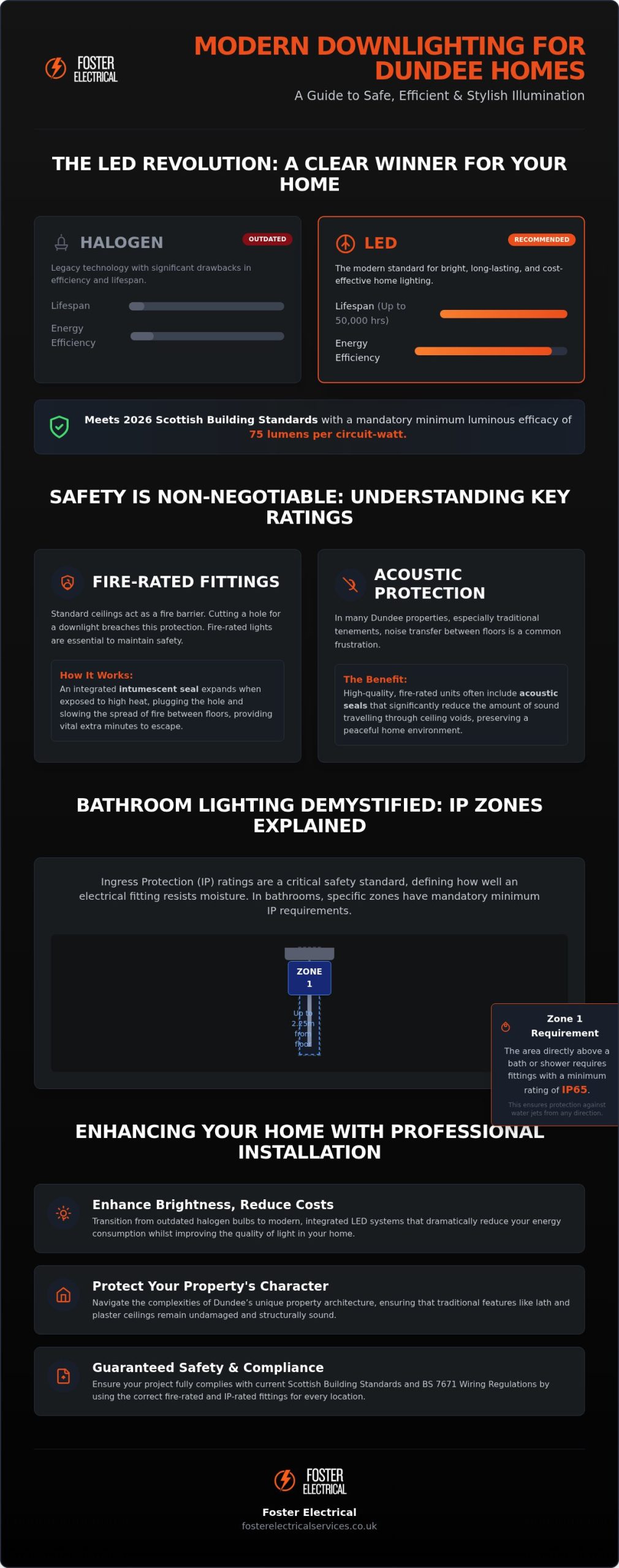
The shift from halogen to LED is no longer just a trend; it’s a necessity for the modern, cost-conscious household. Modern LEDs have a lifespan that far outstrips traditional bulbs, often lasting up to 50,000 hours. Under the 2026 building regulations, every fixed internal light fitting must meet a minimum luminous efficacy of 75 lumens per circuit-watt. By opting for LED lighting upgrades, you’re making a tangible commitment to reducing your carbon footprint. This transition directly reduces the frequency of replacements and lowers your annual electricity consumption, protecting your wallet from rising energy costs through a simple, effective downlight installation dundee.
Understanding Technical Standards: Fire Ratings and IP Zones
Safety is the silent partner in every successful home renovation. When we perform a downlight installation dundee, we aren’t just fitting bulbs; we’re maintaining the structural integrity of your home. A standard ceiling acts as a fire barrier, slowing the spread of heat and smoke between floors. By cutting a hole for a light, we effectively create a breach in that barrier. Fire-rated downlights are designed with an intumescent seal that expands at high temperatures to “plug” the hole, giving your family those vital extra minutes to escape during an emergency. This isn’t just good practice; it’s often a legal requirement under Scottish Building Standards to prevent fire spread between dwellings, particularly in multi-storey properties.
These technical choices also affect your daily comfort through acoustic ratings. In many Dundee properties, especially traditional tenements, noise transfer between floors is a common frustration. High-quality fire-rated units often include acoustic seals that reduce the amount of sound travelling through the ceiling voids. All our work adheres to the BS 7671 IET Wiring Regulations, which dictate how circuits must be loaded and protected. Following these rules ensures that your new lighting doesn’t put undue strain on your existing electrical system, preventing nuisance tripping or overheating whilst ensuring your home remains a sanctuary.
IP Ratings Explained: Bathroom and Kitchen Safety
Water and electricity are a dangerous combination, which is why Ingress Protection (IP) ratings are critical. The IP code tells us how well a fitting resists dust and moisture. For bathroom installations, we divide the room into zones based on their proximity to water. Zone 1, the area directly above your bath or shower up to a height of 2.25m, requires a minimum of IP65. This rating ensures the fitting can withstand low-pressure water jets and heavy steam. Whilst Zone 2 only strictly requires IP44, we often recommend IP65 as the gold standard for all wet rooms in Dundee to ensure maximum durability and safety against splashes.
Fire Safety and Building Compliance
Incorrectly installed lights can create a “chimney effect,” where heat from a fire is funnelled through the ceiling hole into the floor joists above. We prefer using integrated fire-rated units rather than retrofitted fire hoods, as they offer a more reliable, factory-tested seal that lasts the lifetime of the fitting. Compliance with the Approved Document P building regulations is essential for more than just safety; it’s often a condition of your home insurance. An uncertified installation could potentially void your policy in the event of a fire claim. If you have concerns about your current setup, we’re always here to discuss your safety requirements and provide a professional assessment.
Adapting Installation to Dundee’s Unique Property Architecture
Dundee is a city of architectural contrasts. We work in everything from red sandstone Victorian tenements in the West End to the latest timber-frame developments in Western Gateway. A standard approach to downlight installation dundee simply won’t suffice when you’re dealing with such varied building methods. In older properties, we frequently encounter lath and plaster ceilings. These require a delicate touch and specialist hole saws to prevent the old lime plaster from cracking or pulling away from the timber laths. We treat these historic surfaces with the respect they deserve, ensuring your home’s structural integrity remains intact whilst we modernise your lighting.
The layout of your lights is often dictated by the invisible skeleton of your home. The direction and spacing of floor joists in traditional Tayside houses determine exactly where a fitting can sit. We use precision scanning tools to map out these joists before making any cuts. This careful planning avoids the frustration of asymmetrical light rows or the danger of compromising a structural beam. It’s this level of diligence that separates a professional job from a rushed one. We believe in doing the work correctly the first time, protecting both your ceiling and your peace of mind.
Tenement and Period Property Specialist Approaches
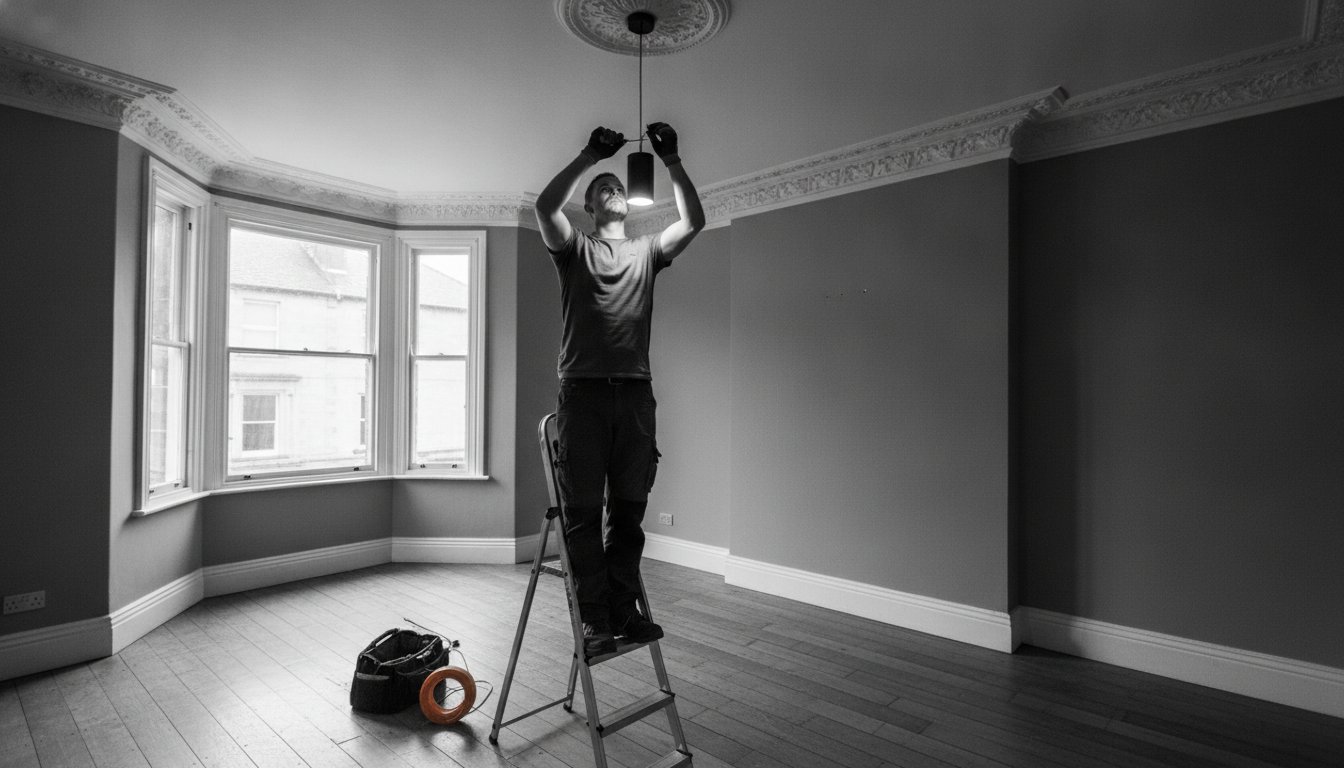
Period properties often boast high ceilings that require more than a standard step ladder. We use specialist platforms to ensure we can work safely and precisely at height. One of our primary goals is preserving original features. We take great care to plan your downlight grid so it complements, rather than cuts through, original plaster cornicing. Wiring in these buildings also presents challenges, as the “dead space” between floors can be irregular or filled with century-old debris. Our experience allows us to navigate these voids efficiently, keeping disruption to your floorboards to an absolute minimum.
Modern Homes and Extensions
In newer Dundee homes, the challenge shifts from fragile plaster to thermal efficiency. Modern houses use thick layers of insulation and airtightness membranes that must not be compromised. We utilise “insulation coverable” downlights that allow heat to dissipate safely without creating a fire risk or a cold spot in your loft. If you are planning a kitchen extension or a garden room, you should consider how these new lights will impact your existing system. Often, a project like this is the ideal time for Consumer Unit Upgrades to ensure your fuse board can safely manage the additional circuits. This level of compliance is a key part of the Part P regulations explained by safety experts, ensuring every addition to your home is documented and legal.
Planning Your Perfect Lighting Layout: A Practical Guide
A successful lighting project begins long before we drill the first hole. We often see homeowners overwhelmed by choice, but a few simple principles ensure your home feels balanced and bright. The standard “rule of thumb” is to divide your ceiling height by two to determine spacing. For a typical home with a 2.4-metre ceiling, this means spacing your lights roughly 1.2 metres apart. This prevents the “Swiss cheese” effect of too many holes whilst ensuring you don’t have dark, shadowy corners. It’s about creating a wash of light that feels natural and effortless.
We also consider the mood of each room through colour temperature. Warm white, typically around 3000K, is our favourite for lounges and bedrooms because it mimics the soft glow of traditional bulbs. For kitchens and bathrooms, cool white (4000K) provides the crisp clarity needed for tasks. By integrating dimmable drivers or smart home controls, you can adjust these levels from your phone or a wall switch. This allows your room to transition from a bright, functional workspace to a relaxed evening retreat with a simple tap. It’s this versatility that makes a professional downlight installation dundee such a valuable upgrade.
Step-by-Step Layout Planning
We start by measuring your room and identifying specific “task areas” that need extra focus. In a kitchen, your downlights should be positioned directly over the worktops rather than in the centre of the floor; this prevents you from working in your own shadow. We then draft a wiring plan that respects the invisible elements of your home. By mapping out floor joists and existing plumbing early, we avoid unnecessary disruption and ensure a symmetrical finish that looks intentional and professional. We take pride in this preparation phase, as it’s where the safety and beauty of the job are truly secured.
Choosing Bulbs and Bezel Finishes
The aesthetics matter just as much as the placement. We suggest matching your bezel finishes to existing hardware like door handles or kitchen taps. Brushed steel and matt white remain the most popular choices for a timeless look. In the 2026 market, understanding the shift from Watts to Lumens is vital for your energy bills. Since current regulations mandate at least 75 lumens per circuit-watt, we focus on high-efficacy units that provide maximum brightness for minimum power consumption. You also have a choice between integrated LED units, which offer superior heat management, and replaceable GU10 bulbs, which provide more flexibility if you wish to change bulb types in the future.
Planning the perfect layout requires a blend of technical knowledge and an eye for design. If you are ready to map out your home’s transformation, we invite you to get in touch for a bespoke lighting plan tailored to your space.
Why Professional Installation Beats DIY for Safety and Longevity
Whilst the “do-it-yourself” approach is popular for painting or gardening, electrical work requires a different level of accountability. A downlight installation dundee involves cutting into the very fabric of your ceilings and integrating new components into your existing wiring. Without the correct training, it is easy to overlook loose connections or “daisy-chaining” errors that can lead to arcing and house fires. We often see DIY attempts where cables have been routed too close to hot fittings or buried under thick insulation without proper clearance, creating a significant overheating risk that could remain hidden for years.
Cutting into a ceiling is also a structural decision. You need to know exactly where your joists and pipes are located to avoid compromising the stability of your floor or causing a costly leak. If a DIY project goes wrong, it often results in nuisance tripping or dead circuits, requiring professional Fault Finding to trace and rectify the mistake. Hiring a professional ensures the job is done right the first time, protecting your property from unnecessary damage and ensuring your circuits are never overloaded.
The Technical Risks of DIY Electrical Work
Many homeowners don’t realise that incorrect cable routing can lead to magnetic interference or circuit failure over time. Professional electricians understand the nuances of circuit loading and how to balance the draw of multiple LED units across your fuse board. We also possess the structural knowledge to navigate timber frames and lath and plaster without causing structural cracks. By choosing a professional downlight installation dundee, you are investing in the long-term health and safety of your property rather than taking a gamble with your domestic comfort.
Your Local Dundee Expert: Foster Electrical
We treat your home with the same care we would our own. We understand that inviting a contractor into your private space is a privilege, so we operate with a level of sensitivity that is often missing in larger, more anonymous corporations. Our “Foster Electrical” standard means we are meticulous about tidiness. We use dust extraction tools and protective coverings to manage debris, ensuring we leave your rooms exactly as we found them. We are a local family-run business, and we take personal pride in our reputation across Dundee, Perth, and Angus.
Upon completion of every job, we provide a Minor Works Certificate for your records. This document is a firm promise that the installation meets the BS 7671 safety standards, which is vital for your home insurance and future property sales. We believe in straightforward, honest service without the high-pressure sales tactics. If you are ready to modernise your home with a safe and efficient system, Contact our team for a professional consultation. We are here to act as the protective guardian of your home’s safety.
Ready to Brighten Your Dundee Home with Confidence?
Upgrading your lighting is about more than just aesthetics; it’s a commitment to safety and long-term efficiency. We’ve explored how fire-rated technology protects your family and how modern LEDs can significantly lower your energy bills whilst meeting the latest 2026 Scottish standards. Whether you live in a traditional tenement or a new-build villa, a thoughtful layout transforms your living space into a warm, functional environment that truly feels like home.
Choosing a professional downlight installation dundee ensures that every technical detail, from IP ratings to joist spacing, is handled with meticulous care. As a local Dundee family business, we take personal pride in our reputation for tidy workmanship and integrity. We are NICEIC Registered and fully 18th Edition Compliant, acting as a trusted guardian of your home’s electrical safety. If you’re ready to see your property in a new light, we’re here to help. We invite you to Request a Professional Downlight Quote from Foster Electrical today. We look forward to treating your home with the respect and diligence it deserves.
Frequently Asked Questions
How much does it cost for downlight installation in Dundee?
The cost of a downlight installation dundee depends on several variables, including the age of your property and the complexity of the existing wiring. We typically provide a bespoke quote based on a per job basis rather than a flat hourly rate. This approach ensures you aren’t surprised by hidden fees if we encounter structural quirks in an older Dundee tenement. Factors such as ceiling height and the need for new circuits will also influence the final price.
Do I need fire-rated downlights in my kitchen?
Fire-rated downlights are highly recommended for kitchens and are often mandatory in multi-storey buildings or flats. They maintain the fire barrier of your ceiling by sealing the hole if a fire occurs, preventing heat from spreading to the floor above. Whilst standard dwellings have different rules, using fire-rated units is a standard safety practice we follow to protect the structural integrity and the safety of your Tayside home.
How many downlights do I need for a 4m x 4m room?
For a 4m x 4m room, you will typically need between four and nine lights depending on the ceiling height and intended use. Following the standard rule of thumb, spacing lights roughly 1.2 metres apart ensures an even wash of light without dark corners. We often suggest a grid of nine for kitchens to provide bright task lighting, whilst a lounge might only require four or five for a softer ambient feel.
Can downlights be installed in a lath and plaster ceiling?
Yes, we can certainly install downlights in lath and plaster ceilings, though it requires a much more delicate touch than modern plasterboard. We use specialist hole saws and precision techniques to ensure the old lime plaster doesn’t crack or pull away from the timber laths. This careful approach is essential for preserving the historic character of Dundee’s period properties whilst bringing their lighting into the modern era safely and correctly.
How long does it take to install 10 downlights?
Installing ten downlights usually takes between three and six hours, depending on the accessibility of the ceiling voids. If we have clear access from a loft above, the process is significantly faster than working between floors in a mid-terrace house. We prioritise a tidy work environment, ensuring we manage dust and debris throughout the day so your home remains comfortable and clean whilst our team carries out the work.
Are LED downlights dimmable?
Most modern LED downlights are dimmable, provided you use a compatible trailing-edge dimmer switch and dimmable drivers. It’s a common mistake to use an old-fashioned dimmer with new LEDs, which often leads to flickering or buzzing. We ensure that every component in your system is perfectly matched, allowing you to create the ideal atmosphere in your living room or bedroom with a smooth, silent dimming range that suits your mood.
Do I need a certificate for downlight installation?
Yes, you should always receive a Minor Works Certificate upon completion of a professional downlight installation dundee. This document confirms that the work complies with the BS 7671 IET Wiring Regulations and is vital for your home insurance records. We provide this certification as standard for all our installations, giving you the peace of mind that your new lighting system is safe, legal, and has been correctly documented by an expert.
Can downlights be covered with loft insulation?
Downlights can only be covered with loft insulation if they are specifically rated as insulation coverable or if a protective fire hood is used. Standard units require a clear air gap to dissipate heat; covering them directly can lead to overheating and potential fire hazards. We always use fittings designed for insulation contact in modern Dundee homes to ensure your thermal efficiency remains high without compromising your electrical safety or property integrity.