That persistent strobe effect in your kitchen or lounge isn’t just a minor annoyance; it’s often a sign that your modern electronics are clashing with traditional UK wiring. We know the frustration of investing in expensive bulbs only to be left wondering why are my led lights flickering uk homeowners frequently ask. It’s natural to feel a sense of unease when your lights behave erratically, especially if you’re worried about the hidden risk of an electrical fire. You deserve a home that feels safe and settled, not one that feels like a building site.
We’ve created this guide to help you find a permanent solution whilst ensuring your property remains in top condition. You’ll learn how to distinguish between a simple bulb swap and a deeper fault that might require a professional fault finding session. We’ll walk you through the impact of the 2021 Ecodesign regulations and explain why those old dimmer switches often fail to support modern LED drivers. Whether it’s a quick fix or a sign that your consumer unit needs attention, we’ll provide the honest, practical advice you need to keep your home bright and safe.
Key Takeaways
- Understand that modern LEDs are digital components, making them far more sensitive to minor voltage fluctuations than traditional filament bulbs.
- Identify if an outdated ‘leading-edge’ dimmer switch is the primary reason why are my led lights flickering uk homes often struggle with modern lighting compatibility.
- Learn how to tell the difference between a simple localised bulb failure and a systemic issue that might suggest a loose connection in your ceiling rose or consumer unit.
- Discover practical, safe steps to secure loose fittings and clean contacts whilst ensuring your home’s electrical integrity remains intact.
- Recognise when it’s time to move beyond DIY and book a professional fault finding session to protect your family and your property from hidden electrical risks.
Understanding LED Flickering in UK Homes
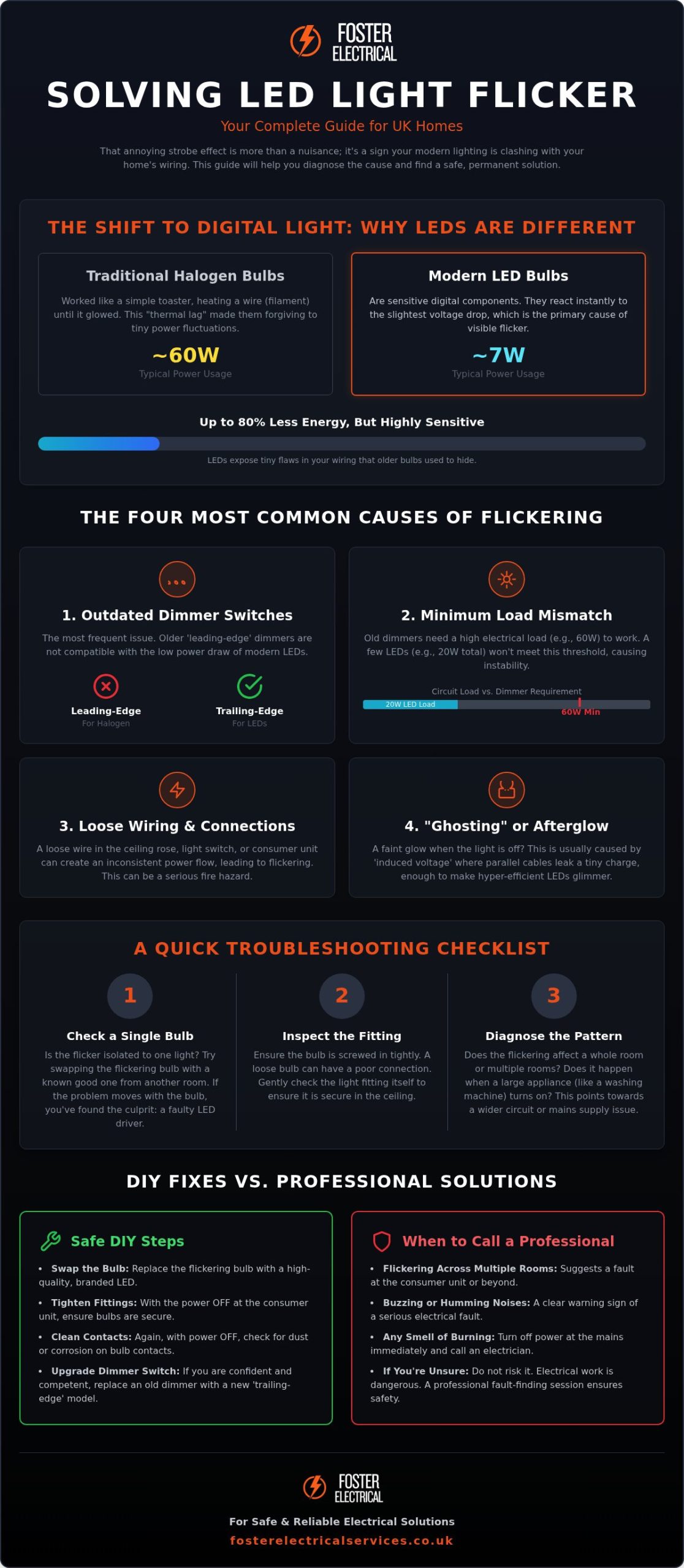
For decades, British homes relied on the humble filament bulb. These were simple devices that worked by heating a wire until it glowed. Today, we’ve transitioned to digital LED technology. This shift has brought incredible energy savings, but it’s also introduced a level of technical complexity that our traditional wiring wasn’t always designed to handle. LEDs are electronic components, not just resistors, and they require a precise, steady flow of power to function correctly.
The UK national grid provides 230V AC at a frequency of 50Hz. Whilst older bulbs had a natural “thermal lag” that smoothed out any tiny dips in power, LEDs are instant. They react to every micro-fluctuation in the circuit. If the voltage drops even slightly, the light output changes immediately. This sensitivity is usually at the heart of the question: why are my led lights flickering uk residents often find themselves asking. To solve this, we must look at the LED driver. This small component acts as the “brain” of the fixture, converting high-voltage AC into the low-voltage DC the LED needs. If this driver is poor quality or failing, the light will struggle to stay stable.
Understanding what causes light to flicker involves identifying the specific pattern. You might notice a “stroboscopic effect” where moving objects look like they’re in a slow-motion film. Alternatively, you might see intermittent drops in brightness or “ghosting”, where the bulb glows faintly even when switched off. Identifying why are my led lights flickering uk wide often starts with checking the quality of the bulbs themselves, as each of these patterns tells us something different about the health of your electrical system.
LED vs Halogen: Why the change matters
Traditional halogen bulbs were remarkably forgiving. They hid minor electrical issues like loose connections or slight voltage drops because the filament stayed hot and bright during brief interruptions. LEDs don’t have that luxury. Whilst they use up to 80% less energy, their digital nature means they expose every tiny flaw in your home’s wiring. Cheap, unbranded LEDs are particularly prone to this, as they often lack the robust internal components needed to handle the specific demands of UK circuits.
What is ‘Ghosting’?
Ghosting is a common phenomenon where your LEDs emit a dim glow or a rhythmic pulse after you’ve flicked the switch to “off”. This usually isn’t a dangerous fault, but rather a result of “induced voltage”. In many UK properties, lighting cables are run parallel to one another in tight bundles. The electromagnetic field from a live wire can “leak” a tiny amount of energy into an adjacent, switched-off wire. Because LEDs require so little power to illuminate, this tiny stray charge is enough to make them glimmer in the dark.
The Dimmer Dilemma: Incompatibility and Minimum Loads
In our experience, the single most common reason why are my led lights flickering uk households is an outdated dimmer switch. Most traditional UK homes were fitted with ‘leading-edge’ dimmers. These were built to control high-wattage filament bulbs, usually starting at 60W or 100W per circuit. When you replace those power-hungry bulbs with modern 5W LEDs, the switch often fails to recognise the load. This mismatch creates an unstable current, resulting in that annoying strobe effect that can ruin the atmosphere of a room.
Beyond the obvious visual irritation, the health effects of flickering lights can be significant. Persistent flickering is known to trigger migraines, cause visual fatigue, and even lead to neurological discomfort for some residents. We believe your home should be a sanctuary of comfort. Addressing a failing or incompatible dimmer is a priority for both your safety and your general wellbeing.
Minimum Load Requirements
Every dimmer switch has a ‘minimum load’ rating. If your circuit total falls below this threshold, the switch cannot maintain a steady output. For example, if an old dimmer requires 60W to function but you have installed four 5W LED bulbs, the total load is only 20W. This massive shortfall leads to the lights ‘dropping out’ or flashing as the switch attempts to regulate the power. You can calculate your load by adding up the wattage of every bulb on that single switch circuit. If it’s under the minimum stated on the back of the switch plate, flickering is almost guaranteed.
Choosing the Right UK Dimmer Switch
To achieve smooth, silent dimming, we always recommend ‘trailing-edge’ dimmers. These modern switches are specifically engineered for the delicate electronics found in LED drivers. They provide a much softer start and more precise control over the current. When selecting a new switch, ensure it is explicitly labelled as ‘LED compatible’ to avoid wasting money on products that will only continue the problem. If you are unsure which switch suits your existing wiring, we can help you find the right solution to restore peace and steady light to your living space.
Diagnosing the Pattern: Is it One Bulb or the Whole House?
When you’re trying to solve why are my led lights flickering uk residents first need to determine the scale of the problem. Is the issue confined to a single bedside lamp, or does the entire kitchen pulse every time the kettle boils? Narrowing this down is the most important step in deciding whether you need a new bulb or a professional fault finding session. In many of the older stone tenements across Dundee and Perth, we often find that aging infrastructure struggles to provide the clean, stable power that modern electronics require.
The technical standards for these components are governed by EU lighting efficiency regulations, which also influence UK market standards. These regulations aim to minimise flicker by enforcing better driver quality. However, even the best bulb cannot compensate for a loose connection in a ceiling rose or a failing circuit. If the flickering is localised, the fault usually lies within the fixture itself. If it’s widespread, the cause is likely deeper within your home’s electrical heart.
Single Fixture Issues
If only one bulb is misbehaving, start with a simple ‘swap test’. Move the suspect bulb to a different, working fixture. If the flicker follows the bulb, the internal LED driver is likely failing and the bulb should be recycled. If a new bulb still flickers in the original socket, we often find the culprit is a loose contact or heat damage within the fitting. This is especially common in older recessed downlights where poor ventilation can cause the delicate electronics to overheat and stutter.
Whole Circuit or House-Wide Flickering
When multiple rooms are affected, the situation becomes more serious. This often points to a ‘loose neutral’ connection. This can occur within your consumer unit or even at the service head where power enters your property. A loose neutral is a significant safety risk and requires immediate professional attention. You might also notice the flicker coincides with the use of high-power appliances. Modern additions like EV chargers or electric showers draw a massive amount of current. If your internal wiring or the external supply from the District Network Operator (DNO) isn’t robust enough, you’ll see a momentary voltage drop that causes your LEDs to dip or pulse. We take great pride in modernising these systems to ensure your home remains a steady, safe environment.
Practical Steps to Stop the Strobe Effect
Before you assume your home requires a full rewire, we recommend a few practical checks to help you identify the source of the strobe effect. We believe in empowering our clients with the knowledge to handle simple maintenance safely. Whilst some issues require a professional touch, others are often solved with a bit of diligence and a steady hand. Always ensure the power is switched off at the wall before you touch any light fitting or attempt to clean the contacts. Over time, dust or slight oxidation can build up on the metal tabs, creating a poor connection that leads to instability. A gentle wipe with a dry, lint-free cloth can often restore a clean path for the current.
We’ve found that many residents struggle to understand why are my led lights flickering uk circuits specifically, and the answer often lies in the quality of the bulbs. Cheap, unbranded LEDs often lack the sophisticated drivers needed to smooth out the 230V AC supply. Investing in reputable, branded bulbs from trusted UK retailers is the most effective way to ensure long-term, flicker-free performance. These bulbs are built to higher standards and are far more likely to be compatible with modern dimmers and smart lighting systems.
The 5-Step Home Check
- Step 1: Verify the bulb is seated correctly. Ensure it is screwed in or pushed into the socket fully, as a loose connection is a prime cause of intermittent flickering.
- Step 2: Check the packaging or the base of the bulb to confirm it is explicitly labelled as ‘dimmable’ if it is on a dimmed circuit.
- Step 3: Perform a swap test. Move the flickering bulb to a different, non-flickering lamp or fixture to see if the problem follows the bulb.
- Step 4: Turn off high-power appliances like your electric shower or oven. If the flickering stops, your circuit may be suffering from a voltage drop.
- Step 5: Inspect the fitting for any signs of heat damage or discolouration, which could indicate a deeper electrical fault.
When to Call Foster Electrical
There are moments when DIY troubleshooting must stop for the sake of your safety. If you notice any burning smells, buzzing sounds coming from the switch, or scorched plastic around your downlights, please isolate the circuit and call us immediately. These are clear signs of a serious hazard that a simple bulb swap cannot fix. For those living in older Dundee tenements or period properties in Perth, we strongly recommend a professional fault finding session if you haven’t had an EICR recently. We take great pride in our meticulous approach to safety, ensuring every connection is secure and every circuit is compliant with the latest 18th Edition regulations. If your lights continue to pulse despite your best efforts, please reach out to our friendly team for a reliable, honest assessment of your home’s wiring.
Professional Solutions: Fault Finding and LED Upgrades
When basic troubleshooting doesn’t resolve the issue, it’s time to look deeper into your property’s infrastructure. We often find that the real answer to why are my led lights flickering uk homes is a loose connection at the consumer unit or a circuit that is simply overwhelmed by modern demands. Professional fault finding is the only way to identify these hidden risks. We use calibrated testing equipment to measure the integrity of your wiring, ensuring it meets the current 18th Edition safety standards. This isn’t just about stopping a flicker; it’s about confirming that your home is fundamentally safe for your family.
A significant part of the solution involves modernising your electrical heart. A Consumer Unit Upgrade provides the precise protection required for sensitive digital lighting. Older fuse boxes were designed for a simpler age and often lack the sophisticated RCDs (Residual Current Devices) needed to handle modern LED drivers correctly. By upgrading, you provide a stable foundation for your entire lighting system, eliminating the micro-voltage fluctuations that cause so much frustration in older properties.
The Foster Electrical Approach
We take great pride in our meticulous approach to every job. When we enter your property, we don’t just look for a quick fix. We use advanced diagnostic tools to trace faults that the human eye simply cannot see, such as insulation breakdown or high-resistance joints. This level of thoroughness is what sets a local expert apart from larger, anonymous corporations. We believe in providing a service that is both artisanal and technically perfect. Our team works tidily, respecting your private space whilst ensuring every connection is as secure as it can be. You’ll always receive clear, honest advice on whether a simple repair is sufficient or if a more robust upgrade is necessary.
Investing in Quality Lighting
For long-term reliability, we often recommend integrated LED downlights over simple retrofitted bulbs. Integrated units are designed as a single, cohesive piece, allowing for superior heat dissipation and perfectly matched drivers. This design significantly reduces the likelihood of flickering and extends the lifespan of the fitting. An LED Lighting Upgrade is an investment that pays for itself through reduced energy bills and the elimination of constant bulb replacements.
If you’re tired of the strobe effect and want to ensure your home wiring is safe, we’re ready to help. We specialise in modernising older systems across Dundee and Angus, bringing them up to the highest contemporary standards. Please contact us today for a safety inspection or lighting quote, and let’s restore steady, reliable light to your home.
Restoring Steady Light to Your Home
Living with unstable lighting can be stressful, but most issues stem from a mismatch between modern technology and traditional wiring. We’ve explored how outdated dimmer switches and poor-quality drivers often create the strobe effect that disrupts your evening. Understanding why are my led lights flickering uk households is the first step toward a permanent fix. Whether it’s a simple bulb swap or a deeper fault within your consumer unit, identifying the pattern early ensures your home remains a sanctuary of comfort and safety.
We take great pride in our reputation as local Dundee experts. As 18th Edition qualified electricians, we specialise in LED upgrades and meticulous fault finding across Perth and Angus. We believe in providing honest, straightforward advice that prioritises your peace of mind over a quick sale. If you’ve tried the basic checks and the flickering persists, it’s time to let a professional ensure your property is fully compliant and safe. Please Contact Foster Electrical for Expert Fault Finding in Dundee. We’re here to help you move from frustrating flickers to a bright, reliable future.
Frequently Asked Questions
Is it dangerous if my LED lights are flickering?
Flickering isn’t always an immediate danger, but it can signal underlying issues like loose connections or a failing neutral wire. These faults can lead to arcing and overheating if they aren’t addressed by a professional. If the flickering is widespread across several rooms, it’s a sign that your electrical system needs a safety check to prevent potential fire risks.
Why do my LED lights flicker when I turn on the kettle or shower?
This happens because high-power appliances draw significant current, causing a momentary voltage drop in your home. If your internal wiring or the mains supply is slightly weak, the voltage dips enough to affect sensitive electronics. This is a common reason why are my led lights flickering uk households with older consumer units or shared service heads often face this issue.
Can I use any dimmer switch with LED bulbs?
No, you must use a switch specifically designed for LEDs, which is typically a trailing-edge dimmer. Older leading-edge switches designed for filament bulbs have a high minimum load that modern LEDs cannot meet. Using an incompatible switch will lead to persistent flickering, buzzing sounds, and will eventually shorten the lifespan of your expensive LED bulbs.
Why do my lights flicker even when they are switched off?
This is usually caused by ‘ghosting’, which happens when a tiny amount of electricity leaks into the circuit from parallel cables. Because LEDs are incredibly efficient, they can glimmer or pulse using this very low level of stray energy. Whilst it’s rarely a safety hazard, it can be distracting in bedrooms and often requires a small component called a ‘leakage compensator’ to fix.
Will a flickering LED bulb eventually explode or catch fire?
It’s very unlikely for an LED bulb to explode, but the flicker indicates that the internal driver is under significant stress. If the cause is a loose connection in the ceiling rose, that specific point can become hot enough to pose a fire risk. Replacing the bulb or securing the fitting is essential to protect your property and ensure your lighting remains reliable.
How much does it cost to fix flickering lights in Dundee?
The cost depends on whether the solution is a simple bulb replacement or a deeper fault in your consumer unit. We provide honest, transparent assessments for our neighbours across Dundee and Angus without using opaque pricing structures. Our focus is on finding a durable solution that ensures your wiring is safe and your energy bills remain as low as possible.
Do I need to rewire my house if my lights are flickering?
A full rewire is rarely necessary just because of flickering lights. Most issues are resolved by replacing incompatible dimmers, securing loose connections, or upgrading your consumer unit to modern standards. However, if your wiring is several decades old and failing to meet current safety regulations, we’ll provide clear advice on the best way to modernise your home safely.
Why do cheap LED bulbs flicker more than expensive ones?
Cheap bulbs often use basic internal components that cannot smooth out the micro-fluctuations in the UK’s 230V supply. Branded bulbs use higher-quality capacitors and drivers that are specifically engineered to handle voltage dips. This is a primary reason why are my led lights flickering uk wide when residents choose unbranded alternatives that aren’t built for long-term stability.